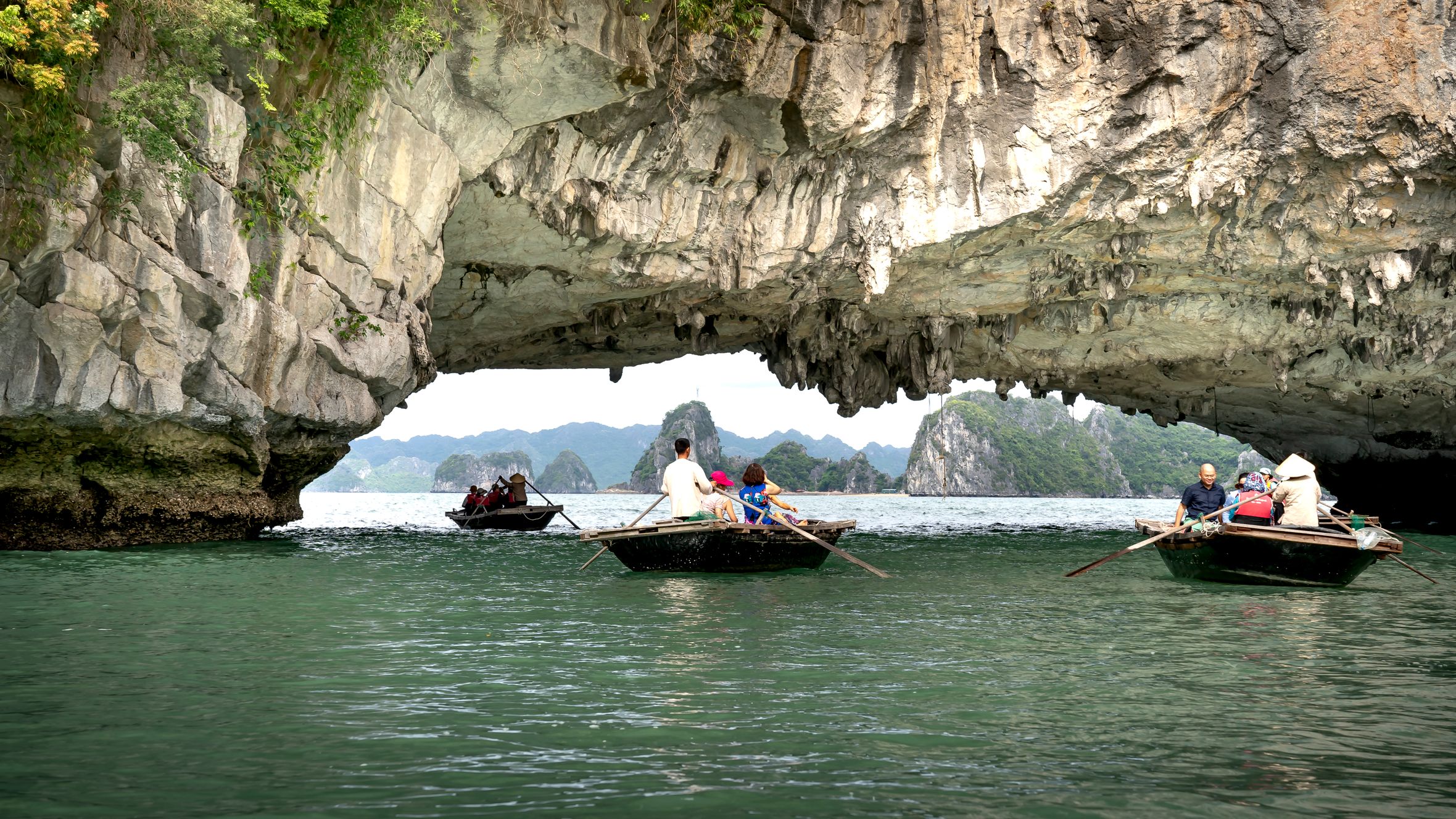
Lai Chau sits in the far northwest of Vietnam (베트남 / 越南 / ベトナム), wedged between mountain ranges and river valleys that most travelers only see from a motorbike seat on the way to somewhere else. Dong Tien Son — a limestone cave complex about 2 km from the city center — is one of the few reasons to actually stop here.
What it is
Dong Tien Son (literally "Fairy Mountain Cave") is a natural limestone cave system carved into the hills just south of Lai Chau city. The cave was opened to visitors in the early 2000s after local authorities added walkways, lighting, and a paved access road. It's not enormous — you can walk through the main chambers in 45 minutes to an hour — but the formations are genuinely impressive: tall stalagmite columns, layered mineral curtains, and a few chambers where the ceiling opens up high enough to lose the echo of your footsteps.
The cave sits inside a karst hill surrounded by rice terraces and small Thai ethnic villages. Unlike the heavily touristed caves near Ha Long Bay or Phong Nha, Dong Tien Son gets almost no international visitors. On a weekday you might be the only foreigner there.
Why travelers go
Honestly, most don't — and that's part of the appeal. If you're already passing through Lai Chau on a northwest loop (Hanoi to Sapa to Lai Chau to Ha Giang, or variations of it), the cave is an easy half-day detour that breaks up long riding days. The interior stays cool year-round, which matters when you've been on a motorbike in 35°C heat since dawn.
The surrounding area also gives you a reason to spend a morning on foot. There are trails through nearby villages and terraced fields that offer a quieter version of the scenery you'll find around Sapa (사파 / 沙坝 / サパ) — without the crowds or the persistent souvenir sellers.
Best time to visit
Lai Chau province is hot and wet from May through September, with heavy rain that can make roads slippery and trigger occasional landslides on mountain passes. The cave itself is fine in rain — it's a cave — but getting there on a motorbike in a downpour is less fun.
October through March is the better window. Skies clear up, temperatures drop to a comfortable 15-22°C during the day, and the rice terraces in the surrounding hills turn golden before harvest (usually late September into October). December and January can get cold at night — down to 5-8°C — so bring layers if you're staying overnight.

Photo by Quang Nguyen Vinh on Pexels
How to get there
Lai Chau city is roughly 200 km from Sapa and 470 km from Hanoi.
From Sapa: The most common route. Buses run daily from Sapa bus station to Lai Chau city, taking around 5-6 hours on winding mountain roads. Tickets cost 120,000-150,000 VND. On a motorbike, the same route takes 4-5 hours depending on stops and your comfort level with switchbacks.
From Hanoi: Overnight sleeper buses depart from My Dinh bus station, arriving in Lai Chau early morning. Expect 10-12 hours and a fare of 280,000-350,000 VND. There's no direct train.
From Lai Chau city to the cave: Dong Tien Son is only about 2 km south of the city center, on the road toward Tam Duong. A xe om (motorbike taxi) costs 20,000-30,000 VND one way, or you can ride your own bike there in under 10 minutes. The entrance is signposted.
Entry fee is 30,000 VND per person.
What to do
Walk the full cave circuit
The main path loops through several connected chambers over roughly 500 meters. The lighting inside is colored — blues, greens, purples — which can feel a bit kitschy, but it does highlight the formations well enough. Pay attention to the second chamber, where a cluster of thin stalactites hangs from the ceiling like pipe organ tubes. The final chamber opens into a high-ceilinged space with a natural skylight.
Explore the hill above the cave
A trail from the cave entrance climbs to the top of the karst hill. It's a short but steep 20-minute hike. From the top you get a wide view over Lai Chau city, the Nam Na River valley, and the surrounding mountains. Early morning light is best.
Visit a nearby Thai village
Several Black Thai communities live in the valleys around Dong Tien Son. If you walk or ride along the small roads south of the cave, you'll pass traditional stilt houses and terraced rice paddies. People are generally friendly but not set up for tourism — there are no ticket booths or guided tours here. A smile, a wave, and basic courtesy go a long way.
Combine with Pu Sam Cap
Pu Sam Cap is another cave system about 8 km further south toward Tam Duong. It's larger than Dong Tien Son and sits inside a protected forest area. If you have a full day, doing both caves with a village walk between them makes for a solid itinerary.
Where to eat nearby
Lai Chau city has a handful of local restaurants along the main road, mostly serving northern Vietnamese and Thai ethnic food.
Look for "pho" with locally raised beef — the broth here tends to be lighter and more herbal than what you get in Hanoi, sometimes flavored with local cardamom. "Thang co," a sour organ-meat stew popular across the northwest highlands, is available at market stalls on weekend mornings. It's an acquired taste — rich, funky, and served with fresh herbs — but worth trying once.
For something simpler, grilled stream fish wrapped in banana leaves with dill and turmeric shows up at most roadside restaurants. A full meal with rice and a local Bia Hoi runs 60,000-90,000 VND.

Photo by Sk4ter bol on Pexels
Where to stay
Lai Chau city has limited accommodation, mostly guesthouses and a few mid-range hotels along the main road.
- Budget: Local guesthouses ("nha nghi") start at 150,000-250,000 VND per night. Basic but clean, with hot water and wifi.
- Mid-range: Newer hotels near the city center charge 400,000-600,000 VND. Rooms are air-conditioned with proper bathrooms. Lan Anh Hotel and Muong Thanh Lai Chau are the most commonly booked.
- Homestays: A few Thai-village homestays operate in Tam Duong district, about 20-30 km south. Expect 200,000-350,000 VND including dinner and breakfast.
Practical tips locals would tell you
- Bring a light jacket into the cave even in summer. The interior sits around 18-20°C and feels cold after the heat outside.
- Wear shoes with grip. The walkways inside are concrete but get slippery from condensation.
- There's no food or drink sold at the cave entrance. Bring water from town.
- Phone signal is weak inside the cave and spotty on the hilltop trail. Download offline maps before you leave Lai Chau city.
- If you're riding a motorbike from Sapa, fuel up before leaving. Gas stations thin out on the mountain roads between the two cities.
Common mistakes to avoid
Rushing through on a bus stop. Some travelers treat Lai Chau as a lunch break between Sapa and the next destination. If you're going to visit the cave, give yourself at least a half day — ideally overnight — so you can also walk the surrounding area.
Expecting Phong Nha. Dong Tien Son is a small provincial cave, not a world-heritage karst system. Adjust your expectations and you'll enjoy it for what it is: a cool, quiet hour underground in a part of Vietnam that doesn't get much attention.
Skipping sun protection on the hilltop. The hike above the cave is exposed. Even in cooler months, the UV at this altitude is strong.
Last updated · May 29, 2026 · independently researched, never sponsored.




