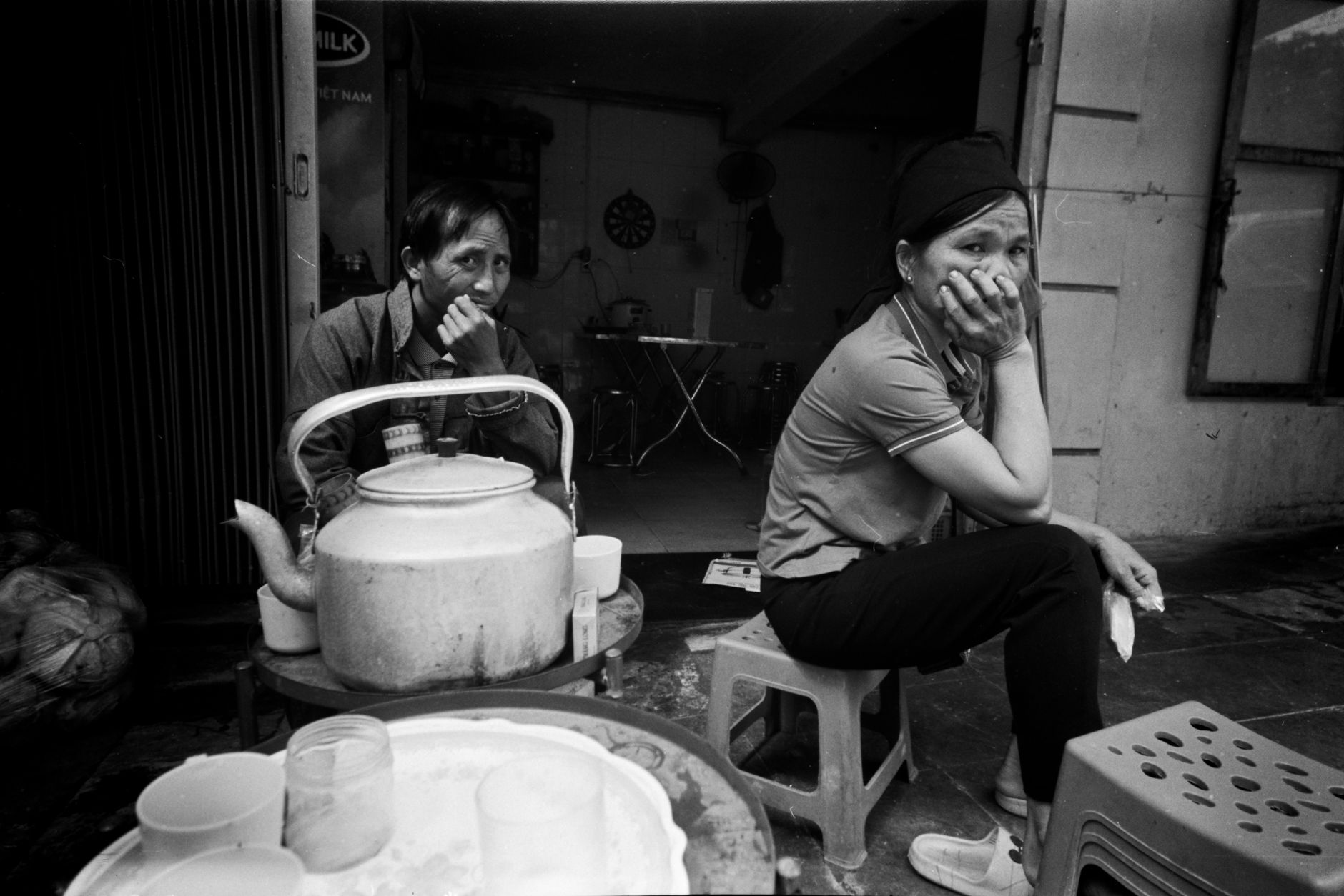
Pa Phach sits in Yen Chau district, Son La province, about 190 km west of Hanoi as the crow flies — though the road makes it feel longer. It's a commune of a few hundred households, mostly Black Thai, spread across a valley floor backed by limestone karst and fruit orchards. If you've driven the Son La highway and wondered what's down those side roads, this is the kind of place you'd find.
What Pa Phach actually is
Pa Phach isn't a town with a main street and coffee shops. It's a collection of Thai hamlets — clusters of wooden stilt houses surrounded by mango, longan, and plum trees depending on the season. The area has been home to the Black Thai for generations, and the agricultural rhythm here still dictates daily life more than anything else. Nobody is selling you a homestay experience wrapped in marketing. People live here, and some of them happen to host travelers.
The commune gained a bit of attention in recent years as travelers heading between Hanoi (하노이 / 河内 / ハノイ) and Moc Chau or Son La city started looking for stops that weren't on every itinerary. Pa Phach is one of those stops — small, unhurried, and genuinely rural.
Why travelers go
Three reasons, mostly. First, the valley itself is genuinely beautiful in a quiet, working-landscape way — rice paddies in the wet season, dry golden fields after harvest, fruit blossoms in spring. Second, the Thai stilt house architecture here is well-preserved because nobody's had a reason to tear it down and build concrete. Third, it's a logical stopover on the northwest loop if you're riding between Hanoi and Son La or pushing on toward Dien Bien Phu.
Pa Phach also appeals to people who've already done Sapa and Mai Chau and want something with fewer tour buses. The trade-off is fewer services and less English spoken. That's the deal.
Best time to visit
October to December is the sweet spot. The rice harvest wraps up in October, the air cools down, and the skies tend to be clearer after the monsoon. Mornings can be misty in the valley, which is a good look.
January to March brings the plum and peach blossom season across Son La province. If you time it right (usually late January into February, overlapping with Tet), the hillsides around Yen Chau go white and pink. It's cold at night — expect 8-12°C — so pack layers.
April to September is hotter and wetter. The rice paddies are green and full, which has its own appeal, but roads can get slippery and leeches come out after rain. Not a dealbreaker, just something to know.
How to get there
From Hanoi, take the highway toward Hoa Binh, then continue on National Road 6 (QL6) through Moc Chau toward Son La city. Pa Phach is in Yen Chau district, roughly 260 km from Hanoi by road. On a motorbike, that's a solid 6-7 hours with stops. By car or private driver, figure 5-6 hours.
There's no direct bus to Pa Phach itself. You can catch a bus from My Dinh station in Hanoi to Son La city (around 200,000-250,000 VND, 6-7 hours), then arrange a local "xe om" (motorbike taxi) or contact your homestay to pick you up. From Son La city to Pa Phach is about 50 km, roughly an hour by motorbike.
If you're on a northwest motorbike loop, Pa Phach slots in naturally between Moc Chau and Son La city.

Photo by Quang Nguyen Vinh on Pexels
What to do
Walk the valley floor
The best thing to do in Pa Phach is walk. There's a path that loops through the hamlets and rice fields, passing stilt houses and small gardens. It takes about two hours at a slow pace. No ticket booth, no entrance fee. Just a walk.
Visit a stilt house
If you're staying at a homestay, your host will likely invite you onto the communal floor of their stilt house. Black Thai homes here are built on wooden stilts with the living space upstairs and storage below. The architecture is functional — good airflow, flood-resistant, cool in summer. Ask before photographing anything inside.
Catch the morning market in Yen Chau town
Yen Chau's small morning market (about 10 km from Pa Phach) is where local Thai and Hmong families come to trade produce. You'll see seasonal fruit, forest vegetables, and sometimes local rice wine. It's busiest before 8 AM. Not a tourist market — just a market.
Hike into the surrounding hills
Ask your homestay host about trails into the karst hills behind the valley. There's no marked hiking infrastructure, but locals know paths that lead to viewpoints over the valley. Bring water and decent shoes. Two to three hours round trip for most routes.
Try local fruit in season
Yen Chau district is known across the north for its mangoes (May-July) and Son La plums (April-June). The fruit here is noticeably better than what you get in Hanoi supermarkets — smaller, uglier, and significantly more flavorful. Buy direct from families for 15,000-30,000 VND per kilogram.
Where to eat nearby
Pa Phach doesn't have restaurants. You'll eat at your homestay, which is part of the experience. Expect sticky rice steamed in banana leaves, grilled stream fish, boiled vegetables with dipping sauce, and "thit trau gac bep" — buffalo meat dried over the kitchen fire, chewy and smoky. If your host offers homemade rice wine, it's polite to accept at least one small cup.
In Yen Chau town, look for "com binh dan" (everyday rice shops) serving northwestern-style dishes. A plate runs 30,000-50,000 VND. "Pho" is also available at morning stalls — it's a leaner, simpler version than what you'd find in Hanoi, but it does the job at 7 AM.
Where to stay
Homestays are the only option, and that's fine. Expect a mattress on the floor of a stilt house, a shared bathroom, mosquito net, and meals included. Prices range from 200,000-400,000 VND per person per night with meals. Book through local contacts or ask at guesthouses in Son La city for recommendations — online listings are sparse.
Son La city (50 km away) has proper hotels if you need air conditioning and hot showers, starting around 300,000 VND for a basic room.

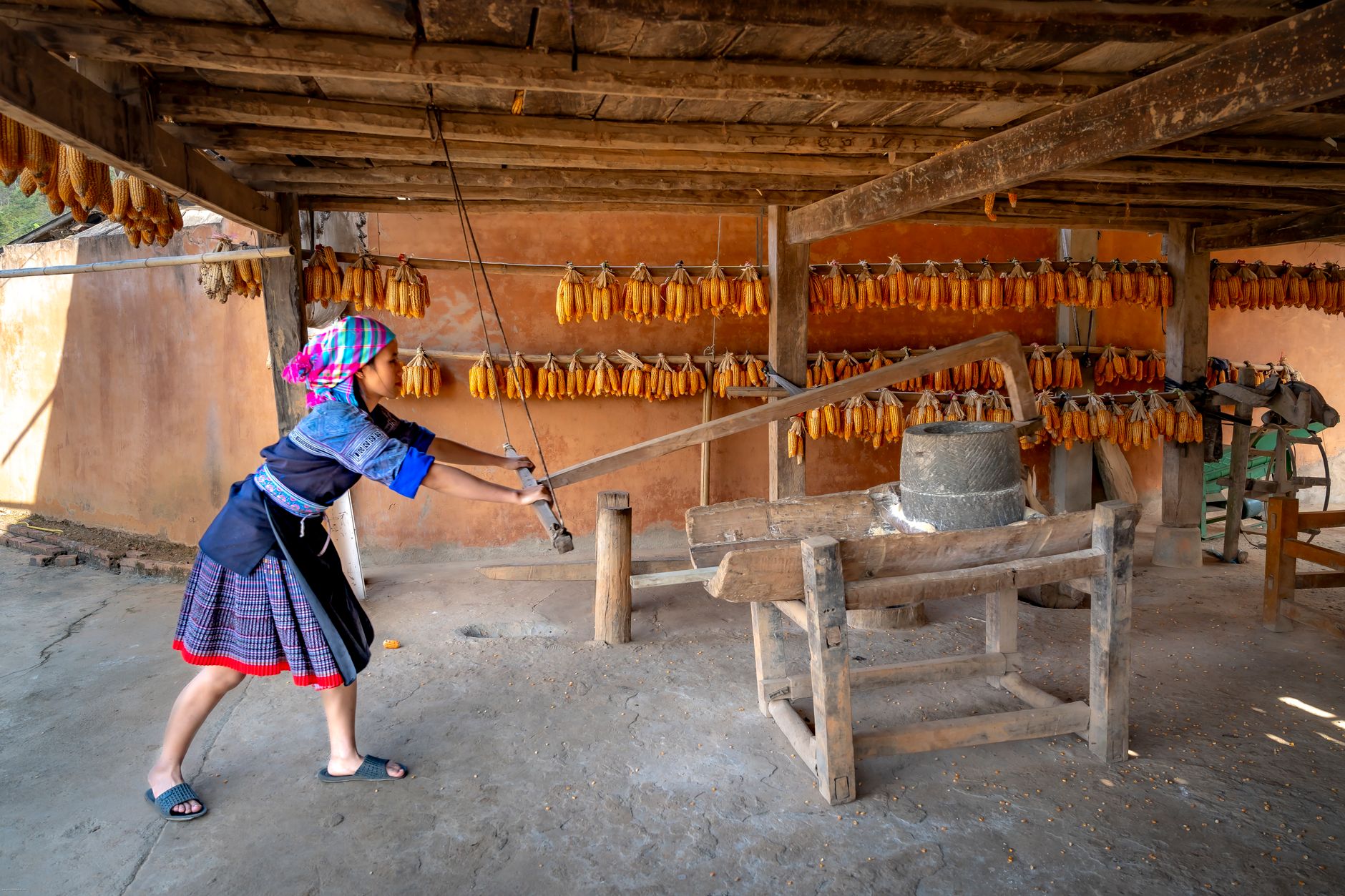
Photo by HONG SON on Pexels
Practical tips locals would tell you
- Bring cash. There are no ATMs in Pa Phach and most homestays don't take cards. Withdraw in Son La city or Yen Chau town.
- Learn five words of Thai or Vietnamese. Even "xin chao" (hello) and "cam on" (thank you) change the interaction. Most people here speak Vietnamese as a second language.
- Dress modestly when visiting homes. Shoulders and knees covered is the baseline.
- Bring a headlamp. Electricity is reliable but lighting is dim, and paths between houses aren't lit at night.
Common mistakes to avoid
Don't show up without a plan for where to sleep. This isn't Sapa (사파 / 沙坝 / サパ) — you can't just walk in and find a bed. Contact a homestay in advance, even if it's just a phone call the day before.
Don't expect English. Almost nobody here speaks it. A translation app with offline Vietnamese downloaded is more useful than a phrasebook.
Don't treat the village as a photo set. People are going about their lives. Ask before photographing someone, especially elders and children. A smile and a gesture go further than a telephoto lens.
Practical notes
Pa Phach works best as a one or two-night stop on a longer northwest loop — Hanoi to Moc Chau to Pa Phach to Son La city to Dien Bien Phu or back. It's not a destination that needs a week. What it offers is a window into daily life in the Vietnamese northwest, without the infrastructure or the crowds. That's enough.
Last updated · May 26, 2026 · independently researched, never sponsored.