What Hang Pygmy actually is
Hang Pygmy sits inside Phong Nha-Ke Bang National Park, buried in limestone karst jungle about 40 km from the town of Phong Nha. It's one of the largest river caves in the world by volume — roughly 845 meters long with ceiling heights reaching over 100 meters in places. The cave was first surveyed by the British Cave Research Association in 2005, and the name comes from a small group of the local Arem ethnic minority who once sheltered near it (early explorers noted their short stature). It only opened to guided tourism in 2015.
This isn't a walkway-and-floodlight cave. Hang Pygmy requires a two-day, one-night expedition through dense jungle, river crossings, and proper caving. Oxalis Adventure is the sole licensed operator, and group sizes cap at 15. If you're looking for something between casual Phong Nha (퐁냐 / 峰牙 / フォンニャ) sightseeing and the extreme commitment of Son Doong, this is the one.
Why travelers go
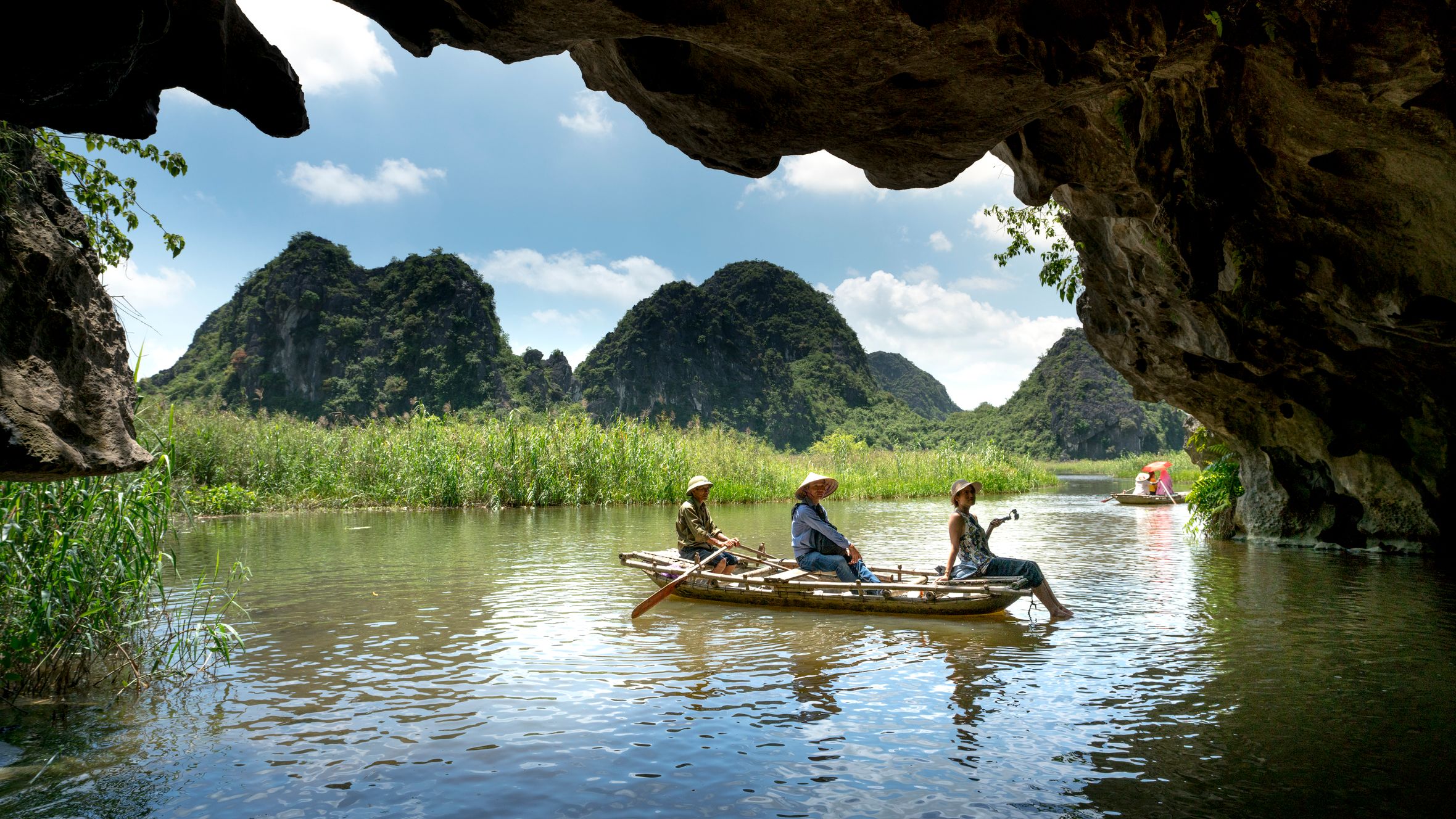
The draw is straightforward: scale and solitude. Hang Pygmy's main chamber is enormous — big enough that your headlamp barely touches the ceiling. You'll wade through underground rivers, scramble over boulder fields, and camp inside the cave mouth on the first night. The jungle trekking itself is a serious part of the experience, cutting through primary forest with minimal trail infrastructure.
It also filters out the crowds. While Paradise Cave and Phong Nha Cave see hundreds of visitors daily, Hang Pygmy gets maybe 10-15 people on any given departure. You'll spend most of the trip hearing nothing but water, birds, and your own breathing.
Best time to visit
The expedition runs from roughly February through August. Peak season is March to May — dry, warm (28-34°C), and the rivers inside the cave are manageable. June through August still works but expect heavier rain, leeches in higher numbers, and muddier trails. The trek shuts down entirely from around September to January when monsoon flooding makes the cave system dangerous.
Book at least two months ahead for March-April departures. Those fill fast.
How to get there
The staging point is Phong Nha town, which sits in what is now Quang Tri province (following the recent merger of the former Quang Binh province). From Dong Hoi — the nearest city with an airport and train station — Phong Nha is about 45 km northwest.
From Dong Hoi
- Private car or taxi: 45 minutes, around 350,000-450,000 VND one way. Your hotel in Phong Nha can usually arrange this.
- Local bus: Runs from Dong Hoi bus station a few times daily, about 50,000 VND, takes roughly 1.5 hours with stops.
- Motorbike: Rentable in Dong Hoi for 150,000-200,000 VND/day. The road (QL16/Ho Chi Minh (호치민 / 胡志明 / ホーチミン) Highway branch) is paved and scenic.
Getting to Dong Hoi
- Flights: VietJet and Vietnam Airlines fly from both Hanoi (1 hour) and Saigon (1.5 hours). Fares run 500,000-1,500,000 VND depending on timing.
- Train: The Reunification Express stops at Dong Hoi. From Hue, it's about 3.5 hours (soft seat around 180,000 VND). From Hanoi, roughly 10 hours overnight.

Photo by Quang Nguyen Vinh on Pexels
What to do on the expedition
Trek through primary jungle
Day one covers about 10 km of jungle hiking to reach the cave. The trail follows streambeds, crosses rivers (sometimes waist-deep), and climbs over karst ridges. It's genuine jungle — expect humidity, insects, and terrain that keeps you paying attention. Porters carry the heavy gear; you handle a daypack.
Camp inside the cave
The first night's camp is set up just inside Hang Pygmy's entrance, on a sandy bank by the underground river. Oxalis provides hammocks, sleeping bags, and meals cooked on-site. Sitting in a hammock watching headlamp beams disappear into the dark overhead is worth the sore legs.
Explore the main chamber
Day two goes deeper. The main passage opens into a cathedral-sized space with massive stalagmite formations and fossil coral embedded in the walls. You'll need a headlamp and helmet — the footing is uneven rock and the river runs through much of it. Guides point out geological features and the cave's hydrology, which is genuinely interesting if you pay attention.
Swim the underground river
At several points you'll swim short sections where the river fills the passage. Water temperature hovers around 20°C year-round. Life jackets provided. It's cold, brief, and one of those experiences that sticks with you.
Optional add-on: Hang Over
Some Oxalis itineraries pair Hang Pygmy with Hang Over ("Over Cave"), a smaller but photogenic cave nearby with a jungle-covered doline (collapsed sinkhole). Worth it if the option exists when you book.
Where to eat nearby
Phong Nha town has a solid little food scene. Before or after your expedition, seek out "banh canh" — the thick tapioca-flour noodle soup that's a central Vietnam staple. Several spots along the main road serve it with crab or pork for 30,000-45,000 VND. For something heartier, look for "com tam" with grilled pork at the local rice shops closer to the market.
The Pub With Cold Beer (yes, that's the name) has been a backpacker institution for years — decent Vietnamese dishes and, obviously, cold "bia hoi" on draft.
Where to stay
Phong Nha has accommodation across all budgets:
- Budget: Hostels and guesthouses run 150,000-300,000 VND/night. Easy Hostel and Phong Nha Farmstay's dorms are reliable.
- Mid-range: Boutique hotels and homestays with air-con, pool, breakfast — 500,000-1,200,000 VND/night. Nguyen Shack and Phong Nha Lake House are well-liked.
- Higher-end: A few newer resorts near the river charge 1,500,000-3,000,000 VND/night.
Book accommodation for the nights before and after the expedition. You'll want a shower and a real bed on return.

Photo by Lucas Tran on Pexels
Practical tips locals would tell you
- Fitness matters. This isn't a casual day hike. You should be comfortable walking 10+ km on rough terrain with elevation changes. Knees take a beating on the karst.
- Leech socks work. Buy them in Phong Nha (about 50,000 VND) or bring long socks and tuck your pants in. Jungle leeches are harmless but annoying.
- Bring dry bags. Your pack will get wet during river crossings. A 10L dry bag for your phone, camera, and spare clothes saves headaches.
- Cash only in Phong Nha. ATMs exist but can run dry on busy weekends. Bring enough VND from Dong Hoi or Hue.
- The expedition costs around 8,500,000-9,500,000 VND per person (roughly $340-380 USD). That covers guides, porters, meals, camping gear, permits, and safety equipment. It's not negotiable — Oxalis has the exclusive permit.
Common mistakes to avoid
- Underestimating the physical demand. Every season, a few people struggle badly because they assumed "it's just a cave tour." Train your legs beforehand.
- Packing too much. You carry your own daypack. Keep it under 5 kg. Porters handle food, water, and camp gear.
- Skipping the briefing. Oxalis runs a safety briefing the evening before departure. Show up. The river crossing and caving protocols matter.
- Not allowing buffer days. Flights out of Dong Hoi can be disrupted by weather. Don't schedule your expedition ending the same day as a flight. Give yourself at least one night back in Phong Nha.
Practical notes
Hang Pygmy is one of the more accessible multi-day caving experiences in the Phong Nha system — harder than the show caves, easier than Son Doong or Hang Va. If you're already making the trip to Phong Nha, and you have reasonable fitness and two days to spare, it's a genuinely good use of your time. Book through Oxalis directly; third-party agents just add markup for the same trip.
Last updated · May 29, 2026 · independently researched, never sponsored.