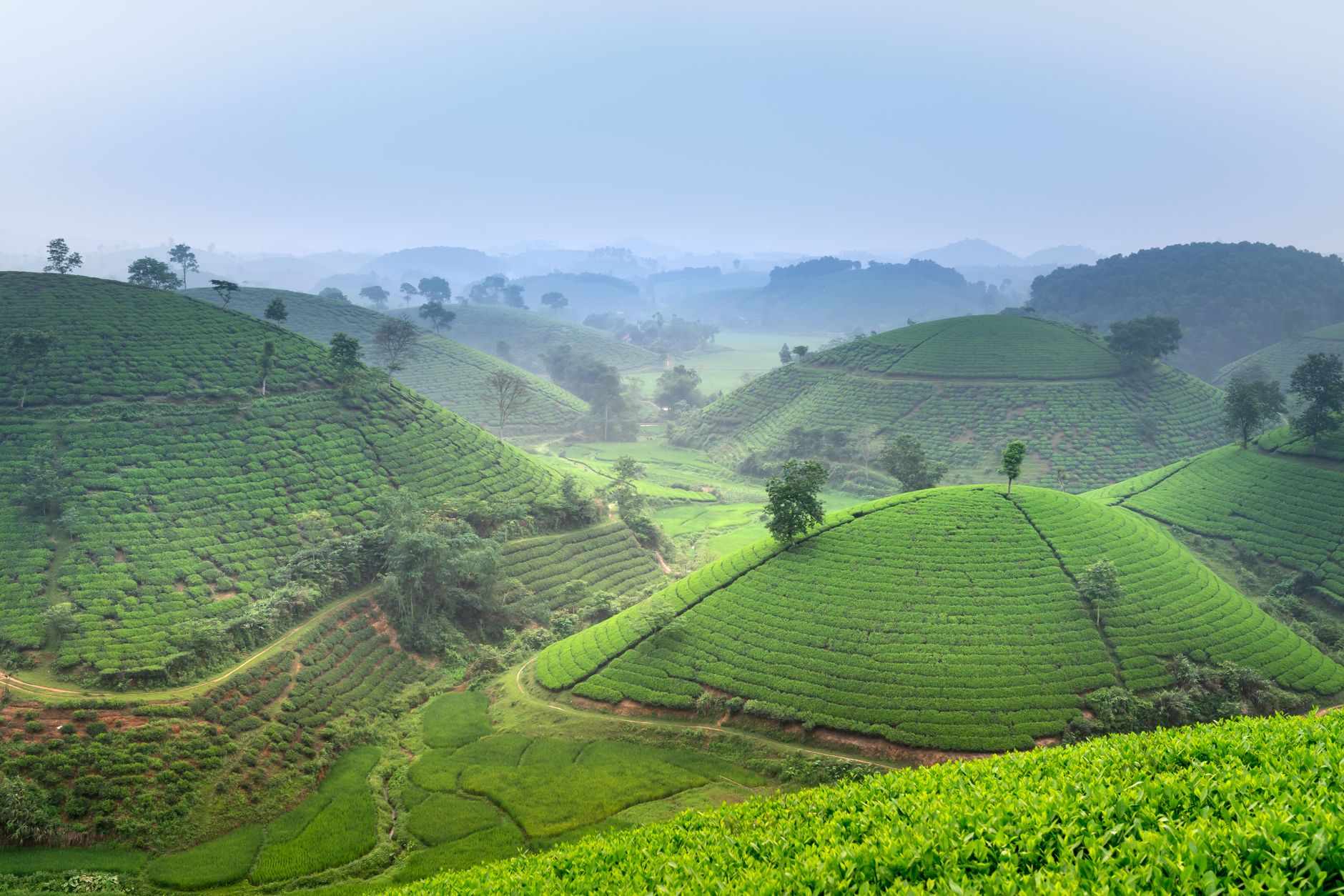
Dong Thien Duong — Paradise Cave — is a 31-kilometer cave system inside Phong Nha-Ke Bang National Park, and it's the kind of place that makes you reconsider what "big" means. The main tourist section alone stretches over a kilometer of boardwalk through chambers wide enough to fit apartment blocks. If you're anywhere near central Vietnam (베트남 / 越南 / ベトナム), this one earns the detour.
What it is
Dong Thien Duong was discovered by a local man in 2005 and surveyed by the British Cave Research Association in 2005–2006. They mapped over 31 km of passages, making it one of the longest dry caves in Asia. The section open to tourists runs about 1.1 km along a wooden boardwalk, with LED lighting that picks out the formations without turning the place into a theme park. The cave sits at an elevation, so you'll climb 524 stone steps just to reach the entrance — worth knowing before you show up in flip-flops.
The chambers inside reach heights of 72 meters in places, with stalagmite and stalactite formations that have been building for hundreds of millions of years. It's genuinely massive. The air inside stays cool — around 20–22°C year-round — which is a relief after the climb.
Why travelers go
Phong Nha (퐁냐 / 峰牙 / フォンニャ) gets most of its fame from Son Doong (the world's largest cave) and Phong Nha Cave itself, but Dong Thien Duong is arguably the most visually impressive cave you can visit without booking an expedition. Son Doong requires a multi-day trek and costs upward of 70 million VND. Dong Thien Duong costs 400,000 VND for the standard route and takes a half day. For most travelers, it delivers a better return on effort.
The scale of the formations is what gets people. You walk along the boardwalk looking up at cathedral-sized vaults, past stalagmites taller than houses, through passages where the walls glitter with crystallized minerals. It doesn't need adjectives — the dimensions speak for themselves.
Best time to visit
The sweet spot is February through August. The dry season in this part of central Vietnam runs roughly February to April, with warm but manageable temperatures. May through August gets hotter (35°C+), but the cave interior stays cool regardless.
Avoid September through November if you can. This stretch brings the heaviest rainfall to the region, and while the cave itself doesn't flood on the tourist route, the access roads can get messy, and Phong Nha town occasionally deals with localized flooding. December and January are cooler but can be drizzly and overcast.
Weekday mornings are best for fewer crowds. Tour buses from Hue and Da Nang tend to arrive between 10:00 and 13:00.

Photo by Trinh Tuoi on Pexels
How to get there
The nearest town is Phong Nha, about 20 km from the cave entrance.
From Dong Hoi (the nearest city with a train station and airport): Phong Nha is 45 km northwest, roughly a 1-hour drive. You can hire a motorbike taxi (around 200,000–250,000 VND one way), rent your own motorbike in Dong Hoi (150,000–180,000 VND/day), or arrange a car through your hotel (500,000–700,000 VND round trip). There are also local buses, but schedules are irregular and slow.
From Hue: About 210 km, 3.5–4 hours by private car or bus. Several tourist shuttle services run daily between Hue and Phong Nha (around 250,000–300,000 VND per person). This is a common route since many travelers pair Phong Nha with a few days exploring the former imperial capital.
From Da Nang or Hoi An: It's a longer haul — roughly 300 km from Da Nang, 5–6 hours by road. The Reunification Express train from Da Nang to Dong Hoi takes about 5 hours and costs 200,000–400,000 VND depending on seat class.
Once in Phong Nha, Dong Thien Duong is a 20-minute drive south into the national park. Most hotels and hostels arrange transport or you can ride your own motorbike to the parking area.
What to do
Walk the standard boardwalk (1.1 km)
This is what most visitors do. The 1.1 km wooden boardwalk is well-maintained, gently lit, and takes 60–90 minutes at a comfortable pace. Ticket price: 400,000 VND (includes the electric cart from the parking lot to the base of the steps). Budget an extra 30 minutes for the 524-step climb each way.
Book the 7 km extended tour
If the standard route leaves you wanting more, there's an adventure option that continues 7 km deeper into the cave system. This requires a guide, headlamp, and decent shoes. It costs around 2,500,000 VND per person and needs to be booked through authorized operators in Phong Nha. The deeper sections are raw — no boardwalk, no lighting — and you'll wade through some muddy stretches.
Combine with Phong Nha Cave
Phong Nha Cave (Dong Phong Nha) is 20 km north and accessed by boat along the Son River. You can comfortably do both caves in one day if you start early. Phong Nha Cave entry is 150,000 VND plus the boat fee (around 360,000 VND per boat, fits up to 14 people).
Ride the access road
The 20 km road from Phong Nha town to the cave entrance cuts through the national park buffer zone — limestone karsts, rice paddies, and thick jungle canopy. On a motorbike, it's one of the better short rides in central Vietnam.
Visit the Nuoc Mooc eco-trail
About 3 km before Paradise Cave, a signed turnoff leads to the Nuoc Mooc spring and eco-trail — a network of wooden paths over clear spring water, with kayaking and zip-lining options. Entry is 80,000 VND. Good for cooling off after the cave.
Where to eat nearby
Phong Nha town has a solid little restaurant strip along the main road. Look for "banh xeo" — the central Vietnamese version uses rice paper and comes smaller and crispier than the southern style. A plate runs 25,000–40,000 VND. Several family-run spots also serve "banh canh" with thick tapioca noodles in pork or crab broth — filling and cheap at 30,000–45,000 VND a bowl.
For something more social, a few backpacker-oriented bars and cafes serve Vietnamese coffee and local "bia hoi" alongside Western food. The Pub with Cold Beer (yes, that's the real name) has been a Phong Nha institution for years.
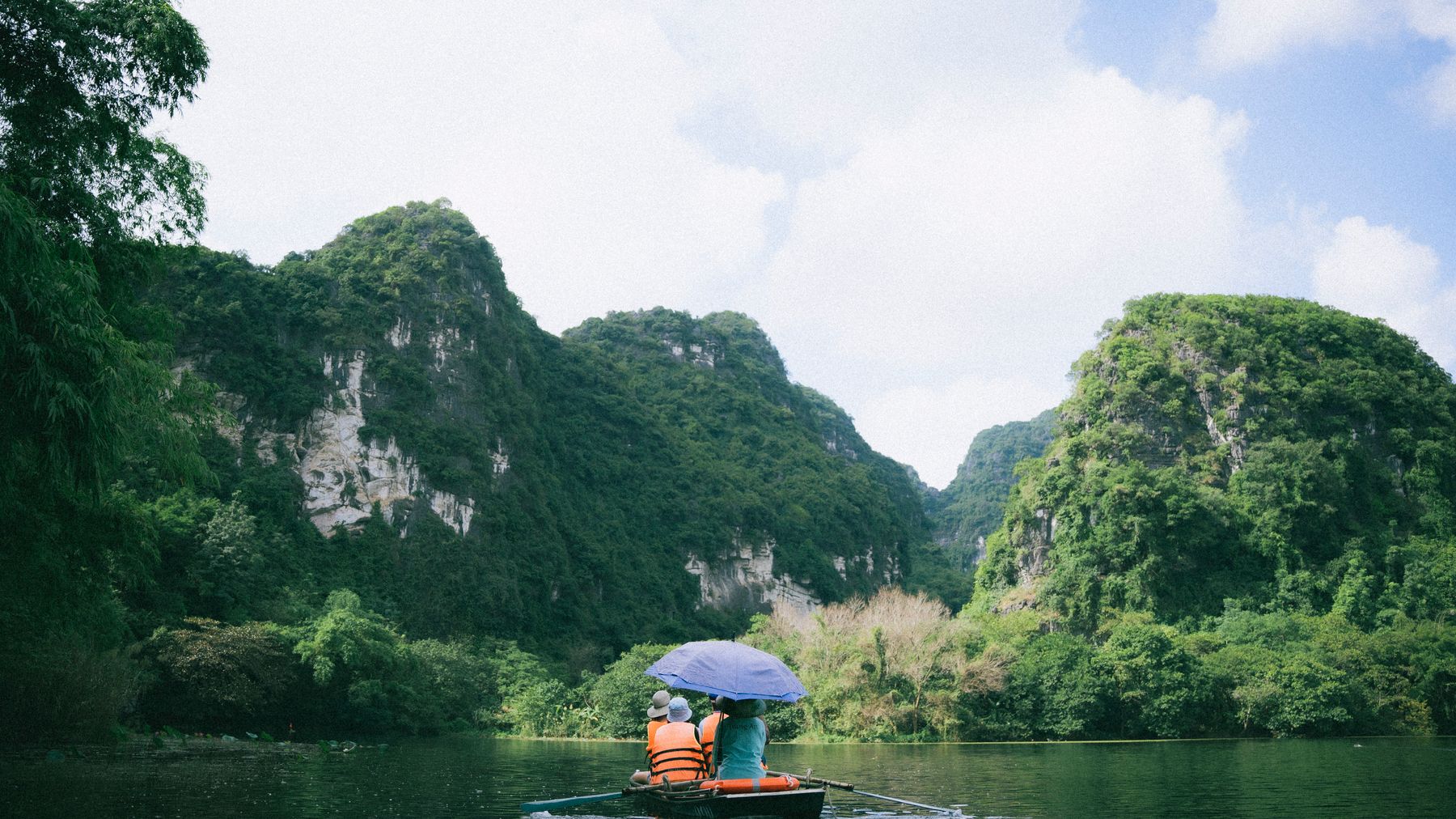
Photo by Bid on Pexels
Where to stay
Phong Nha town has accommodation for every budget:
- Budget: Hostels and guesthouses from 150,000–300,000 VND/night. Easy Hostel and Phong Nha Farmstay dorms are popular.
- Mid-range: Boutique hotels and homestays run 500,000–1,200,000 VND/night. Rooms with river views and breakfast included.
- Higher-end: A few resorts outside town charge 1,500,000–3,000,000 VND/night, with pools and national park views.
Book ahead if visiting during peak months (June–August) — Phong Nha is small and fills up.
Practical tips
- Wear proper shoes. The 524 steps are concrete but can be slippery in humid conditions. Sandals work but aren't ideal.
- Bring water. There's a small shop at the base of the steps, but prices are marked up. Fill a bottle in town.
- The electric cart from the parking lot to the steps is included in your ticket. Don't pay extra if someone offers a separate "cart fee."
- A light rain jacket is useful even in dry season — the cave entrance area can drip.
- Photography is fine, but tripods slow down the single-file boardwalk sections and annoy everyone behind you. Handheld or phone shots work.
Mistakes to avoid
- Showing up after 14:00. Last entry is typically 16:00–16:30, and you need at least 90 minutes inside plus the climb. Arrive by noon at the latest.
- Skipping the extended tour because of price. If you're a caving enthusiast, the 7 km route is a different experience entirely. The standard boardwalk is polished; the deep cave is raw and worth it.
- Trying to do Son Doong and Paradise Cave in the same trip without planning. Son Doong expeditions are 4 days and need months-ahead booking. Paradise Cave is drop-in. They're not interchangeable.
- Not bringing cash. Card acceptance in Phong Nha is spotty. ATMs exist in town but occasionally run dry on weekends.
Last updated · May 29, 2026 · independently researched, never sponsored.