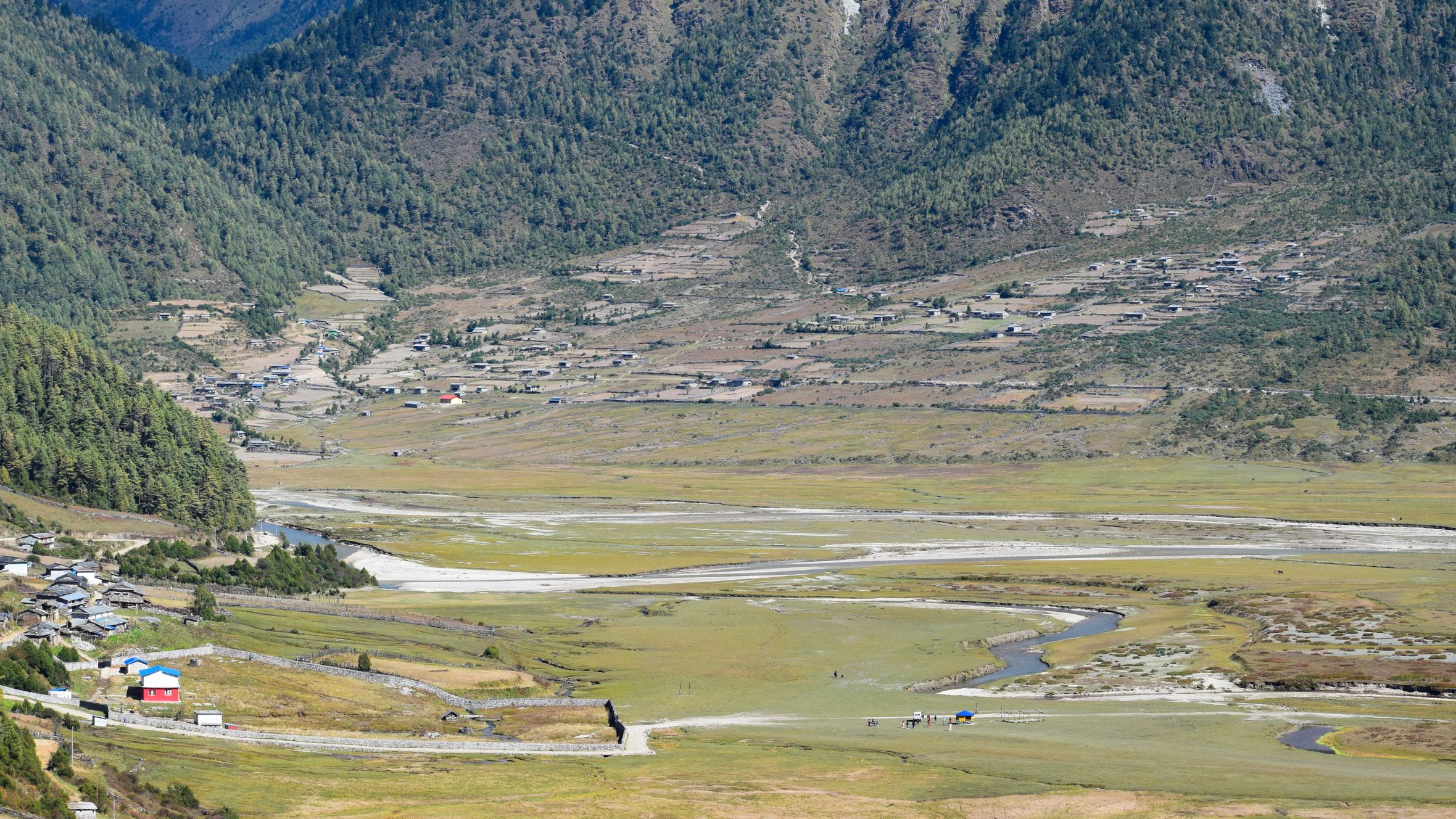
Ho Thau sits at roughly 1,400 meters in the Hoang Lien Son range, about 60 km southeast of Lai Chau city center. It's a commune of scattered hamlets — mostly Black Dao and Mong families — spread across a valley of terraced rice fields that have been carved into these slopes for generations. If you've done the Ha Giang loop and want something with a similar feel but almost no tourist infrastructure, Ho Thau is that place.
What Ho Thau is and why it matters
Ho Thau belongs to Tam Duong district in Lai Chau province. The commune covers a handful of villages connected by dirt tracks, surrounded by dense forest and rice terraces that climb steeply up the mountainsides. Unlike Sapa — which is only about 80 km to the east as the crow flies but a world apart in terms of development — Ho Thau has no cable cars, no hotel strips, no tour buses idling in parking lots. What it has are working agricultural communities, cool mountain air, and some of the most intact upland landscapes left in the northwest.
The area has been home to Dao and Mong people for centuries. Their livelihoods revolve around wet rice farming, cardamom cultivation under the forest canopy, and small-scale livestock. Tourism is not the local economy here — you're a guest in a place that functions perfectly well without visitors.
Why travelers go
The draw is simple: walking. Ho Thau is a trekking destination for people who want to move through real hill-country terrain without encountering other foreigners. The terraces here are dramatic — not in a postcard way, but in a practical, deeply worked way that shows generations of effort. You'll pass through villages where people are genuinely surprised to see you, which is increasingly rare in northern Vietnam (베트남 / 越南 / ベトナム).
Birders also come through here. The forests above Ho Thau sit within the Hoang Lien range's broader ecosystem, and the area supports species that have been pushed out of more accessible zones.
Best time to visit
The rice terraces are at their most photogenic in two windows: late May to early June, when the paddies are freshly flooded and reflect the sky, and September to early October, when the rice ripens to gold before harvest. These are the months most people target.
Avoid mid-July through August if you can. Rain is heavy and the dirt roads connecting villages become genuinely difficult — not adventure-difficult, just slow and muddy. December through February is dry but cold, with temperatures dropping to 5-8°C at night. If you don't mind the chill and bare terraces, the skies are clearer and the trails are firm.
How to get there
The most practical route starts from Hanoi.
Hanoi (하노이 / 河内 / ハノイ) to Lai Chau city — Take a sleeper bus from My Dinh bus station. Several operators run the route, including Hai Van and Hung Thanh. The trip takes 8-10 hours depending on road conditions and costs 350,000-450,000 VND. Buses typically depart in the evening and arrive early morning. If you prefer breaking the journey, you could stop in Sapa first and continue to Lai Chau by local bus (about 3 hours, 100,000-150,000 VND).
Lai Chau city to Ho Thau — From Lai Chau, you need to get to Tam Duong town first (about 30 km, 40 minutes by motorbike or local minibus for around 50,000 VND). From Tam Duong, Ho Thau is another 25-30 km on increasingly rough roads. There's no public transport for this last stretch — you'll need a motorbike (your own or hired with a driver, roughly 200,000-300,000 VND for the day) or arrange pickup through a homestay. The road from Tam Duong is paved for the first half, then transitions to packed dirt and gravel.
Renting a motorbike in Lai Chau city runs about 150,000-200,000 VND per day for a semi-automatic. Make sure the brakes work — you'll need them on the descents.

Photo by Quang Nguyen Vinh on Pexels
What to do
Walk the terrace trails between villages
The core activity. Routes connect Ho Thau's main settlement to surrounding hamlets — Sin Suoi Ho, Giang Ta Chai, and others. A full day of walking covers 12-18 km depending on your route, with elevation changes of 300-500 meters. No marked trails exist; you follow farm paths and village tracks. A local guide (arranged through your homestay, around 300,000-500,000 VND per day) is worth it both for navigation and for bridging the language gap when you pass through villages.
Visit the weekly market in Tam Duong
Tam Duong hosts a market that draws Dao, Mong, and Thai families from surrounding communes. It runs on specific days — ask your homestay host for the current schedule, as it rotates. The market is practical, not performative: people selling livestock, fabric, tobacco, forest herbs. Go early, before 9 AM.
Hike into the forest above the terraces
The forested slopes above the rice-growing zone are dense and steep. With a guide, you can do half-day walks into primary forest where cardamom grows wild under the canopy. The air temperature drops noticeably under the trees. Bring a rain layer regardless of season.
Sit with a family and learn to cook
This isn't an organized cooking class — it's accepting an invitation. If you stay in a homestay and show interest, families will often let you help prepare meals. "Thang co," a slow-cooked organ meat stew that's a staple at highland markets, is something you'll encounter here. It's an acquired taste, rich and funky, but it's the real thing.
Where to eat nearby
Ho Thau doesn't have restaurants. You eat where you sleep. Homestay meals typically include rice, local greens (often foraged), pork or chicken, and sometimes freshwater fish. The food is simple, seasonal, and good.
Two dishes to pay attention to: "thang co" if it's on offer — the stew mentioned above, common across Mong communities in the northwest — and "com lam," sticky rice cooked inside bamboo tubes over a fire. The bamboo imparts a subtle sweetness to the rice. You'll find "com lam" at the Tam Duong market too.
Where to stay
Homestays are the only option, and that's the right way to experience Ho Thau. Expect a mattress on the floor, a shared bathroom, and meals included. Prices range from 200,000-400,000 VND per person per night including dinner and breakfast. Sin Suoi Ho village, about 8 km from central Ho Thau, has a few established homestays that are slightly easier to book in advance — ask around in Tam Duong or search Vietnamese-language booking groups on Facebook.
Don't expect Wi-Fi or hot water in most places. Some homestays have solar-heated showers that work intermittently.
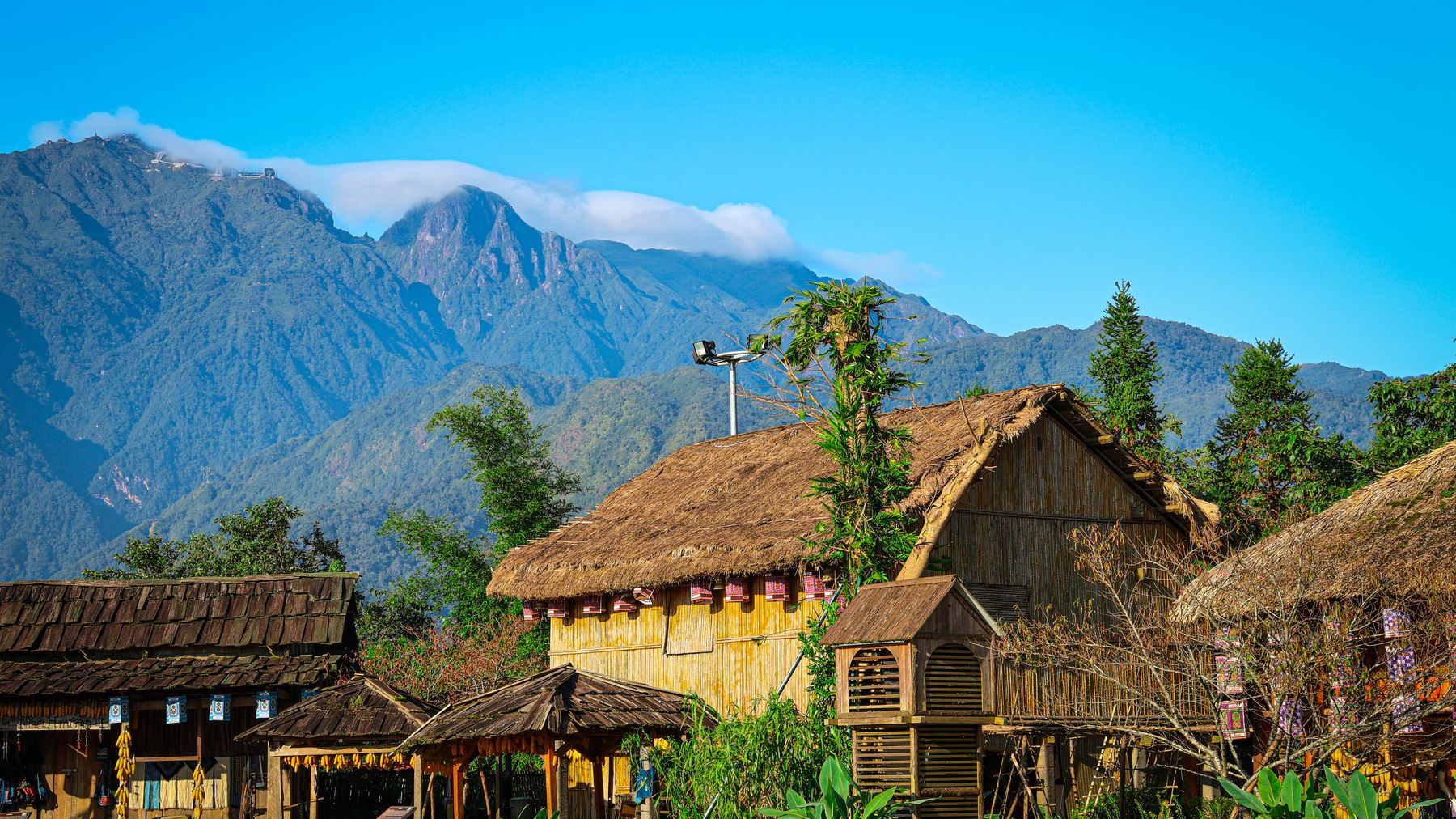
Photo by Haneul Trac on Pexels
Practical tips locals would tell you
- Bring cash. There are no ATMs in Ho Thau. The nearest reliable ATM is in Tam Duong or Lai Chau city. Carry enough for 2-3 days including guide fees, homestay, and fuel.
- Learn five words of Vietnamese. Even basics like "xin chao" (hello), "cam on" (thank you), and "bao nhieu" (how much) go a long way. Many older residents speak only their ethnic language, but younger people increasingly know some Vietnamese.
- Pack layers. The temperature swing between midday sun and evening can be 15°C. A fleece and rain jacket cover most situations.
- Charge everything in Tam Duong. Power in homestays can be unreliable. Top up phones, cameras, and battery banks before heading up.
Common mistakes to avoid
- Showing up without a plan for the last 30 km. The road from Tam Duong to Ho Thau isn't something you want to figure out at dusk. Arrange transport or confirm your route before leaving Tam Duong.
- Expecting Sapa-level infrastructure. If you need reliable hot showers and restaurant menus, this isn't your destination. The appeal of Ho Thau is precisely that it hasn't been built up for tourism.
- Photographing people without asking. This applies everywhere in Vietnam, but especially in small ethnic minority communities. A smile and a gesture go further than a zoom lens.
Practical notes
Ho Thau rewards patience and flexibility. Roads change with the weather, schedules are loose, and the best moments — a shared meal, a chance encounter on a trail — aren't things you can plan. Budget two full days minimum in the area to give yourself time to actually settle in rather than rushing through.
Last updated · May 29, 2026 · independently researched, never sponsored.




