What is Song Lung Khung Long?
Song Lung Khung Long — literally "Dinosaur Spine" — is a narrow mountain ridge in Binh Lieu district, Quang Ninh province, about 50 km from the Chinese border. The ridge sits at roughly 900 m elevation and gets its name from the jagged, vertebrae-like rock formations running along its crest. From certain angles, it genuinely does look like the fossilized back of something prehistoric poking through the grass.
The trail itself is only about 3 km round-trip, but what draws people here isn't distance — it's the exposed ridgeline walk, the drop-offs on both sides, and the views over layered mountain ranges that fade into haze. Binh Lieu as a whole has been quietly developing as a trekking area over the past few years, popular with Hanoi weekenders but still largely off the radar for international visitors.
Why travelers go
Binh Lieu offers something most of northern Vietnam (베트남 / 越南 / ベトナム)'s popular trekking zones don't: solitude. Compared to Sapa or Ha Giang, visitor numbers here are a fraction. The Dinosaur Spine trek is short enough to do in a morning, which makes it accessible even if you're not a serious hiker. But the ridge itself feels genuinely dramatic — narrow enough in places that you're walking with open air on both sides, grass whipping in the wind, and nothing but mountains ahead.
The surrounding area is home to Dao and San Chay ethnic communities, and the terraced rice fields around Binh Lieu town are worth the trip on their own. If you've already done the northern loop through Ha Giang or spent time around Ninh Binh (닌빈 / 宁平 / ニンビン) and want something different, this is a solid pick.
Best time to visit
The sweet spot is October to early December. The rice terraces turn gold in October, the weather is dry and cool, and morning fog burns off to leave clear ridgeline views. November through early December stays dry with temperatures around 15-20°C at elevation — comfortable hiking weather.
April to May is a second window. The hills are green, wildflowers bloom, and you'll have even fewer visitors. Avoid June through September: rain makes the ridge slippery and clouds often sit right on the trail, killing visibility. January and February can be bitterly cold up top, with occasional frost.
If you time it for late September or early October, you may catch "mua co lau" — the silver grass season — when the hillsides shimmer with tall pampas-like reeds. It's become a bit of a photography draw.

Photo by Thành Peter on Pexels
How to get there from Hanoi
Binh Lieu is about 280 km northeast of Hanoi, and the drive takes 5-6 hours depending on your route and stops.
By motorbike: The most popular option for independent travelers. Take QL18 toward Ha Long Bay, then cut north on QL18C through Tien Yen to Binh Lieu. The last 40 km on QL18C winds through mountains and is genuinely enjoyable riding. Budget around 200,000-250,000 VND for fuel round-trip on a 125cc bike.
By bus + xe om: Catch a bus from Hanoi's My Dinh or Bai Chay station to Tien Yen town (around 200,000-250,000 VND, 4-5 hours). From Tien Yen, hire a "xe om" (motorbike taxi) to Binh Lieu town for roughly 150,000-200,000 VND — the ride takes about an hour. There's no direct bus to Binh Lieu itself.
By car: Possible to drive or hire a private car. Expect around 3,500,000-4,500,000 VND for a round-trip private car from Hanoi with driver. Worth it if you're splitting costs with a group.
From Binh Lieu town, the trailhead for Song Lung Khung Long is about 8 km further toward the border. You'll need a motorbike for this stretch — the road is paved but steep in sections. Most homestays can arrange a ride or rental.
What to do
Trek the Dinosaur Spine
The main event. The ridge hike takes 1.5-2.5 hours depending on your pace and how long you spend sitting on rocks staring at mountains. Start early — by 6:00 or 6:30 AM — to catch sunrise light and avoid afternoon clouds. The trail is straightforward but exposed; there are no railings and the path narrows to less than a meter in places. Wear shoes with grip.
Walk the Binh Lieu rice terraces
The terraces around the town, especially along the road toward the Cao Ba Lanh border gate area, are genuinely photogenic in season. No entrance fee, no crowds. Just walk or ride slowly and stop where it looks good.
Visit a Dao village
Several Dao hamlets sit in the valleys near Binh Lieu. The Sunday morning market in Binh Lieu town draws Dao, Tay, and San Chay families from surrounding villages. It's a real market — people buying livestock, vegetables, and fabric — not a tourist performance.
Hike to Cao Xiem waterfall
A secondary trek about 5 km from town. The waterfall is modest, but the trail passes through forest and farmland. Good for an afternoon if you've done the Dinosaur Spine in the morning.
Catch sunset from Quang Nam pass
The road over Quang Nam pass (QL18C) between Tien Yen and Binh Lieu has several pull-off spots with wide views west. If you're driving in, time your arrival for late afternoon.
Where to eat nearby
Binh Lieu town has a handful of small restaurants along the main road. Don't expect variety — this is a rural district town, not a food destination. That said, two things are worth seeking out:
- "Xoi ngu sac" (five-color sticky rice): a Dao and Tay specialty colored with natural plant dyes. You'll find it at the Sunday market or at some homestays.
- Grilled stream fish and local greens: Several of the small restaurants near the market serve freshwater fish grilled over charcoal with local herbs. Simple, good, and around 80,000-120,000 VND per dish.
Bring snacks for the trail. There are no shops or vendors on the ridge.
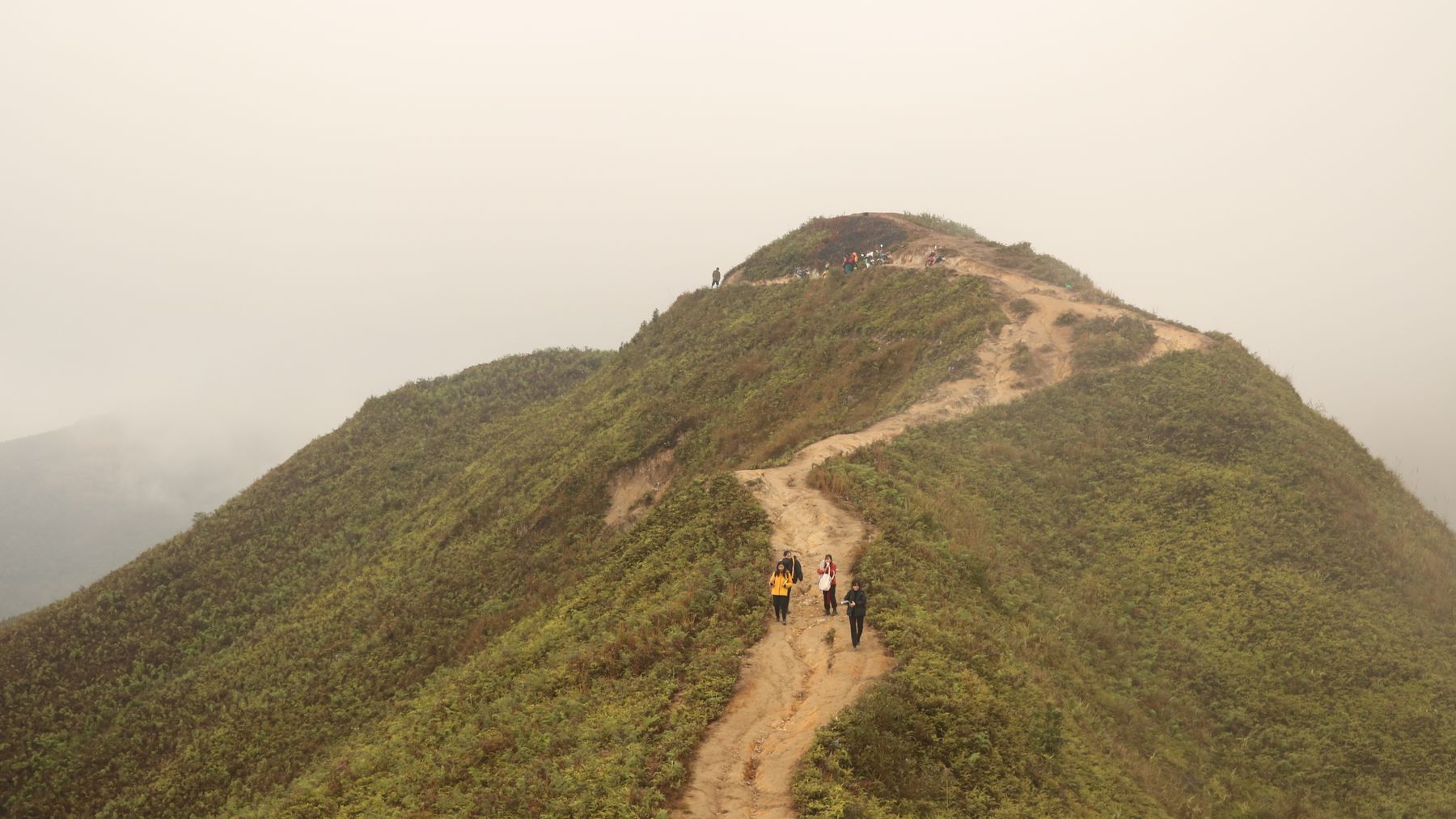
Photo by Hoàng Huy on Pexels
Where to stay
Accommodation in Binh Lieu is basic but improving.
- Homestays: 200,000-400,000 VND per night. Most are run by local families and include dinner and breakfast. Expect a mattress on the floor, shared bathroom, and genuine hospitality. Book through Facebook or ask at the town market.
- Guesthouses: 300,000-600,000 VND. A few newer guesthouses have private rooms with hot water. Nothing fancy, but functional.
- Camping: Some trekkers camp near the ridge. Bring your own gear — there's nowhere to rent locally.
There are no hotels in the conventional sense. If you need comfort, the nearest proper hotels are back in Tien Yen or Mong Cai.
Practical tips locals would tell you
- Bring layers. The ridge is windy and significantly cooler than the valley. Even in October, mornings at 900 m can feel cold.
- Start before dawn. The best light and clearest skies are early. By midday, clouds often roll in.
- Fill your fuel tank in Tien Yen. Petrol stations in Binh Lieu exist but can be unreliable on hours.
- Cash only. There's one ATM in Binh Lieu town (Agribank) and it sometimes runs dry on weekends. Bring enough dong from Hanoi.
- Download offline maps. Cell signal drops in and out between Tien Yen and Binh Lieu.
Common mistakes to avoid
- Going on a holiday weekend. Vietnamese long weekends (especially around Tet or September 2) bring surprising crowds to the ridge. Weekdays are dramatically quieter.
- Wearing sandals on the ridge. The rocks are uneven and often dew-slick in the morning. Proper shoes make a real difference.
- Skipping the Sunday market. If your schedule allows, plan around it. It's the most interesting cultural experience in the area.
- Expecting Ha Long Bay-level tourism infrastructure. Binh Lieu is a farming district that happens to have a great trek. Adjust expectations accordingly — that's also what makes it worth going.
Last updated · May 29, 2026 · independently researched, never sponsored.