
What it is
Thanh Co Chau Sa sits about 4 km northeast of Quang Ngai city center, in Tinh An commune. It's a Champa-era citadel — one of the few surviving fortified sites from the Cham civilization in central Vietnam (베트남 / 越南 / ベトナム). The citadel dates back roughly to the late 9th or early 10th century, built during a period when the Champa kingdom controlled much of what is now south-central Vietnam.
The walls form a rough rectangle, stretching about 1 km on each side, constructed from packed earth reinforced with laterite blocks. Much of the original structure has eroded or been absorbed into rice paddies and village houses over the centuries, but sections of the ramparts still rise 3-4 meters above the surrounding fields. The site was classified as a national historical monument in 1988.
If you've visited My Son near Hoi An, think of Chau Sa as a different piece of the same puzzle — less theatrical, far fewer tourists, but equally important for understanding how the Cham people organized their territory.
Why travelers go
Honestly, most don't. Quang Ngai isn't on the standard backpacker trail, and Chau Sa doesn't have the visual drama of a temple complex. But that's part of the appeal. You'll likely have the place to yourself, walking along overgrown ramparts with rice fields on both sides and water buffalo doing their thing in the distance.
People who do visit tend to be interested in Champa history, Vietnamese archaeology, or just getting off the tourist circuit between Hoi An (호이안 / 会安 / ホイアン) and Quy Nhon. It's also a good excuse to spend a day exploring Quang Ngai province, which has solid food, empty beaches, and almost zero foreign visitors.
Best time to visit
The dry season in Quang Ngai runs from roughly March through August. April to June is ideal — warm but not yet at peak heat, and the rice paddies around the citadel are green and photogenic. The rainy season (September to December) brings heavy downpours, and the low-lying areas around the citadel walls can flood. The earthen ramparts get slippery and muddy, making it harder to walk along the tops.
Early morning visits (before 8 AM) work best year-round. The light is better for photos, and you avoid the midday heat that makes walking the exposed ramparts uncomfortable.
How to get there
Da Nang is the nearest major hub, about 130 km north. From Da Nang, you have a few options:
- Train: The Reunification Express stops at Quang Ngai station. Journey takes about 2.5-3 hours. Tickets run 80,000-150,000 VND depending on seat class. This is the most comfortable option.
- Bus: Intercity buses from Da Nang's central bus station to Quang Ngai cost around 90,000-120,000 VND and take 3-3.5 hours depending on stops.
- Motorbike: If you're riding the coast, the QL1A highway covers the distance in about 3 hours. The stretch south of Duc Pho is flat and straightforward.
From Quang Ngai city center to the citadel itself, grab a "xe om" (motorbike taxi) or use the Grab app. The ride takes about 10-15 minutes and costs 15,000-25,000 VND. If you've rented a motorbike, head northeast on Truong Chinh street toward Tinh An commune — locals know the site, so asking for directions works fine.
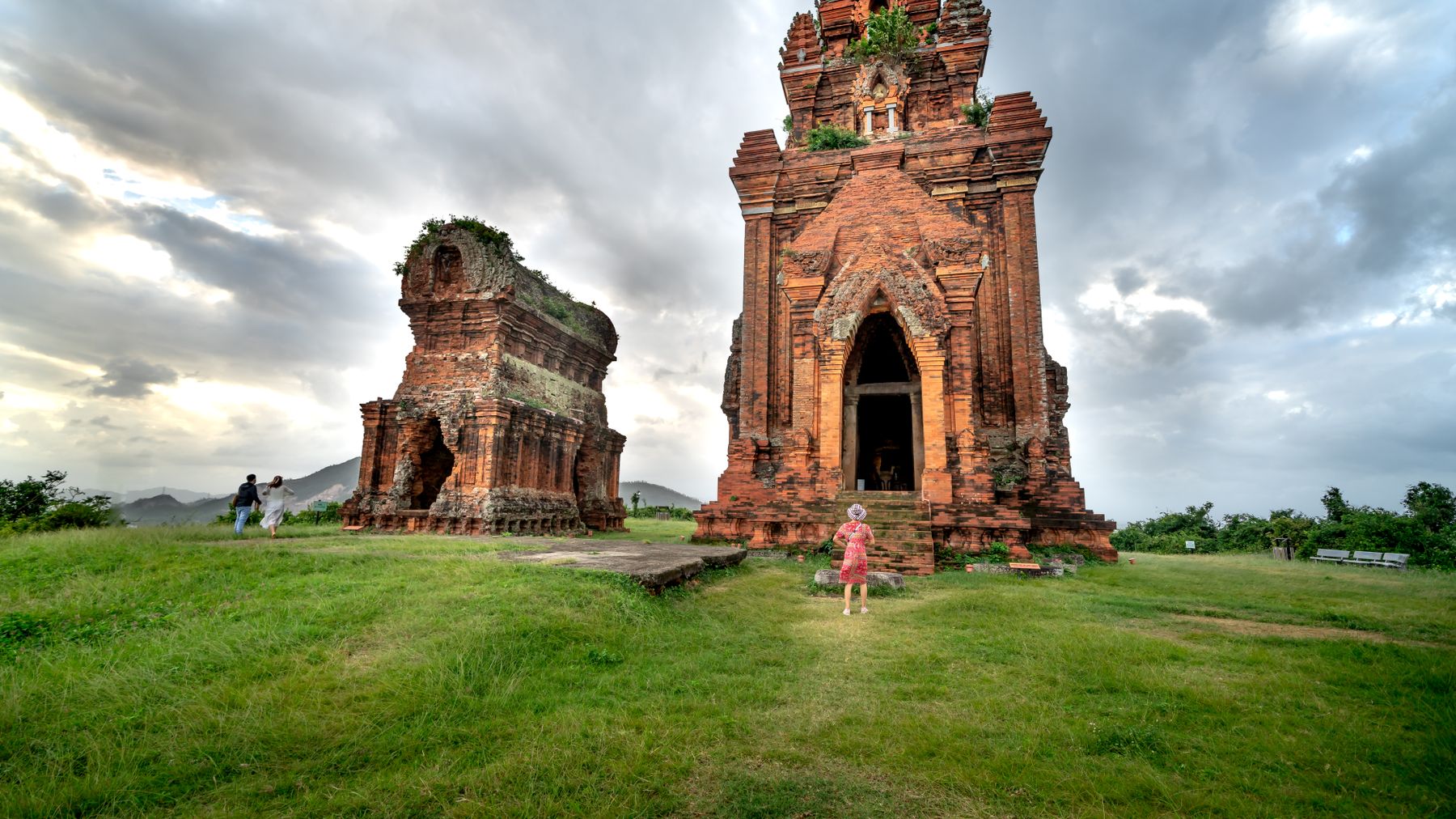
Photo by Quang Nguyen Vinh on Pexels
What to do
Walk the ramparts
The northern and eastern walls are the best preserved. You can walk along the top of the earthen embankments for several hundred meters, getting a feel for the scale of the original fortification. The walls are wide enough to walk comfortably, though there are no railings or maintained paths — wear shoes with grip.
Find the gate foundations
The citadel originally had four gates, one on each side. The southern gate foundation is the most visible, with laterite blocks still partially in place. A small informational sign marks the spot, though it's in Vietnamese only. The eastern gate area has been partially excavated and gives the clearest sense of the original construction technique.
Explore the surrounding village
Tinh An commune has grown up around and partially inside the old citadel walls. Walking through the village inside the perimeter is part of the experience — you'll see houses built on top of centuries-old foundations, garden walls incorporating laterite blocks pulled from the ruins, and the everyday life of a Vietnamese farming village that happens to sit inside a Champa fortress.
Visit the local museum display
Quang Ngai Museum (Bao Tang Quang Ngai), back in the city center on Quang Trung street, has a small collection of Cham artifacts recovered from the Chau Sa site — stone carvings, pottery fragments, and architectural elements. It's free to enter and worth 30-45 minutes if you want context before or after visiting the citadel.
Combine with Thien An Pagoda
Thien An Pagoda sits on a hill about 5 km southwest of the citadel. The pine forest surrounding it is a popular local hangout, and the views over the Tra Khuc River valley are worth the short detour. It pairs well with Chau Sa for a half-day loop.
Where to eat nearby
Quang Ngai's signature dish is "don" — a rice noodle cake served with fish sauce, shredded pork skin, scallion oil, and herbs. It's specific to this province and genuinely hard to find elsewhere. Try the cluster of "don" stalls near Quang Ngai market on Phan Boi Chau street — a bowl runs 15,000-25,000 VND.
The province also does excellent "com tam" (broken rice) with grilled pork. Look for Com Tam Ba Sau on Hung Vuong street — plates go for about 30,000-40,000 VND and portions are generous. For a drink, the local "ca phe sua da" scene is solid if unremarkable — any corner cafe will do.
Where to stay
Quang Ngai city has a handful of hotels but no real tourist infrastructure:
- Budget: Guesthouses along Quang Trung street start at 200,000-300,000 VND/night. Basic but clean. Air conditioning and hot water are standard.
- Mid-range: Central Hotel Quang Ngai or Hung Vuong Hotel offer decent rooms for 400,000-600,000 VND/night with breakfast included.
- No luxury options: There are no international-brand hotels in Quang Ngai. If you need that, base yourself in Da Nang or Quy Nhon and day-trip.

Photo by Quân Thiều Quang on Pexels
Practical tips locals would tell you
- Bring water and sun protection. There's no shade on the ramparts and no vendors at the site.
- The citadel is unfenced and free to visit — there's no ticket booth or opening hours. You can show up whenever.
- A Vietnamese-speaking friend or a translation app helps enormously. Signage is minimal and in Vietnamese only.
- Combine Chau Sa with the Quang Ngai coast — My Khe beach (the Quang Ngai one, not the Da Nang one) and Ly Son Island are both reachable from here.
Common mistakes to avoid
- Expecting a restored site. This isn't a manicured heritage park. It's partially ruined walls in a working village. Adjust expectations accordingly and you'll appreciate it more.
- Skipping the museum. Without context, the ramparts are just dirt mounds. The museum visit adds the layer of understanding that makes the site meaningful.
- Coming during heavy rain. The site is essentially open farmland. In a downpour, it's miserable and the laterite gets dangerously slick.
- Not allocating enough time in Quang Ngai. Most people treat the city as a pass-through. Give it at least one full day — between Chau Sa, the food, and the coastline, there's more here than the guidebooks suggest.
Practical notes
Chau Sa works best as part of a longer central Vietnam itinerary — slot it between Hoi An heading south and Quy Nhon. Budget half a day for the citadel and museum, a full day if you add the coast or Thien An Pagoda. It's the kind of place that rewards curiosity over expectations.
Last updated · May 29, 2026 · independently researched, never sponsored.





