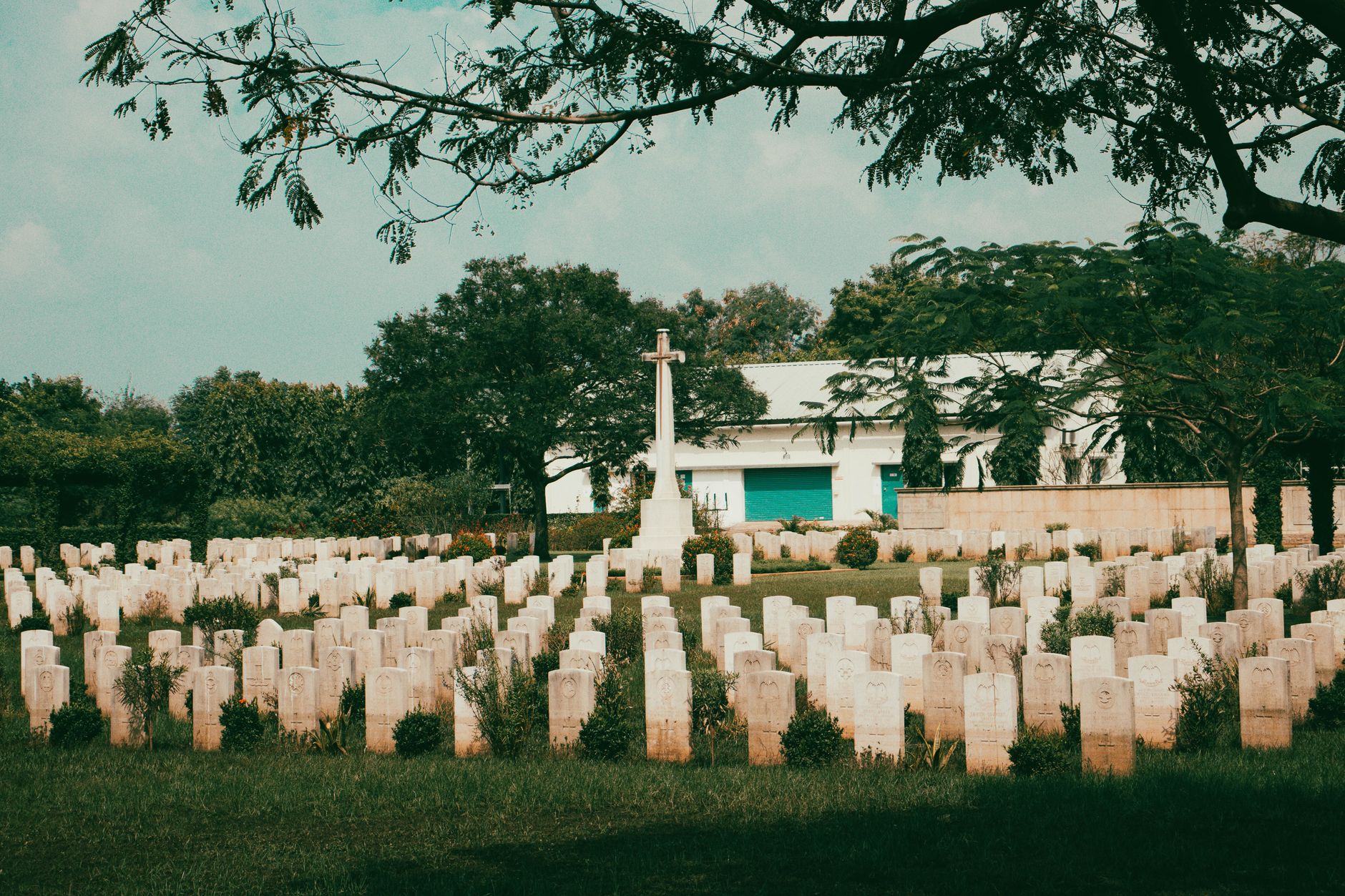
Truong Son National Cemetery sits in the forested hills of what was once Quang Tri province, about 38 km northwest of Dong Ha town. It's the largest national cemetery in Vietnam (베트남 / 越南 / ベトナム), a place where more than 10,300 soldiers are buried across terraced hillsides shaded by pine and frangipani trees. If you're traveling through central Vietnam — especially if you're already visiting Phong Nha or heading between Hue and the DMZ — this is a site that gives real weight to the history you'll see referenced everywhere else along this stretch of coast.
What it is
The cemetery was established in 1977 to honor Vietnamese soldiers who died along the Truong Son Trail (known in the West as the Ho Chi Minh Trail) during the war. The graves are arranged by home province — 64 sections fanning out from a central monument — so families from Hanoi, the Mekong Delta (메콩 델타 / 湄公河三角洲 / メコンデルタ), and everywhere in between can find their relatives in designated areas. A large stone incense burner sits at the hilltop, and a museum near the entrance houses photographs, personal effects, and wartime artifacts.
This isn't a place that tries to sell you anything. There are no ticket booths, no audio guides, no souvenir shops inside the grounds. It's a working memorial where Vietnamese families still come regularly to burn incense and leave offerings. On any given weekday you'll see more local visitors than foreign tourists.
Why travelers go
Most foreign visitors come as part of a broader DMZ tour from Hue, which typically includes the Vinh Moc Tunnels, the former border at the Ben Hai River, and Khe Sanh Combat Base. But Truong Son Cemetery deserves more than 20 minutes in a minibus itinerary. The scale of the site — rows of white headstones stretching across multiple hills — communicates something that war museums in Saigon or Hanoi can't replicate. It's quiet, it's vast, and it asks very little of you except attention.
For Vietnamese visitors, this is one of the most important memorial sites in the country, particularly around national holidays.
Best time to visit
The cemetery is open year-round, but timing matters. March through June is the most comfortable window — warm but not yet peak-heat, and relatively dry compared to the autumn months. July and August get seriously hot (regularly above 38°C with the Lao wind blowing in from the west), and September through November brings heavy rain that can make the hillside paths slippery.
If you visit on July 27 (Vietnam's War Invalids and Martyrs' Day), expect large crowds, official ceremonies, and a very different atmosphere — moving, but not ideal if you want to walk the grounds at your own pace. The days just before and after are a good compromise.

Photo by Lucas Tran on Pexels
How to get there
The nearest hub is Dong Ha, the main town in the area, which sits on the north-south railway and Highway 1A.
- From Hue: 70 km north on Highway 1A. Buses from Hue's southern bus station run frequently (around 60,000–80,000 VND, 1.5–2 hours). Grab cars cost roughly 500,000–600,000 VND one way.
- From Dong Ha to the cemetery: Head west on Highway 15 (the road toward Lao Bao border gate) for about 38 km. A xe om (motorbike taxi) from Dong Ha runs around 150,000–200,000 VND each way. If you rent a motorbike in Dong Ha (150,000–200,000 VND/day), the ride takes about 45 minutes through countryside and small towns.
- DMZ tours from Hue: Most organized day tours (400,000–700,000 VND per person) include the cemetery as one of 4–5 stops. The trade-off is limited time at each site.
There's no public bus that drops you at the cemetery gate, so private transport or a tour is necessary.
What to do
Walk the provincial sections
The graves are organized by the soldier's home province. Each section has a small marker identifying the region. Walking through several sections gives you a sense of how the war drew from every corner of the country — headstones for soldiers from Ha Giang in the far north sit not far from those representing the Mekong Delta provinces.
Visit the hilltop monument
The central staircase leads up to the main memorial, a tall stone marker flanked by incense urns. From the top you get a wide view over the cemetery grounds and the surrounding hills. Early morning light is best for photos, and you'll often find fresh flowers and burning incense left by families.
Spend time in the museum
The small museum near the entrance displays wartime photographs, letters, and personal items recovered from the Truong Son Trail. Labels are mostly in Vietnamese, but the objects speak clearly enough — a rusted canteen, a faded diary, a pair of rubber sandals cut from tire treads. Budget 20–30 minutes.
Drive the surrounding countryside
If you have your own motorbike, the ride from Dong Ha along Highway 15 is worth savoring. The road passes through farming villages, pepper plantations, and patches of forest that were heavily bombed during the war. You'll cross several small rivers and see bomb craters still visible in the landscape.
Pay respects properly
If you'd like to participate, buy a bundle of incense sticks from vendors near the entrance (5,000–10,000 VND). Light them and place them in the sand-filled urns at the hilltop monument or at individual graves. It's a small gesture that's appreciated.
Where to eat nearby
There's not much at the cemetery itself — maybe a drink vendor near the parking area. For a real meal, head back toward Dong Ha.
- "Banh canh" in Dong Ha: The local version uses thick tapioca-and-rice noodles in a pork or crab broth. Look for shops along Le Duan Street near the market. A bowl runs 25,000–35,000 VND.
- Com hen (baby clam rice): More associated with Hue, but available at several rice shops in Dong Ha for 30,000–40,000 VND. A light, tangy plate that works well in the heat.

Photo by HONG SON on Pexels
Where to stay
Most travelers base themselves in Dong Ha or continue to Hue after visiting.
- Budget: Guesthouses along Le Duan Street in Dong Ha go for 200,000–350,000 VND/night. Basic but clean, with air conditioning and hot water.
- Mid-range: A few hotels near the Dong Ha bus station offer rooms in the 400,000–700,000 VND range with breakfast included.
- If you prefer more options: Hue has a far wider range of accommodation, from 150,000 VND dorm beds to proper hotels. Many visitors see the cemetery as a day trip from Hue.
Practical tips locals would tell you
- Dress modestly. Covered shoulders and knees. This is a place of mourning, not a beach.
- Bring water and sun protection. There's limited shade between sections, and the midday heat in this part of central Vietnam is no joke.
- Go early. The cemetery opens at dawn. Arriving by 7:00–7:30 AM means cooler temperatures and fewer tour buses.
- Budget at least 1.5 hours if you want to walk the grounds properly, visit the museum, and sit with the atmosphere for a moment. Twenty minutes from a tour bus isn't enough.
Common mistakes to avoid
- Treating it like a photo backdrop. Selfies at gravesites don't land well here. Be aware of families visiting nearby.
- Skipping it because it's "depressing." It's solemn, yes, but it's also one of the most honest historical sites in the country. You'll understand central Vietnam differently after visiting.
- Not combining it with other DMZ sites. The Vinh Moc Tunnels and Khe Sanh are all reachable in the same day if you start early from Dong Ha. Planning them together makes the logistics worthwhile.
Last updated · May 29, 2026 · independently researched, never sponsored.