What it is and why it matters
Tuong Binh Hiep has been producing lacquerware — "son mai" — for over 300 years. Tucked in what was formerly Thu Dau Mot city in Binh Duong province, the village is now part of the expanded Ho Chi Minh City following recent administrative changes. That technicality aside, arriving here still feels like crossing into a different world from the high-rises and traffic of central Saigon (사이공 / 西贡 / サイゴン). Workshops line narrow lanes, the smell of lacquer resin hangs in the air, and artisans sit cross-legged on low platforms doing work that takes weeks per piece.
Vietnamese lacquerware isn't the shiny tourist-shop stuff you see near Ben Thanh Market. Traditional "son mai" involves layering natural resin from the son tree onto wood or bamboo bases, sanding each coat smooth, then building up to 15-20 layers before the final decoration — gold leaf, eggshell inlay, or hand-painted scenes. The whole process for a single piece can take three to six months. Tuong Binh Hiep is one of the few places where you can watch every stage happen in the same village.
Why travelers go
This isn't a theme park or a curated "experience." It's a working craft village where families have passed techniques down for generations. You go because you want to understand how something is actually made, buy directly from the people who make it, and spend a half-day outside the usual Saigon circuit.
The village also has a small lacquerware museum — the Tuong Binh Hiep Lacquerware Exhibition House — which displays pieces dating back decades and explains the techniques in reasonable English. It's free to enter and worth 30 minutes before you start wandering the workshops.
Best time to visit
Year-round works, but aim for the dry season (December through April) if you want comfortable walking weather. The village lanes aren't well-paved in spots, and the rainy season (May through November) can turn some paths muddy. Mornings are best — artisans start early and the light is good for watching detail work. By early afternoon, some workshops wind down or shift to drying stages that aren't as interesting to observe.
Avoid major holidays like Tet, when most workshops close for one to two weeks.
How to get there from central Saigon
Tuong Binh Hiep is roughly 30 km north of District 1, in the Thu Dau Mot area. Three realistic options:
- Grab car: The easiest choice. About 45-70 minutes depending on traffic, 200,000-300,000 VND one way. Book the return in advance or keep the app open — Grab availability drops outside the city center.
- Motorbike: If you're comfortable on two wheels in Vietnamese traffic, take National Highway 13 (Quoc Lo 13) north. The ride is straightforward but busy with trucks. About 45 minutes without heavy traffic.
- Bus: Bus route 604 runs from Saigon toward Thu Dau Mot. It's cheap (around 20,000 VND) but slow — expect 90 minutes or more, plus a short xe om (motorbike taxi) ride from the bus stop to the village.
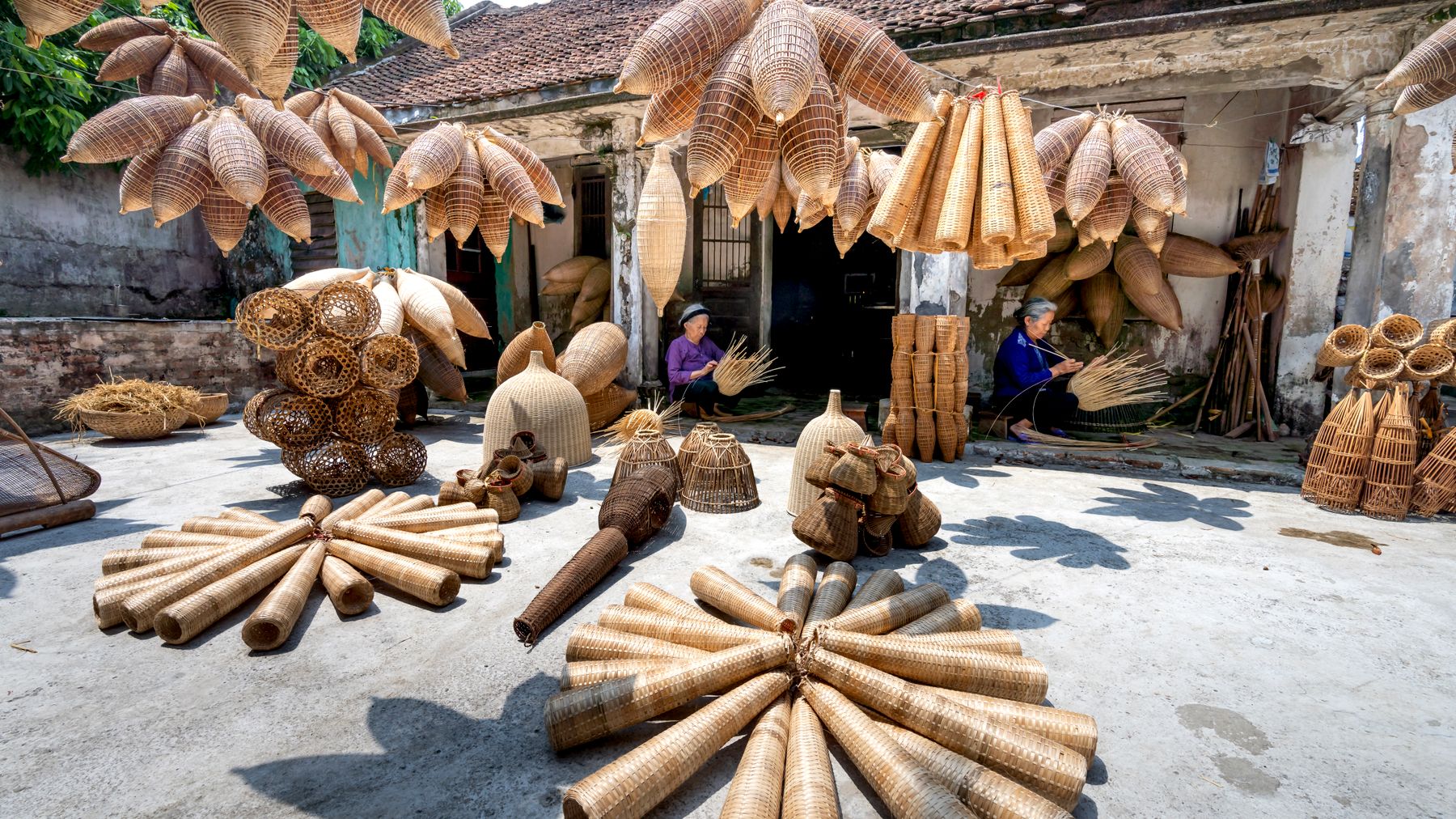
Photo by Quang Nguyen Vinh on Pexels
What to do
Watch artisans work
Most family workshops welcome visitors who are polite and don't block the workspace. You can watch the layering process, the painstaking sanding between coats, and the final decoration stages. Some workshops have someone who speaks basic English; others communicate through gestures and smiles. A small purchase or tip (50,000-100,000 VND) is appreciated if you spend time watching.
Visit the Lacquerware Exhibition House
The village's small museum displays finished pieces across different styles — from traditional landscapes and "ao dai"-clad figures to abstract modern work. Panels explain the son mai process step by step. It gives you context before you see the real thing in the workshops.
Buy directly from makers
Prices here are significantly lower than Saigon galleries. Small decorative plates start around 200,000 VND. Larger wall panels or trays with gold leaf or eggshell inlay run 500,000-3,000,000 VND depending on size and complexity. Bargaining is mild — these aren't tourist-market prices to begin with. If you want a custom piece, some workshops take commissions, though expect to wait weeks and arrange shipping.
Try a workshop class
A few workshops now offer short hands-on sessions (typically 1-2 hours) where you paint a simple lacquer piece under guidance. Expect to pay 150,000-300,000 VND per person. The piece won't be dry enough to take home that day — they'll need to finish and ship it, or you can pick it up later. Ask at the Exhibition House for current workshop options.
Walk the village lanes
The village itself is the attraction. Wander past open-front workshops, stacks of drying panels leaning against walls, and the occasional ancestral house with carved wooden doors. It's compact enough to cover on foot in an hour or two.
Where to eat nearby
Tuong Binh Hiep isn't a food destination, but the surrounding Thu Dau Mot area has solid options. Look for "banh beo" — small steamed rice cakes topped with dried shrimp and scallion oil, a Binh Duong specialty you'll find at small street-side shops for 30,000-50,000 VND per serving. "Bun bo Hue" shops are also common in the area and tend to be heavy on lemongrass and chili, closer in style to the central original than what you find in most Saigon spots.
For a sit-down meal, head toward the center of Thu Dau Mot where there are com binh dan (daily rice) restaurants along Yersin and Nguyen Thai Hoc streets. A full plate with two or three dishes runs 35,000-50,000 VND.
Where to stay
Most travelers visit Tuong Binh Hiep as a day trip from Saigon and head back the same afternoon. If you want to stay nearby, Thu Dau Mot has a handful of budget hotels and guesthouses in the 250,000-500,000 VND range per night. Nothing fancy — clean rooms, air conditioning, hot water. Becamex Hotel is the area's more upscale option at around 800,000-1,200,000 VND per night with a pool.
Photo by HONG SON on Pexels
Practical tips locals would tell you
- Wear clothes you don't mind getting a faint resin smell on. Lacquer workshops aren't sterile environments.
- Bring cash. Almost nowhere in the village takes cards.
- If you have a lacquer allergy (related to poison ivy sensitivity), be cautious around wet resin. Ask before touching anything in-process.
- Vietnamese coffee is easy to find at small roadside cafes on the way in. Grab a "ca phe sua da (연유커피 / 越南冰咖啡 / ベトナムアイスコーヒー)" before you start walking — there's not much shade in the village lanes.
- Combine this trip with a stop at the Binh Duong pottery village (Lai Thieu), about 10 km south, for a full craft-village day.
Common mistakes to avoid
- Showing up after 2 PM. Many artisans finish their detailed work by early afternoon. Morning visits see the most activity.
- Expecting a polished tourist setup. There's no ticket booth, no guided tour bus, no gift shop with branded bags. That's the appeal, but set your expectations accordingly.
- Buying lacquerware without checking the base material. Cheap pieces use MDF board instead of solid wood. Ask "go gi?" (what wood?) — the better pieces use jackfruit wood or bamboo.
- Not negotiating shipping for large items. If you buy a big panel, don't try to carry it on a motorbike. Most workshops can arrange domestic shipping for a small fee.
Practical notes
Budget half a day for Tuong Binh Hiep — two to three hours in the village plus travel time from Saigon. It pairs well with other destinations north of the city if you have a car for the day. This is a quieter, slower kind of travel, and it rewards patience more than a checklist mentality.
Last updated · May 26, 2026 · independently researched, never sponsored.