Bac Ninh province has produced more doctoral laureates than almost any other region in Vietnamese history, and Van Mieu Bac Ninh is the physical record of that obsession with learning. If you've visited the Temple of Literature in Hanoi and wondered whether similar sites exist elsewhere — they do, and this one tells a different, more local story.
What it is and why it matters
Van Mieu Bac Ninh (literally "Temple of Literature of Bac Ninh") sits in Bac Ninh city, about 30 km northeast of Hanoi (하노이 / 河内 / ハノイ). It was originally built during the Ly dynasty (11th century) and reconstructed multiple times, most recently in 2000 when the provincial government restored the complex to something close to its historical form.
The site honors the Confucian scholarly tradition of the old Kinh Bac region — the area that roughly corresponds to modern Bac Ninh and Bac Giang provinces. Stone stelae inside the complex record the names of 677 "tien si" (doctoral laureates) from the region who passed the imperial examinations between the 11th and 19th centuries. That's a remarkable concentration of scholars from one area, and locals are genuinely proud of it.
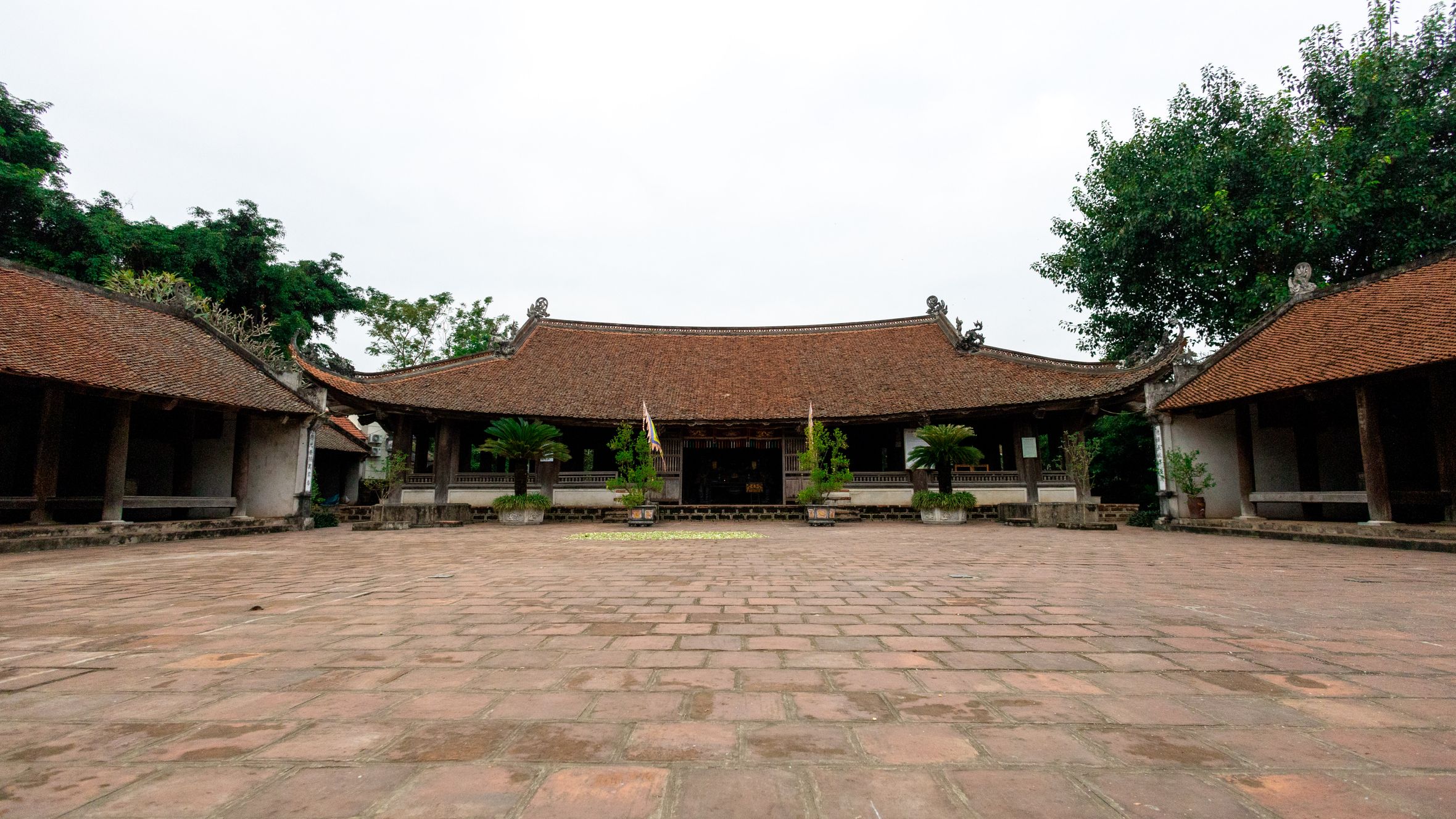
Unlike the Temple of Literature in Hanoi, which draws constant tour bus traffic, Van Mieu Bac Ninh is calm. You might share the grounds with a handful of students and a few elderly visitors burning incense. That quietness is the point.
Why travelers go
Three reasons, honestly. First, you're interested in Vietnamese Confucian heritage beyond the Hanoi circuit. Second, you're already in Bac Ninh for "quan ho" folk singing — the province is the heartland of this UNESCO-recognized tradition — and want to fill a morning. Third, you like temple architecture without crowds.
The complex also functions as a living cultural space. During Tet and exam season (roughly May–June), families bring offerings and pray for academic success. If you happen to visit during the Bac Ninh cultural festival in spring, the grounds host calligraphy demonstrations and traditional music.
Best time to visit
October through March gives you cooler weather and clearer skies — Bac Ninh shares Hanoi's climate, so summers are sweltering and rainy. The sweet spot is late October to December, when humidity drops and the temple grounds feel comfortable for walking.
If you want atmosphere, visit in the days leading up to Tet (뗏 (베트남 설날) / 越南春节 / テト) (late January or early February, depending on the lunar calendar). The complex gets decorated, incense smoke drifts through the courtyards, and there's real energy in the air. The Lim Festival — Bac Ninh's biggest quan ho event — usually falls on the 13th day of the first lunar month, so timing a visit around that lets you combine both.
How to get there from Hanoi
By bus
Catch bus 203 from the Long Bien bus station area. It runs to Bac Ninh city and costs around 20,000–30,000 VND. The ride takes roughly 1–1.5 hours depending on traffic. From Bac Ninh bus station, the temple is about 2 km — a short xe om (motorbike taxi) ride for 15,000–20,000 VND, or use Grab.
By motorbike or car
Take National Highway 1A northeast from Hanoi. The drive is about 30 km and takes 45 minutes to an hour outside of rush hour. If you're riding a motorbike, it's a straightforward route but watch the truck traffic on QL1A — it's heavy.
By taxi or Grab
A Grab car from central Hanoi runs 200,000–300,000 VND one way. Not the cheapest option, but convenient if you're combining with other Bac Ninh stops.

Photo by Haneul Trac on Pexels
What to do at Van Mieu Bac Ninh
Read the stelae. The 15 stone stelae are the heart of the complex. Each one lists the names, home villages, and examination years of Kinh Bac scholars. Some date back centuries. Even if you can't read classical Chinese characters ("chu Han"), the sheer density of names on each stone tells a story about how seriously this region took scholarship.
Walk the three-courtyard layout. The complex follows the traditional Vietnamese temple structure — a front gate, a middle courtyard with the stelae pavilions, and the rear sanctuary. Take your time in the middle courtyard; the proportions are satisfying and the tile-roofed pavilions photograph well in morning light.
Visit the rear hall. The main sanctuary at the back honors Confucius and several notable Kinh Bac scholars. The altar arrangement is traditional, and if the caretaker is around, they'll sometimes explain which figures are represented.
Check for cultural events. The temple occasionally hosts quan ho performances, calligraphy writing, and poetry readings. These aren't scheduled daily — they cluster around festivals and national holidays. Ask at the entrance gate or check with your hotel.
Combine with Dong Ho village. Dong Ho Painting village is about 25 km east of Bac Ninh city. If you have a half-day, pairing Van Mieu with a visit to watch artisans make traditional woodblock prints is a solid use of time.
Where to eat nearby
Bac Ninh's signature dish is "banh khuc" — sticky rice balls filled with mung bean paste and minced pork, coated in cudweed leaves. Street vendors sell them near the central market for around 10,000–15,000 VND each. They're best eaten warm.
For a sit-down meal, look for "bun cha" shops along Ly Thai To street in Bac Ninh city. The local version isn't radically different from Hanoi's, but portions tend to be bigger and prices lower — expect 35,000–50,000 VND for a full bowl with spring rolls.
If you're heading back toward Hanoi and want something more substantial, the restaurants along QL1A near Tien Son serve decent "pho" and grilled meat rice plates.
Where to stay
Most travelers visit Van Mieu Bac Ninh as a day trip from Hanoi, which makes sense given the short distance. If you do want to stay overnight — say, for the Lim Festival — Bac Ninh city has a handful of hotels and guesthouses.
- Budget: Local guesthouses ("nha nghi") run 200,000–350,000 VND/night. Basic but clean.
- Mid-range: Hotels along Ly Thai To and Nguyen Dang Dao streets charge 500,000–800,000 VND/night with air conditioning and decent wifi.
- Higher-end: A couple of three-star business hotels sit near the provincial government area, running 900,000–1,200,000 VND/night.

Photo by Hồng Quang Official on Pexels
Practical tips locals would tell you
- The temple grounds close around 5 PM. Arrive before 3 PM if you want unhurried time.
- Entry is free or costs a nominal 10,000–15,000 VND — it changes periodically.
- Dress modestly. It's a Confucian temple, not a pagoda, but long pants and covered shoulders show respect.
- Bring mosquito repellent in summer months. The courtyards have standing water features that breed them.
- If you visit during Tet, bring small denominations of cash for incense and offerings sold at the gate.
Common mistakes to avoid
Confusing it with the Hanoi Temple of Literature. They're different sites with different histories. Van Mieu Bac Ninh focuses specifically on Kinh Bac regional scholars, not the national examination system.
Coming only for the temple. Bac Ninh province is compact but culturally dense. Skipping quan ho singing, Dong Ho village, or the Bac Ninh Museum means missing the context that makes the temple meaningful.
Driving in Bac Ninh during rush hour. The city has grown rapidly and traffic around the central area gets congested between 7–8 AM and 5–6 PM. Plan around it.
Practical notes
Van Mieu Bac Ninh works best as part of a broader Bac Ninh half-day or full-day trip from Hanoi. Pair it with Dong Ho Painting village or time it with the Lim Festival for the fullest experience. It's not a place that demands hours — an attentive visit takes 45 minutes to an hour — but what it offers is a quieter, more focused window into Vietnam's scholarly past than the busy Hanoi equivalent.
Last updated · May 29, 2026 · independently researched, never sponsored.