What is Lang Quan Ho Diem?
About 35 km northeast of Hanoi, in Vien An commune of Bac Ninh province, sits Diem Village — widely considered the cradle of "quan ho" folk singing. This isn't a tourist attraction in the typical sense. There's no ticket booth, no gift shop, no audio guide. It's a working village where one of Vietnam (베트남 / 越南 / ベトナム)'s oldest musical traditions has been passed down through generations for roughly six centuries.
"Quan ho" is a form of antiphonal singing — male and female groups trade verses back and forth, often improvised, covering themes of love, longing, and daily life in the Red River Delta. UNESCO recognized it as an Intangible Cultural Heritage of Humanity in 2009, and Diem Village is ground zero for the tradition. The village's communal house and the Vua Ba temple complex serve as the spiritual and physical heart of quan ho culture here.
If you've been to Hanoi (하노이 / 河内 / ハノイ) and experienced "ca tru" or Water Puppetry, visiting Diem Village gives you a different angle on northern Vietnamese performing arts — one that's less staged and more rooted in community life.
Why travelers go
Most visitors come for one reason: to hear quan ho sung in the place where it originated. Unlike the polished performances you might catch at a Hanoi theater, quan ho in Diem Village — especially during festival season — is participatory and raw. Singers sit across from each other on mats, often holding hands or sharing betel nut, performing without amplification. It's intimate in a way that formal stages can't replicate.
Beyond the music, the village itself is a well-preserved example of Red River Delta settlement architecture. Laterite walls, narrow lanes, banyan trees older than anyone can remember, and a communal house that dates back several hundred years. For anyone interested in rural northern Vietnam without a multi-day trek to Sapa or Ha Giang, this is a solid half-day or full-day trip.
Best time to visit
The prime window is during the Lim Festival, held on the 13th day of the first lunar month (usually falling in February or early March). This is the biggest quan ho event of the year, drawing singers from across Bac Ninh province. The festival runs for about three days, with boat singing on Lim Hill pond being the highlight — groups in traditional "ao dai" exchange verses from opposite boats.
Outside of festival season, autumn (September to November) is comfortable for visiting. The heat has broken, rain is tapering off, and the village is quiet enough that you can actually talk to residents. Summers (June-August) are brutally hot and humid in the delta, and the village has minimal shade beyond the communal house.
If you visit on a normal day outside festival time, you likely won't stumble into a live performance. Arrange ahead through Bac Ninh's cultural tourism office or ask your hotel to contact the village's quan ho club — they can sometimes organize an informal session for small groups, though this isn't guaranteed.
How to get there from Hanoi
From central Hanoi, you have a few options:
- Motorbike or car: Take National Highway 1A or the newer expressway toward Bac Ninh city (about 30 km, 45-60 minutes depending on traffic). From Bac Ninh city center, Diem Village is another 5-6 km northeast. Total ride: roughly an hour. Grab car from Hanoi runs around 350,000-450,000 VND one way.
- Bus: Catch a bus from My Dinh or Gia Lam station to Bac Ninh city (around 30,000-50,000 VND, 1-1.5 hours). From Bac Ninh bus station, take a local xe om or taxi the remaining distance for about 50,000-80,000 VND.
- Day trip by motorbike: This is the most flexible option and what most independent travelers do. Rentals in Hanoi's Old Quarter run 120,000-180,000 VND per day.

Photo by Bid on Pexels
What to do
Visit the communal house (Dinh Lang Diem)
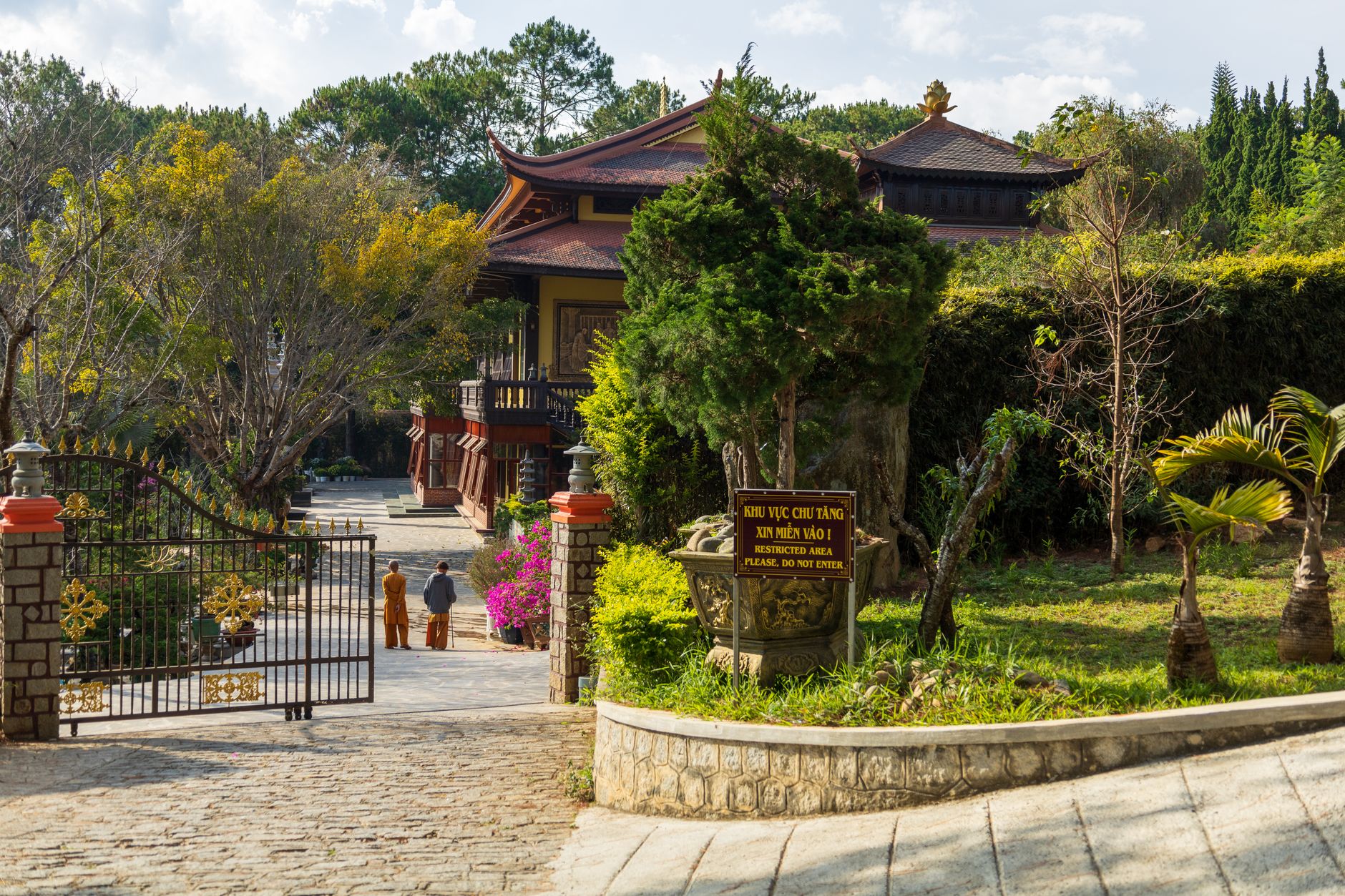
The village's communal house is the social and ceremonial center. It's where quan ho gatherings traditionally take place and where village elders still meet. The wooden architecture is characteristic of northern delta style — carved beams, tiled roof, open sides. Respectful visitors are generally welcome. Remove your shoes.
Explore the Vua Ba Temple
This temple honors the legendary founder of quan ho. It's a modest but well-maintained complex with incense-darkened interiors and centuries-old stele. During Lim Festival, this is where major ceremonies and offerings take place.
Walk the village lanes
Diem Village rewards slow wandering. The laterite-walled alleys, lotus ponds, and areca palm gardens are the real texture of the place. You'll see daily life — rice drying on tarps, grandmothers shelling peanuts, kids on bicycles. Bring a camera but ask before photographing people.
Attend a quan ho session
If you've arranged a session through the local club, expect to sit on the floor of the communal house or a private home. Singers perform in pairs. The etiquette is to listen quietly, accept offered tea, and not interrupt between songs. A small cash gift (100,000-200,000 VND) to the singers' club is customary and appreciated.
Visit nearby Lim Hill
About 2 km from Diem Village, Lim Hill is where the main Lim Festival activities concentrate. Outside festival time, it's a peaceful hilltop with a pagoda and views across the flat delta landscape. Worth combining if you're already in the area.
Where to eat nearby
Bac Ninh province isn't a major food destination, but there are local specialties worth seeking out. "Banh khuc" — a sticky rice dumpling filled with mung bean and pork, wrapped in cudweed leaves — is a cold-weather staple in the delta and easy to find at roadside stalls, especially in winter months. Expect to pay around 10,000-15,000 VND per piece.
For a proper meal, head to Bac Ninh city center (15 minutes by motorbike). Look for "bun cha" served Bac Ninh style — the patties tend to be slightly sweeter and fattier than the Hanoi version. Pho shops along Ly Thai To street in Bac Ninh city are reliable and cheap, with bowls running 35,000-50,000 VND.
Where to stay
Diem Village itself has no formal accommodation. Your options:
- Bac Ninh city: Budget hotels and guesthouses along Ly Thai To and Ngo Gia Tu streets range from 250,000-500,000 VND per night. Clean, basic, air-conditioned. Don't expect English-speaking staff.
- Hanoi: Most travelers visit Diem as a day trip from Hanoi, which keeps accommodation simple and gives you far more choices.

Photo by Vietnam Hidden Light on Pexels
Practical tips locals would tell you
- Dress modestly at the temple and communal house. Shoulders and knees covered.
- Bring cash. There are no ATMs in the village, and nobody takes cards.
- If you're visiting during Lim Festival, arrive early — by 8 AM if possible. Roads get clogged and parking fills fast.
- Learn the phrase "lien anh, lien chi" (brother singer, sister singer) — it's the traditional way quan ho performers address each other, and using it shows you've done your homework.
- Vietnamese language skills help enormously here. Almost nobody in the village speaks English. Google Translate's conversation mode works in a pinch.
Common mistakes to avoid
- Showing up unannounced expecting a performance. Outside of Lim Festival, quan ho isn't performed on demand. Plan ahead.
- Treating the village like a theme park. People live and work here. Don't wander into private homes or yards without being invited.
- Skipping Bac Ninh city entirely. The provincial museum has decent exhibits on quan ho history and instruments that give useful context before visiting the village.
- Driving back to Hanoi after dark on a motorbike. Highway 1A has heavy truck traffic at night. Leave with enough daylight.
Practical notes
Lang Quan Ho Diem is best treated as a half-day or full-day trip from Hanoi, ideally timed around Lim Festival for the full experience. It pairs well with a stop at Ninh Binh or Bat Trang pottery village if you're building a longer northern itinerary. This is not a place that tries to impress you — it's a place that lets you in, quietly, if you show up with patience and respect.
Last updated · May 29, 2026 · independently researched, never sponsored.