Vung Chua is the kind of place that ends up meaning something different to everyone who visits. For some it's a pilgrimage. For others it's just a quiet bay with clear water and almost no tourist infrastructure. Both things are true, and the combination is what makes it worth the drive from Dong Hoi.
Getting There from Dong Hoi
Vung Chua sits roughly 50 km south of Dong Hoi, near Quang Binh's border with Quang Tri province. The standard route follows Highway 1 south to Vung Chua hamlet, then a short turn toward the coast. By motorbike the ride takes around 70–80 minutes depending on your pace — longer if you stop at Phong Nha on the way, which plenty of people do since the cave complex is roughly en route heading north. By car it's a comfortable 50-minute run. There's no direct bus service to Vung Chua itself; grab a xe om (motorbike taxi) in Dong Hoi or rent your own bike for the day (around 120,000–150,000 VND for a semi-automatic).
The Tomb of General Vo Nguyen Giap
General Vo Nguyen Giap — commander of the Viet Minh forces at Dien Bien Phu, then of the People's Army of Vietnam (베트남 / 越南 / ベトナム) for decades — died in 2013 at the age of 102. By his own request, he was buried here on Yen Island, overlooking the East Sea, on a hillside above Vung Chua bay. He was born in Quang Binh province, and coming home was the point.
The tomb complex is modest by the standards of other Vietnamese memorial sites. There's no giant mausoleum, no queued crowds (outside of national holidays), no obligatory guided tour. A wide stone path climbs the hillside through casuarina trees to a simple grave marker surrounded by offering tables. Incense burns almost constantly — visitors bring sticks without being prompted. On weekdays you might share the path with a handful of other people; on anniversaries of his death (October 4) or national days, buses of school groups and veterans arrive from across the country.
Dress respectfully. There's no formal dress code enforced at the gate, but this is a genuine pilgrimage site, not a photo-op backdrop. Long pants and covered shoulders are appropriate. The climb to the grave takes about 10–15 minutes on foot from the car park.
Entry to the memorial area is free.

Photo by Quang Nguyen Vinh on Pexels
The Beach at Vung Chua
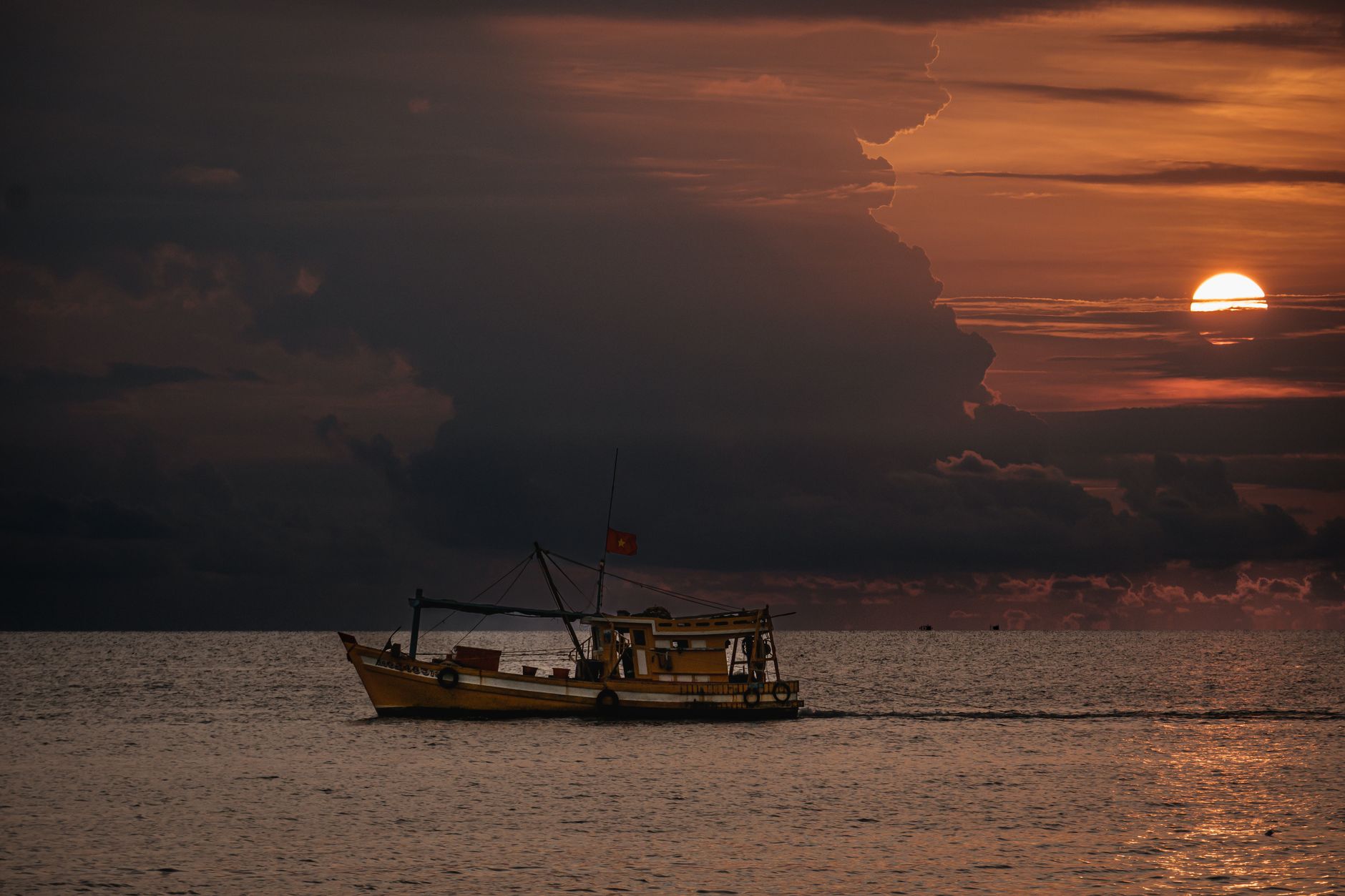
Below the hill, the bay itself is calm and largely undeveloped. The water here sits in a natural inlet sheltered by the Yen Island headland, which keeps the waves manageable even in stronger wind conditions. The sand is coarse by Phu Quoc or Da Nang standards but the water clarity is good — you can swim here without any infrastructure anxiety.
There are a few small seafood shacks along the approach road. Expect simple menus: grilled clams, steamed crab, fresh fish with rice. A solid meal for two runs 150,000–250,000 VND depending on what you order and your negotiating energy. Don't expect English menus or English-speaking staff — pointing at the seafood tank works fine.
The beach sees almost no foreign tourists on a typical day. If you're coming from Hoi An or Hue on a longer central Vietnam loop, Vung Chua is an easy diversion before pushing north toward Phong Nha (퐁냐 / 峰牙 / フォンニャ).
What's Nearby
Phong Nha-Ke Bang National Park is around 60 km northwest of Vung Chua — the road isn't direct, but if you're building a two-day loop from Dong Hoi, the combination of Phong Nha caves in the morning and Vung Chua in the afternoon works well.
Nhat Le Beach, right in Dong Hoi itself, is a serviceable base for the evening — decent guesthouses from 250,000–400,000 VND per night, and a functional strip of com tam and seafood restaurants along the beachfront road.
Hue is about 150 km south of Dong Hoi and makes a logical next stop if you're moving down the central coast. The Hue Citadel, the Tomb of Khai Dinh, and the Tomb of Tu Duc are all within easy reach once you're there.

Photo by Quang Nguyen Vinh on Pexels
When to Visit
Central Vietnam's weather is reliably tricky. Quang Binh's dry season runs roughly May through August — this is when Vung Chua beach is actually swimmable and the tomb path isn't muddy. September through November brings heavy rain and occasional typhoon exposure; the area isn't cut off, but conditions are uncomfortable and the drive is less pleasant. If you're combining Vung Chua with Phong Nha, the cave visit is viable year-round but cave flooding can affect some routes in rainy season.
October 4 (the anniversary of Giap's death) draws significantly larger crowds — worth knowing if you want solitude, or if you want to witness something more communal.
Practical Notes
Bring cash; there are no ATMs near Vung Chua. Fuel up in Dong Hoi before heading south. The tomb complex has basic toilet facilities near the car park, but there's nothing else in the way of visitor amenities — treat it as a half-day excursion with a seafood lunch, not a full-day destination.
Last updated · May 29, 2026 · independently researched, never sponsored.