Cao Bang city: cheap, convenient, fewer travelers
Staying in Cao Bang city means sleeping in the provincial capital — a scrappy, unremarkable town where most backpackers and Vietnamese tourists pass through without lingering. That's actually its main draw.
Hotels here run 300,000–1,100,000 VND (roughly $12–45 USD) for a basic double with air conditioning, fan rooms even cheaper. Chains like Hoang Dieu, Cao Bang Hotel, and the ubiquitous family-run guesthouses cluster near the town square and along Ngo Quyen Street. You'll find restaurants, convenience stores, ATMs — the infrastructure of any Vietnamese provincial town. If something goes wrong (lost luggage, food poisoning, need antibiotics), a city has options.
A few specific picks worth knowing: Cao Bang Hotel on Kim Dong Street has reliable hot water and breakfast included around 400,000 VND. Hoang Dieu, a few blocks east, is slightly newer and charges 500,000–700,000 VND for a room with a decent mattress and working Wi-Fi. For budget travelers, the guesthouses on Ngo Quyen Street — look for signs reading "nha nghi" — drop below 250,000 VND but expect thin walls and no English. Check-in at most places is flexible; just show your passport and pay cash or transfer via a Vietnamese banking app.
For food in Cao Bang city, mornings revolve around "pho" — specifically a local variation with pork bone broth that's lighter than what you'll find in Hanoi. Stalls along Xuan Truong Street open by 6:00 AM and charge 30,000–40,000 VND per bowl. The town also has solid "banh cuon" — steamed rice rolls filled with minced pork and wood-ear mushroom, served with a dipping sauce and a plate of herbs. Try the stall across from the central market around 35,000 VND a plate. Evenings, a cluster of "com binh dan" (everyday rice) shops near the bus station serve rice with three or four dishes for 35,000–50,000 VND. Nothing remarkable, but filling and honest.
The trade-off: Ban Gioc is 80km north, a 2–2.5 hour drive depending on road condition and your motorbike's temperament. Most visitors rent a motorbike in Cao Bang (80,000–150,000 VND/day) or hire a car with driver (800,000–1,200,000 VND for a full day, splits cheaper with others). You'll leave early to catch morning light at the falls and return by evening.
Best for: travelers on a tight budget, those wanting laundry and restaurant choice, anyone uncomfortable with homestay informality.
Near Ban Gioc: homestays and eco-lodges, fewer tourists
The village of Ban Gioc sits just a few kilometers from the waterfall itself. Homestays and small eco-lodges have sprouted here — mostly run by local families or small operators who understand the falls better than anyone.
Prices range 600,000–2,000,000 VND ($25–80) per night depending on amenities and season. Expect simple rooms (often with shared or private bathroom), basic breakfast (rice, eggs, pickles, coffee), and hosts who speak some English or have arranged English-speaking guides. Places like Ban Gioc Eco-Lodge and family homestays near the village center offer this setup. Some include motorbike rental or guides to lesser-known viewpoints and nearby caves (Nguom Ngao is close).
The advantage: you wake up 3–5km from the falls. You can visit early morning (before day-trippers arrive from Hanoi), stay for lunch, and return to rest. You can also explore quieter sections of the waterfall, hidden pools, and the Cao Bang–China border landscape without rushing back to town. The homestays often arrange hikes, local-food dinners, and introductions to villagers.
Dinner at a homestay is usually communal — your host cooks whatever is fresh. Expect river fish, stir-fried greens, pork with lemongrass, and sticky rice. Some hosts serve "ruou ngo" (corn wine), a local specialty of Cao Bang province that tastes sharp and earthy. A full dinner typically costs 100,000–150,000 VND per person, or it's included in a package rate. Ask when you book. Breakfast is simpler: instant Vietnamese coffee, bread, fried eggs, sometimes a bowl of noodle soup.
One practical note: most homestays near Ban Gioc only take cash or bank transfer. Don't rely on credit cards. The nearest ATM is back in Trung Khanh town, about 20km south, so withdraw in Cao Bang city before heading up.
The trade-off: fewer restaurants outside your homestay's kitchen, limited power or internet reliability, and you're dependent on your host for guidance. If the place is mediocre, you're stuck. No late-night cafe culture or backup options.
Best for: travelers wanting immersion and convenience, photographers chasing light, those with flexibility on comfort.
Photo by Vyvan BÙI VY VÂN on Pexels
Timing: weekday beats weekend
Cao Bang province sees heavy domestic tourism on Saturdays and Sundays. Vietnamese tour groups, motorbike clubs, and Hanoi families descend on Ban Gioc, crowding the falls and carparks by mid-morning. If you stay in Cao Bang city and drive out on a Saturday, expect hundreds of people, loud music from vendor stalls, and a circus atmosphere.
Weekdays (Monday–Friday) are quieter. Fewer tour groups, shorter photo queues, and a more contemplative experience. If your schedule allows, build your Cao Bang trip around a weekday visit — check Vietnamese public holidays first (avoid Tet, mid-autumn festival), then pick a Tuesday or Wednesday.
Homestays near the falls benefit even more from weekday timing. You can hike the upper falls or explore the China-side views with minimal crowds.
Seasonally, September through November offers the best combination: the rainy season keeps the falls full and powerful, but the heaviest downpours of July and August have tapered off. December through March brings drier weather and thinner falls, though the cooler air (10–18°C at night) makes motorbike riding more comfortable. April and May heat up fast. If you visit during the dry months, the falls won't have the same volume, but you'll deal with fewer muddy roads.

Photo by Hiếu Vũ Vlog on Pexels
The drive: what to expect between Cao Bang city and Ban Gioc
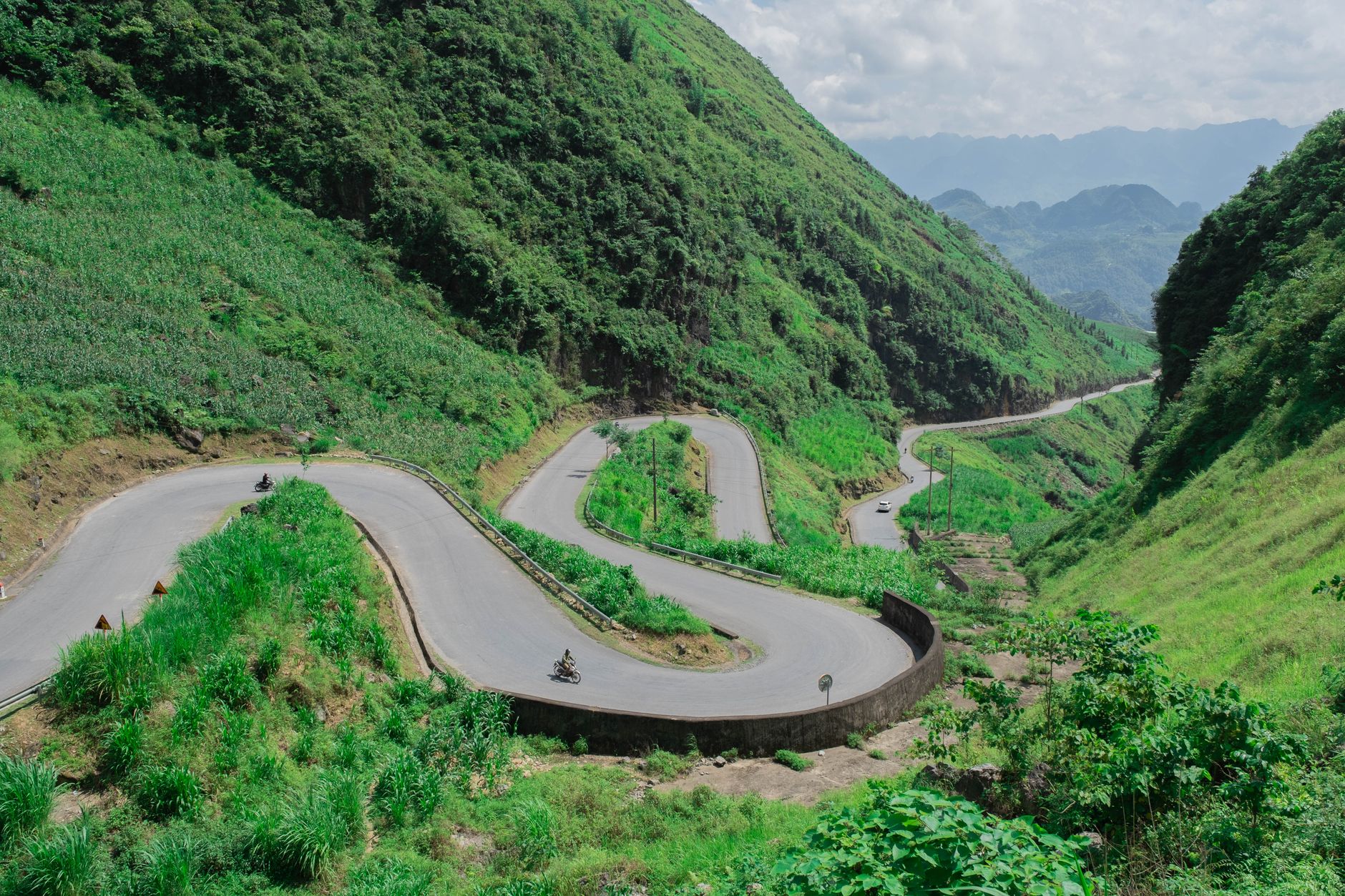
The 80km road from Cao Bang city to Ban Gioc (via Trung Khanh) is one of the better-maintained routes in the northeast, but "better-maintained" is relative. It's a two-lane highway — paved, mostly smooth, but narrowing through small towns where dogs, chickens, and slow-moving trucks share the lane. The route passes through limestone karst scenery that rivals anything in Ninh Binh or Ha Giang, just without the elevation drama of the Ma Pi Leng pass.
About halfway, you'll hit Trung Khanh town — the last reliable stop for fuel, snacks, and an ATM. Fill up here. There's a decent "bun" (noodle soup) shop on the main road through town; look for the one with the most parked motorbikes around 7:00–8:00 AM. A bowl runs about 30,000 VND.
Past Trung Khanh, the road narrows further and the karst peaks close in. The final 20km to Ban Gioc is scenic and mostly flat, following the Quay Son River. You'll spot rice paddies, water buffalo, and the occasional border marker. Budget about 2 hours total from Cao Bang city if you stop once, 2.5 hours if you stop for breakfast in Trung Khanh.
If you're coming directly from Hanoi (하노이 / 河内 / ハノイ), the full drive is roughly 350km and takes 7–8 hours on Highway 3 through Thai Nguyen and Bac Kan. It's doable in a day but exhausting; most travelers break it with an overnight in Cao Bang city or — increasingly — in Ba Be National Park, which adds a side trip to the lake. Some travelers loop Cao Bang into a larger northeast circuit that includes Ha Giang, Bao Lac, and Meo Vac, turning the trip into a 5–7 day motorbike route.
What surprises foreigners
The entrance fee and the raft. Ban Gioc waterfall has a 45,000 VND entrance ticket. To get close to the base of the falls, you board a bamboo raft (additional 50,000 VND per person). The raft ride is short — maybe 15 minutes — but it's the only way to reach the mist zone where the falls crash hardest. Some travelers skip it and regret it. Others find the raft queue chaotic on weekends. Go early on a weekday and the raft is peaceful.
The border. Ban Gioc straddles the Vietnam–China border. The left side of the falls (as you face them) is in China; the right side is in Vietnam. You can see Chinese tourists on the opposite bank, sometimes waving. It's surreal. You cannot cross — there's no border gate at the falls. The proximity to China also means you might pick up a Chinese mobile signal on your phone; don't accidentally roam onto it unless you want surprise charges.
Cold season temperatures. Cao Bang sits at a higher latitude and elevation than most places tourists visit in northern Vietnam. From December through February, nighttime temperatures can drop to 5–8°C, and some homestays near Ban Gioc have no heating. Bring layers. A fleece and a rain jacket cover most conditions. Even in Cao Bang city, cheap hotels don't always have reliable hot water during cold snaps.
Nguom Ngao cave is worth the detour. About 3km from the falls, this limestone cave system stretches over 2km and is well-lit with walkways. Entry is 40,000 VND. It's cool inside (literally — around 20°C year-round), which is a relief if you're visiting in summer. The cave doesn't get the foot traffic of places like Phong Nha, so you'll often have sections to yourself.
Food near the falls is limited. There's a row of small restaurants near the Ban Gioc parking area selling "com phan" (set meals) for 60,000–80,000 VND — rice, a meat dish, soup, and greens. Quality varies. If you're particular, pack a "banh mi (반미 / 越式法包 / バインミー)" from Cao Bang city or Trung Khanh before heading up.
Quick reference
- Cao Bang city to Ban Gioc: 80km, 2–2.5 hours by motorbike
- Hanoi to Cao Bang city: ~350km, 7–8 hours by car or motorbike via Highway 3
- Budget hotel in Cao Bang city: 250,000–500,000 VND/night
- Mid-range hotel in Cao Bang city: 500,000–1,100,000 VND/night
- Homestay near Ban Gioc: 600,000–2,000,000 VND/night
- Motorbike rental (Cao Bang city): 80,000–150,000 VND/day
- Car with driver (full day): 800,000–1,200,000 VND
- Ban Gioc entrance fee: 45,000 VND
- Bamboo raft to falls base: 50,000 VND/person
- Nguom Ngao cave entrance: 40,000 VND
- Best months: September–November (full falls, manageable rain)
- Best day of the week: Tuesday or Wednesday
- Useful Vietnamese: "Cho toi mot phong" (give me a room), "Bao nhieu tien?" (how much?), "Ban Gioc o dau?" (where is Ban Gioc?)
Frequently Asked Questions
How far is Cao Bang city from Ban Gioc waterfall?
Ban Gioc waterfall is 80km north of Cao Bang city, a 2 to 2.5 hour drive depending on road conditions and your vehicle. Most visitors rent a motorbike in Cao Bang for 80,000-150,000 VND per day, or hire a car with driver for 800,000-1,200,000 VND for a full day. Splitting a car with other travelers reduces the cost significantly.
What does a hotel room in Cao Bang city typically cost?
Hotels in Cao Bang city run 300,000-1,100,000 VND ($12-45 USD) for a basic double with air conditioning. Budget guesthouses on Ngo Quyen Street drop below 250,000 VND. Mid-range options include Cao Bang Hotel on Kim Dong Street at around 400,000 VND with hot water and breakfast, and Hoang Dieu a few blocks east at 500,000-700,000 VND with Wi-Fi.
When should you arrive at Ban Gioc to avoid day-tripper crowds?
Arrive early morning, before day-trippers from Hanoi reach the falls. Staying at a homestay or eco-lodge near Ban Gioc village, just 3-5km from the waterfall, makes this practical. Properties like Ban Gioc Eco-Lodge offer this proximity for 600,000-2,000,000 VND per night, and some include motorbike rental or guide arrangements to quieter viewpoints and nearby Nguom Ngao cave.
Practical notes
Motorbike rental requires a passport copy; drivers should have an International Driving Permit (or at least know their home license is often overlooked). The road from Cao Bang to Ban Gioc is paved but narrow in stretches; drive cautiously, especially in rain. If you're not confident on a motorbike, hire a driver or join an organized tour (Hanoi tour operators run Cao Bang 2–3-day trips for 2–3 million VND per person including transport and guide). Stock up on snacks and water in Cao Bang before heading north — village convenience stores are limited.
For travelers combining Cao Bang with a larger northern loop, the route east from Cao Bang toward Lang Son (about 150km) connects to Highway 1 and eventually back to Hanoi, making a circuit possible. Alternatively, heading west toward Ha Giang via Bao Lac is a spectacular but demanding ride — budget two full days and check road conditions locally, especially during rainy season.
Final note
Cao Bang doesn't try to impress you the way Hoi An or Da Lat might. It's rough, quiet, and a long drive from anywhere. But Ban Gioc is one of the largest waterfalls in Southeast Asia and it sits at the end of some of Vietnam's best riding roads. Pick your base, go on a Tuesday, and give yourself enough time to not rush it.
Last updated · May 26, 2026 · independently researched, never sponsored.