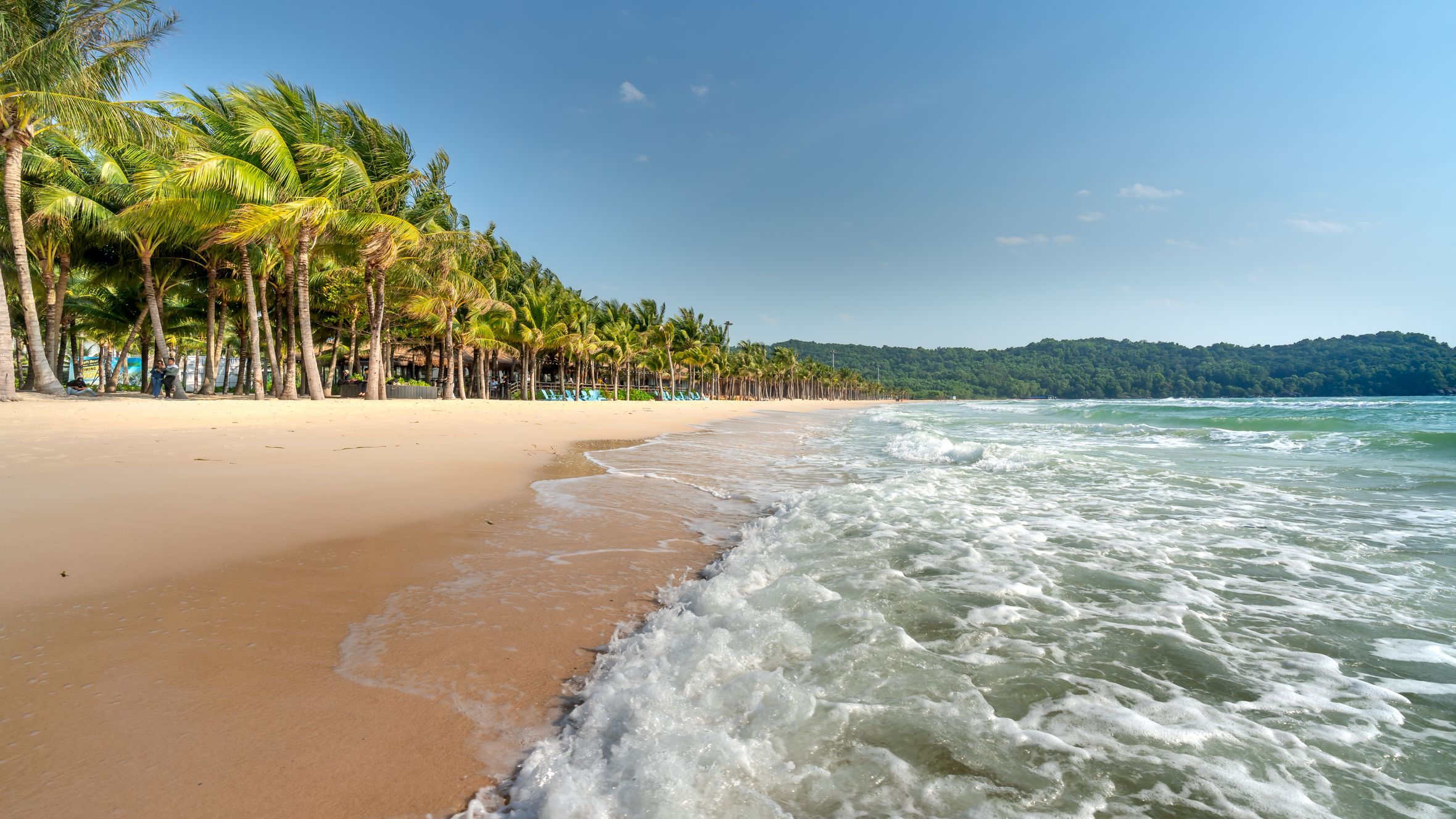
Bai Dai ("Long Beach" — not to be confused with the other Long Beach on the west coast) runs roughly 20km along the northwest shore of Phu Quoc. It's the island's longest continuous stretch of sand, and for years it was the quiet side that package tourists skipped. That's changed, but not entirely.
What it is and how it got here
Bai Dai refers to the coastline running from Ganh Dau in the north down toward Cua Can. For most of the 2000s, this was empty sand backed by cashew trees and fishing shacks. The road was dirt. Then came the wave of resort development — Vinpearl, InterContinental, Marriott — which transformed the northern section into a corridor of gated properties. But the southern stretches toward Cua Can and several public access points remain open, and the water here is still some of the clearest on the island.
The name literally means "long beach" in Vietnamese, and locals sometimes call segments of it by different names depending on which hamlet you're near. Don't get confused if a taxi driver looks blank when you say "Bai Dai" — try specifying the resort or the nearest village instead.
Why travelers go
The draw is simple: shallow, calm water with a sandy bottom that stays turquoise through most of the dry season. The northwest orientation means you get sunsets over the water — something the main Long Beach on the west coast also offers, but with more crowds and hawkers.
Bai Dai's other advantage is space. Even with resort development, the beach is long enough that you can find 200-meter sections with almost nobody on them, especially midweek. The water stays shallow for 30-50 meters out, which makes it good for kids or anyone who just wants to float without fighting waves.
Best time to visit
November through March is peak season — dry days, calm seas, water visibility at its best. April and May still work but get hotter (35°C+). June through October brings the southwest monsoon; Bai Dai faces northwest, so it catches some of that swell. The beach isn't dangerous in rainy season, but it loses that glass-flat quality and some days the water turns murky from runoff.
Weekdays are noticeably quieter. Vietnamese domestic tourists flood Phu Quoc (푸꾸옥 / 富国岛 / フーコック) on weekends and public holidays, especially around Tet and the September 2 national holiday.

Photo by Theodore Nguyen on Pexels
How to get there
Phu Quoc International Airport sits about 25km south of Bai Dai's midpoint. A taxi runs 250,000-350,000 VND depending on exactly where you're headed. Grab works on the island but driver availability drops in the north — book before you leave the airport area.
If you're already staying in Duong Dong town, it's 15-20km north on the DT975 coastal road. Motorbike rental runs 150,000-200,000 VND/day from shops along Tran Hung Dao street. The road is paved and in decent shape, though watch for sand patches near the coast.
From the mainland, fast ferries run from Ha Tien and Rach Gia to Phu Quoc's ports. The Ha Tien route takes about 80 minutes.
What to do
Swimming and lying on sand — obviously. Beyond that:
Snorkeling at the north end
The rocky points near Ganh Dau have better coral than the sandy stretches. You can rent basic gear from beach shacks for 50,000-100,000 VND. Don't expect Raja Ampat, but there's enough fish life to keep it interesting for an hour.
Vinpearl Safari and VinWonders
Both sit just inland from Bai Dai's northern section. The safari is genuinely well-maintained by Vietnamese standards — open-range sections with giraffes, zebras, and a decent bird park. Entry runs around 650,000 VND for adults. VinWonders is the theme park next door; good for families, skippable if you're traveling without kids.
Cua Can village
At the southern end of Bai Dai, the Cua Can river meets the sea. The village here still has a fishing-community feel — wooden boats, drying squid, a few local "hu tieu" stalls. Worth a morning wander before the heat sets in.
Sunset drinks
Several beach bars have popped up along the public-access sections. Prices range from 50,000 VND for a Saigon beer to 150,000 VND for cocktails. The scene is mellow — nothing like the party beaches in Thailand.
Where to eat
The resort restaurants are fine but overpriced (300,000-800,000 VND per main). Better options:
- Seafood shacks on the beach road — Look for places with tanks out front between Bai Dai and Cua Can. Grilled "ca" (fish), steamed "goi cuon" with shrimp, and garlic butter clams. Expect 150,000-400,000 VND per person depending on what you order.
- Cua Can market area — A few rice-and-noodle spots serve solid "com tam (껌땀 / 碎米饭 / コムタム)" (broken rice) and "bun" soups for 40,000-60,000 VND. No English menus; point and smile.
- Duong Dong night market — 20 minutes south by motorbike. Grilled scallops, sea urchin, and the island's famous "banh canh" crab noodle soup. Touristy but the food quality holds up.

Photo by Luke Dang on Pexels
Where to stay
Three tiers:
- Resorts (2,000,000-8,000,000 VND/night): InterContinental, Marriott, Vinpearl — all beachfront, all gated. You'll have a private beach section but limited access to the rest of Bai Dai without transport.
- Mid-range (600,000-1,500,000 VND/night): Smaller hotels set back from the beach on the inland road. You'll need a motorbike. Places like Nam Nghi or Fusion tend to land in this range during low season.
- Budget (200,000-500,000 VND/night): Homestays and guesthouses closer to Cua Can or along the DT975. Basic rooms, sometimes with breakfast. Beach is a 5-10 minute ride.
Practical tips
- Sunscreen matters here. The reflection off white sand and shallow water intensifies UV. Reapply after swimming.
- Cash is still king at smaller beach vendors and Cua Can stalls. ATMs exist in Duong Dong but are sparse up north.
- Public beach access points aren't always signed. Look for gaps between resort fences or ask locals for "loi xuong bien" (path to the sea).
- Jellyfish occasionally show up October-November. Ask locals before wading in if you see purple dots on the sand.
Common mistakes
Booking a resort without realizing you're 20km from Duong Dong's restaurants and nightlife. If you want both beach quiet and evening options, stay mid-island and ride to Bai Dai for day trips.
Assuming the whole beach is one continuous walkable strip — resort properties block through-access in places. You may need to go back to the road and re-enter at the next public point.
Visiting only the developed northern section and concluding Bai Dai is "just resorts." Head south toward Cua Can for the less-polished, more interesting stretches where fishing boats still land on the sand.
Last updated · May 29, 2026 · independently researched, never sponsored.








