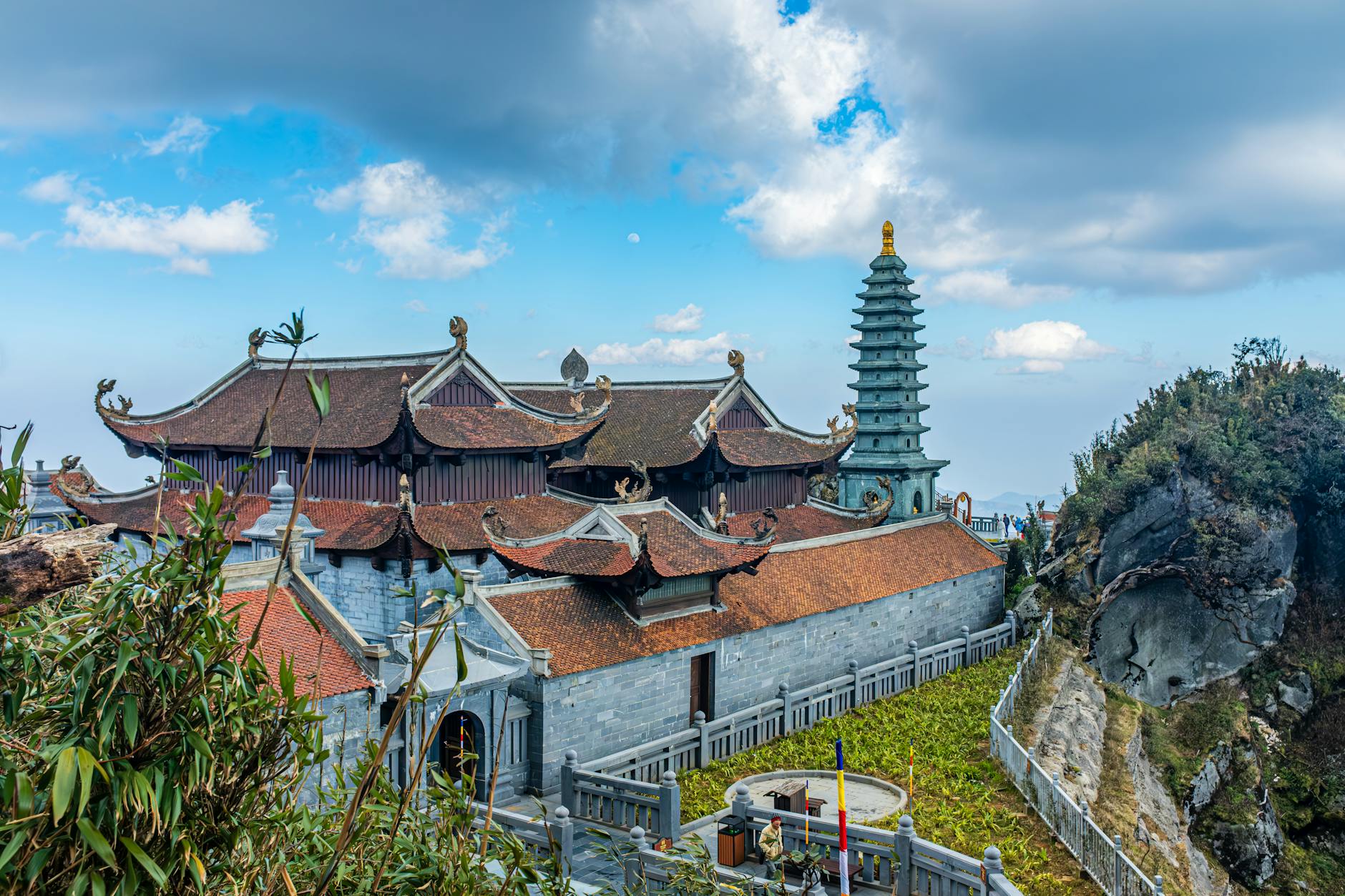
Chua Bo Da sits on the low slopes of Bo Da Hill in Tien Son district, Bac Ninh province — about 50 km northeast of Hanoi. It's one of the oldest Truc Lam Zen Buddhist monasteries in northern Vietnam (베트남 / 越南 / ベトナム), and it feels like it. The complex sprawls across terraced grounds shaded by old banyan trees, with none of the neon lighting or loudspeaker chanting you'll find at more commercial pagodas. If you want to see Vietnamese Buddhist architecture that hasn't been polished for Instagram, this is worth the half-day trip.
What it is
Chua Bo Da (full name: Bo Da Pagoda, or Tu Phuc Tu) dates to the 11th century in its earliest form, though most of what you see today was rebuilt during the Le and Nguyen dynasties — roughly the 17th to 19th centuries. The monastery belongs to the Truc Lam Zen school, a distinctly Vietnamese branch of Zen Buddhism founded during the Tran dynasty.
The complex covers around 50,000 square meters and includes the main worship halls, a monk's quarters section with mud-walled rooms, and — the real draw — a "vuon thap" (stupa garden) holding over 100 stone and brick stupas containing the remains of monks who lived and practiced here over centuries. It was recognized as a Special National Monument in 2016.
The monastery also preserves nearly 2,000 woodblocks carved with Buddhist scriptures, some dating to the 18th century. These are among the oldest surviving examples of woodblock printing in Vietnam.
Why travelers go
Chua Bo Da isn't a major tourist circuit stop, and that's precisely the appeal. You won't find tour buses or souvenir stalls outside the gate. The monastery is still an active place of worship, with resident monks, and the atmosphere is genuinely quiet.
Three things set it apart from other pagodas near Hanoi (하노이 / 河内 / ハノイ):
- The stupa garden. Over a hundred weathered stupas clustered under old trees. It's one of the largest surviving collections in Vietnam, and walking through it in the early morning light is the kind of experience that sticks with you.
- The earthen architecture. Unlike the concrete-and-tile renovations common at pagodas closer to Hanoi, Chua Bo Da retains mud walls, laterite foundations, and clay-tile roofs. The monk's quarters in particular look almost unchanged from 200 years ago.
- Proximity to Bac Ninh's "quan ho" folk singing villages. Bac Ninh province is the heartland of "Quan Ho" — a UNESCO-recognized form of Vietnamese folk duet singing. You can combine a pagoda visit with a stop at one of the villages where it's still practiced, especially during festivals.
Best time to visit
Chua Bo Da is open year-round, but two windows stand out:
- Late January to March — This covers the [lunar new year](/posts/tet / 越南春节 / テト)-lunar-new-year-guide) period around Tet and the spring festival season. The pagoda holds its main annual festival on the 16th-18th of the first lunar month. During these days, you'll see ceremonies, chanting, and sometimes Quan Ho singing. It's busier, but it's also when the place feels most alive.
- September to November — Cooler, drier weather. Fewer visitors. The stupa garden photographs well in the softer autumn light. This is the better window if you want stillness.
Avoid July and August if you can — the heat is oppressive and afternoon storms are frequent.

Photo by Thịnh La on Pexels
How to get there from Hanoi
Chua Bo Da is in Tien Son district (previously part of Bac Giang province, now under the expanded Bac Ninh after the 2025 merger). From central Hanoi, you have a few options:
- Motorbike or car: About 50 km via National Highway 1A toward Bac Ninh city, then north on provincial roads toward Bo Da Hill. Takes 1-1.5 hours depending on traffic. If you're renting a motorbike in Hanoi, this is a manageable day trip.
- Bus: Take bus 203 from My Dinh or Gia Lam station to Bac Ninh city (around 25,000-30,000 VND, 1.5 hours). From Bac Ninh bus station, grab a local taxi or xe om to Chua Bo Da — roughly 15 km north, about 80,000-120,000 VND by taxi.
- Grab car from Hanoi: Expect to pay 350,000-500,000 VND one way. Not the cheapest option, but straightforward if you're splitting with someone.
What to do
Walk the stupa garden
This is the centerpiece. The stupas range from small, mossy brick towers to more elaborate multi-tiered structures. Each one holds the remains or relics of a former monk. Give yourself at least 30 minutes here — it's not large, but it rewards slow looking.
See the woodblock collection
Ask a monk or caretaker if the woodblock storage hall is open. The carved blocks are stored on wooden shelves and you can sometimes see them up close. They contain sutras and Buddhist texts in Han-Nom script. Not always accessible, but worth asking.
Explore the monk's quarters
The living quarters are built from rammed earth and laterite, with narrow corridors and small rooms. It gives you a real sense of monastic life in northern Vietnam before modern construction took over. Be respectful — monks still live here.
Climb Bo Da Hill
Behind the pagoda, a path leads to the hilltop. It's a short climb (maybe 15 minutes), and the view over the surrounding rice paddies and lychee orchards is worth it. Not dramatic, just pleasant.
Catch a Quan Ho performance (seasonal)
During festival periods, Quan Ho singers sometimes perform near the pagoda or in neighboring villages. If you're visiting during the spring festival in the first lunar month, ask locally about performance schedules.
Where to eat nearby
Tien Son district isn't a food destination, but you won't go hungry:
- "Banh cuon" Tien Son — Bac Ninh province makes excellent "banh cuon" (steamed rice rolls), thinner and more delicate than the Hanoi version. Look for small shops near the main road in Tien Son town. A plate runs 25,000-35,000 VND.
- Nem Bui (herb pork rolls) — A Bac Ninh regional specialty. Ground pork mixed with roasted rice powder and herbs, wrapped in fig leaves. You'll find it at local com binh dan (rice-and-sides) shops. Around 40,000-60,000 VND for a portion.
For a proper meal, Bac Ninh city (15 km south) has more restaurant options.

Photo by Serg Alesenko on Pexels
Where to stay
Most travelers visit Chua Bo Da as a day trip from Hanoi. If you want to stay overnight:
- Bac Ninh city hotels: Budget guesthouses from 250,000-400,000 VND/night. Mid-range hotels with air-con and breakfast around 500,000-800,000 VND.
- Homestays near Tien Son are rare but starting to appear on Booking.com. Don't expect much beyond a clean room and a fan.
Practical tips
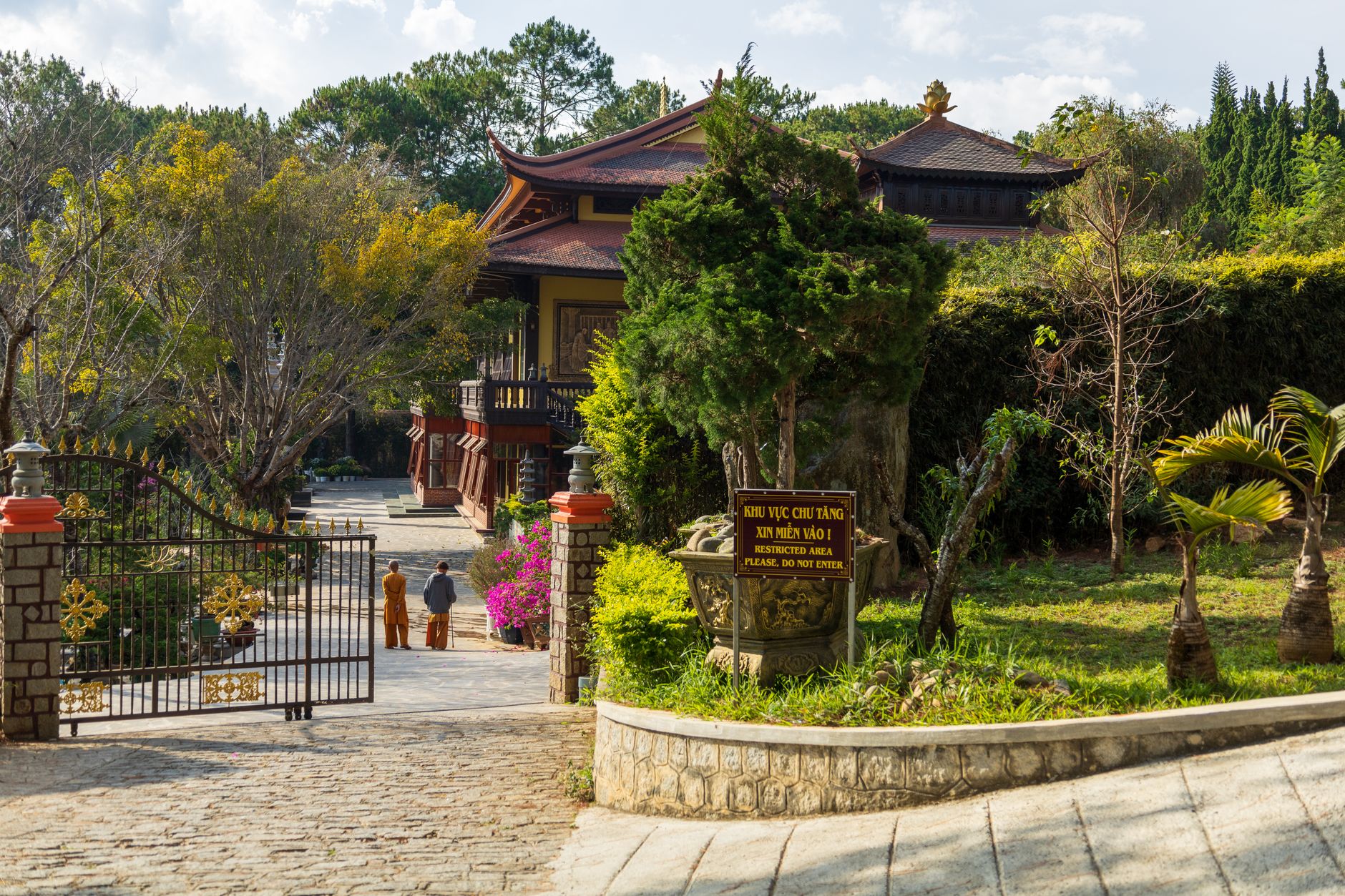
- Dress modestly. This is an active monastery. Cover shoulders and knees. You'll see signs at the entrance.
- Bring cash. There's no ATM at the pagoda and card payment doesn't exist here. Small donations (20,000-50,000 VND) at the main altar are customary.
- Arrive early. Before 9 AM if possible. The grounds are quieter and the light in the stupa garden is better.
- Remove shoes before entering any worship hall. Sandals you can slip on and off make life easier.
Common mistakes to avoid
- Rushing it. Some people drive up, snap a photo of the gate, and leave. The stupa garden and earthen quarters are behind the main halls — you need to walk deeper into the complex.
- Visiting only the pagoda. If you're already in Bac Ninh province, combine the trip with a stop at Dong Ho village (known for Dong Ho Painting, traditional woodblock folk prints) or a Quan Ho village. It makes the day fuller.
- Expecting English signage. There's almost none. A basic Vietnamese phrasebook or translation app helps. The monks are friendly but rarely speak English.
Last updated · May 29, 2026 · independently researched, never sponsored.