Ban Gioc Waterfall, located in the far northern province of Cao Bang, changes its character entirely with the seasons. To get the most out of the 340-kilometer journey from Hanoi, you need to align your trip with the region's water cycle.
Choosing the right month determines whether you get a roaring, muddy torrent or a calm, turquoise cascade framed by golden rice fields. Here is what to expect throughout the year, along with the practical logistics of making the trip.
The Wet Season (June to September): Peak Flow and Power
The summer monsoon brings heavy rains to the mountains of northern Vietnam (베트남 / 越南 / ベトナム). During these months, the Quay Son River swells, and the three tiers of Ban Gioc merge into a single, thundering wall of water.
The sheer volume is impressive, but the water turns a muddy red-brown from agricultural runoff and silt. The spray is so intense that keeping a camera lens dry is a constant challenge, and the paths around the base can become slick with mud. If you want to witness the raw, deafening power of the falls, this is the time to go. Just prepare for high humidity, afternoon downpours, and the occasional tropical storm that can disrupt road travel from Hanoi (하노이 / 河内 / ハノイ).
The Dry Season (October to May): Clear Waters and Harvest Gold
As the rains subside in October, the river clears, revealing the famous deep turquoise hue that defines the classic postcard views of Ban Gioc. The waterfall separates back into its distinct, delicate tiers, flowing gently over limestone ledges.
October and November are widely considered the best months to visit. The weather is cool and dry, and the rice paddies lining the Quay Son valley turn a brilliant golden yellow just before the autumn harvest.
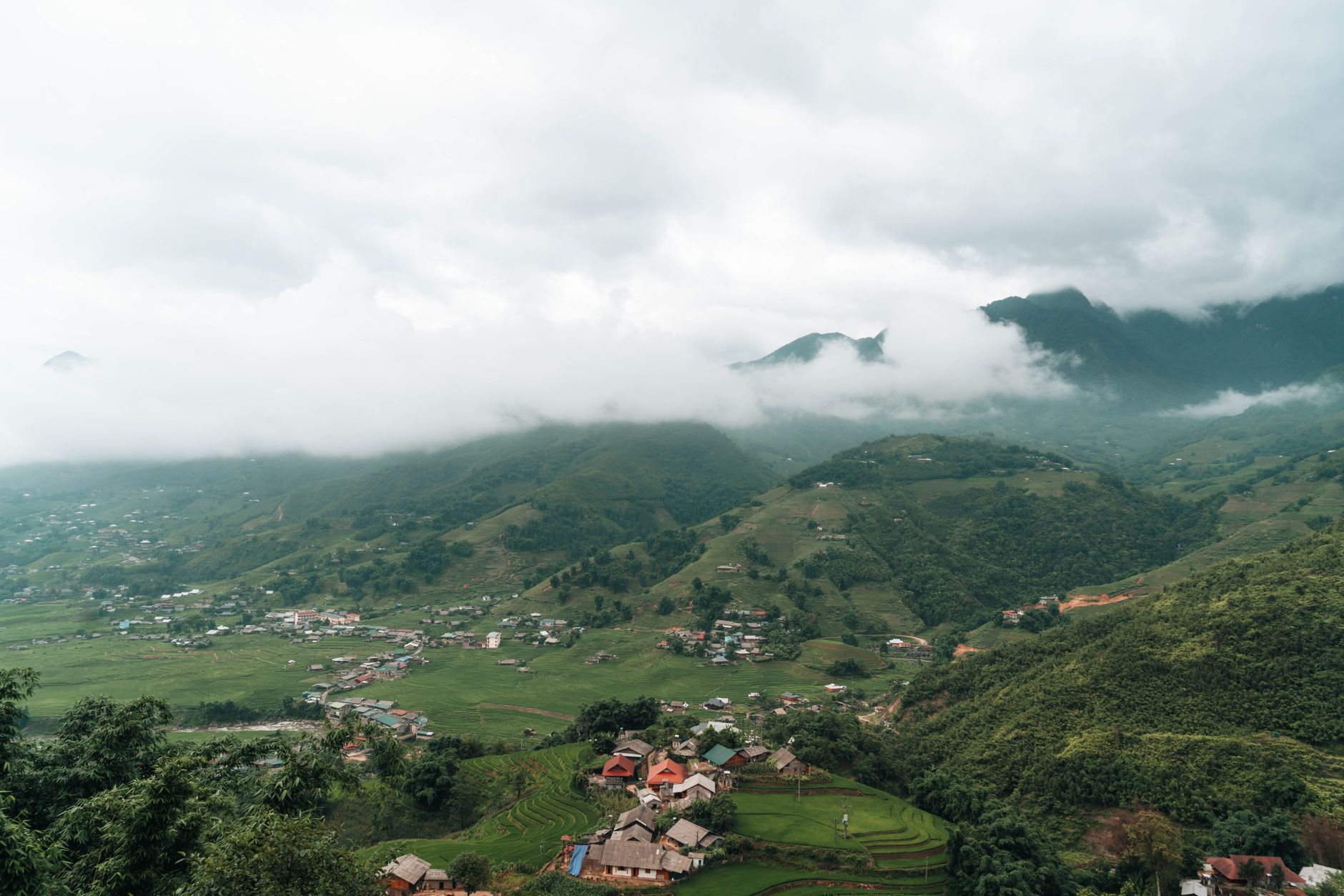
From December to February, temperatures drop significantly, often hovering around 10 degrees Celsius. The landscape takes on a quiet, misty atmosphere, though the water volume begins to decrease. By March and April, the flow reaches its lowest point of the year. While the falls are less dramatic during these spring months, the surrounding vegetation turns a lush, vibrant green, and tourist crowds are virtually non-existent.

Photo by Hao Hoang on Pexels
How to Get to Ban Gioc from Hanoi
Reaching Ban Gioc requires some planning, as there are no commercial airports nearby. Most travelers start their journey in Hanoi.
- Sleeper Bus: You can board an overnight sleeper bus from My Dinh Bus Station in Hanoi to Cao Bang city. Tickets cost between 250,000 and 300,000 VND, and the journey takes about six to seven hours.
- Local Transport from Cao Bang: From Cao Bang city, the waterfall is another 85 km away. You can rent a semi-automatic motorbike for about 150,000 VND per day, hire a "xe om" (motorcycle taxi), or catch a local public bus that runs every hour for 70,000 VND.
- Direct Limousine: For a more direct route, daily limousine vans run straight from Hanoi to the Trung Khanh district near the waterfall for about 400,000 VND per seat.
Costs and Logistics at the Falls
The entrance ticket to the waterfall is 45,000 VND per person. Once inside, a paved path leads down through flat grassy fields to the water's edge.
To get right up to the base of the falls, you can board a shared bamboo raft for 50,000 VND. The operators steer the raft close enough for you to feel the heavy mist. Because the Quay Son River serves as the physical border, you must carry your passport. Local border guards occasionally check registration at the entrance. Do not attempt to swim in the river or step onto the far bank.

Photo by Quang Nguyen Vinh on Pexels
Nearby Highlights
If you make the trip to Ban Gioc, do not skip Nguom Ngao Cave, located just 3 km from the falls. The entrance fee is 45,000 VND, and it features massive limestone chambers carved by an underground river.
A short drive further leads to the Phong Nam Valley, where quiet roads wind through towering karst peaks and traditional stone houses. After a long day of exploring, stop in Trung Khanh town for a hot bowl of "pho" or a fresh "banh mi" to refuel before heading back to your homestay.
Practical notes
Pack a light jacket if visiting between October and March, and always keep your passport handy for the ticket counter. Plan for at least two full days in Cao Bang to cover both the waterfall and the surrounding valleys without rushing.
Last updated · May 30, 2026 · independently researched, never sponsored.