What Doi A1 is and why it matters
Doi A1 (Hill A1) is a low, rounded hill on the eastern edge of Dien Bien Phu city center. It sits about 500 meters from the main museum and rises just 32 meters above the valley floor — modest by any geographic standard, but it was the most fiercely contested position during the 1954 Battle of Dien Bien Phu. The French garrison named it Eliane 2; Vietnamese forces called it A1. Today it's a national heritage site with preserved trenches, a massive bomb crater, a reconstructed bunker, and interpretive markers scattered across roughly 4 hectares of maintained hillside.
For travelers, Doi A1 is essentially an open-air museum. You walk the actual ground, see the tunnel entrance where sappers detonated nearly a thousand kilograms of explosives, and stand at the crater that blast left behind. It's small enough to cover in 45 minutes, but most people spend 60–90 minutes reading the plaques and absorbing the landscape.
Why travelers go
Dien Bien Phu isn't on most itineraries — it's remote, the road is long, and there's no beach. People who come here are generally interested in 20th-century history, motorcycle touring through the northwest highlands, or completing a loop from Hanoi through Sapa, Lai Chau, and back. Doi A1 is the anchor site. The hill gives physical scale to a battle most people only know from books or documentaries. Standing in a trench that's still shoulder-deep after 70 years communicates something a museum panel can't.
It also pairs well with the Dien Bien Phu Victory Museum (500m away), the De Castries bunker (800m), and the hilltop cemetery — all walkable in a single morning.
Best time to visit
Dien Bien province has a subtropical climate with a wet season from May through September. The valley gets hot and humid in summer — 35°C is common in June and July — and mornings can be foggy from October through January.
Best months: March and April. Temperatures hover around 25–28°C, rain is minimal, and the surrounding rice paddies are bright green. November through February is also fine if you don't mind cooler mornings (15–18°C) and occasional mist.
Avoid: Late May through August. Heavy rain turns the hillside slippery and the heat makes the exposed walk unpleasant. The annual commemoration ceremony around May 7 draws large crowds — interesting if you want to see it, but the site gets packed.
How to get there
From Hanoi by air: Vietnam (베트남 / 越南 / ベトナム) Airlines operates daily flights to Dien Bien Phu Airport (roughly 1 hour). The airport is 2km from the city center — a taxi costs 50,000–70,000 VND. This is the fastest option.
From Hanoi (하노이 / 河内 / ハノイ) by road: About 480km via the QL6/QL279 route through Son La, or roughly 500km via Sapa and Lai Chau on the QL12. Either way, expect 10–12 hours by bus or private car. Sleeper buses depart from My Dinh station nightly (around 350,000–450,000 VND).
From Sapa: 260km via QL4D and QL12 through Lai Chau. A scenic but winding 6–7 hour drive. Many motorcyclists build this into a Ha Giang–Sapa–Dien Bien loop.
Getting to the hill itself: Doi A1 is on Tran Dang Ninh Street, a 5-minute motorbike ride or 15-minute walk from the city center. No special transport needed.

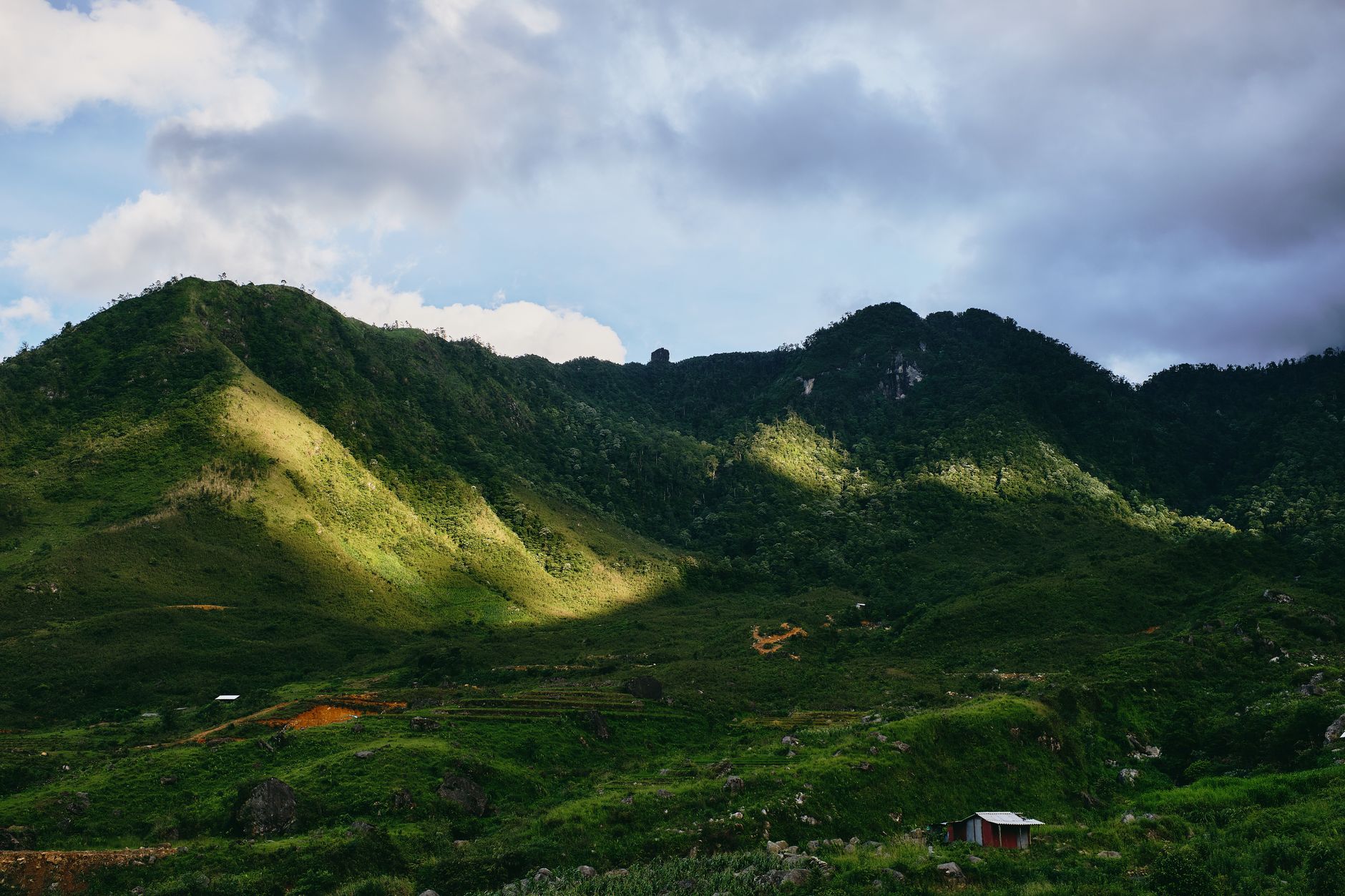
Photo by Sea Man on Pexels
What to do at Doi A1
Walk the trenches
A network of original trenches — both French defensive positions and Vietnamese approach trenches — crisscross the hill. They've been maintained and reinforced with concrete edges, but the layout is authentic. Follow the numbered markers for a chronological route.
See the bomb crater
At the summit, a massive crater roughly 20 meters across marks where a tunnel packed with explosives was detonated beneath the French position. It's now partially filled with rainwater and surrounded by frangipani trees. A monument stands at the rim.
Visit the reconstructed bunker
A French command bunker has been rebuilt with sandbags and timber to approximate its 1954 appearance. It's small — maybe 3x4 meters inside — but gives a claustrophobic sense of the conditions.
Read the interpretive panels
Bilingual Vietnamese-English panels dot the site. They're factual and concise, covering troop movements, dates, and engineering details. Budget time to read them — they add real context.
Where to eat
Dien Bien Phu city has a limited but decent food scene. Most restaurants cluster along Tran Dang Ninh and Muong Thanh streets.
- Lam Vien Restaurant (7/5 Street): Local Thai-minority dishes — grilled stream fish, bamboo-tube rice, "com lam" — around 60,000–100,000 VND per dish.
- Pho shops on Hoang Van Thai Street: Standard northern pho, served from early morning until around 9:00 AM. 35,000–45,000 VND per bowl.
- Muong Thanh valley market: Open mornings. Good for "xoi" (sticky rice) and grilled meats for under 30,000 VND.
Don't expect Hanoi-level variety. This is a provincial capital — the food is honest, affordable, and heavily influenced by Thai and Hmong highland cooking.
Where to stay
- Muong Thanh Grand Dien Bien Phu Hotel: The nicest option in town, 600,000–900,000 VND/night. Clean, reliable, restaurant on-site.
- Him Lam Resort: 3km from center, quieter, with valley views. Around 500,000 VND/night.
- Guesthouses on Nguyen Chi Thanh Street: Basic but clean rooms from 200,000–300,000 VND. Fine for one or two nights.
Booking in advance isn't critical except around May 7 (anniversary) or during Tet.

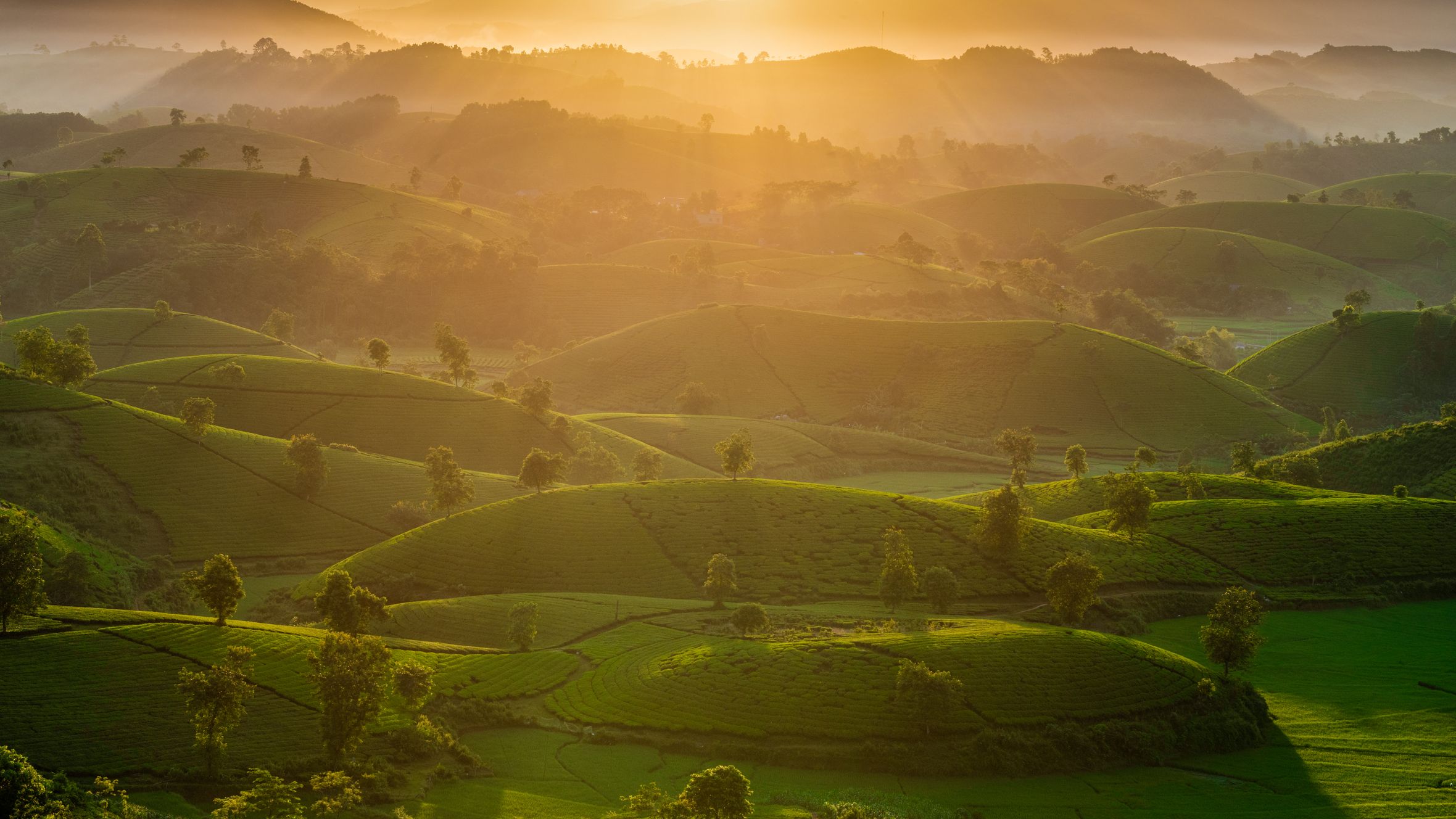
Photo by Valeria Drozdova on Pexels
Practical tips
- Entry fee: 20,000 VND per person (as of early 2024). Paid at the gate.
- Time needed: 60–90 minutes for Doi A1 alone; half a day if you combine it with the museum and De Castries bunker.
- Footwear: Wear shoes with grip. The paths between trenches are concrete but the hill sections can be muddy after rain.
- Guides: Available at the entrance for around 200,000 VND. Not essential — the English panels are decent — but a guide adds personal stories.
- Photography: Allowed everywhere. Morning light (before 9:00 AM) is best; the hill faces east.
Common mistakes
- Rushing through. People treat it as a 20-minute photo stop. Give it at least an hour. Read the panels.
- Skipping the museum. The Dien Bien Phu Victory Museum has context — maps, weapons, dioramas — that makes the hill visit richer. Do the museum first.
- Coming in peak summer heat. The hill has minimal shade. At 34°C with full sun, it's miserable. Go early morning or pick a cooler month.
- Not combining with the region. Dien Bien is worth the journey but remote. Build it into a northwest loop — Sapa, Mu Cang Chai, Son La, Dien Bien — rather than flying in and out for just one hill.
Practical notes
Doi A1 is small and straightforward. No guide apps, no complicated logistics. Fly in, walk the hill, eat grilled fish, leave with a better understanding of why this quiet valley carries so much weight. If you're already touring the northwest by motorbike, Dien Bien Phu makes a natural overnight stop between Lai Chau and Son La.
Last updated · May 29, 2026 · independently researched, never sponsored.