What it is
Ganh Ong is a coastal rock formation about 20 km south of Tuy Hoa city, sitting on the shoreline where dark basalt columns meet the South China Sea. Think of it as the quieter, rougher sibling of the more famous Ganh Da Dia — same volcanic geology, fewer tour buses, and a wilder stretch of coast that hasn't been smoothed out for Instagram.
The rocks here are hexagonal basalt columns formed by ancient volcanic activity, similar to the Giant's Causeway in Ireland but compressed into a tighter, more jagged arrangement. Locals named it "Ganh Ong" (Grandfather Reef) after a nearby shrine dedicated to whale worship — a centuries-old coastal tradition where fishing communities venerate whales as protective spirits. The small shrine still stands above the rocks, maintained by local fishermen.
Why travelers go
Three reasons, mostly:
-
The geology. The basalt columns are genuinely impressive — dark, angular, stacked in ways that look engineered rather than natural. At low tide, you can walk across exposed rock platforms that stretch 50-60 meters into the sea.
-
The solitude. Ganh Da Dia gets coach tours from Quy Nhon and Nha Trang (냐짱 / 芽庄 / ニャチャン). Ganh Ong gets a handful of local visitors on weekends and almost nobody on weekdays. If you want dramatic coastal rock formations without sharing them, this is it.
-
The fishing village atmosphere. The surrounding area is a working fishing hamlet — wooden boats, drying squid on racks, the smell of nuoc mam being processed somewhere nearby. It's not curated or touristic.
Best time to visit
March through August gives you the calmest seas and clearest skies. The sweet spot is April to June — warm but not yet scorching, minimal rain, and low tide tends to fall in the morning hours when the light is best on the rocks.
Avoid October through December entirely. The northeast monsoon brings heavy swells that submerge the rock formations and make the coastal path slippery and dangerous. January and February are transitional — hit or miss.
For the best experience on any given day, check tide tables and arrive within an hour of low tide. High tide covers most of the interesting formations.

Photo by Haneul Trac on Pexels
How to get there
Ganh Ong sits in An Ninh Dong commune, roughly 20 km south of Tuy Hoa along the coast road.
From Tuy Hoa: Rent a motorbike (120,000-150,000 VND/day from most guesthouses) and ride south on QL1D, then turn east toward the coast at the signed turnoff near An Ninh Dong. The final 3 km is a narrow concrete village road. Total ride: 35-40 minutes.
From Quy Nhon: About 180 km south. Take QL1A to Tuy Hoa, then follow directions above. Budget 3-3.5 hours by motorbike or arrange a car (around 1,200,000 VND one-way via Grab).
From Nha Trang: 200 km north on QL1A. Roughly 4 hours by motorbike, or take the train to Tuy Hoa station (3 hours, from 85,000 VND for a hard seat) and rent a bike there.
There's no public bus to Ganh Ong itself. You'll need your own wheels for the last stretch.
What to do
Walk the rock formations
The main draw. At low tide, pick your way across the basalt platforms — wear shoes with grip, not flip-flops. The columns range from knee-height to about 2 meters, with tide pools holding small crabs and sea urchins between them. Allow 45-60 minutes to explore fully.
Visit the whale shrine
The small "Lang Ong" temple sits on the bluff above the rocks. Inside are whale bones — vertebrae the size of dinner plates — and offerings from local fishermen. It's modest but atmospheric. Remove shoes, dress modestly (cover shoulders and knees), and don't photograph the altar without asking.
Explore the coastline south
A rough footpath continues south along the cliff edge for about 1.5 km, passing smaller rock outcrops and a couple of hidden coves accessible at low tide. Good for an hour of wandering if you're not in a rush.
Watch the fishing boats return
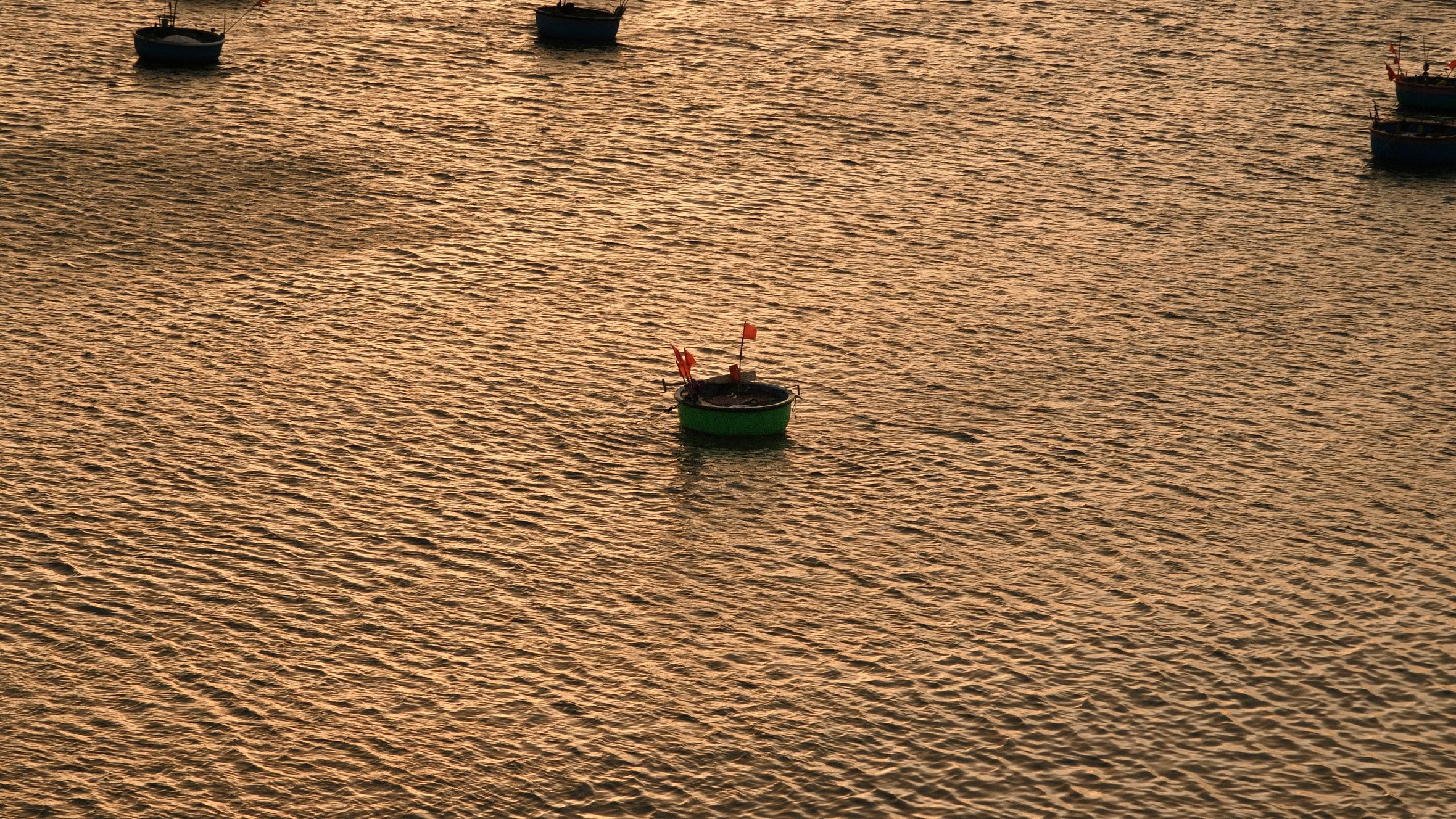
If you're there in late afternoon (around 4-5 PM), the round basket boats — "thung chai" — come back with the day's catch. It's unremarkable to locals but worth seeing if you haven't encountered this style of fishing elsewhere on the coast.
Where to eat
There are no restaurants at Ganh Ong. The nearest food is back in An Ninh Dong village or in Tuy Hoa proper.
In An Ninh Dong: Look for any "com binh dan" sign (everyday rice plates, 30,000-45,000 VND) or the seafood shacks along the main village road that serve whatever came off the boats that morning. Grilled squid and steamed clams are reliable — expect 80,000-150,000 VND for a seafood spread for two.
In Tuy Hoa: The city has surprisingly good "bun cha ca" — rice noodle soup with fish cake that's a regional specialty. Try the strip of food stalls on Tran Hung Dao street near the market. A bowl runs 30,000-40,000 VND. For something more substantial, the seafood restaurants along Tran Phu beach road serve decent grilled fish at reasonable prices (200,000-400,000 VND for a whole grilled fish).

Photo by Quang Nguyen Vinh on Pexels
Where to stay
Nothing exists at Ganh Ong itself — this is a day trip from Tuy Hoa.
Budget: Tuy Hoa has plenty of "nha nghi" (guesthouses) in the 200,000-350,000 VND range. Clean enough, air-con, hot water. Try the cluster near the train station.
Mid-range: A few newer hotels along the beachfront offer sea-view rooms for 500,000-800,000 VND/night. CenDeluxe Hotel is the city's tallest building and has decent rooms from 650,000 VND.
Homestay: Some families in An Ninh Dong rent rooms informally — ask around if you want to be closer, but don't expect bookable listings online.
Practical tips
- Bring water and sunscreen. There's zero shade on the rock formations.
- Wear proper shoes — reef shoes or sneakers. The basalt edges are sharp and barnacle-covered.
- The site has no entrance fee and no ticket booth. It's just... there.
- Phone signal is decent (Viettel works fine, Mobifone is patchy).
- If combining with Ganh Da Dia, the two are about 30 km apart — easy to hit both in a day.
Common mistakes
Going at high tide. You'll see a rough shoreline and wonder what the fuss was about. Check tide tables — the Vietnam (베트남 / 越南 / ベトナム) Institute of Oceanography publishes them online.
Wearing flip-flops on the rocks. One slip on wet basalt and you're looking at cut feet or worse. This isn't a beach boardwalk.
Expecting facilities. No cafe, no bathroom, no parking attendant. Bring what you need and take your trash out.
Skipping it for Ganh Da Dia only. Da Dia is more famous and more photogenic in a clean, symmetrical way. But Ganh Ong feels rawer and more honest — and you'll probably have it to yourself.
Last updated · May 26, 2026 · independently researched, never sponsored.







