What it is
Lang Nha San Dan Toc Sinh Thai Thai Hai sits about 15 km west of Thai Nguyen city center, tucked into a valley where tea plantations meet forested hills. It's not a museum or a theme park — around 30 families from the Tay ethnic minority actually live here in traditional wooden stilt houses, maintaining daily rhythms of farming, weaving, and communal meals. The village was established in the early 2000s by a Tay woman named Nguyen Thi Thanh Hai, who gathered families from various northern provinces to preserve a way of life that was quietly disappearing as younger generations moved to cities.
The result is somewhere between a cultural preservation project and an ecotourism site. You can sleep in stilt houses, eat home-cooked Tay food, watch textile dyeing, and join rice wine toasts around a fire pit — all without the feeling that someone built this for a tour bus. The village earned national recognition as a cultural tourism model, and it draws a mix of domestic weekenders and the occasional foreign traveler who heard about it through word of mouth.
Since the recent administrative merger of Thai Nguyen and Bac Kan provinces, the village remains in the same location and is still commonly referred to by its Thai Nguyen address.
Why travelers go
Most people visit for the overnight homestay experience. Sleeping in a stilt house on woven mats, waking up to roosters and the smell of wood smoke — it's a sharp contrast to Hanoi, which is only about 80 km south. The village works well as a detour if you're heading further north toward Ha Giang or the lakes around the former Bac Kan area. It's also one of the more accessible places to experience Tay culture without committing to a multi-day trek in Sapa or Ha Giang.
There's a genuineness here that's harder to find at more commercialized homestay operations. The families aren't performing — they're living. You just happen to be invited in.
Best time to visit
The sweet spot is October through April, when the weather is cooler and drier. Mornings can be genuinely cold in December and January — bring a jacket, because the stilt houses are open-air by design. The surrounding tea hills are greenest from March to May after spring rains.
Avoid major holiday weekends around Tet (late January or February) if you want a quieter experience — the village gets popular with domestic visitors during long weekends. Weekdays year-round are the calmest.
How to get there from Hanoi
From Hanoi (하노이 / 河内 / ハノイ), you have a few options:
- Bus: Catch a bus from My Dinh or Gia Lam station to Thai Nguyen city (around 70,000–90,000 VND, roughly 2 hours). From Thai Nguyen bus station, grab a local taxi or Grab to the village — about 15 km, costing 80,000–120,000 VND.
- Motorbike: The ride from Hanoi is about 80 km via QL3 (National Route 3). Straightforward road, mostly flat until the last stretch. Allow 2–2.5 hours depending on Hanoi traffic.
- Private car: A hired car from Hanoi runs around 1,200,000–1,500,000 VND one way. Worth it if you're splitting with others or combining with stops along the way.
The village is in Thinh Duc commune — most taxi drivers in Thai Nguyen know it. If they don't, search "Lang sinh thai Thai Hai" on Google Maps.

Photo by Quang Nguyen Vinh on Pexels
What to do
Stay overnight in a stilt house
This is the main draw. The houses are traditional Tay construction — hardwood frames, thatched or tiled roofs, raised floors. You sleep communally on mats with mosquito nets. It's basic but comfortable. Evening gatherings around the fire pit with rice wine ("ruou can," sipped through bamboo straws from a shared jar) are the social highlight.
Watch indigo dyeing and weaving
Several women in the village still practice traditional textile work. The indigo dyeing process — fermenting leaves, dipping fabric repeatedly, drying in the sun — takes days. You can watch and sometimes try your hand at it. The woven scarves and bags sold here are handmade, not factory reproductions.
Walk the tea plantations
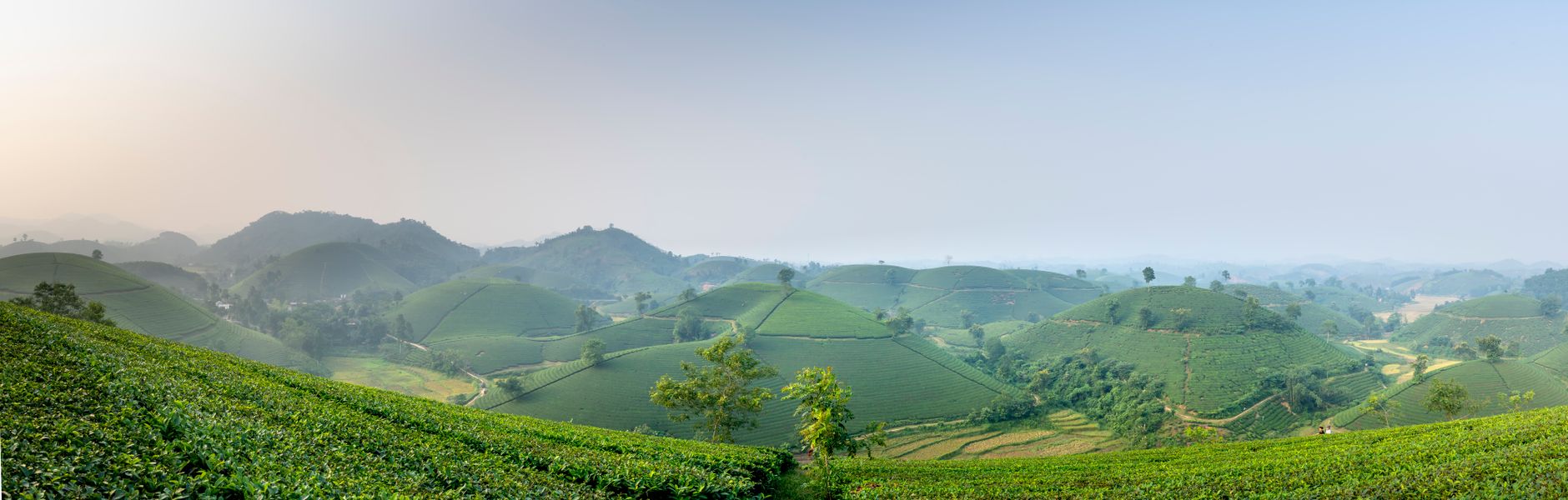
Thai Nguyen province is Vietnam (베트남 / 越南 / ベトナム)'s most famous tea-growing region. The hills around the village are planted with rows of green tea bushes. Morning walks through the plantations, especially when mist is still hanging in the valley, are one of those quiet pleasures that don't need a sales pitch. If you're lucky, you'll see pickers at work.
Join a Tay cooking session
Some visits include hands-on cooking with the families — wrapping "[banh chung](/posts/banh-chung-tet / 越南春节 / テト)-sticky-rice-cake)" (sticky rice cakes, especially around Tet season), grilling stream fish in banana leaves, or preparing "xoi ngu sac" (five-color sticky rice, each color from a natural plant dye). Ask when you book whether a cooking activity is available during your dates.
Explore the surrounding hills
Light hiking trails loop through the forested area behind the village. Nothing strenuous — an hour or two of walking through bamboo groves and past small streams. No guide needed, though a villager will usually point you in the right direction.
Where to eat nearby
Most visitors eat at the village itself — the communal meals are part of the experience and included in the homestay price. Expect dishes like grilled pork with "mac khen" (a peppery spice from the mountains), bamboo shoot soup, steamed river fish, and sticky rice. The food is simple and consistently good.
If you're passing through Thai Nguyen city, look for "pho" shops around Hoang Van Thu street — the local style leans toward lighter broth than Hanoi versions. Thai Nguyen is also the place to drink proper green tea; any "quan tra" (tea shop) near the city center will serve fresh local leaves.
Where to stay
The village homestay runs about 250,000–400,000 VND per person per night, including dinner and breakfast. Conditions are communal and basic — shared bathrooms, no air conditioning, limited hot water.
If you prefer more privacy, Thai Nguyen city has standard hotels in the 400,000–800,000 VND range. Yen Hoa Hotel and Dong A Hotel are both clean, central, and fine for a night. There's no reason to stay in the city unless you specifically want a hot shower and a firm mattress.

Photo by Q. Hưng Phạm on Pexels
Practical tips locals would tell you
- Bring cash. There's no ATM in the village and card payments aren't accepted. Bring enough VND for your stay, any textiles you might buy, and your transport back.
- Mosquito repellent matters. The valley setting means mosquitoes, especially from May to September. Nets are provided for sleeping, but bring spray for the evening hours.
- Book ahead for weekends. The village has limited capacity. Call or message through their Facebook page at least a few days before, especially for Saturday nights.
- Dress modestly. You're staying in people's homes. Shorts are fine, but avoid anything too revealing out of respect.
- Learn a few Tay greetings. Even a clumsy "Slao ma" (hello) gets a warm reaction.
Common mistakes to avoid
- Treating it like a day trip from Hanoi. You can visit for a few hours, but you'll miss the best parts — the evening fire pit, the morning mist, the slow pace. Stay at least one night.
- Expecting resort-level comfort. This is a village, not a hotel. If you need air conditioning and private bathrooms, this isn't your stop.
- Skipping the tea. You're in the tea capital of Vietnam. Drinking tea here — freshly picked, roasted, and brewed by someone who's done it for decades — is a different experience from the bottled stuff.
Practical notes
Lang Nha San Dan Toc Sinh Thai Thai Hai works best as a one-night stop on a longer northern Vietnam route — pair it with a day in Thai Nguyen for tea tasting, then continue north. It's not a place that needs a packed itinerary. Show up, slow down, and let the village set the pace.
Last updated · May 29, 2026 · independently researched, never sponsored.