What it is
Suoi Nuoc Nong Ban Ho is a natural hot spring tucked into the valley floor of Ban Ho commune, about 25 km southeast of Sapa town in Lao Cai province. The springs sit at roughly 600 meters elevation along the Muong Hoa River, surrounded by terraced rice paddies and Tay minority villages. Water temperatures hover around 40-45°C year-round, fed by geothermal activity beneath the Hoang Lien Son mountain range.
Locals have bathed here for generations — long before anyone thought to charge admission. The site was developed into a basic tourist facility in the mid-2010s with concrete soaking pools, changing rooms, and a ticket booth. It's still fairly low-key compared to commercial hot spring resorts elsewhere in Vietnam (베트남 / 越南 / ベトナム). No infinity pools, no spa music piped through speakers. Just hot mineral water in a valley that gets genuinely cold from November through March.
Why travelers go
Most visitors come for one of three reasons. First: it's a legitimate hot spring with high mineral content — sulfur, calcium, and silica — not a hotel pool with heated tap water. Second: the location itself. Ban Ho valley is one of the quieter alternatives to the increasingly crowded Sapa (사파 / 沙坝 / サパ) center, with homestays run by Tay families and hiking trails that see a fraction of the traffic on Fansipan routes. Third: after two or three days of trekking in Sapa's hills, soaking tired legs in 42°C water is hard to argue with.
The springs also work as a half-day trip if you're based in Sapa and want something beyond the usual Cat Cat village circuit.
Best time to visit
The sweet spot is October through March. Cool mountain air (sometimes dropping to 5-8°C at night in December and January) makes the hot water feel genuinely therapeutic rather than just warm. The contrast between cold air and hot soak is the whole point.
April to June is pleasant but less dramatic — temperatures are mild and the terraces are being planted. July through September brings heavy rain and occasional landslides on the access road, so check conditions before heading down.
Weekday mornings are quietest. Weekends, especially around Tet and public holidays, draw domestic tourists from Hanoi and Lao Cai city.

Photo by Quang Nguyen Vinh on Pexels
How to get there
From Sapa town center, Ban Ho is about 25 km by road — roughly 50 minutes on a motorbike via the winding route through Thanh Kim commune. The road is paved but narrow in sections, with some steep grades. If you're not comfortable on two wheels in mountain terrain, hire a xe om (motorbike taxi) for around 150,000-200,000 VND one way, or arrange a car through your hotel for 400,000-500,000 VND round trip with waiting time.
From Lao Cai city, it's about 45 km (1.5 hours by car). You'd head toward Sapa on the expressway, then branch off south before reaching town.
There's no public bus direct to the springs. The nearest bus stop is Sapa town, which connects to Hanoi via sleeper buses (6-7 hours, 250,000-350,000 VND) and to Lao Cai city station by minibus (45 minutes, 50,000 VND).
What to do
The main activity is soaking. The facility has several pools at different temperatures — a couple of hotter pools closer to the source, and cooler ones downstream. Entry costs around 80,000-100,000 VND per person (prices may adjust seasonally). Towel rental is available for 20,000 VND if you forget yours.
Beyond the pools:
Hiking to Tay villages
Ban Ho commune has several Tay hamlets accessible on foot. A 2-3 km walk from the springs takes you through rice terraces to villages where families still build traditional stilt houses. This isn't a guided "ethnic tourism" experience — it's just a walk through a working agricultural community. Be respectful, ask before photographing people.
Muong Hoa River
The river runs through the valley and has some calm swimming spots in dry season. Water is cold — a good contrast if you've been in the hot pools.
Combine with Sapa trekking
Many travelers slot Ban Ho into a multi-day Sapa trek: Day 1 hike from Sapa to Ta Van, Day 2 continue to Ban Ho, soak in the springs, stay overnight in a homestay, Day 3 return or get picked up.
Where to eat
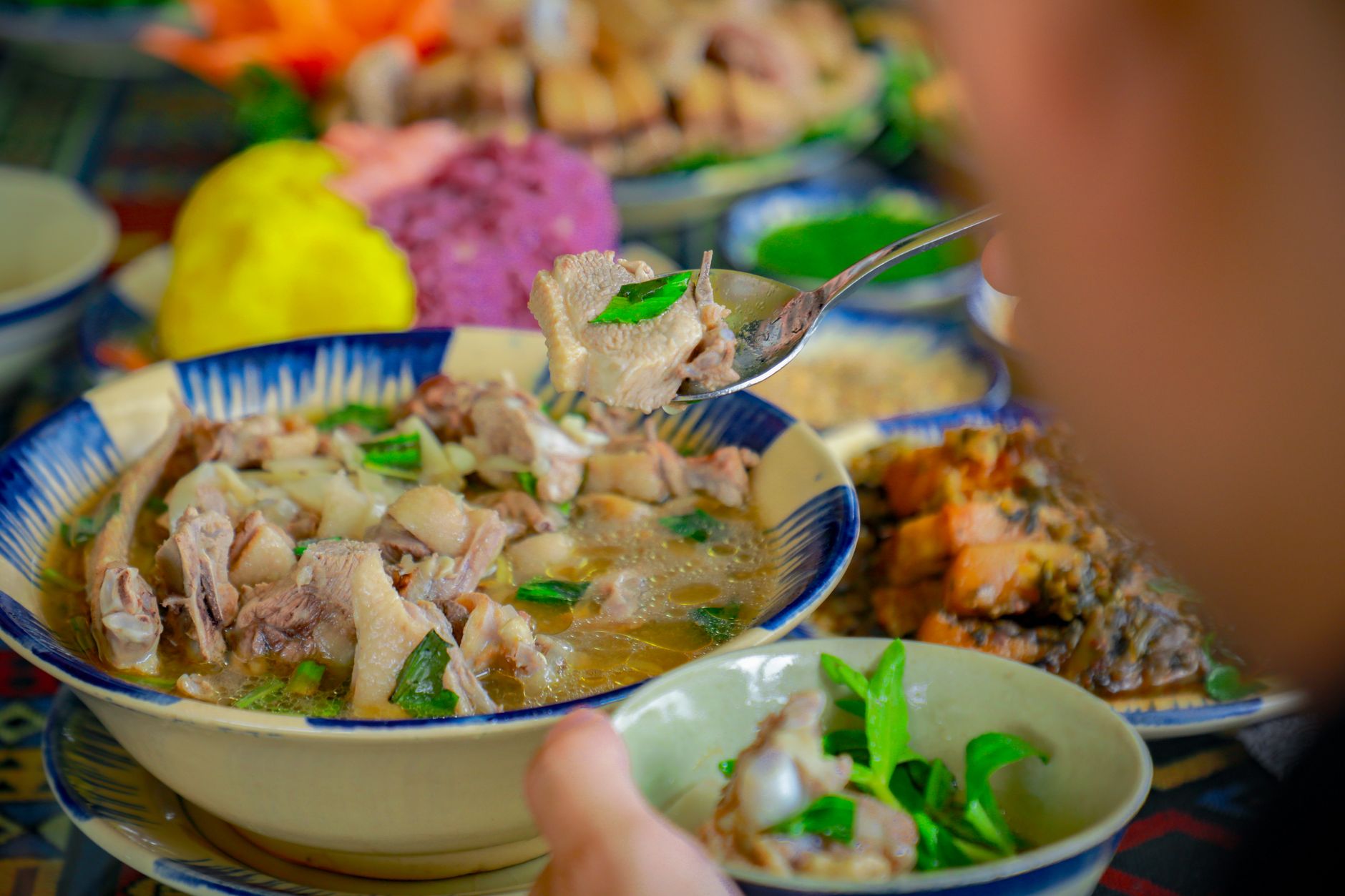
Options near the springs are limited. A few family-run kitchens near the entrance serve basic Vietnamese meals — rice, stir-fried vegetables, grilled stream fish, and "thang co" (a Hmong-origin organ soup popular in the highlands). Expect 60,000-100,000 VND per person for a filling lunch.
For better variety, eat in Sapa before or after. The town has everything from "pho" and "bun" stalls to proper restaurants. If you're trekking through, homestay hosts in Ban Ho typically cook dinner and breakfast included in the overnight rate — usually family-style with local greens, pork, and rice.

Photo by Quang Nguyen Vinh on Pexels
Where to stay
The closest accommodation is homestays in Ban Ho village itself. Tay family homestays charge 200,000-350,000 VND per person including dinner and breakfast. Conditions are basic — mattress on the floor of a stilt house, shared bathroom, mosquito net. But the food is honest and the setting is quiet.
If you want more comfort, base yourself in Sapa (25 km away) where hotels range from 300,000 VND budget rooms to multi-million VND resorts, and visit the springs as a day trip.
There's no mid-range hotel at Ban Ho itself — it's either homestay or nothing.
Practical tips
- Bring your own swimsuit. Rental options are limited and sizes unpredictable.
- Pack a dry bag if motorcycling — the road can be muddy in wet season.
- Cash only at the springs and surrounding villages. No ATM in Ban Ho. Withdraw in Sapa or Lao Cai city.
- Phone signal is patchy in the valley. Download offline maps before heading down.
- The sulfur content can discolor silver jewelry. Leave rings at your hotel.
- Bring flip-flops for the pool area — concrete gets slippery.
Common mistakes
Going midday in summer. When it's 28°C outside, sitting in 42°C water loses its appeal fast. Time your visit for early morning or late afternoon, or go in cool season.
Not checking road conditions in rainy season. The access road floods occasionally July-September. Ask your hotel in Sapa before committing to the trip.
Expecting a resort. This is a rural hot spring with basic facilities. If you want robes and aromatherapy, this isn't the place. If you want mineral water in a mountain valley with nobody trying to upsell you a spa package, it's perfect.
Skipping Ban Ho village. Some visitors soak for an hour and leave. The valley itself — the terraces, the river, the Tay stilt houses — is worth at least a half-day walk.
Last updated · May 29, 2026 · independently researched, never sponsored.