What it is
Mong Ngua — literally "horseshoe" — is a section of rice terraces in Mu Cang Chai that curves in a dramatic arc around a valley, creating one of the most photographed landscapes in northern Vietnam (베트남 / 越南 / ベトナム). The terraces sit at roughly 1,000m elevation in what was formerly Yen Bai province (now part of the expanded Lao Cai province after administrative redistricting). Hmong communities carved these terraces into the mountainside over generations, and the site is part of the broader Mu Cang Chai terraced fields recognized as a national heritage landscape.
Unlike the more famous La Pan Tan or Che Cu Nha terrace clusters nearby, Mong Ngua is compact and visually distinct — the horseshoe shape funnels your eye toward the center of the valley, where a small settlement sits surrounded by green (or gold, depending on season).
Why travelers go
Three reasons. First, the geometry — the curved terraces layered on top of each other look almost artificial, like someone designed them in software. Second, the relative quiet. Mu Cang Chai sees far fewer visitors than Sapa, even though the landscape rivals it. Third, the drive itself. Getting here from Hanoi means crossing Khau Pha Pass, one of the great mountain roads in Vietnam, with views that justify the trip even if you never reach the terraces.
Photographers come for golden hour. Hikers come for the trails threading between terrace levels. Everyone else comes because they saw one photo online and couldn't believe it was real.
Best time to visit
Two windows:
- Late September to mid-October — harvest season. The rice turns gold and the terraces glow. This is peak time, and you'll share the viewpoints with other visitors, but the colors are worth it.
- Late May to June — water-filling season. Terraces flood and become mirrors reflecting the sky. Fewer people, more dramatic light at sunrise.
Avoid November through March — the terraces are bare and brown, the weather is cold and foggy, and there's little to photograph. July and August work if you don't mind deep green (less contrast, but still beautiful) and afternoon rain.
How to get there
From Hanoi (하노이 / 河内 / ハノイ), Mu Cang Chai is about 280 km northwest — roughly 6-7 hours by motorbike or private car via National Road 32. The route passes through Nghia Lo and over Khau Pha Pass.
By motorbike: The classic choice. Rent in Hanoi (150,000-250,000 VND/day for a Honda Wave or XR150) and ride over two days, overnighting in Nghia Lo or Tu Le. The road is paved but winding — experienced riders only on Khau Pha.
By car/private driver: Book through your hotel or a Hanoi travel agency. Expect 3,500,000-4,500,000 VND round trip for a private car with driver (2-3 day trip).
By bus: Hanoi's My Dinh station runs buses to Mu Cang Chai town (around 250,000 VND, 6-7 hours). From town, you'll need a "xe om" (motorbike taxi) or arrange transport to the Mong Ngua viewpoint, about 15 km south.
Once in the area, Mong Ngua is off a dirt track branching from the main road near La Pan Tan commune. Ask locals for "mong ngua" — everyone knows it.
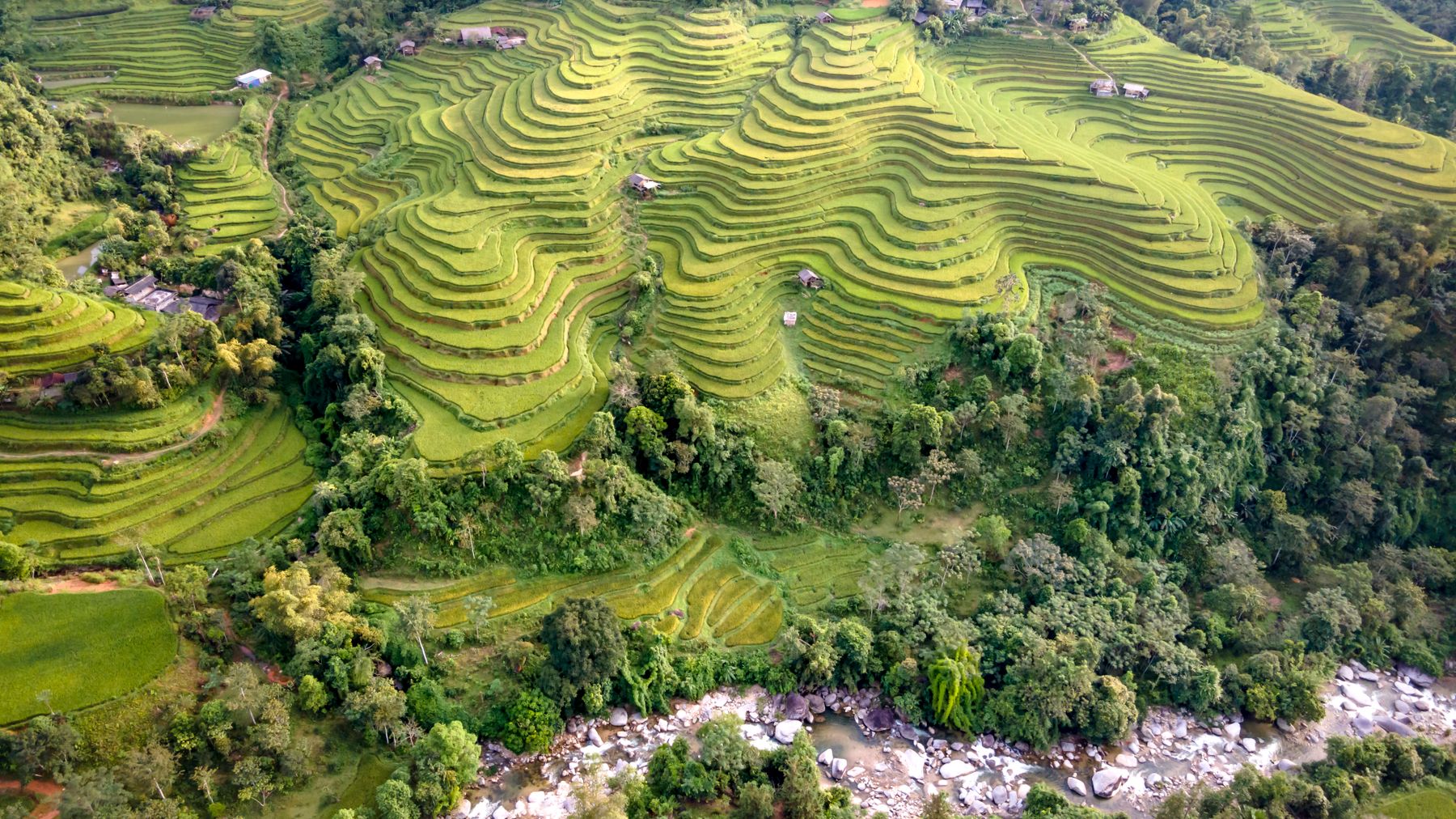
Photo by Quang Nguyen Vinh on Pexels
What to do
Walk the terraces
A trail drops from the upper viewpoint down through the terrace layers to the valley floor — about 45 minutes each way. The paths are narrow and can be slippery after rain, so wear proper shoes, not sandals. Hmong farmers use these paths daily, so stay on the established routes and don't trample through active paddies.
Sunrise photography
The horseshoe faces east-southeast, which means early morning light hits the terraces head-on. Arrive before 5:30 AM in September for the best conditions. A 35mm or 50mm lens captures the curve well; wide-angle distorts the shape.
Visit the weekly market
Mu Cang Chai town holds a market on Sunday mornings where Hmong, Thai, and other highland communities trade. It's not a tourist market — expect livestock, tobacco, fabric, and "thang co" (horse meat stew) rather than souvenirs.
Combine with Khau Pha Pass
The pass itself is a destination. Stop at the summit viewpoint (about 1,200m) for panoramic views stretching to the Laotian border range. The descent toward Tu Le includes natural hot springs where you can soak for 20,000-50,000 VND.
Where to eat
Mu Cang Chai town has a strip of "com pho" shops (rice and noodle joints) along the main road. Expect basic northern fare — pho, "bun" with pork, fried spring rolls ("cha gio"), and stir-fried greens. A meal runs 40,000-70,000 VND.
For something more memorable, look for "com lam" — sticky rice cooked inside bamboo tubes over fire — sold by Hmong women at the roadside near La Pan Tan. Pair it with grilled pork and local corn wine if you're not riding afterward.
Tu Le (30 km back toward Hanoi) is known for its "com nep" — a fragrant sticky rice variety grown only in that valley. Worth a lunch stop.
Where to stay
Mu Cang Chai town has guesthouses in the 200,000-500,000 VND range — basic rooms with hot water and WiFi. Eco Palms Lodge and Mu Cang Chai Ecolodge sit closer to the terraces and offer valley-view rooms for 800,000-1,500,000 VND/night.
Homestays in La Pan Tan commune put you closest to Mong Ngua itself — sleeping on floor mattresses in a Hmong stilt house, shared meals included, typically 300,000-400,000 VND per person. Book through local contacts or just show up and ask; availability is rarely an issue outside peak harvest weeks.
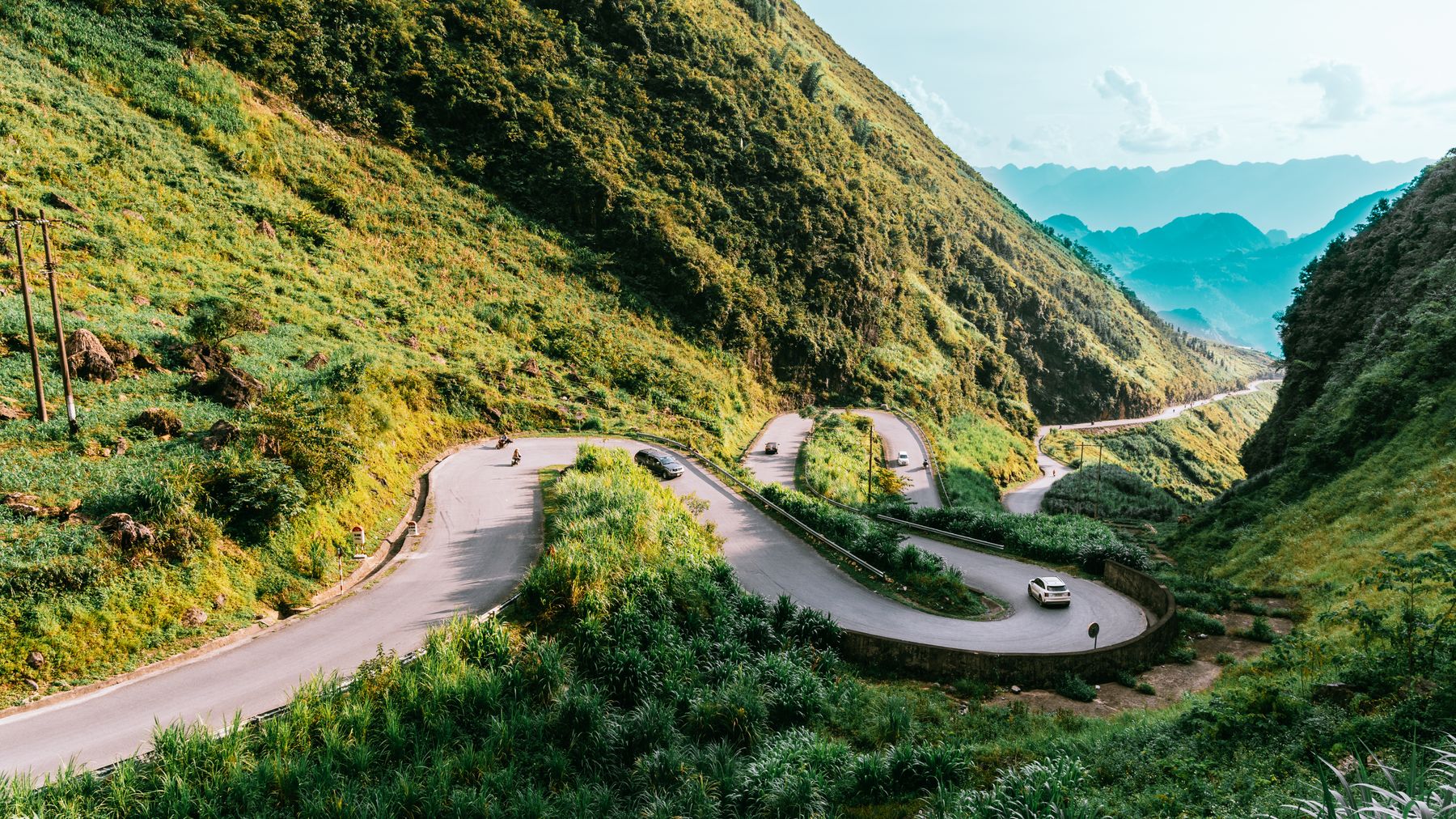
Photo by Nguyễn Sơn Tùng on Pexels
Practical tips
- Cash only. No ATMs in the terrace area. The nearest ATM is in Mu Cang Chai town (Agribank). Bring enough dong from Hanoi.
- Phone signal is patchy between the terraces. Viettel has the best coverage in highland areas.
- Altitude sickness isn't an issue at 1,000m, but the roads can trigger motion sickness. Pack medication if you're prone.
- Respect the fields. These are working farms. Don't climb terrace walls, pick rice, or fly drones directly over farmers without asking.
- Fuel up in Mu Cang Chai town. There's no petrol station between town and the terraces.
Common mistakes
Arriving in the wrong month tops the list — showing up in December to brown, empty fields. Second: underestimating the drive from Hanoi and trying to do it as a day trip (you can't, comfortably). Third: wearing flip-flops on wet terrace trails and sliding into a paddy. Fourth: not bringing a headlamp for pre-dawn hikes to the viewpoint.
Practical notes
Mong Ngua works best as part of a 3-day loop from Hanoi: Day 1 ride to Tu Le or Nghia Lo, Day 2 explore Mu Cang Chai and the terraces, Day 3 return via a different route through Than Uyen toward Sapa or loop back to Hanoi. The Ha Giang loop gets all the attention these days, but Mu Cang Chai delivers equally dramatic scenery with a fraction of the tourist traffic.
Last updated · May 29, 2026 · independently researched, never sponsored.