Nui Nho — literally "Small Mountain" — is the rocky headland at the southern tip of the Vung Tau peninsula. It tops out at just 170 meters, but that's enough elevation to earn panoramic views of the coast, the city's harbor, and the open sea beyond. If you're visiting Vung Tau for a weekend from Saigon, this is the walk that justifies getting up early.
What it is
Nui Nho sits at the far end of Vung Tau (붕따우 / 头顿 / ブンタウ)'s southern cape, across from its taller sibling Nui Lon (Big Mountain) to the north. The headland is home to the old Vung Tau Lighthouse — built during the French colonial period in 1862 and still operational — as well as a network of paved and semi-paved paths that wind through scrubby forest and along cliff edges.
The mountain also holds the massive Jesus Christ statue (Tuong Chua Kito Vua), completed in 1993. At 32 meters tall on a 10-meter platform, it's visible from most of the city's beaches. You can climb the interior staircase to the statue's outstretched arms for a view that puts the whole Vung Tau coastline into perspective.
Vung Tau has recently become part of the expanded Ho Chi Minh City (호치민시 / 胡志明市 / ホーチミン市) administrative area. For travelers, nothing changes on the ground — it's the same coastal town, same seafood, same weekend escape energy.
Why travelers go
Vung Tau is the closest proper beach town to Saigon, and Nui Nho is its most rewarding half-day activity. The combination of coastal walking paths, the lighthouse, the Jesus statue, and cheap seafood at the base makes it a solid morning or late-afternoon outing. It's not a hike in any serious sense — more a steep walk with stairs — but the elevation gives you something the flat beaches can't: perspective over the South China Sea and Back Beach stretching north.
It's also genuinely used by locals. Early mornings you'll share the paths with Vietnamese joggers and elderly walkers doing their daily exercise. That alone makes it feel less like a tourist attraction and more like part of the city's routine.
Best time to visit
November through April is the dry season and the most comfortable window. Mornings between 6:00 and 8:00 AM are ideal — the air is cooler, the light is good for photos from the lighthouse, and the paths aren't crowded yet.
Avoid weekends from May to September if you can. Vung Tau fills up with Saigon day-trippers during summer, and the paths on Nui Nho get busy by mid-morning. Weekday visits in any season are noticeably quieter.
The rainy season (May–October) brings afternoon downpours. The stone steps near the Jesus statue get slippery — not dangerous, but worth knowing.
How to get there from Saigon
The fastest option is the hydrofoil from Bach Dang Wharf (District 1) to Vung Tau. Greenlines operates the most frequent service — about 1 hour 30 minutes, tickets around 250,000–350,000 VND one way depending on seat class. Book a day ahead on weekends.
Alternatively, buses run from Mien Dong bus station. The ride takes roughly 2 to 2.5 hours depending on traffic, and costs 70,000–130,000 VND. Phuong Trang (FUTA) and Kumho Samco are reliable operators.
Once in Vung Tau, Nui Nho is at the southern end of the peninsula. From the hydrofoil terminal, it's about 5 km — a 30,000–50,000 VND xe om (motorbike taxi) ride, or you can rent a motorbike for the day (150,000–200,000 VND) which gives you freedom to hit both mountains and the beaches.

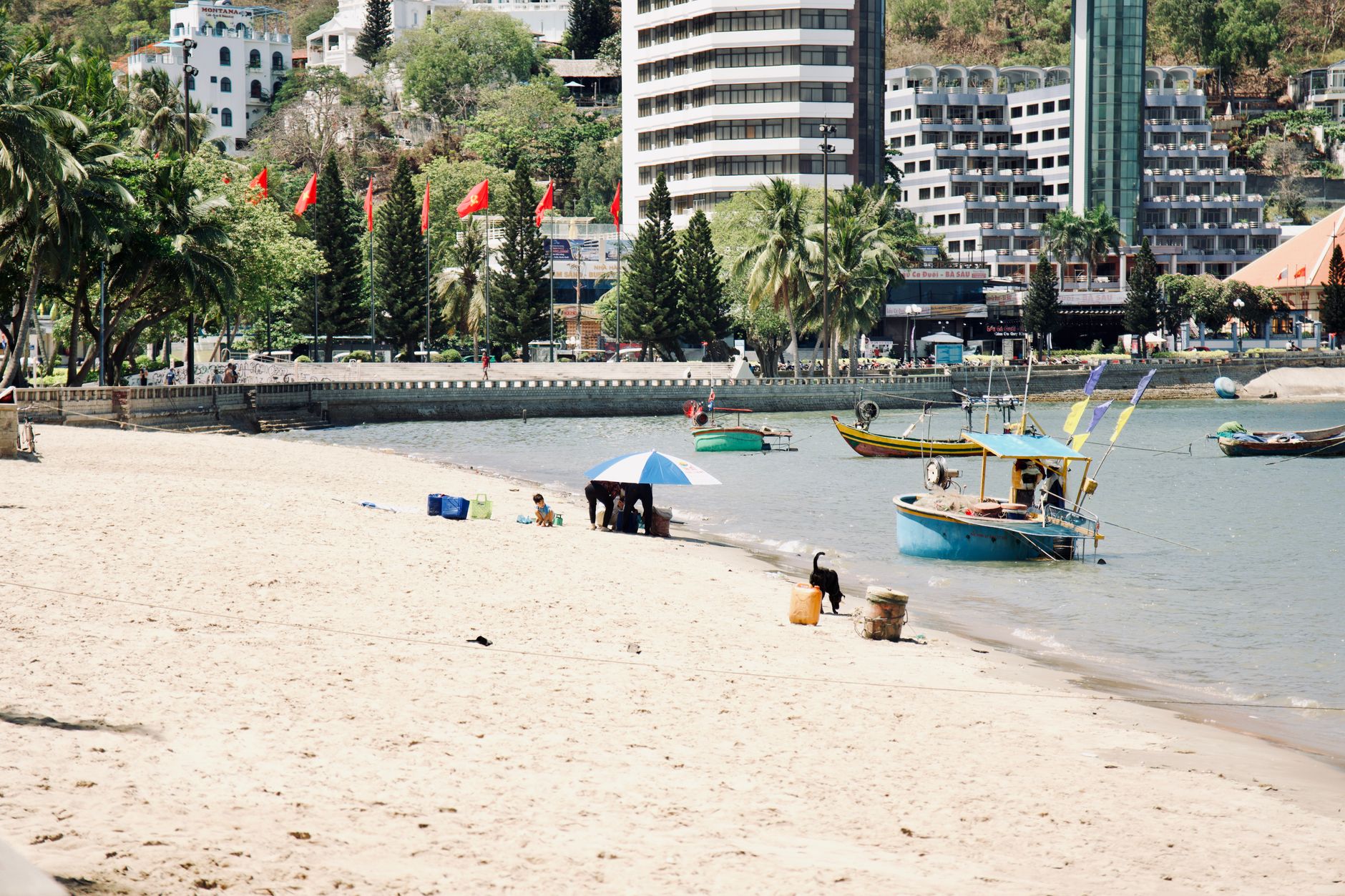
Photo by Costa Karabelas on Pexels
What to do
Walk to the lighthouse
The Vung Tau Lighthouse sits near the peak of Nui Nho. The path up starts from Hai Dang street on the eastern side. It's a 20-to-30-minute walk up paved switchbacks. The lighthouse itself is a squat white tower — nothing dramatic architecturally, but the vantage point is the real draw. You can see Back Beach, Front Beach, the container port, and on clear days, the oil rigs offshore. Entry is free.
Climb the Jesus statue
The entrance is on the western slope, off Ha Long street (not to be confused with Ha Long Bay up north). There's a gate and a long stone staircase — 811 steps total from the base. Inside the statue, a narrow spiral staircase leads to the arms. The interior is basic concrete, and the final section requires some squeezing through tight passages. Open daily, usually 7:30–11:30 AM and 1:30–5:00 PM. Free entry, but you'll need to cover your knees and shoulders.
Walk the coastal cliff path
A partially paved trail runs along the southern cliff face between the lighthouse area and the statue. This stretch is the highlight — rocky outcrops, waves below, and almost no commercial development. It takes about 40 minutes at a relaxed pace. Some sections are uneven, so wear proper shoes, not flip-flops.
Watch the fishing boats from Bai Dau
Bai Dau (Mulberry Beach) sits at the northwestern foot of Nui Nho. It's a small, relatively quiet beach where local fishing boats anchor. Not a swimming beach, but a good spot to sit with a coffee and watch the harbor activity in the late afternoon.
Where to eat nearby
Vung Tau's thing is seafood, and the streets around the base of Nui Nho — particularly along Truong Cong Dinh and Ha Long — have small restaurants serving grilled fish, steamed clams, and "banh khot" (tiny crispy rice flour pancakes with shrimp). Banh khot is a Vung Tau signature worth seeking out. Quan Banh Khot Goc Vu Sua on Nguyen Truong To street is a long-running local spot — expect to pay 40,000–60,000 VND for a generous plate.
For something more substantial, "com tam" (broken rice) places are everywhere. A plate with grilled pork, egg, and fish sauce runs 35,000–50,000 VND.
Where to stay
Budget guesthouses near Back Beach start around 300,000–500,000 VND per night. Mid-range hotels with sea views go for 800,000–1,500,000 VND. If you want to be close to Nui Nho specifically, look for accommodation along Ha Long street or near Front Beach — you'll be within walking distance of the mountain paths.
Most visitors from Saigon do Vung Tau as a day trip or single overnight. One night is enough to cover Nui Nho, a beach session, and a seafood dinner.

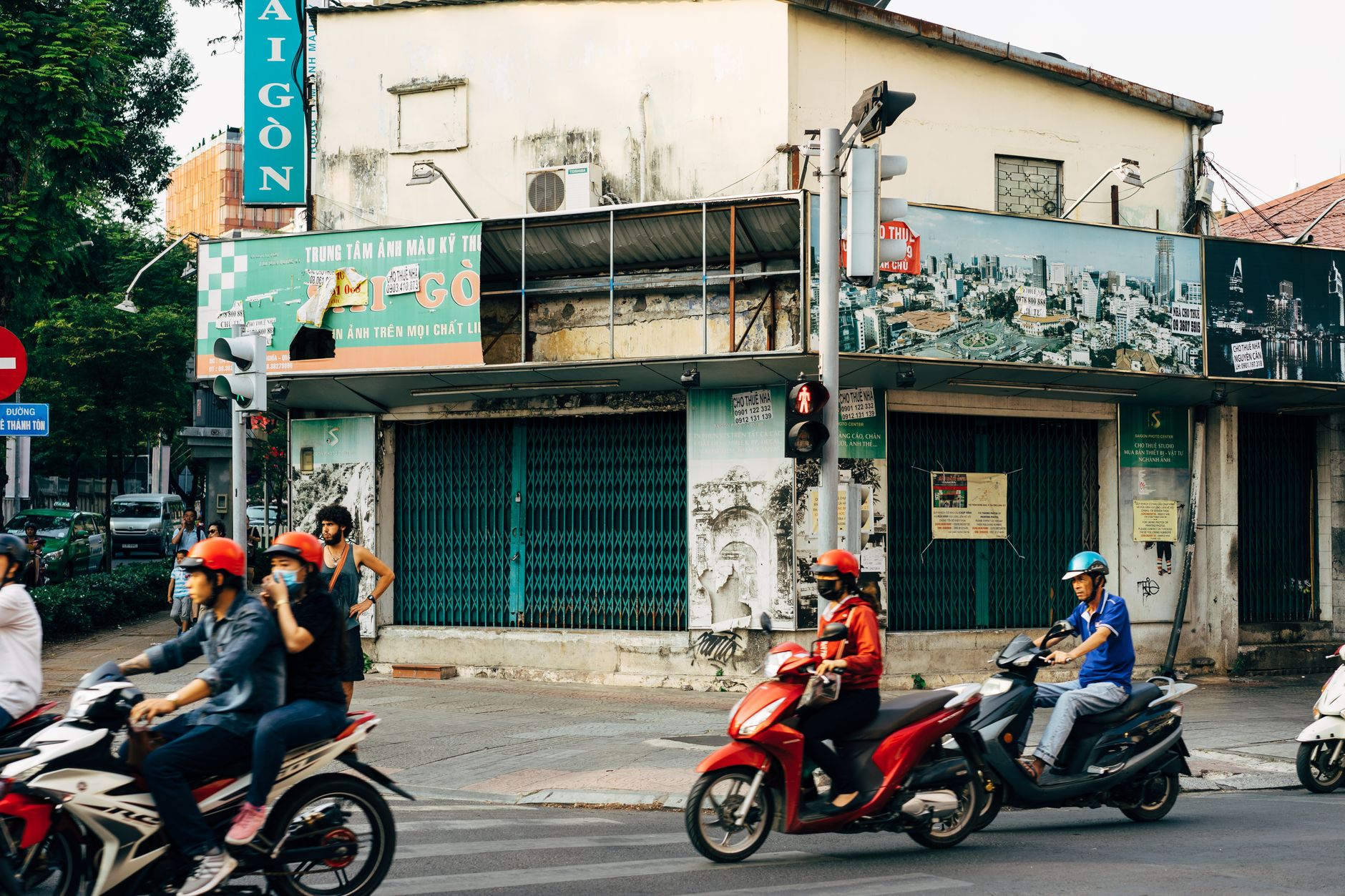
Photo by Pham Huan on Pexels
Practical tips locals would tell you
- Bring water. There are no shops on the mountain paths between the base and the summit areas.
- Start early. By 9:00 AM the exposed sections of the cliff path are uncomfortably hot.
- The Jesus statue has a dress code that's actually enforced. Long pants or a sarong and covered shoulders.
- If you rent a motorbike, park at the base near the statue entrance — the road up to the lighthouse is steep and the parking situation at the top is limited.
Common mistakes to avoid
- Trying to do Nui Nho in the midday heat. The mountain has limited tree cover and the stone steps radiate heat. Morning or late afternoon only.
- Wearing sandals on the cliff path. The rocks are uneven and sometimes loose.
- Skipping the lighthouse in favor of only the statue. The lighthouse viewpoint is arguably better and far less crowded.
- Coming on a summer weekend without booking the hydrofoil in advance. Tickets sell out, especially Sunday return trips to Saigon.
Practical notes
Nui Nho works best as a morning activity paired with an afternoon on Back Beach and an evening seafood dinner. The whole mountain can be covered in 2–3 hours at a comfortable pace. Combine it with Vung Tau's other draws and you have one of the most accessible weekend trips from Saigon.
Last updated · May 29, 2026 · independently researched, never sponsored.