What Tu Lan Is and Why It Matters
Tu Lan is a cave system about 70 km northwest of Phong Nha town in central Vietnam (베트남 / 越南 / ベトナム)'s Quang Binh region. It sits in the same karst limestone belt as Son Doong — the world's largest cave — but draws a fraction of the visitors. The system includes around ten caves connected by jungle trails, underground rivers, and valleys that feel genuinely remote even though you're only a few hours from a paved road.
The caves were surveyed by the British-Vietnamese Cave Research Association starting in 2009, and the adventure tourism operator Oxalis has held the exclusive permit to run treks here since 2011. That exclusivity is worth knowing upfront: you cannot visit Tu Lan independently. Every trip goes through Oxalis or, for a couple of the shorter routes, through authorized partners. This isn't a place you can show up and wing it.
The system gained international attention after scenes from the film Kong: Skull Island (2017) were shot at Hang En and in the surrounding jungle. That brought cameras, but the permit system and multi-day format have kept Tu Lan from turning into a selfie circus.
Why Travelers Go
Tu Lan appeals to people who want something physically demanding but don't need to spend $3,000 on Son Doong. The one-day and two-day treks involve river crossings (chest-deep in places), jungle hiking over uneven terrain, swimming through cave passages, and camping inside or near caves. It's not extreme mountaineering, but it's not a walkway with handrails either.
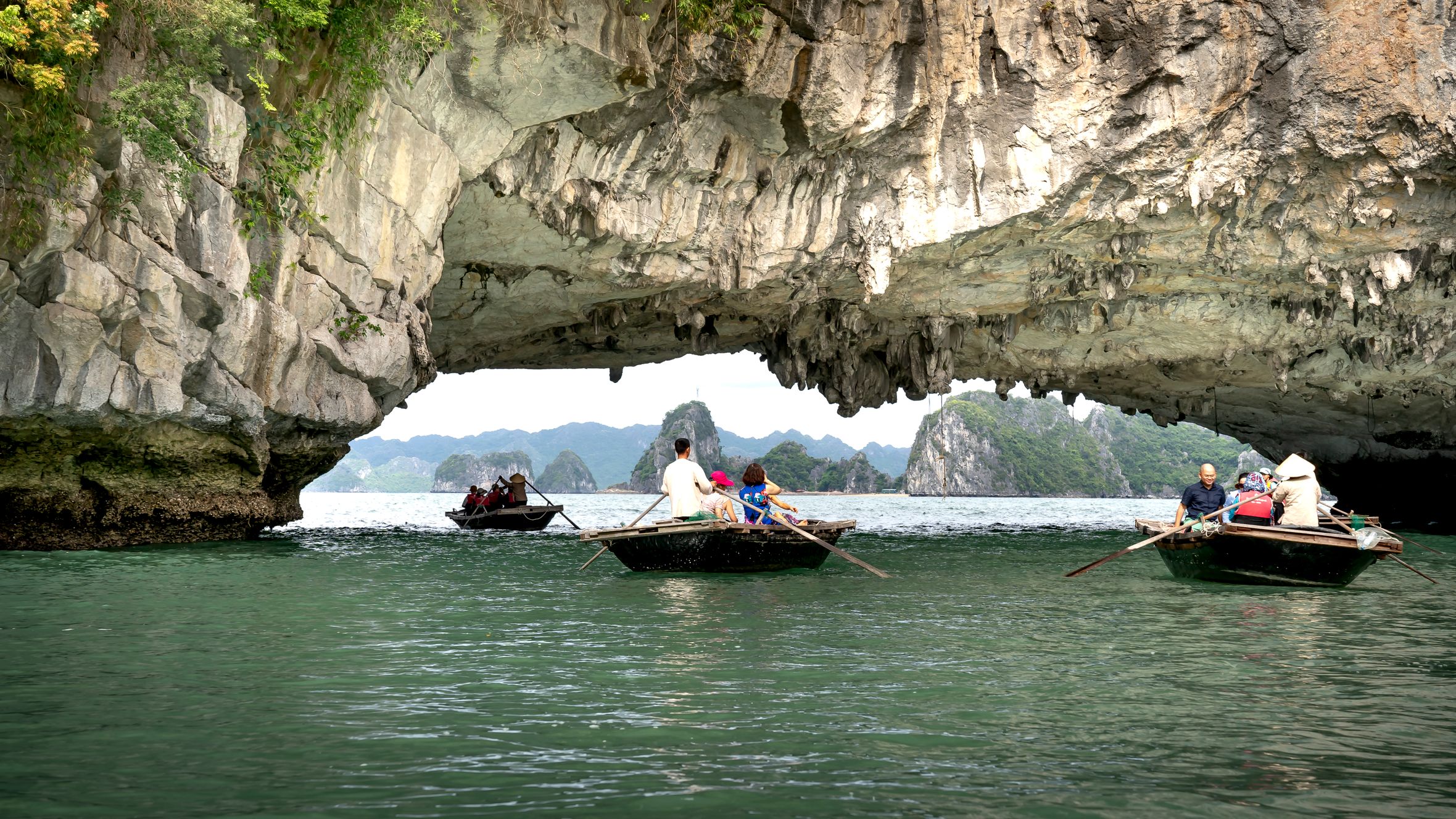
The draw is the combination: you're trekking through dense jungle, wading into pitch-black cave mouths, swimming across emerald pools inside limestone chambers, and sleeping in a camp set up by porters who carry everything in. The two-day expedition, which covers Hang Ken, Tu Lan, and several smaller caves, is the most popular option and hits a good balance between effort and accessibility.
If you've already visited Phong Nha (퐁냐 / 峰牙 / フォンニャ) Cave and Paradise Cave — the two big tourist caves in the area — Tu Lan is the logical next step up in terms of adventure.
Best Time to Visit
The trekking season runs from roughly February through August. The sweet spot is March to June: temperatures are warm but not brutal (28-34°C), rainfall is relatively low, and river levels are manageable for the swimming sections.
July and August still work but are hotter, and afternoon rains become more frequent. From September through November, the region gets hammered by monsoon rains and occasional typhoons. Oxalis suspends operations during the worst months. December and January are cooler (18-22°C) and sometimes foggy, which can make jungle sections slippery. Book early for April and May — those months fill up fastest.
How to Get There
The nearest hub is Dong Hoi, a small coastal city with its own airport (Dong Hoi Airport, VDH) and a train station on the north-south line.
- From Hanoi: VietJet or Vietnam Airlines fly to Dong Hoi in about 1 hour 15 minutes. Tickets run 800,000-1,500,000 VND one way if booked a few weeks ahead. The Reunification Express train takes roughly 10-11 hours; sleeper berths cost around 500,000-700,000 VND.
- From Da Nang or Hue: the train from Hue to Dong Hoi is about 3.5 hours (150,000-350,000 VND depending on class). From Da Nang, add another hour. Buses also run this route for around 150,000-200,000 VND.
- From Dong Hoi to Phong Nha: local buses run the 45 km route for about 30,000 VND; motorbike rental from Dong Hoi costs around 150,000-200,000 VND/day. A private car transfer is roughly 400,000-500,000 VND.
Oxalis runs its own shuttle from Phong Nha town to the Tu Lan trailhead on trek days. That's included in the tour price. The trailhead is near Tan Hoa village, about 70 km from Phong Nha — around 1.5 hours on winding roads through farming country.

Photo by Trinh Tuoi on Pexels
What to Do
1. The Two-Day Tu Lan Expedition
This is the flagship trek. You hike roughly 8-10 km each day through jungle, swim through cave passages, explore Hang Ken and Tu Lan caves, and camp overnight at a site near the cave entrance. Porters handle the heavy gear. The cost is around 6,500,000-7,500,000 VND per person, meals and equipment included. Groups are capped at about 10-12 trekkers.
2. The One-Day Tu Lan Trek
A condensed version covering fewer caves but still including jungle hiking, river swimming, and cave exploration. Runs about 3,500,000-4,500,000 VND. Good if you're short on time but still want more than a standard cave tour.
3. Hang Tien Expedition (Four Days)
For those who want to go deeper — literally. The four-day trek covers more remote sections of the system and includes camping in caves. Prices start around 12,000,000-14,000,000 VND. This is serious trekking and requires reasonable fitness.
4. Explore Phong Nha and Paradise Cave
If you have time before or after your Tu Lan trek, the main Phong Nha caves are worth a half-day. Phong Nha Cave is accessed by boat; Paradise Cave has a well-built walkway system. Entry fees are around 150,000-250,000 VND each.
5. Cycle Around Phong Nha
Rent a bicycle in Phong Nha town (50,000-80,000 VND/day) and ride through the surrounding countryside. The road to Nuoc Mooc Spring is flat and quiet. Stop for "bia hoi" at one of the roadside spots along the way.
Where to Eat Nearby
Phong Nha town has a strip of traveler-friendly restaurants along the main road. For something more local, look for "com binh dan" (everyday rice) places in the market area — a plate of rice with grilled pork, greens, and broth runs 30,000-40,000 VND.
The region is also good for "banh xeo" — the crispy turmeric crepe stuffed with shrimp and pork. Central Vietnamese versions tend to be smaller and crispier than the southern style. Ask your guesthouse owner where to find the best one nearby; the answer changes every year.
Where to Stay
Phong Nha town is the base. Budget hostels and homestays run 150,000-300,000 VND/night for a dorm bed or basic room. Mid-range guesthouses with air conditioning and decent showers cost 400,000-800,000 VND. A handful of higher-end options like Phong Nha Farmstay sit outside town in the 1,200,000-2,500,000 VND range.
If you want to stay closer to the trailhead, Tan Hoa has a couple of homestays. They're basic — expect a mattress, a fan, and home-cooked meals — but the village setting is genuinely peaceful. Around 200,000-350,000 VND/night.
Photo by Trinh Tuoi on Pexels
Practical Tips Locals Would Tell You
- Book Oxalis treks at least 2-3 weeks ahead in peak season. Same-week bookings are sometimes possible but not reliable.
- Bring shoes that can get soaked. You'll be in water repeatedly. Sandals aren't allowed on the trek; sturdy trainers or trail shoes work. Oxalis provides trekking shoes if yours aren't suitable.
- Pack light. Porters carry the main gear, but you'll carry a small daypack with water, sunscreen, and a change of clothes. Don't overpack.
- Waterproof bags matter. A dry bag for your phone and wallet is essential, not optional. River crossings are chest-high.
- Leeches are part of the deal. Jungle in central Vietnam means leeches after rain. Tuck your pants into your socks and check yourself at rest stops. They're harmless but unpleasant.
Common Mistakes to Avoid
- Showing up without a booking thinking you can join a trek. You can't. The permit system is strict.
- Underestimating the physical demands. The two-day trek isn't casual. If you can't hike 10 km on uneven ground and swim 200 meters, train first.
- Skipping travel insurance. Evacuations from the jungle are expensive and complicated. Make sure your policy covers adventure activities.
- Rushing through Phong Nha. Budget at least three days in the area — one for the Tu Lan trek, one for the main caves, one for recovery and the countryside. Trying to do it all in 24 hours just means you enjoy none of it.
Practical Notes
Tu Lan isn't a budget day trip — between the Oxalis permit, gear, and transport from Dong Hoi, you're looking at a minimum of 4,000,000 VND even for the one-day option. But for what you get — actual jungle trekking, underground river swimming, cave camping — it's reasonable by international adventure tourism standards. Just come prepared, physically and logistically, and it'll be one of the more memorable things you do in Vietnam.
Last updated · May 29, 2026 · independently researched, never sponsored.