What It Is and Why It Matters
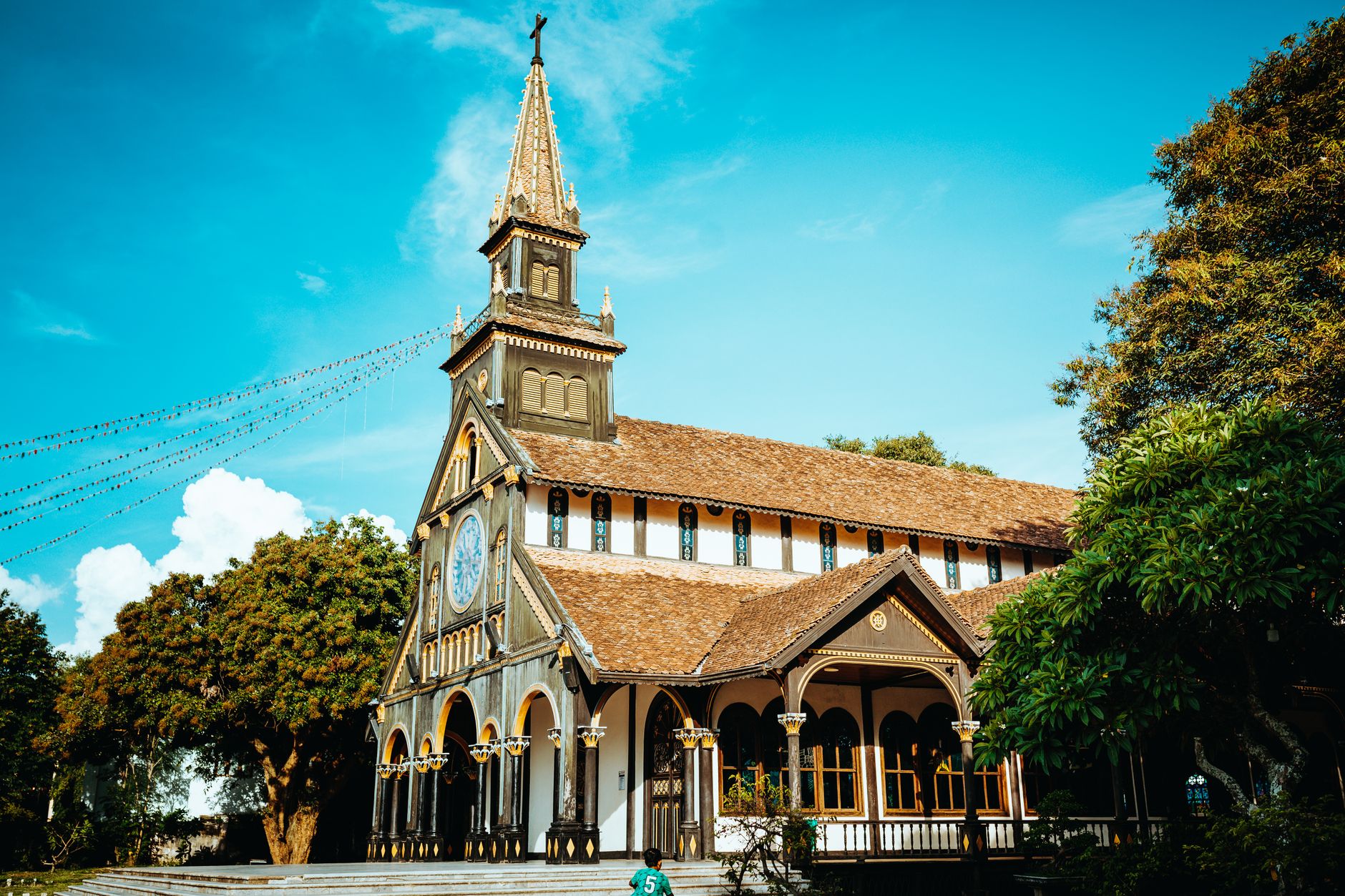
Toa Giam Muc Kon Tum — the Kon Tum Bishop's Residence — is a Catholic complex anchored by a wooden church that French missionaries and local Ba Na craftsmen built between 1913 and 1918. The whole thing was constructed without a single nail. Instead, the builders used a traditional Ba Na interlocking timber technique, slotting hardwood beams together so precisely that the structure has held for over a century through wars, storms, and Central Highlands (중부 고원 / 中部高原 / 中部高原) humidity.
The main church is sometimes called the Wooden Church of Kon Tum (Nha Tho Go Kon Tum), and it sits alongside a seminary, an orphanage, and a small museum of Indigenous highland culture. It's one of the few places in Vietnam (베트남 / 越南 / ベトナム) where Romanesque European church architecture and Ba Na ethnic design genuinely merge — not as a tourist attraction, but because that's how the community actually built it.
Kon Tum city sits in Vietnam's Central Highlands, historically part of Kon Tum Province. Following recent administrative reorganization, the broader region now falls under an expanded Quang Ngai Province. The complex remains in Kon Tum city itself, on Nguyen Hue Street, close to the Dak Bla River.
Why Travelers Go
Most people passing through the Central Highlands are on the road between Da Nang or Hue and the southern highlands around Da Lat. Kon Tum is a natural stop on that route, and the Bishop's Residence is the single most distinctive piece of architecture in town.
But it's not just about the building. The complex is a window into the Ba Na, Gia Rai, and other highland communities whose culture is everywhere in Kon Tum but rarely explained to outsiders. The small ethnographic museum on the grounds — displaying traditional textiles, musical instruments, and ritual objects — is one of the better introductions you'll find without hiring a guide or trekking to remote villages.
Best Time to Visit
Kon Tum has two seasons: dry (November to April) and wet (May to October). The best months are December through March — warm days around 25–28°C, cool nights, almost no rain. The landscape is green from the previous wet season but the roads are dry and easy.
Avoid September and October if you can. That's peak rain, and while the church itself is fine, the surrounding dirt roads to nearby Ba Na villages turn into red mud.
Sunday mornings are worth timing for: the local Ba Na Catholic community holds mass with hymns sung in their own language. It's not a performance — it's a real service — so sit quietly in the back if you attend.
How to Get There
The nearest major hub is Da Nang, roughly 290 km north via the QL14E and AH17 highways.
- Bus from Da Nang: Direct buses run daily from Da Nang's central bus station. The ride takes about 5.5–6 hours and costs around 150,000–200,000 VND. Several companies operate the route; buy tickets at the station or through the Vexere app.
- Motorbike: The Da Nang to Kon Tum ride via Kham Duc and the Ho Chi Minh Road is one of the better motorcycle routes in central Vietnam — mountain passes, coffee plantations, very little traffic once you're past the coast. Budget a full day.
- From Hue: About 320 km. Buses take 7–8 hours with a transfer in Da Nang or a direct service if available.
- From Pleiku (Gia Lai): Only 50 km south. Frequent local buses, about 1 hour, under 50,000 VND. Pleiku also has a domestic airport with flights from Hanoi and Saigon.
Once in Kon Tum city, the Bishop's Residence is on Nguyen Hue Street, about 1 km from the town center. A "xe om" (motorbike taxi) or Grab ride costs 10,000–15,000 VND.

Photo by Dương Nhân on Pexels
What to Do
1. Walk Through the Wooden Church
The interior is dim, cool, and smells like old wood. Look up — the ceiling structure is where the Ba Na joinery really shows. The stained glass windows were made in France, but the decorative motifs on the walls blend Catholic iconography with Ba Na geometric patterns. Give yourself 20–30 minutes to actually look.
2. Visit the Ethnographic Museum
Small but genuinely informative. Displays cover Ba Na longhouse construction, "cong chieng" (gong culture) of the Central Highlands, weaving patterns, and ritual practices. Free entry. It's usually open mornings and early afternoons — don't show up at lunch expecting an open door.
3. Cross the Dak Bla River to Kon Klor Suspension Bridge
About 3 km east of the church, this pedestrian suspension bridge connects to a Ba Na village on the opposite bank. The bridge itself is photogenic — painted in bright colors, swaying slightly over the wide brown river. On the far side you can see a traditional "rong" (communal house) with its distinctive steep roof.
4. Walk the Seminary Grounds
The seminary garden behind the main church is quiet, shaded, and usually empty. There's a grotto and several older buildings in the same wooden architectural style. It's a good place to sit for a while.
5. Catch the Light at Golden Hour
The church faces east. Late afternoon sun hits the back and sides, and the warm light through the stained glass is worth timing for — arrive around 4:00–4:30 PM in dry season.
Where to Eat Nearby
Kon Tum's food scene leans highland. Two things to seek out:
- "Com lam" — sticky rice cooked inside bamboo tubes over charcoal. Sold at small stalls along Nguyen Hue Street and near the market. Around 15,000–20,000 VND per tube. Eaten with grilled pork or dried buffalo meat.
- "Goi la" — a DIY wrap-it-yourself dish with dozens of different leaves, herbs, rice paper, thin rice noodles, and various meats. Restaurants near the Dak Bla River specialize in this. A full spread for two runs about 150,000–200,000 VND. It's interactive, messy, and one of the most distinctive meals you'll have in Vietnam.
For Vietnamese coffee, Kon Tum is surrounded by coffee plantations. Any local cafe will serve strong, freshly roasted stuff — far better than what you'll get in most tourist towns.
Where to Stay
- Budget (200,000–400,000 VND/night): Basic guesthouses on Nguyen Hue and Phan Dinh Phung streets. Clean enough, air conditioning, hot water. Don't expect English.
- Mid-range (500,000–900,000 VND/night): A few newer hotels near the town center with decent rooms. Indochine Kon Tum Hotel is a reliable pick.
- Homestays: Some Ba Na community homestays exist in villages across the Dak Bla River. Ask at the local tourism office or your guesthouse — these aren't on Booking.com.

Photo by Duy Nguyen on Pexels
Practical Tips Locals Would Tell You
- Dress modestly at the church. Shoulders and knees covered. This is an active place of worship, not a museum.
- Bring cash. Kon Tum has ATMs, but many smaller restaurants and all market stalls are cash-only.
- Learn two words: "Xin chao" (hello) and "cam on" (thank you). Kon Tum sees far fewer foreign visitors than Hoi An or Da Nang — a little effort goes a long way.
- The complex is free to enter, but donations are appreciated. There's a box near the church entrance.
Common Mistakes to Avoid
- Rushing through. People sometimes treat this as a 15-minute photo stop. The museum, the gardens, and the bridge across the river easily fill a half day.
- Skipping Kon Tum entirely. Many travelers blast from Da Nang straight to Da Lat. Kon Tum is worth an overnight — it's quiet, the food is different from the coast, and the highland culture is something you won't find in Hue or Hoi An.
- Visiting only the church. The whole complex matters. Walk the full grounds.
Practical Notes
Kon Tum is an undervisited corner of central Vietnam that rewards slower travel. The Bishop's Residence is the anchor, but the town itself — riverside walks, highland food, Ba Na villages within easy reach — makes for a solid one or two-night stop between the coast and the southern highlands.
Last updated · May 29, 2026 · independently researched, never sponsored.