
What Thac Trang actually is
Thac Trang — literally "White Waterfall" — is a tiered cascade tucked into the highlands of Minh Long district, about 30 km southwest of Quang Ngai city. The falls drop roughly 30-35 meters through layers of dark granite, sending up a permanent mist that keeps the surrounding forest canopy dripping wet even in dry season. The water runs off the eastern slopes of the Truong Son range, fed by streams that swell dramatically between September and December.
Minh Long is home to a significant Hre ethnic minority population, and the area around the falls has been part of their traditional lands for centuries. You'll notice this in the stilt-house architecture, the rattan baskets drying on porches, and the rice wine offered if you stop to ask directions. The waterfall itself has no major historical monument attached to it — it's simply been a fixture of the landscape that locals have always known about and that travelers from outside Quang Ngai are only now starting to find.
Why travelers go
Quang Ngai doesn't sit on the typical tourist circuit the way Hoi An or Da Nang does. That's precisely the draw. Thac Trang gives you a reason to push inland from the coast and spend time in a part of central Vietnam where you're more likely to be the only foreigner in the village than one of fifty at a ticket counter. The waterfall is genuinely impressive in volume during wet season, the swimming pool at its base is swimmable, and the road in passes through valleys of terraced rice that would make Sapa jealous — minus the crowds.
Best time to visit
The sweet spot is October through early December. The rains have been running for a month or two by then, so the falls are at full power, but the heaviest downpours of September have usually eased. The surrounding hills are at peak green. Water temperature is cool but comfortable for swimming.
January to April is drier and easier for the road in, but the falls thin out significantly. By March they can look underwhelming.
Avoid September if you're on a motorbike — the mountain road gets slippery and some stream crossings flood. Not dangerous, but slow and messy.
How to get there from Quang Ngai city
From Quang Ngai city center, you're looking at roughly 30 km southwest along provincial road DT624, then a smaller road into Minh Long town, and a final stretch on a concrete village road to the trailhead. Total drive time: about 1 hour by motorbike, slightly less by car.
By motorbike (recommended): Rent in Quang Ngai city for 120,000-150,000 VND/day. The road is paved the entire way but narrow in parts, with a few steep switchbacks in the last 8 km. Fill up on fuel before leaving the city — there's one small gas station in Minh Long town but nothing after that.
By car or taxi: A private car from Quang Ngai runs around 500,000-700,000 VND round trip with waiting time. Grab is available in Quang Ngai city but drivers may be reluctant to go this far — negotiate a flat rate.
Getting to Quang Ngai: The city has a train station on the Reunification Express line (roughly 700,000 VND from Da Nang (다낭 / 岘港 / ダナン), 3 hours). Buses from Da Nang take about 3 hours and cost 100,000-130,000 VND. From Hoi An, it's about 2.5 hours by bus or private transfer.

Photo by Quang Nguyen Vinh on Pexels
What to do
Swim at the base pool
The main cascade empties into a natural pool roughly knee-to-chest deep depending on the season. The water is cold — noticeably colder than the coast — but after an hour on a motorbike through humid hills, you'll welcome it. Rocks around the edge are slippery; water shoes help.
Hike up the tiers
A rough trail on the left side of the falls lets you scramble up to the second and third tiers. It takes about 20-25 minutes and involves some rock-hopping. The upper pools are smaller but more secluded. No railings, no steps — this isn't a manicured park.
Visit a Hre village
A few hundred meters before the waterfall trailhead, you'll pass through a small Hre hamlet. If you approach respectfully and someone waves you over, this is worth more than the waterfall itself. The Hre are known for their rice wine, woven textiles, and communal longhouses. Don't photograph people without asking — a smile and a gesture goes further than a telephoto lens.
Ride the DT624 loop
The road in is half the experience. Consider making it a loop: ride south on DT624 through Minh Long, then loop back east toward the coast via Ba To district before heading north to Quang Ngai. Total loop is about 90 km and takes a full day with stops. The scenery through Ba To is dramatic — river gorges, bamboo forest, almost no traffic.
Where to eat nearby
Minh Long town has a handful of "com binh dan" (everyday rice) spots along the main road. Expect to pay 30,000-40,000 VND for a plate.
The dish to look for in the wider Quang Ngai area is "don" — a local rice noodle cake layered with shrimp, scallion oil, and pork crackling. It doesn't exist outside this province. Back in Quang Ngai city, the "com ga" (chicken rice) stalls near the market on Phan Dinh Phung street are consistently good and run about 35,000-45,000 VND per plate. If you're coming from or heading to Hoi An (호이안 / 会安 / ホイアン) or Da Nang, you'll also find excellent "mi quang" and "banh xeo" along the coastal route.
Where to stay
There's no accommodation at the waterfall itself and nothing tourist-oriented in Minh Long town. Your options:
- Quang Ngai city: Budget hotels along Quang Trung street run 200,000-350,000 VND/night. Mid-range places like the Cong Doan Hotel or TTC Hotel charge 400,000-700,000 VND. Nothing fancy, but clean and functional.
- Homestay in Minh Long: Occasionally locals offer a room or hammock space. This is informal — don't count on it being available, and bring your own sleeping bag liner just in case. Expect to pay 100,000-150,000 VND as a goodwill gesture.
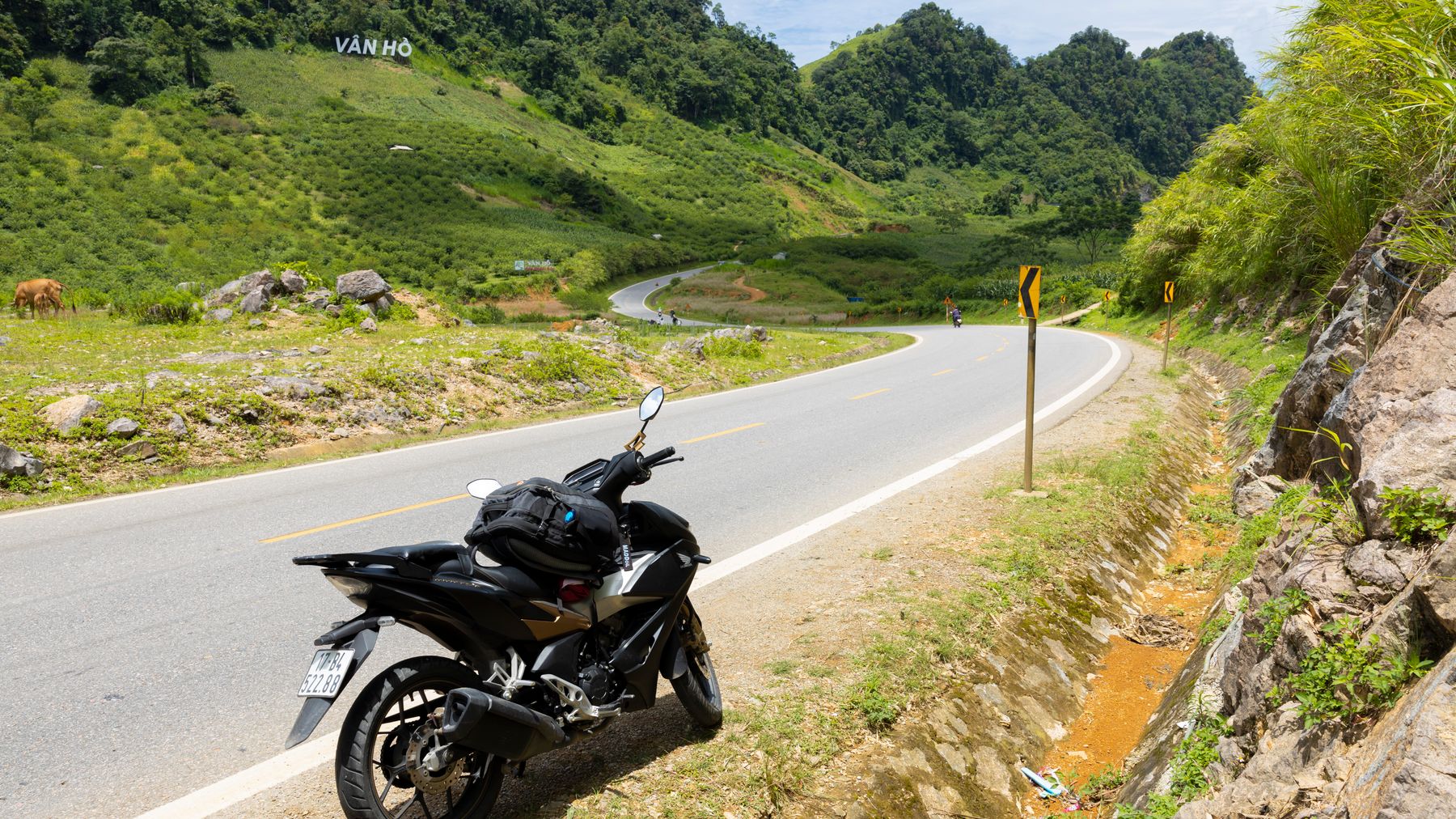
Photo by HONG SON on Pexels
Practical tips locals would tell you
- Bring cash. There are no ATMs in Minh Long. The nearest ATM is in Quang Ngai city.
- Pack a dry bag for your phone and wallet. Between the mist at the falls and the possibility of rain on the ride, electronics get wet.
- Wear long pants and closed shoes for the trail — leeches are common in wet season. Tuck your pants into your socks and check your ankles every 20 minutes.
- Start early. Leave Quang Ngai by 7 AM to get the best light at the falls and avoid riding back on mountain roads after dark.
- Bring your own water and snacks. There's one small shop in Minh Long town but nothing at the trailhead.
Common mistakes to avoid
- Underestimating the road. It's only 30 km, but the last stretch is slow. Don't plan this as a quick two-hour side trip — give it a full day.
- Going in flip-flops. The rocks at the waterfall and the trail up the tiers are genuinely slippery. Every year someone gashes a foot.
- Skipping Quang Ngai city entirely. The city itself isn't a destination, but spending an evening there lets you eat well and avoid rushing. The night market along the Tra Khuc riverfront is low-key and local.
- Expecting infrastructure. There are no ticket booths, no changing rooms, no guides at the falls. That's the appeal — but it also means you're responsible for your own safety.
Practical notes
Thac Trang works best as a day trip from Quang Ngai city, combined with the motorbike ride through Minh Long's highlands. It rewards travelers who are comfortable on two wheels and don't need handrails. If you're already passing through central Vietnam between Da Nang and Quy Nhon, the detour inland is worth the extra day.
Last updated · May 26, 2026 · independently researched, never sponsored.





