What it is
Tu Vien Bat Nha — roughly translating to "Prajna Monastery" — sits on a hillside about 8 km outside of Bao Loc town in Lam Dong province, surrounded by tea plantations and pine forest at an elevation of roughly 850 meters. The monastery was originally established in the early 2000s as a practice center in the Zen Buddhist tradition. Today it operates on a smaller scale than its early years, but the grounds remain intact: a main meditation hall, walking paths through the trees, simple living quarters, and open courtyards designed for quiet reflection.
It's not a major tourist circuit stop. You won't find tour buses here. That's precisely why some travelers make the detour.
Why travelers go
Most people who visit Bat Nha are looking for something specific: a few hours of genuine quiet in a part of the highlands that hasn't been turned into an Instagram backdrop. The monastery grounds are well-maintained and remarkably peaceful. The surrounding landscape — rolling hills planted with tea and coffee, red-earth paths cutting through pine groves — feels like a different country from the coast just 100 km south.
If you're traveling between Da Lat and Saigon, or between Da Lat and the coast toward Mui Ne (무이네 / 美奈 / ムイネー), Bao Loc is a natural halfway point, and Bat Nha gives you a reason to stop rather than just refuel.
Best time to visit
Lam Dong's highlands are comfortable year-round compared to the lowlands, but the sweet spot is November through March — dry season, cooler mornings (18–22°C), and minimal afternoon rain. The grounds are at their quietest on weekday mornings. Weekends, especially around Buddhist holidays or Tet, draw more domestic visitors. If you want solitude, aim for a Tuesday or Wednesday before 10 a.m.
Avoid the peak of rainy season (July–September) if you're on a motorbike — the access road gets slippery and the red clay turns into a mess.
How to get there
From Da Lat (달랏 / 大叻 / ダラット) (nearest major hub): Bao Loc is about 110 km south of Da Lat along Highway 20 — a well-paved, scenic road through pine forests and coffee country. By motorbike, it's roughly 2.5–3 hours depending on how many times you stop to stare at the scenery. By bus, Phuong Trang (FUTA) runs frequent coaches from Da Lat to Bao Loc for around 80,000–100,000 VND; the ride takes about 2.5 hours.
From Bao Loc town center, the monastery is approximately 8 km northeast. You can grab a local "xe om" (motorbike taxi) for 30,000–50,000 VND, or ride your own bike. The last stretch is a narrow road climbing into the hills — follow signs toward Phuoc Loc commune. Google Maps has the pin, but ask locals if you lose signal; everyone in the area knows the place.
From Saigon: Bao Loc is about 190 km northeast of Saigon. FUTA buses run the route in roughly 4.5 hours for around 130,000–160,000 VND. If you're riding a motorbike from Saigon, budget a full day — Highway 20 is scenic but winding once you climb past Dau Giay junction.

Photo by Serg Alesenko on Pexels
What to do
Walk the monastery grounds
The main draw is simply being there. The grounds are designed for walking meditation — stone paths loop through pine trees, past small ponds, and along garden beds. There's no entrance fee. Dress modestly (cover shoulders and knees) and keep your voice low. Photography is generally fine outdoors, but ask before shooting inside the meditation hall.
Sit in the meditation hall
The central hall is open to visitors outside of scheduled practice times. It's a simple, airy space — polished wood floors, minimal decoration, natural light. Even if you don't meditate, sitting still for twenty minutes in a room this quiet recalibrates something. No shoes inside.
Explore the tea plantations nearby
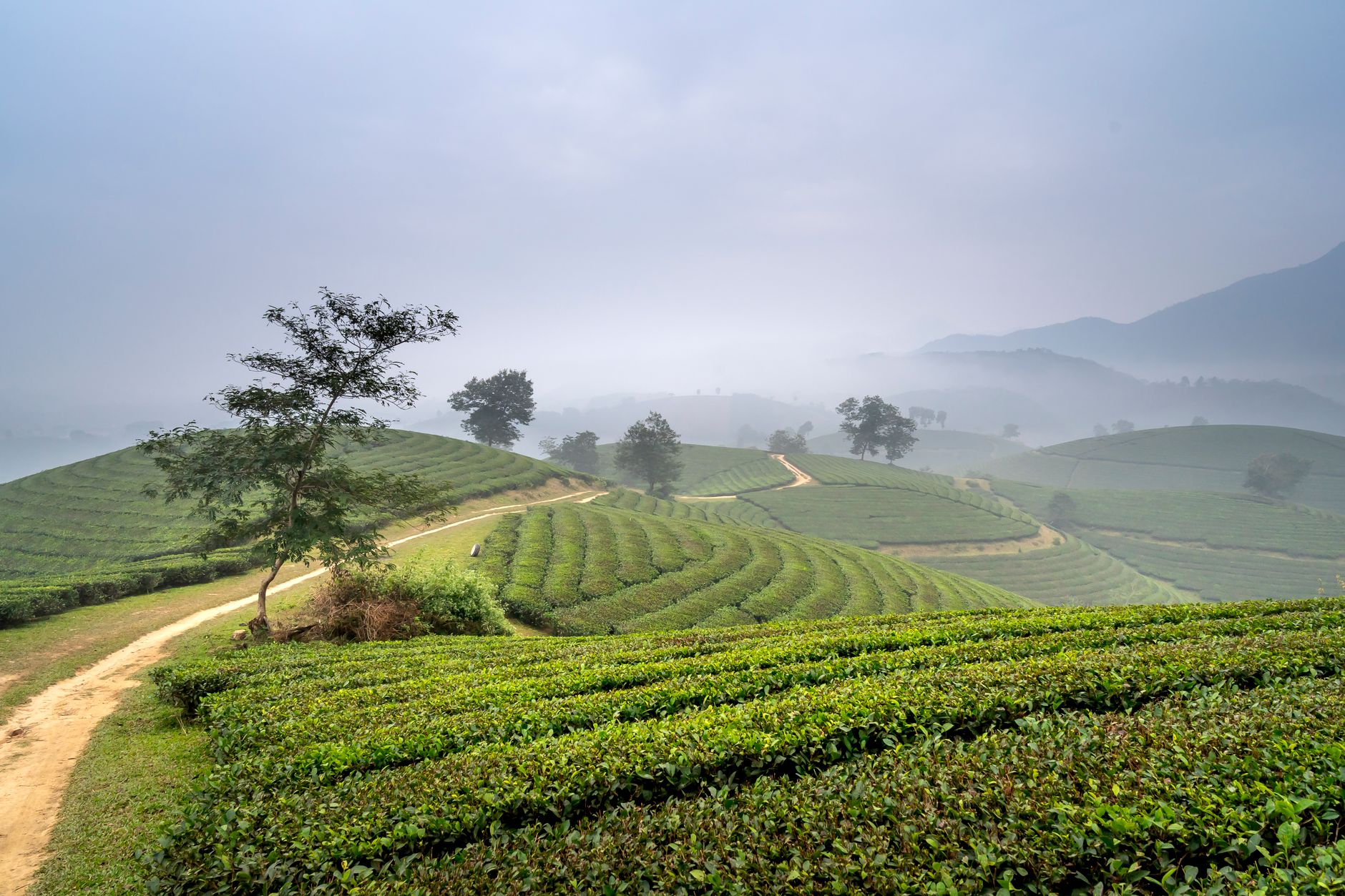
Bao Loc is one of Vietnam's most important tea-growing regions. Within a few kilometers of Bat Nha you'll pass terraced tea fields — bright green rows climbing up hillsides. Some small producers sell directly from their homes. A bag of fresh "tra oolong" (oolong tea) costs 80,000–150,000 VND and makes a better souvenir than anything at a gift shop.
Visit Dambri Waterfall
About 18 km from the monastery, Dambri is one of the tallest waterfalls in the southern highlands — roughly 90 meters. It's a proper cascade, not a trickle. Entry is 50,000 VND. There's an elevator down to the base or you can take the stairs. Best flow is during and just after rainy season (August–November).
Drive the Bao Loc loop
If you have your own wheels, the roads around Bao Loc reward aimless riding. QL55 heading southeast toward the coast passes through coffee and cashew country with almost zero tourist traffic. The 40 km stretch from Bao Loc toward Di Linh is particularly good — wide road, long views, and roadside stalls selling roasted corn and sugarcane juice.
Where to eat nearby
Bao Loc isn't a food destination on the level of Da Lat or Saigon, but there are things worth eating.
"Banh canh" with wild boar: Several small restaurants along the main road into Bao Loc serve "banh canh" — thick tapioca-flour noodles in a rich, peppery broth — topped with sliced wild boar (or farm-raised, depending on who you believe). A bowl runs 35,000–50,000 VND. Ask your "xe om" driver for the nearest spot; these places don't have English signs.
Avocado with coconut ice cream: Bao Loc grows excellent avocados. Street stalls and small cafes blend them into smoothies or serve them halved with a scoop of coconut ice cream — 20,000–30,000 VND. Simple, good, and only available when avocados are in season (roughly May–August).
Where to stay
Bao Loc has a range of accommodation, though nothing luxury.
- Budget: Local guesthouses ("nha nghi") around the town center run 200,000–350,000 VND per night. Basic but clean. Don't expect English.
- Mid-range: A few newer hotels and homestays on the outskirts — 400,000–800,000 VND. Some have garden settings and serve breakfast. Check Booking.com or ask locally.
- Splurge (by Bao Loc standards): A handful of resort-style stays in the hills surrounding town charge 1,000,000–1,500,000 VND. You're paying for the view and the quiet, not for a spa.

Photo by Quang Nguyen Vinh on Pexels
Practical tips locals would tell you
- Bring layers. Mornings at 850 meters get cool, especially in December and January. A light jacket is enough.
- Fuel up in Bao Loc town. There's no petrol station near the monastery. Top off before the last 8 km.
- Cash only. The monastery doesn't charge anything, but the surrounding area is cash-based. ATMs are in Bao Loc center. Carry small bills for "xe om" and roadside food.
- Respect the silence. This is a functioning monastery, not a tourist attraction. If monks or nuns are in walking meditation, give them space. Don't play music.
Common mistakes to avoid
- Treating it as a half-day from Da Lat. It's 110 km each way. If you're coming from Da Lat, plan to spend a night in Bao Loc or combine it with the drive toward Saigon or Mui Ne.
- Arriving midday. The grounds are hottest and least atmospheric between noon and 2 p.m. Early morning is best.
- Wearing shorts and tank tops. You'll be asked to cover up or given a loaner wrap. Just dress appropriately and save yourself the awkwardness.
- Skipping Bao Loc entirely. Most travelers blast through on the bus between Da Lat and Saigon without stopping. Bao Loc won't change your life, but an overnight here — monastery in the morning, tea fields in the afternoon — is a genuinely restorative pause.
Practical notes
Tu Vien Bat Nha works best as part of a longer route through the southern highlands rather than a standalone destination. Pair it with Da Lat for the full highland experience, or use Bao Loc as a stopover on the ride down to Mui Ne or back to Saigon. Budget half a day for the monastery and surroundings, plus a night in town if you're not in a rush.
Last updated · May 29, 2026 · independently researched, never sponsored.