What Dinh 2 actually is
Dinh 2 — sometimes called Bao Dai's Summer Palace or Dinh Toan Quyen — sits on a low hill about 4 km southwest of Da Lat's center, surrounded by pine trees and French-era gardens. Built between 1933 and 1937 under the direction of French architect Paul Veysseyre, it served as the summer residence of Bao Dai, Vietnam (베트남 / 越南 / ベトナム)'s last emperor. The building is Art Deco in bones but deliberately restrained — think clean lines, pale yellow walls, and low-profile wings rather than anything palatial.
After 1954, the building changed hands repeatedly. It became a government guesthouse, then a museum. Today it operates as a ticketed historical site managed by Lam Dong province (which, following the 2025 administrative merger, now also encompasses the former Dak Nong and Binh Thuan provinces). The interior preserves — or reconstructs — Bao Dai's study, reception rooms, and private quarters, complete with period furniture and personal effects.
Why travelers actually go
Dinh 2 is not a blockbuster attraction. It's a slow visit, and that's the appeal. The building gives you a physical sense of how the French colonial hill-station era intersected with Vietnamese royalty — something you don't get at the more tourist-heavy sites around Da Lat (달랏 / 大叻 / ダラット) like the Crazy House or Xuan Huong Lake.
The gardens are the real draw. Mature pine and cedar trees, clipped hedges, and flower beds that peak in spring. On a weekday morning, you might have the grounds nearly to yourself. The elevation (around 1,540 m) keeps it cool year-round, and the gardens catch good light in the early hours.
For anyone interested in Vietnamese history, walking through the rooms where Bao Dai held meetings during the final years of the monarchy adds a layer that's hard to get from a textbook.
Best time to visit
Da Lat's dry season runs roughly from November through March, and that's the comfortable window. December to February is peak season — cool mornings (sometimes 10-12°C), clear skies, and flowers in bloom across the city.
April and May still work but afternoons get rainy. June through October is full wet season: heavy showers most afternoons, though mornings are often clear enough for a visit.
For Dinh 2 specifically, weekday mornings between 7:30 and 9:00 AM are ideal. Tour bus groups tend to arrive from 9:30 onward.
How to get there
From central Da Lat (Hoa Binh Square area), Dinh 2 is about 4 km south along Trieu Viet Vuong street. A Grab bike runs 15,000-25,000 VND; a Grab car around 30,000-40,000 VND. The ride takes roughly 10 minutes.
If you're renting a motorbike (the standard Da Lat move, around 120,000-150,000 VND/day for a Honda Wave), follow Tran Hung Dao south and turn onto Trieu Viet Vuong. There's a small parking lot at the gate — 5,000 VND for a motorbike.
From Saigon, the most common route to Da Lat is either a 6-7 hour bus (Phuong Trang or Thanh Buoi lines, 200,000-280,000 VND) or a 50-minute flight to Lien Khuong Airport, 30 km south of the city center. Airport taxis to Da Lat cost around 250,000-350,000 VND.

Photo by Quang Vuong on Pexels
What to do at Dinh 2
Walk the interior rooms
The ticket (currently 40,000 VND for adults) gets you into the main building. The ground floor has the reception hall and a map room with Bao Dai's original strategic maps still mounted. Upstairs, the private quarters include his office, a small library, and the empress's sitting room with original teak furniture. Labels are in Vietnamese and English, though the English translations are sometimes rough.
Spend time in the gardens
The grounds cover about 26 hectares, though only a portion is manicured. The pine garden behind the main building is the quietest section — stone paths, moss-covered benches, and filtered light through old conifers. Bring a book or a thermos of vietnamese coffee from town.
Photograph the architecture
The Art Deco facade photographs well in morning sidelight. The front elevation with its symmetrical wings and covered balconies is the classic shot. Less photographed but worth finding: the servants' wing on the east side, which shows a plainer, more functional colonial style.
Combine with Dinh 1 and Dinh 3
Da Lat has three Bao Dai residences. Dinh 1 (about 2 km away) is smaller and quieter. Dinh 3 is the most visited and sits closer to the center. Hitting all three in a morning by motorbike is easy and gives you a complete picture. Dinh 3 charges a separate 40,000 VND entry.
Walk downhill to the neighborhood
The streets below Dinh 2 along Hung Vuong have some of Da Lat's older residential architecture — French-era villas mixed with 1960s concrete houses. It's a good 20-minute walk if you want to stretch your legs after the palace.
Where to eat nearby
Da Lat's food scene is more interesting than most highland cities. Within a 10-minute ride of Dinh 2:
- "Banh canh" at Banh Canh Da Lat on Phan Dinh Phung — thick tapioca noodles in a pork-and-crab broth, around 35,000-45,000 VND. This is a regional staple worth trying here rather than in Saigon.
- "Banh mi" xiu mai (meatball banh mi) near the central market — Da Lat's signature twist on the classic sandwich. Vendors along Nguyen Thi Minh Khai sell them for 15,000-25,000 VND. The meatballs are braised in a tomato-based sauce and it's messier than a standard banh mi — bring napkins.
For a sit-down meal, the area around Truong Cong Dinh street (Da Lat's unofficial restaurant strip) has dozens of options ranging from hot pot to grilled meats.
Where to stay
Da Lat has accommodation at every price point:
- Budget: Hostels and guesthouses around the market area run 150,000-300,000 VND/night. Basic but clean.
- Mid-range: Boutique hotels on the hills south of the lake — 500,000-1,200,000 VND/night. Many have valley views and decent breakfast.
- Upscale: Ana Mandara Villas or Terracotta Hotel, 2,000,000-4,000,000 VND/night. The Ana Mandara properties occupy restored French villas, which pairs well thematically if you're visiting the Dinh sites.
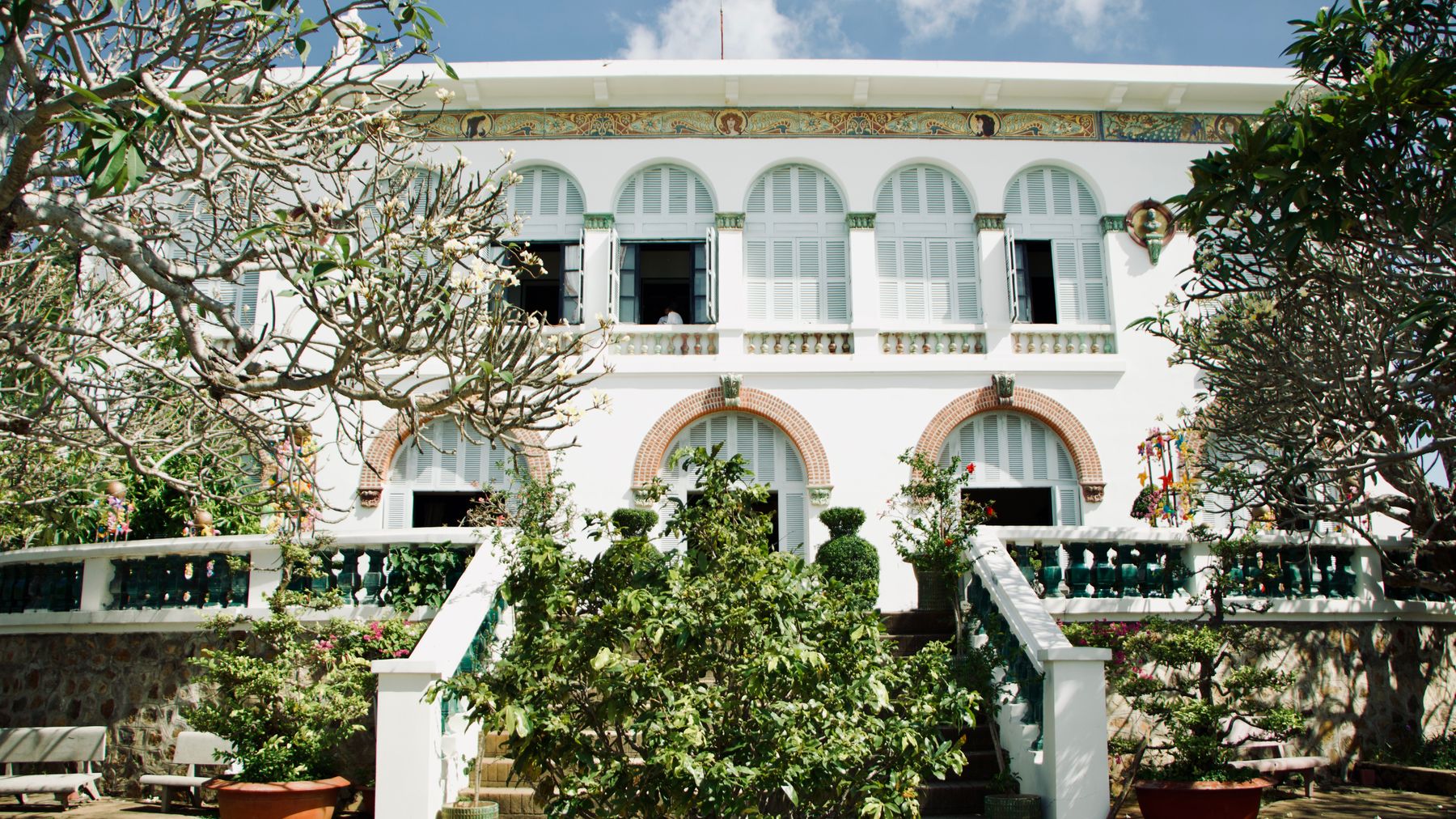
Photo by Tuan Vy on Pexels
Tips locals would tell you
- Bring a light jacket even in dry season. The grounds are shaded and the elevation makes mornings cool.
- The ticket booth closes at 5:00 PM but the gates often close earlier on slow days. Arrive by 4:00 PM at the latest for afternoon visits.
- Don't bother with the costume photo service inside (you can dress up in replica royal clothing for a fee). It's overpriced at 100,000 VND and the backdrops are tacky.
- If you're visiting all three Dinh palaces, start with Dinh 2 — it's the best maintained and sets a good baseline.
Common mistakes to avoid
- Arriving with a tour group at 10 AM: The experience completely changes when 40 people are shuffling through the same small rooms. Early morning, solo or in a pair, is a different visit entirely.
- Skipping the gardens: Most visitors spend 20 minutes inside and leave. The gardens deserve at least another 30 minutes.
- Expecting grandeur: This isn't Versailles or even the Imperial Citadel in Hue. It's a modestly sized residence. Calibrate expectations and you'll appreciate the details — the ironwork, the floor tiles, the window hardware — that make it worthwhile.
Practical notes
Dinh 2 is open daily from 7:00 AM to 5:00 PM. Entry is 40,000 VND (as of early 2025). There are basic restrooms on site. The whole visit — interior plus gardens — takes 60-90 minutes at a relaxed pace. Combine it with the other Dinh sites or a morning at the nearby Tuyen Lam Lake for a full half-day.
Last updated · May 29, 2026 · independently researched, never sponsored.