If your Vietnam (베트남 / 越南 / ベトナム) tourist visa is about to expire and you don't want to apply for an extension in-country, a visa run — leaving and re-entering to reset your permit — is the most straightforward option. The two main borders are Cambodia (south) and Laos (north and central), each with different crossing points, timelines, and costs.
Why a visa run instead of extension?
Applying for a visa extension through an immigration office in Vietnam takes 3–7 business days and costs 1–3 million VND depending on whether you use an agent. A visa run is faster and sometimes cheaper if you're organized. You leave, get a new entry stamp, and return — all within 2–5 days. The main trade-off: you spend money on transport, accommodation, and a new visa instead of just an extension fee.
Bavet to Phnom Penh (most popular)
Distance from Hanoi to Saigon: This route is busiest from Saigon; it's only 90 km to the Cambodian border.
The Bavet crossing (also called Moc Bai on the Vietnamese side) sits at the junction of Vietnam's Tay Ninh Province and Cambodia's Svay Rieng Province. Most travelers heading south take this route because it's the shortest and most straightforward.
How to get there: From Saigon (사이공 / 西贡 / サイゴン), minibuses and tour operators depart daily from Ben Thanh Market area around 7–8 a.m. and arrive in Phnom Penh by early afternoon (4–5 hours including the border stop). Cost: 80,000–120,000 VND one-way. If you prefer independence, rent a motorbike or car with driver — the highway is well-maintained, though heavy traffic exits the city.
Visa-on-arrival at Bavet: Cambodia issues a tourist visa at the border for $30–35 USD cash (no photos needed, though bring a passport photo just in case). Processing takes 15–30 minutes. The border opens 7 a.m. to 5 p.m. daily. Exit Vietnam's side first, then enter Cambodia, which is straightforward if you have your passport, entry card, and cash.
Return to Vietnam: You need a new Vietnam entry stamp. You can:
- Get a Cambodia e-visa before traveling (cvisa.gov.kh, ~$25 USD, 1–3 days). This is the safest option if you're nervous about border procedures.
- Get a visa-on-arrival at the Vietnamese consulate in Phnom Penh (same-day or next-day, 1.3–2 million VND through an agent or direct at the consulate). The consulate is at 27 Tran Hung Dao Street, open 8:30 a.m. to 11:30 a.m. for applications, 2–5 p.m. for collection.
- Arrange it through your accommodation or a travel agent in Phnom Penh. Many guesthouses in Siem Reap also offer visa services.
Timeline: 1–2 nights in Cambodia. If you arrive early morning, you can visit Phnom Penh, get your visa application submitted same-day, collect it the next afternoon, and be back in Saigon by evening.
Lao Bao to Savannakhet (DMZ route)
This crossing bridges Quang Tri Province (central Vietnam) to Savannakhet in Laos, about 220 km west of Hue. It's historically significant and geographically dramatic — the town straddles the former demilitarized zone.
How to get there: From Hanoi or Hue, you'll need to arrange a minibus (8–10 hours from Hanoi, 3–4 hours from Hue) or drive yourself. The road is good but winding through mountains. Cost: 200,000–300,000 VND from Hue.
Visa-on-arrival at Lao Bao: Laos issues a tourist visa for $40–45 USD at the border. Bring cash and a passport photo. Processing is usually 20–45 minutes. The border is open 7 a.m. to 6 p.m., though it can be quieter and less reliable than Bavet — occasionally it closes early or has staff shortages.
Return to Vietnam: Same options as the Cambodia route. Most travelers either get a Laos e-visa beforehand (evisa.gov.la, ~$20 USD) or visit the Vietnamese consulate in Savannakhet or Vientiane. The Savannakhet consulate (Thanon 13, on the main strip) is smaller and slower than Phnom Penh — allow 2–3 days for a rush visa-on-arrival (1.5–2 million VND).
Timeline: 2–4 nights in Laos. Savannakhet is a quiet riverside town with limited dining and entertainment, so many travelers push on to Vientiane (a 4-hour bus ride) or head north. If you go to Vientiane, the consulate is faster and the city has more going on, but it adds travel time.

Photo by Haneul Trac on Pexels
Bo Y to Cambodia (Ngoc Hoi)
This smaller, less-traveled crossing sits on the border between Kon Tum Province (central Vietnam) and Mondulkiri Province (northeastern Cambodia). It's remote and scenic but used less frequently by foreigners.
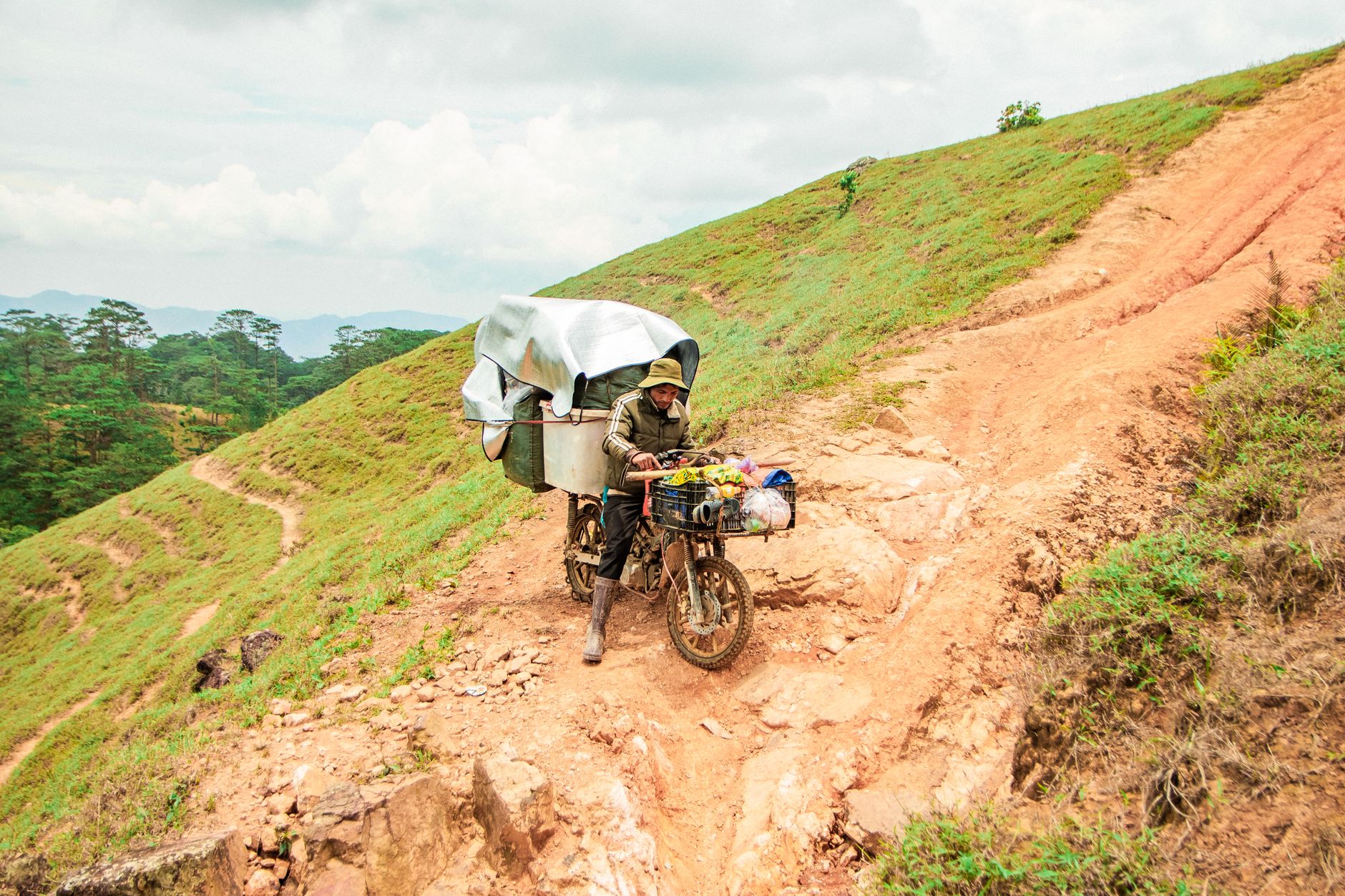
How to get there: You'll need a motorbike or car with driver. Bo Y is a small hill-town settlement in Kon Tum; from there, you cross into Cambodia at Ngoc Hoi. Transport is not straightforward — minibuses are rare. Most people arrange a driver or rent a motorbike. From Kon Tum town, it's about 100 km (3–4 hours) to the border.
Visa details: Less predictable than Bavet or Lao Bao. Visas-on-arrival are available but the border is understaffed and sometimes delays processing. Bring extra cash, passport photos, and patience. Expect to spend 30–90 minutes at the crossing. Return visas are easier if you handle them in Phnom Penh or Siem Reap rather than rushing at a remote border.
Use case: Best for travelers exploring the Central Highlands or those already heading to Mondulkiri. Not recommended if a visa run is your only goal — the logistics outweigh the convenience.
Nam Can to Cambodia (Mekong Delta)
This is the southernmost crossing, from Ca Mau Province) into Cambodia's Kach Kong Province. It's quiet and rarely used by visa-run tourists.
How to get there: Ca Mau is 300+ km from Saigon. Minibuses exist but are infrequent. Most travelers use a car and driver (8–10 hours from Saigon, 1.5–2 million VND).
Visa details: Similar to Bo Y — less efficient, understaffed, and unpredictable. Visas-on-arrival exist but you may face delays or refusal. Not recommended as a primary visa-run option unless you're traveling through the Delta anyway.
Photo by Flint Huynh on Pexels
Moc Bai (Vietnam side of Bavet)
Moc Bai is not technically a separate crossing — it's the Vietnamese name for the Bavet checkpoint. Including it here to clarify terminology: some guides call it Moc Bai (Vietnam terminology), others Bavet (Cambodia terminology), but it's the same border post.
Key tips
Bring originals and copies. Always carry your original passport, two copies of your photo and passport data page, and your original Vietnam entry card (the white form you got when you arrived). Borders ask for all three.
Cash only. USD for Cambodia visas, USD or Thai Baht for Laos. ATMs exist in Phnom Penh and Vientiane but not reliably at smaller borders. Withdraw before you cross.
Single vs. multi-entry. When you re-enter Vietnam, your new visa stamp is single-entry by default. If you plan to leave again soon, request a multi-entry e-visa or arrange one through an agent (+200,000–300,000 VND extra).
Timing. Avoid crossing on Vietnamese public holidays (Tet, National Day, etc.) when borders are chaotic. Weekday mornings (Tuesday–Thursday, 7–9 a.m.) are quietest.
Agent vs. DIY. If this is your first border crossing or you're anxious, use a reputable travel agent or guesthouse service. Cost is 500,000–1 million VND higher but includes pickup, guidance, and visa processing. DIY is cheaper (just transport + visa cost) but requires more confidence.
Health insurance note: If you're on a tourist visa, check that your travel insurance remains valid during your visa run and re-entry. Some policies void coverage if you leave Vietnam.
Frequently Asked Questions
How long does a Vietnam visa run to Cambodia actually take?
A visa run via the Bavet/Moc Bai crossing typically takes 1-2 nights. Leaving Saigon by minibus around 7-8 a.m. gets you to Phnom Penh by early afternoon. Submit your Vietnam re-entry visa application the same day at the consulate at 27 Tran Hung Dao Street (open 8:30-11:30 a.m.), collect it the next afternoon (2-5 p.m.), and return to Saigon by evening.
What does a Cambodia border visa run from Saigon cost in total?
Budget for a minibus from Ben Thanh Market at 80,000-120,000 VND each way, a Cambodia tourist visa-on-arrival at $30-35 USD, and a Vietnam re-entry visa at roughly 1.3-2 million VND through an agent or the Phnom Penh consulate. Alternatively, a Vietnam e-visa costs around $25 USD if arranged in advance. Compared to extending in-country (1-3 million VND plus 3-7 business days), costs are similar but the timeline is tighter.
When is the Bavet border crossing open, and can you cross on arrival?
The Bavet/Moc Bai crossing is open daily from 7 a.m. to 5 p.m. Cambodia issues a tourist visa-on-arrival at the border for $30-35 USD cash, with processing taking 15-30 minutes. Bring your passport, entry card, and cash. A passport photo is not required but recommended. The Lao Bao crossing into Laos runs 7 a.m. to 6 p.m. but is less reliable and occasionally closes early due to staff shortages.
Practical notes
Bavet to Phnom Penh remains the fastest, cheapest, and most reliable option for most travelers exiting Vietnam from the south. If you're in central Vietnam, Lao Bao is reasonable. Remote crossings like Bo Y and Nam Can are scenic but unpredictable — use them only if travel logistics already dictate it. Always arrange your return Vietnam visa before exiting; last-minute applications at quiet consulates can stall.
Last updated · May 29, 2026 · independently researched, never sponsored.