What Cat Hai actually is
Cat Hai is the smaller island sitting between Hai Phong's mainland coast and Cat Ba island. Most travelers blow right past it on the ferry or speedboat to Cat Ba, barely registering it through the window. That's a mistake — not a huge one, but a real one. Cat Hai town has a working fishing port, a handful of seafood restaurants that locals from Hai Phong drive out specifically to eat at, and a pace of life that Cat Ba lost about a decade ago.
The island is part of Cat Hai District in Hai Phong. It's flat, compact — you can walk the main town end to end in about 25 minutes — and connected to the mainland by the Tan Vu - Lach Huyen expressway and bridge system that opened in 2017. That road link changed everything. What used to require a ferry hop from Dinh Vu is now a straight drive across the water.
Why travelers go
Honestly, most don't. Cat Hai sits in the shadow of Cat Ba, which gets the lion's share of tourists heading to Ha Long Bay or Lan Ha Bay. But that's exactly the draw for a certain type of traveler. Cat Hai gives you a real northern Vietnamese fishing town without the guesthouse touts, without the tour-bus crowd, and with seafood that's priced for locals rather than backpackers.
It also works as a practical stopover. If you're driving or riding a motorbike from Hai Phong to Cat Ba, you'll pass through Cat Hai anyway. Instead of rushing through, give it a few hours — or a night.
Best time to visit
April through June is ideal. The weather is warm without the heavy rains that hit from July through September, and the seas are calm enough that the fishing boats are running regularly, which means the freshest catch at the port-side restaurants. October and November can also work — the tail end of the wet season, cooler temperatures, and fewer domestic tourists.
Avoid the peak of Tet if you want restaurants open. The town largely shuts down for the holiday, and ferry schedules to Cat Ba get chaotic. Weekends year-round bring Hai Phong day-trippers, especially in summer, so weekdays are quieter.

Photo by Hugo Heimendinger on Pexels
How to get there from Hai Phong
From central Hai Phong, Cat Hai is about 30 km east via the Tan Vu - Lach Huyen bridge road. The drive takes roughly 40 minutes by car or motorbike, depending on traffic at the bridge toll.
By car or motorbike: Head east from Hai Phong on the Tan Vu - Lach Huyen expressway. Toll for a car is around 35,000 VND one way; motorbikes are cheaper at about 10,000 VND. Follow signs toward Cat Ba — you'll hit Cat Hai town before the Pha Got ferry terminal. If you're on a rented motorbike from Hai Phong, budget about 150,000-200,000 VND for a day's rental.
By bus: Buses from Hai Phong's Niem Nghia bus station run to Cat Ba via Cat Hai. The ride to Cat Hai town takes about 45 minutes and costs around 30,000-50,000 VND. Frequency is decent in the morning, thinner in the afternoon.
By ferry (old route): The Dinh Vu to Cat Hai ferry still operates but is slower and less convenient since the bridge opened. It's mainly used by locals with heavy cargo. The crossing takes about 25 minutes and costs roughly 10,000 VND per person, 50,000 VND for a motorbike.
What to do
Walk the fishing port
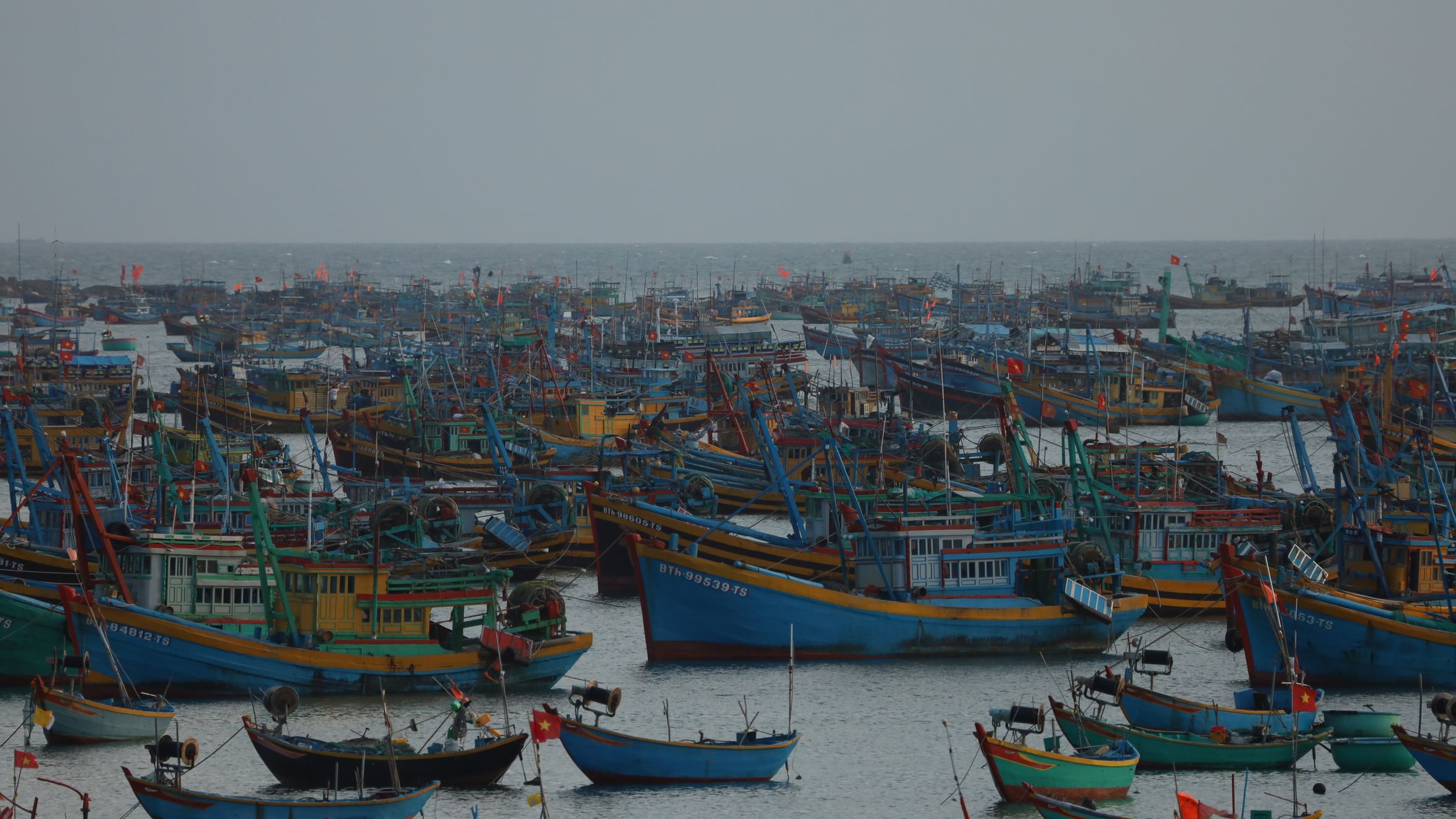
Cat Hai's port is a working harbor, not a tourist attraction, which is what makes it interesting. Early morning — around 5:30 to 7:00 AM — is when boats come in with the night's catch. You'll see squid, crab, mantis shrimp, and all manner of small fish being sorted, weighed, and loaded onto ice trucks bound for Hai Phong and Hanoi. Nobody minds if you watch, but stay out of the way of the carts.
Cycle around the island
The island is flat and small enough that a bicycle covers it easily in a couple of hours. There's no formal rental shop, but most guesthouses can arrange one for around 50,000 VND per day. The coastal road on the south side gives you views across to Cat Ba's limestone hills, and the interior passes through small villages where people dry fish on racks outside their houses.
Visit the Cat Hai market
The town's central market is busiest in the morning. It's a standard Vietnamese wet market — produce, meat, dried seafood — but the dried squid and shrimp paste ("mam tom") here are locally made and noticeably better than what you'll find on the mainland. Good for picking up edible souvenirs if you're into that.
Take the ferry across to Cat Ba
From Pha Got ferry terminal on Cat Hai's western tip, ferries cross to Pha Got on Cat Ba island in about 10 minutes. If you're island-hopping, this is the natural next step — and from Cat Ba you can arrange boat trips into Lan Ha Bay or Ha Long Bay (하롱베이 / 下龙湾 / ハロン湾).
Sit at the waterfront and do nothing
This isn't a joke. Cat Hai's waterfront has a few concrete benches and a view of fishing boats and karst silhouettes. Grab an iced tea or a "ca phe sua da" from one of the small cafes near the port and just sit. There's value in a place that doesn't try to entertain you.
Where to eat
Seafood is the only real answer here. Cat Hai is known locally for two things: "bun ca" (fish noodle soup) and fresh steamed crab.
The fish soup uses a turmeric-and-dill broth — the same style you'll find in Hanoi (하노이 / 河内 / ハノイ) but made with fish pulled out of the water that morning. A bowl runs about 30,000-40,000 VND. Several small restaurants along the main road near the market serve it; look for the places with the most motorbikes parked outside.
For crab and grilled squid, the restaurants closest to the port sell by weight. A kilo of steamed crab typically costs 200,000-350,000 VND depending on the season and species. Order it with a plate of rice and a cold Hai Phong-brewed beer — a proper lunch for under 200,000 VND per person if you're sharing.

Photo by Long Bà Mùi on Pexels
Where to stay
Accommodation on Cat Hai is basic. There are a handful of "nha nghi" (guesthouses) in town, mostly used by Vietnamese traveling workers or the occasional domestic tourist. Expect clean-enough rooms with air conditioning, hot water, and Wi-Fi for 250,000-400,000 VND per night. Don't expect English-speaking staff or booking on international platforms — you may need to just show up or call ahead.
If you want more comfort, it makes sense to base yourself in Hai Phong — which has proper hotels in every price range — and visit Cat Hai as a day trip. Or continue on to Cat Ba, where there's a wider range of guesthouses and hostels.
Practical tips locals would tell you
- Bring cash. There's no ATM on Cat Hai that reliably works for foreign cards. Load up in Hai Phong before you cross.
- Fill your tank. If you're on a motorbike, fuel up on the mainland side. There's a petrol station on Cat Hai but it occasionally runs dry.
- Sunscreen and a hat. The island is flat with almost no shade once you leave the town center.
- Learn basic Vietnamese numbers. Prices here aren't in English. Knowing how to say 50,000 or 100,000 in Vietnamese goes a long way at the market.
Common mistakes to avoid
Don't come expecting Cat Ba-level tourism infrastructure. There are no tour agencies, no dive shops, no rooftop bars. Cat Hai is a fishing town that happens to be on a scenic route. Treat it that way and you'll enjoy it.
Don't skip the morning. If you arrive at noon, you've missed the port activity and the best of the market. Get there early or stay overnight so you catch the 6 AM energy.
Don't eat dinner too late. Most food spots close by 8 PM. This isn't Hanoi — the town winds down early.
Last updated · Aug 25, 2026 · independently researched, never sponsored.






