
What it is
Ho Na Hang (Na Hang Lake) is a man-made reservoir created after the construction of the Na Hang hydropower dam on the Gam River, completed in 2007. The flooding submerged valleys between towering limestone karsts, producing a landscape that draws immediate comparisons to Ha Long Bay — except there are no cruise ships, no crowds, and no ticket touts. The lake sits in Na Hang district, Tuyen Quang province, roughly 250 km north of Hanoi in a region where the terrain starts climbing toward the highlands of Ha Giang.
The surrounding area is home to Tay, Dao, and H'Mong communities. Their stilt houses dot the hillsides above the waterline, and weekly markets in nearby towns still function as actual trading posts rather than tourist attractions.
Why travelers go
Three reasons, really. First: the scenery. Karst pillars rise straight out of jade-green water, wrapped in mist most mornings. It looks like a Chinese ink painting, except you're actually floating through it on a metal boat with a 15-horsepower engine. Second: isolation. Na Hang sees a trickle of domestic tourists on weekends and almost no international visitors. You won't share a viewpoint with fifty other photographers. Third: it's a genuine window into rural northern Vietnam — rice terraces, bamboo forests, river valleys — without the infrastructure (or price inflation) that comes with more established destinations like Sapa or Ninh Binh (닌빈 / 宁平 / ニンビン).
Best time to visit
September through November offers the clearest skies and comfortable temperatures (20-28°C). The rice terraces on surrounding hillsides turn gold in late September and early October — that's peak photography season.
April through June is warm, occasionally hazy, but the lake is fullest after spring rains and the green is almost aggressive. Avoid July-August if you can: heavy rain makes roads slippery and can delay boat trips. December through February is cold (10-15°C on the water), often foggy. Beautiful if you like moody landscapes; miserable if you forgot a jacket.
How to get there
From Hanoi (하노이 / 河内 / ハノイ): Drive or bus to Tuyen Quang city (about 3 hours, 130 km via CT05 expressway and QL2). From Tuyen Quang city, continue north on QL2 and then DT185 to Na Hang town — another 100 km, roughly 2.5 hours on winding mountain roads. Total from Hanoi: 5-6 hours by private car or motorbike.
By bus: Catch a bus from My Dinh station to Tuyen Quang city (90,000-120,000 VND, departures every 30 minutes). From Tuyen Quang bus station, local buses run to Na Hang town (about 70,000 VND, 2-3 departures daily). Schedules are loose — confirm morning departures the night before.
By motorbike: The ride from Hanoi is doable in a long day. Many riders combine Na Hang with a loop continuing north toward Ha Giang, making it a first or last stop on a highland circuit. The DT185 stretch has sharp turns and limited guardrails — ride in daylight.
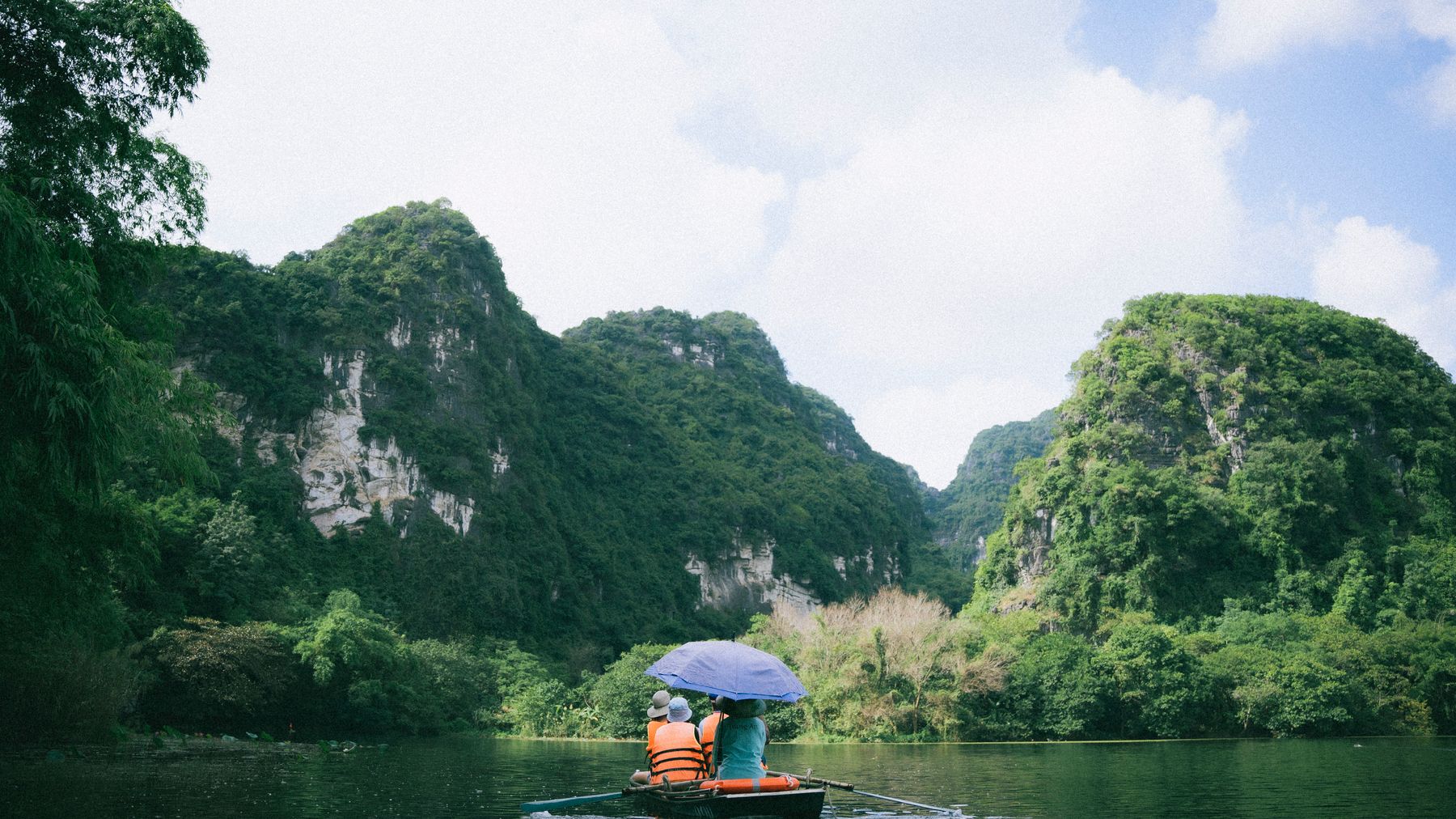
Photo by Bid on Pexels
What to do
Boat trip on the lake
The main event. Hire a boat at the Na Hang pier (typically 800,000-1,200,000 VND for a half-day, fitting 8-10 people). The boat threads between karst towers, passes flooded forests, and stops at a few viewpoints. Some captains will take you to Pac Ban cave or small Tay villages accessible only by water. Negotiate the route before departure — there's no fixed itinerary.
Lam Binh area and waterfalls
About 30 km west of Na Hang town, Lam Binh district has Khuoi Nhi and Khuoi Sung waterfalls — small but photogenic, reachable by motorbike on dirt tracks. The road itself, cutting through bamboo forest and terraced hillsides, is half the point.
Local markets
Na Hang town has a small daily market selling freshwater fish, forest vegetables, and rice wine. For something livelier, time your visit for a Sunday morning market in Thuong Lam or Sinh Long communes — Dao women in embroidered indigo clothing, livestock trading, and "thang co" (horse-meat hotpot) sold from big cauldrons.
Kayaking
A few homestays now rent kayaks (150,000-200,000 VND/hour). Paddling between the karsts at dawn, before boat engines start up, is the quietest version of the lake you'll get.
Where to eat
Na Hang town has a strip of "com binh dan" (everyday rice) shops along the main road. Expect grilled stream fish, stir-fried bamboo shoots, free-range chicken, and mountain greens. A full meal runs 60,000-100,000 VND per person.
For something more specific: look for "ca song" restaurants near the pier — they serve freshwater fish pulled from the lake that morning, steamed with ginger or grilled over charcoal. A whole fish (enough for two) costs 150,000-250,000 VND depending on species.
Vietnam's northern highlands are egg coffee territory in the cities, but up here it's green tea and corn wine ("ruou ngo"). Accept a cup if offered at a homestay — refusing is awkward.
Where to stay
Homestays: The best option for atmosphere. Several Tay-style stilt house homestays operate around the lake shore and in Lam Binh. Expect a mattress on the floor, mosquito net, shared bathroom, and home-cooked dinner. Rates: 250,000-400,000 VND per person including meals. Book via phone or Facebook — English is limited, so having a Vietnamese-speaking friend call ahead helps.
Na Hang town guesthouses: Basic but functional. Air-con rooms with hot water run 300,000-500,000 VND/night. Look along the main street near the market.
Mid-range: A couple of newer "resort" properties (Na Hang Lakeside, for instance) have opened, targeting domestic weekend visitors. Clean rooms, lake-adjacent, 600,000-1,000,000 VND/night. Don't expect international-standard service, but the views compensate.

Photo by Quang Nguyen Vinh on Pexels
Practical tips
- Cash only. There's one ATM in Na Hang town (Agribank) and it's unreliable. Withdraw in Tuyen Quang city before heading north.
- Phone signal is patchy on the lake and in Lam Binh valleys. Download offline maps.
- Vietnamese language matters here more than in tourist hubs. Learn basic phrases or use a translation app — locals appreciate the effort.
- Boat sharing: If you're solo or a couple, ask your guesthouse if other travelers want to split a boat. Showing up at the pier and waiting works on weekends but not weekdays.
- Fuel up in Na Hang town. Petrol stations are scarce beyond it.
Common mistakes
Rushing it. Many visitors do a day trip from Tuyen Quang city, which means 5 hours on the road for 2 hours on the lake. Stay at least one night — preferably two — to justify the travel time.
Expecting Ha Long Bay facilities. There are no luxury boats, no floating restaurants, no English-speaking guides waiting at the pier. That's the appeal, but pack accordingly: sunscreen, rain jacket, snacks, water.
Skipping Lam Binh. The lake gets all the attention, but the surrounding valleys and waterfalls are equally compelling and almost completely empty of tourists.
Final note
Na Hang is the kind of place that won't stay quiet forever — domestic tourism is growing fast, and road improvements keep shortening the drive from Hanoi. For now, it remains one of northern Vietnam's most striking landscapes with almost none of the tourist infrastructure that usually accompanies such scenery. Go before that changes.
Last updated · May 29, 2026 · independently researched, never sponsored.





