The Ho Chi Minh (호치민 / 胡志明 / ホーチミン) Mausoleum is one of Hanoi's most visited landmarks and one of the few places in the city where you'll see Vietnamese families, school groups, and foreign travelers all standing in the same slow-moving line. Whether you're interested in 20th-century history or just want to understand the role Ho Chi Minh plays in daily Vietnamese life, it's worth a morning.
What it is
The mausoleum sits on Ba Dinh Square, the same spot where Ho Chi Minh read Vietnam (베트남 / 越南 / ベトナム)'s declaration of independence in September 1945. The granite and marble structure was completed in 1975 and houses the preserved body of Ho Chi Minh, who died in 1969. The building itself is austere — a large, blocky monument flanked by manicured gardens and guarded by soldiers in white uniforms. You walk through in a single file, passing the glass case in near silence. The whole interior visit takes about 15 minutes.
Why travelers go
It's not a museum in the usual sense. There are no exhibits, no audio guides, no gift shop inside. People come because the mausoleum is central to understanding modern Vietnam. It's a place of genuine reverence for many Vietnamese visitors, and seeing that firsthand tells you something about the country that a temple or a food tour won't. It's also the anchor of a cluster of sights — the Presidential Palace grounds, the One Pillar Pagoda, and the Ho Chi Minh Museum — that together fill a solid half-day.
Best time to visit
The mausoleum is open Tuesday through Thursday and Saturday through Sunday, typically from 7:30 AM to 10:30 AM (last entry around 10:15 AM). It closes for about two months each year — usually from mid-October to mid-December — for maintenance. Always confirm dates before you plan around it.
Season-wise, October through April gives you cooler weather for the outdoor queuing. From May through September, Hanoi's heat and humidity make standing in line less pleasant. If you're visiting in summer, arrive right at opening. The line moves steadily, but by 9 AM on weekends it can stretch well past the gardens.
How to get there
From Hoan Kiem Lake (the Old Quarter area where most travelers stay), the mausoleum is about 2.5 km west. A Grab car costs 20,000–35,000 VND and takes 10–15 minutes depending on traffic. A xe om (motorbike taxi) via Grab is cheaper, around 15,000 VND. You can also walk it in about 30 minutes through some of Hanoi's more interesting French-colonial streets — head west along Hang Bong, then follow Phan Dinh Phung, one of the city's best tree-lined boulevards.
City bus route 09 runs from Hoan Kiem to a stop near the mausoleum for 8,000 VND, though navigating bus routes without Vietnamese can be tricky.

Photo by David Tran on Pexels
What to do
Visit the mausoleum itself
The queue starts from Ba Dinh Square. You'll pass through a security check — bags are stored for free at a counter before you enter. No cameras, phones, water bottles, or hats allowed inside. The guards are serious about this. Walk slowly, stay in line, and keep your hands at your sides. No talking, no stopping. You're in and out in 15 minutes.
Walk the Presidential Palace grounds
After the mausoleum, the adjacent grounds are open for a loop walk. You'll see the yellow French-colonial Presidential Palace (exterior only), Ho Chi Minh's stilt house where he lived and worked, and the surrounding gardens with mango trees and a carp pond. The stilt house is simple and small — two rooms — and the contrast with the grand palace next door is the whole point. Entry is 40,000 VND.
See the One Pillar Pagoda
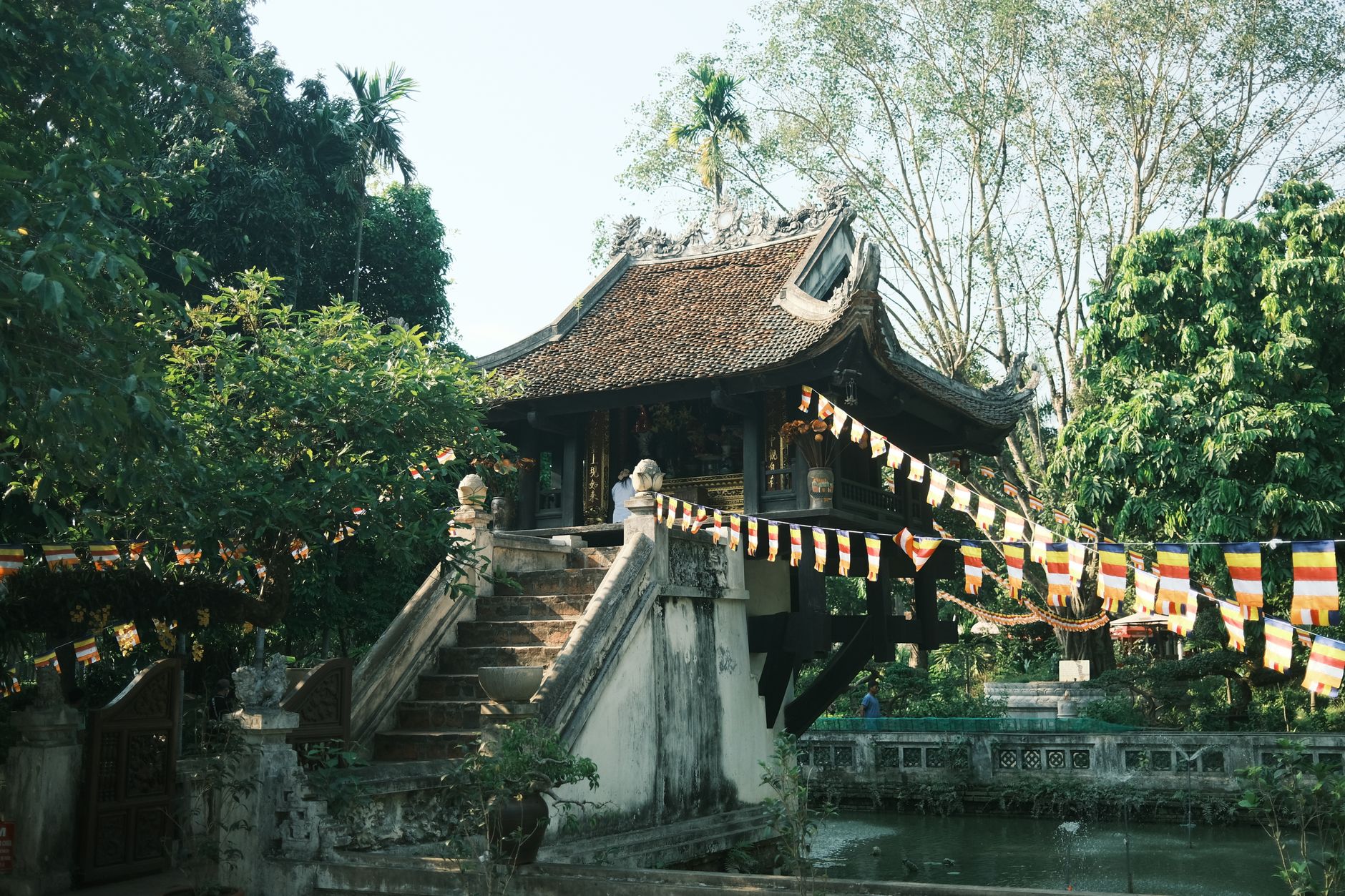
Just south of the mausoleum complex, the One Pillar Pagoda is a small wooden structure set on a single stone column in a lotus pond. It dates to 1049 in its original form, though what you see is a 1950s reconstruction. It takes five minutes to see, but it's one of Hanoi's most distinctive pieces of architecture.
Browse the Ho Chi Minh Museum
Next to the pagoda, this museum covers Vietnamese history through a mix of photographs, documents, and some oddly abstract art installations on the upper floors. It's hit or miss — the ground floor historical exhibits are more interesting than the conceptual stuff upstairs. Entry is 40,000 VND. Budget 30–45 minutes.
Walk to the Temple of Literature
From the mausoleum complex, the Temple of Literature is about 1.5 km south on foot — a 20-minute walk through quiet residential streets. It's Vietnam's first university, dating to 1070, and one of the best-preserved examples of traditional Vietnamese architecture in Hanoi. Combining the two sites makes for a natural morning route.
Where to eat nearby
The streets south of the mausoleum toward Nguyen Thai Hoc aren't a major food district, but you're only a short ride from excellent options. Head back toward the Old Quarter for "bun cha" — grilled pork patties with rice noodles and dipping broth. Bun Cha Dac Kim on Hang Manh is a reliable choice, with plates running 40,000–50,000 VND.
Closer to the mausoleum, the area around Nguyen Tri Phuong street has local rice and noodle shops where a plate of "com tam" or a bowl of "pho" costs 35,000–45,000 VND. These aren't tourist spots — you'll eat on plastic stools, which is exactly the point.
For a post-visit coffee, Hanoi's egg coffee is best experienced at Cafe Giang on Nguyen Huu Huan (back in the Old Quarter) or at one of the smaller cafes on Ly Quoc Su street.
Where to stay
Most travelers base themselves in the Old Quarter, 2–3 km east of the mausoleum. Budget hostels run 150,000–250,000 VND per night. Mid-range hotels on Ma May or Hang Bac streets cost 600,000–1,200,000 VND. If you want something quieter and closer to the mausoleum area, look at hotels around Lieu Giai or Kim Ma streets — rates are often lower than the Old Quarter for comparable quality, in the 500,000–900,000 VND range.
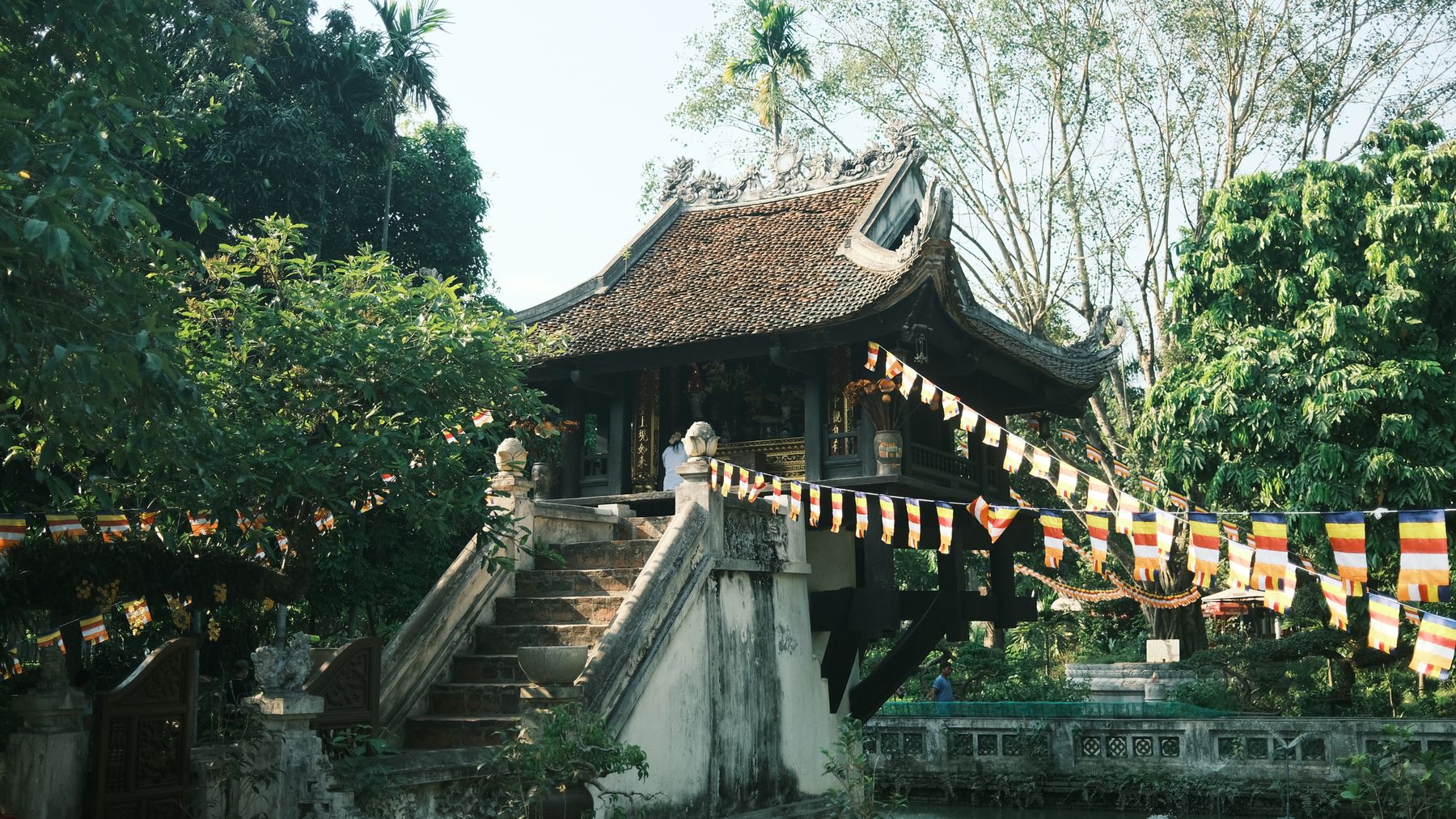
Photo by Quý Nguyễn on Pexels
Practical tips locals would tell you
- Dress code matters. No shorts above the knee, no sleeveless tops, no flip-flops. Guards will turn you away. This applies to men and women equally.
- Go early. The line is shortest right at 7:30 AM on weekday mornings. Saturday and Sunday mornings draw large domestic tour groups.
- Check the closure calendar. The annual maintenance closure catches travelers off guard every year. Vietnamese government websites list exact dates, usually announced a few weeks in advance.
- Leave your bag at the counter. The free bag storage near the entrance is efficient. Trying to sneak a phone in is not worth the hassle — guards check thoroughly.
Common mistakes to avoid
- Arriving after 9:30 AM and finding the line already capped or moving painfully slowly.
- Planning a visit on Monday or Friday — the mausoleum is closed both days.
- Wearing casual beach clothes. This catches people coming straight from Ha Long Bay or Sapa who haven't thought about it.
- Skipping the surrounding grounds. The mausoleum interior is brief. The real value of the visit is the full complex — stilt house, gardens, pagoda, museum. Budget two to three hours for everything.
Practical notes
The mausoleum and surrounding complex are free to enter (the mausoleum itself has no ticket). The Presidential Palace grounds and museum each charge 40,000 VND. The whole morning — mausoleum, grounds, pagoda, museum, and a walk to the Temple of Literature — is one of Hanoi's best half-day routes and costs almost nothing.
Last updated · May 29, 2026 · independently researched, never sponsored.