What It Is and Why It Matters
Kon Klor Suspension Bridge spans roughly 292 meters across the Dak Bla River on the eastern edge of Kon Tum city. Built in 2000 and modeled after the structural style of traditional Ba Na communal houses — the tall, steep-roofed "rong" houses that define the Central Highlands (중부 고원 / 中部高原 / 中部高原) — the bridge serves as both a functional river crossing and an informal symbol of Kon Tum itself. The towers on each end rise in angular peaks meant to echo rong house architecture, and they're among the first things you'll see on postcards and signage around town.
The bridge connects downtown Kon Tum to Kon Klo village, a Ba Na community on the opposite bank. It's not a museum piece or a tourist attraction with a ticket booth. People use it daily — motorbikes, bicycles, pedestrians hauling produce. That ordinariness is part of the appeal.
Why Travelers Go
Kon Tum doesn't get a fraction of the foot traffic that Hoi An or Da Nang sees, and that's precisely the draw. The bridge gives you a reason to cross the river and walk into a village that operates on its own rhythm. On the far side, you'll find a functioning Ba Na rong house, small gardens, and a pace of life that feels disconnected from even Kon Tum's already quiet city center.
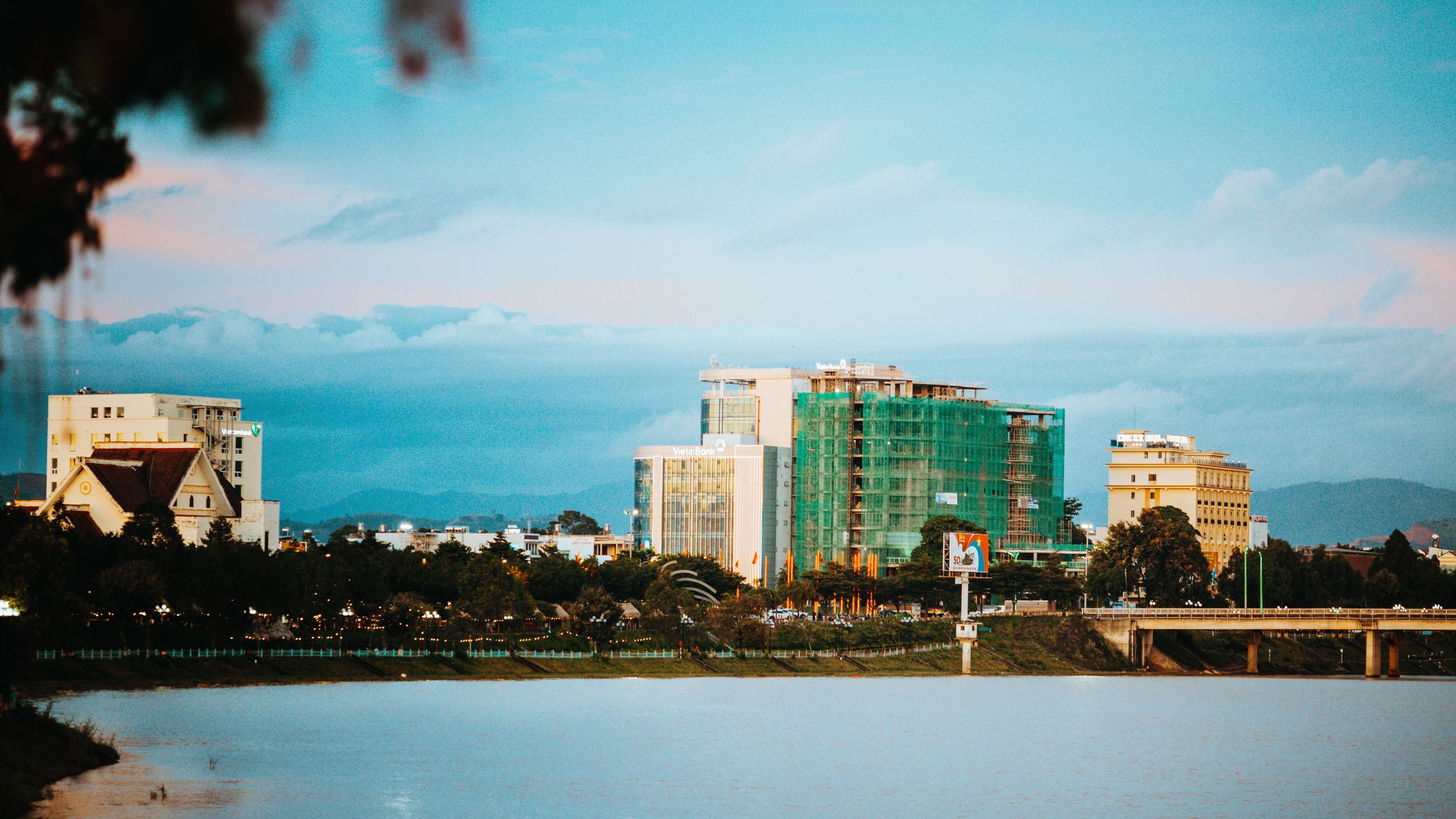
Photographers come for the bridge profile at golden hour, when the Dak Bla reflects the structure and the surrounding hills go soft. But the real reason to visit is context — Kon Klor is a doorway into the ethnic minority culture of the Central Highlands, without any of the staging you get at purpose-built "cultural villages" elsewhere in Vietnam.
Best Time to Visit
The Central Highlands have two broad seasons: dry (November through April) and wet (May through October). For the bridge and surrounding area, November to March is ideal. The river runs calmer, the air is cooler — mornings can dip to 18°C — and the roads into Kon Tum from the coast are less prone to landslides.
Avoid September and October if possible. The Dak Bla swells during heavy rains, and while the bridge itself holds up fine, the village on the far side can get muddy and partially flooded. The upside of visiting in the early wet season (May–June) is that the surrounding hills are intensely green, but you'll want rain gear and patience.

Photo by Duy Nguyen on Pexels
How to Get There
Kon Tum is roughly 245 km northwest of Da Nang (다낭 / 岘港 / ダナン) and about 50 km north of Pleiku.
From Da Nang
The most common route is to bus from Da Nang to Kon Tum via Pleiku. Direct buses run daily from Da Nang's central bus station, taking around 6–7 hours. Expect to pay 180,000–250,000 VND for a sleeper seat. Alternatively, fly Da Nang to Pleiku (45 minutes, from around 600,000 VND one-way on Vietnam Airlines or Bamboo), then grab a local bus or taxi from Pleiku to Kon Tum — about 50 km, roughly 1 hour, and 50,000–70,000 VND by bus or 250,000–350,000 VND by taxi.
From Hue
No direct bus. Your best bet is to go through Da Nang or take a bus to Pleiku and transfer.
Getting to the Bridge
Once in Kon Tum city, the bridge is only about 3 km east of the center. A "xe om" (motorbike taxi) costs 15,000–20,000 VND. If you've rented a motorbike — which is the best way to explore Kon Tum province generally — just follow Phan Dinh Phung Street east until you hit the river.
What to Do
1. Walk the Full Bridge at Dawn
Get there before 7 a.m. The light is low, the bridge is quiet except for a few locals heading to market, and you can stand at the midpoint with the Dak Bla stretching in both directions. The walk takes about 10 minutes end to end if you don't stop — you will stop.
2. Visit the Rong House in Kon Klo Village
On the far bank, the village rong house is a genuine communal space, not a replica. It's tall, made of wood and thatch, and usually open. Ask before entering — a nod or a smile from someone nearby is your green light. The interior is spare: a central fire pit, some woven mats, maybe some gong instruments. This is where village meetings and ceremonies happen.
3. Cycle Along the Dak Bla
Rent a bicycle in Kon Tum (most guesthouses have them for 30,000–50,000 VND/day) and ride along the river road east of the bridge. The path takes you through small Ba Na and Xe Dang hamlets, past coffee plantations and cassava fields. A 15 km loop is comfortable for a morning.
4. Catch a Gong Performance (If Your Timing Is Right)
Gong culture is UNESCO-recognized in the Central Highlands. During festivals — particularly around the [lunar new year](/posts/tet / 越南春节 / テト)-lunar-new-year-guide) (Tet) or harvest season — villages near Kon Klor sometimes hold gong performances. These aren't scheduled for tourists. Ask at your guesthouse or at the Kon Tum tourism office on Phan Chu Trinh Street if anything is happening during your stay.
5. Photograph the Bridge from the Riverbank
For the classic profile shot, walk down to the riverbank on the city side, about 100 meters south of the bridge entrance. Late afternoon light — around 4:30 to 5:30 p.m. — gives you the best contrast against the rong-style towers.
Where to Eat Nearby
Kon Tum's food scene is small but distinctive. Two dishes worth tracking down:
- "Pho kho" (dry pho) — a Kon Tum specialty where rice noodles are served without broth, topped with minced pork and scallions, with a bowl of soup on the side. Try it at Pho Kho Ba Cuc on Nguyen Hue Street, about 2 km from the bridge. A bowl runs 25,000–35,000 VND.
- "Goi la" — a DIY wrap-and-roll dish with dozens of jungle leaves, herbs, rice paper, cured pork, and fermented fish paste. It's social food, meant to be shared. Several restaurants near the market on Tran Hung Dao Street serve it. Expect 80,000–120,000 VND per set for two people.
Pair either with a cup of local Vietnamese coffee — Kon Tum is coffee-growing country, and the beans here are fresh.

Photo by Kirandeep Singh Walia on Pexels
Where to Stay
Kon Tum has limited accommodation, mostly concentrated in the city center.
- Budget: Guesthouses and nha nghi along Nguyen Hue and Bach Dang streets run 150,000–300,000 VND/night. Basic but clean.
- Mid-range: Indochine Hotel or Kon Tum Hotel offer air-conditioned rooms with decent Wi-Fi for 400,000–700,000 VND/night.
- Homestays: A few Ba Na community homestays operate on the east bank near Kon Klo village. Availability is inconsistent — ask at the tourism office. When available, expect 200,000–350,000 VND including a simple dinner.
Practical Tips
- Bring cash. There are ATMs in Kon Tum center, but none near the bridge or across the river.
- If you ride a motorbike across the bridge, go slow. The surface can be slippery in the morning dew, and the bridge sways slightly with traffic.
- Learn the phrase "xin chao" (hello) and "cam on" (thank you). English is almost nonexistent in Kon Klo village.
- Dress modestly if entering the rong house — cover shoulders and knees.
Common Mistakes
- Treating it as a 30-minute stop. The bridge alone takes 15 minutes, but the village, the riverbank, and the cycling loop deserve a half day.
- Coming midday. Between 11 a.m. and 2 p.m., the sun is punishing and the bridge has zero shade. Morning or late afternoon only.
- Skipping Kon Tum entirely. Many travelers pass through on the way between Pleiku and the coast without stopping. Kon Tum rewards an overnight stay — it's one of the quietest provincial capitals in Vietnam, and the ethnic minority culture here is more accessible than in Sapa or Ha Giang without the crowds.
Last updated · May 29, 2026 · independently researched, never sponsored.