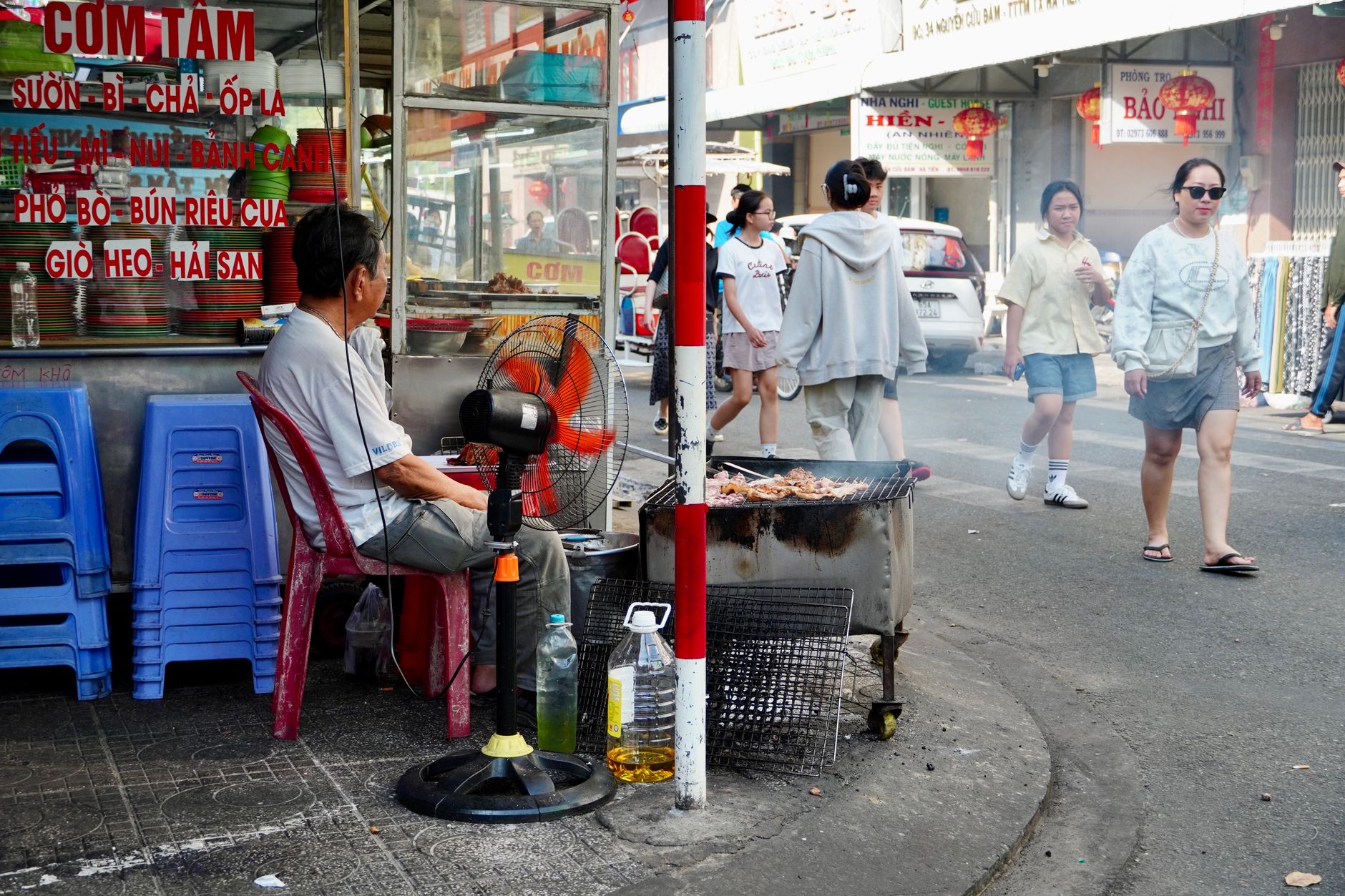
Ben Tre sits in the Mekong Delta (메콩 델타 / 湄公河三角洲 / メコンデルタ) where rivers meet farms, and that geography shapes every plate. Coconut is everywhere—in sweets, savory dishes, even coffee. Fish and shrimp come fresh from the water. Rice noodles are the backbone. You won't find high-end restaurants or fusion cuisine here. What you get is straightforward, seasonal, and cheap.
Coconut Everything
Ben Tre calls itself the "coconut capital" of Vietnam (베트남 / 越南 / ベトナム), and it's not marketing. Walk the market and you'll see coconut candy, coconut ice cream, roasted coconut strips, candied coconut, and coconut water sold in halves on ice.
The most common sweet is coconut candy ("keo dua"). Vendors sell it in plastic bags for 5,000–10,000 VND. It's chewy, dense, and tastes like concentrated coconut milk with a slight sesame undertone. Buy it at the Ben Tre Market or any street corner; quality is consistent because production is industrial and competitive.
For something less obvious, try coconut ice cream ("kem dua"). Small shops scattered along Hung Vuong Street sell it in plastic cups for 15,000–20,000 VND. It's creamy and rich—locals eat it as a midday snack, not just dessert. A tip: eat it immediately. The power goes out often, and no one pretends the cold chain is reliable.
Coconut coffee ("ca phe dua") blends roasted coconut with condensed milk and ice. Order it at any stall in the Old Market or riverside cafes. It costs 20,000–30,000 VND and tastes like buttered toast meets coffee—genuinely good.
Fish and "Banh Hoi" — The Daily Staple
"Banh hoi" is the regional noodle form: ultra-thin, delicate rice noodles served in a loose mat that you break apart by hand. It comes with grilled fish, shrimp paste, and a dipping sauce (usually fish sauce with chili and lime).
Look for banh hoi with grilled fish at open-air stalls near the Tien River or Ben Tre Market. A plate costs 20,000–35,000 VND. The fish is usually snakehead ("ca loc") or catfish ("ca tra"), grilled whole or in thick fillets. Locals eat this for breakfast or lunch, sitting on plastic stools, tearing the noodle mat with their fingers.
A variation is banh hoi with shrimp paste ("mam tom"), which smells aggressively funky if you're unfamiliar with fermented seafood. It's an acquired taste, but if you like umami, order it. Same price. Same stools.
"Hu Tieu" — Clear Noodle Soup
"Hu tieu" is Mekong Delta comfort food: rice-noodle soup with a broth made from pork bones, shrimp, and sometimes squid. Ben Tre's version is lighter than Saigon's; the broth is clear, the noodles are soft, and the toppings are minimal—usually a few shreds of pork and green onion.
Walk into any breakfast stall or pho-style shop and order a bowl. Sizes run small (20,000 VND), medium (25,000 VND), and large (30,000 VND). Locals eat it early, between 6 a.m. and 8 a.m., then the stalls close. If you arrive after 9 a.m., you'll find the big pot empty and the cook already cleaning.

Photo by Quang Nguyen Vinh on Pexels
"Mi Quang" — Turmeric Noodle Dish
This is a central and southern staple, but Ben Tre has its own take. Yellow noodles (colored with turmeric) are topped with pork, shrimp, peanuts, herbs, and a small amount of broth. You eat it by hand, wrapping noodles and meat in lettuce and herbs, then dipping in fish sauce.
Find it at stalls in the Ben Tre Market or near the Hung Vuong street intersection. Cost: 25,000–35,000 VND. It's messier than most dishes—wear something you don't mind staining.
Street Markets: Where Locals Eat
Ben Tre Central Market (Cho Ben Tre, at the corner of Hung Vuong and 30 Thang 4 streets) is the real heart. No English signs. No tourist prices. Dozens of stalls serve noodles, soups, and rice dishes from 5 a.m. to noon, then pack up. Go early. Expect to pay 15,000–35,000 VND per dish.
Walk the rows: stall vendors call out, but they don't hassle. Sit at communal tables. Locals will watch you navigate chopsticks with kind indifference. This is where you eat with construction workers, teachers, and retired farmers.
Riverside stalls along the Tien River (especially near Boat Docks and the south end of 30 Thang 4 Street) set up evenings and sell grilled fish, fresh shrimp, and coconut-based sweets. These are popular with both tourists and locals, but the prices don't jump—a plate of grilled shrimp is still 40,000–50,000 VND. Arrive around 5 p.m. for the best selection.
Tourist Traps (and How to Avoid Them)
Ben Tre is small and not heavily touristed, so there's less overt marking-up. But watch for:
- Boat-tour operator restaurants: If your tour company recommends a "coconut candy workshop" or "local family restaurant," you're paying 2–3× market rates. A coconut-candy plate (with fresh fruit and sample sweets) costs 120,000–150,000 VND. The same items from the market cost 30,000 VND total.
- Pricey riverside cafes on Hung Vuong Street: Pleasant views, terrible value. A coffee is 40,000–60,000 VND when the market version is 20,000 VND.
Stay in the market. Stay off the main tourist drag unless you just want a drink.

Photo by Tuan Vy on Pexels
What to Order (One Day Sampling)
Breakfast (7 a.m.): Hu tieu or banh hoi at a market stall. 25,000 VND.
Mid-morning snack (10 a.m.): Coconut ice cream or coconut candy. 15,000–20,000 VND.
Lunch (12 p.m.): Mi quang or grilled fish with rice at a riverside stall. 35,000–50,000 VND.
Afternoon (3 p.m.): Coconut coffee and a small banh mi or sticky-rice snack. 30,000–40,000 VND.
Dinner (6 p.m.): Hu tieu, pho, or a rice-based dish ("com tam" with grilled pork) at a market stall. 30,000–45,000 VND.
Total for the day: approximately 135,000–195,000 VND (about USD 5.50–8).
Seasonal Notes
Ben Tre's food changes subtly through the year. In the wet season (May–September), river fish and shrimp are fattier and more flavorful. Winter (November–February) brings firmer fish and sweeter coconuts. Avoid ordering seafood in April and October—the fishing season resets and supply is thin.
Frequently Asked Questions
How much does street food cost at Ben Tre markets?
Most dishes at Ben Tre's street stalls cost between 20,000 and 35,000 VND. Coconut candy runs 5,000-10,000 VND per bag, coconut ice cream is 15,000-20,000 VND, and coconut coffee 20,000-30,000 VND at Old Market stalls or riverside cafes. A bowl of hu tieu starts at 20,000 VND for a small size. Banh hoi with grilled fish or shrimp paste lands in the same 20,000-35,000 VND range.
What is banh hoi and how do you eat it?
Banh hoi is a regional rice noodle form made of ultra-thin strands served in a loose mat. You break it apart by hand, then eat it with grilled snakehead or catfish, shrimp paste, and a fish sauce dipping sauce with chili and lime. Stalls near the Tien River and Ben Tre Market serve it for 20,000-35,000 VND. Locals treat it as a breakfast or lunch dish, eaten on plastic stools.
When should you arrive at Ben Tre breakfast stalls to find food?
Arrive between 6 a.m. and 8 a.m. Hu tieu stalls in particular close early — locals eat the clear pork-and-shrimp noodle soup in that window, and the pot is typically empty by 9 a.m. with the cook already cleaning up. The same pattern applies broadly: Ben Tre's street food culture runs on an early schedule, not tourist hours.
Practical Notes
Ben Tre has no English-speaking waitstaff in market stalls. Learn to say "banh hoi" and "hu tieu" and point. Bring cash: most stalls don't take cards. The market is loudest and most crowded before 9 a.m.—if you prefer quiet, eat early or late morning.
Last updated · May 29, 2026 · independently researched, never sponsored.