What it is
Tinh Xa Ngoc Hoa is a Buddhist hermitage ("tinh xa") tucked into the red-soil landscape of Gia Lai province in Vietnam's Central Highlands (중부 고원 / 中部高原 / 中部高原). Unlike the grand pagodas of Hue or the tourist-heavy temples around Da Nang, this is a working religious site — modest in scale, genuinely peaceful, and almost entirely off the foreign-tourist radar.
The hermitage belongs to the Khất Sĩ (mendicant) tradition of Vietnamese Buddhism, a reform movement founded in the 1940s that emphasizes simplicity and meditation over ornamentation. You won't find golden dragons or towering statues here. Instead, expect clean lines, open-air meditation halls, and monks going about daily practice without much fuss.
Brief history
Tinh Xa Ngoc Hoa was originally established in what was then Binh Dinh province before administrative boundary changes placed it within the expanded Gia Lai jurisdiction. The hermitage has served the local Buddhist community for decades, functioning as both a place of worship and a center for Dharma study. Its architecture reflects the Khất Sĩ preference for functional design — think whitewashed walls, tiled roofs, and garden courtyards rather than elaborate carvings.
Why travelers go
Honestly, most don't — and that's the appeal. If you're passing through Gia Lai (likely en route between the coast and the highlands, or exploring the Central Highlands loop), Tinh Xa Ngoc Hoa offers a window into everyday Vietnamese spiritual life that you won't get at more commercialized sites like Bai Dinh.
Reasons to stop:
- Genuine quiet. No tour buses, no selfie sticks, no entrance fee.
- A chance to observe Khất Sĩ Buddhist practice, which differs noticeably from the Mahayana traditions most visitors encounter in Hanoi or Saigon.
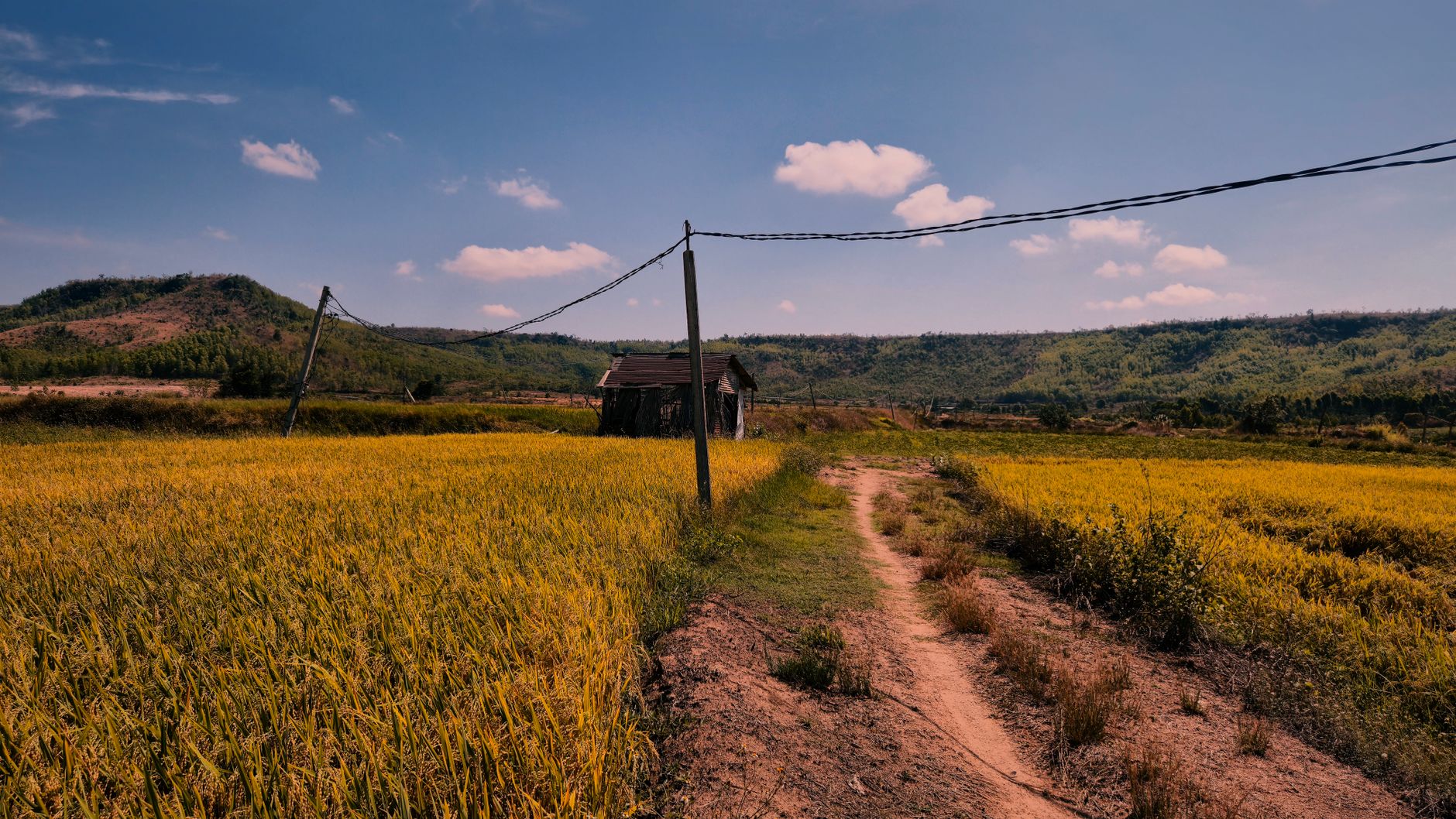
- The surrounding landscape — Gia Lai's rolling hills, coffee plantations, and laterite roads — makes the drive itself worthwhile.
- Friendly monks who may invite you for tea if you're respectful and curious.
Best time to visit
Gia Lai's dry season runs from November to April. Mornings are cool (18-22°C) and the light is soft — ideal for photography and for catching the monks during early chanting sessions, typically around 5:30-6:00 AM.
Avoid June through September if you dislike mud; the red-soil roads around the hermitage can get slippery after rain. Major Buddhist holidays (Vesak in the 4th lunar month, Vu Lan in the 7th lunar month) bring local devotees but remain low-key compared to urban pagodas.

Photo by Ahmad Malulein on Pexels
How to get there
Gia Lai's capital, Pleiku, is your base. From Pleiku:
- By motorbike: The most practical option. Depending on the hermitage's exact location within the province, expect 20-45 minutes on provincial roads. Rent a semi-automatic (Honda Wave or Yamaha Sirius) for around 120,000-150,000 VND/day in Pleiku.
- By car: Hire a driver through your hotel for roughly 800,000-1,200,000 VND for a half-day trip that can include other stops.
- Getting to Pleiku: Direct flights from Saigon (1 hour, VietJet/Vietnam Airlines) or buses from Quy Nhon (3.5 hours, ~150,000 VND) and Da Nang (다낭 / 岘港 / ダナン) (7-8 hours).
There's no public transport directly to the hermitage. Grab works in Pleiku city but drivers may be reluctant for rural trips — negotiate a round-trip fare if you don't ride.
What to do
At the hermitage
- Walk the grounds slowly. The garden areas are maintained by monks and often include medicinal herbs and fruit trees.
- Sit in the meditation hall if it's open. You don't need permission, but remove shoes and stay quiet.
- If monks are present and approachable, ask about the Khất Sĩ tradition. Many speak basic English or will find someone who does.
- Photography is generally fine outdoors, but ask before shooting inside worship spaces.
Nearby
- Bien Ho (Sea Lake): A volcanic crater lake about 6 km north of Pleiku. Peaceful in the early morning, good for a combined half-day trip.
- Coffee plantations: Gia Lai is one of Vietnam's major robusta-growing regions. Some farms welcome visitors — ask your hotel to arrange. A cup of vietnamese coffee here tastes different when you're surrounded by the trees that produced it.
- Local markets: Pleiku's central market sells dried "com tam" rice, local honey, and Central Highlands spices worth browsing.
Where to eat
Gia Lai isn't a culinary destination on the level of Hoi An or Hue, but the food is honest and cheap:
- "Pho" kho Gia Lai: A dry noodle variation specific to this province — noodles served separately from the broth with scallions and ground pork. Find it at any street-front shop near Pleiku's market for 30,000-40,000 VND.
- "Banh mi" stalls along Le Loi street in Pleiku serve solid versions for 15,000-20,000 VND.
- Com phan (broken rice): Look for signage reading "Com Binh Dan" for rice-plate meals at 35,000-50,000 VND.
- Grilled chicken with lemongrass and pepper — a highland specialty. Several restaurants on Hung Vuong street specialize in this.

Photo by Antonio Garcia Prats on Pexels
Where to stay
Pleiku has limited international-standard hotels but several clean guesthouses:
- Duc Long Gia Lai Hotel: The most comfortable option in town. Around 600,000-900,000 VND/night.
- Local nha nghi (guesthouses): Basic but functional rooms from 200,000-350,000 VND. Air conditioning and hot water are standard.
- Don't expect hostels or backpacker infrastructure — this isn't Sapa or Da Lat. Book ahead on weekends when domestic tourists visit Bien Ho.
Practical tips
- Dress modestly: cover shoulders and knees. This applies to all genders.
- Bring cash. There's no ATM at the hermitage, and card payments barely exist outside Pleiku hotels.
- Learn "Xin chao" (hello) and "Cam on" (thank you). Even basic Vietnamese goes far in places where foreigners rarely appear.
- A small donation (20,000-50,000 VND) in the offering box is appropriate but not required.
- Phone signal can be patchy on rural roads. Download offline maps before leaving Pleiku.
Common mistakes
- Showing up midday: The hermitage is most alive at dawn and late afternoon. Arriving at noon means empty halls and locked doors.
- Expecting English signage: There is none. Use Google Maps pinned location or ask locals — "Tinh xa Ngoc Hoa o dau?" (Where is Tinh Xa Ngoc Hoa?).
- Rushing it: This isn't a 15-minute photo stop. Give yourself at least an hour to absorb the atmosphere.
- Skipping the drive: The journey through Gia Lai's countryside — pepper farms, rubber plantations, Jarai villages — is half the experience.
Final note
Tinh Xa Ngoc Hoa won't appear on any top-ten list. That's precisely why it's worth your time if you're in Gia Lai. The Central Highlands reward travelers who slow down, and a quiet morning at this hermitage is one of the better ways to do it.
Last updated · May 29, 2026 · independently researched, never sponsored.