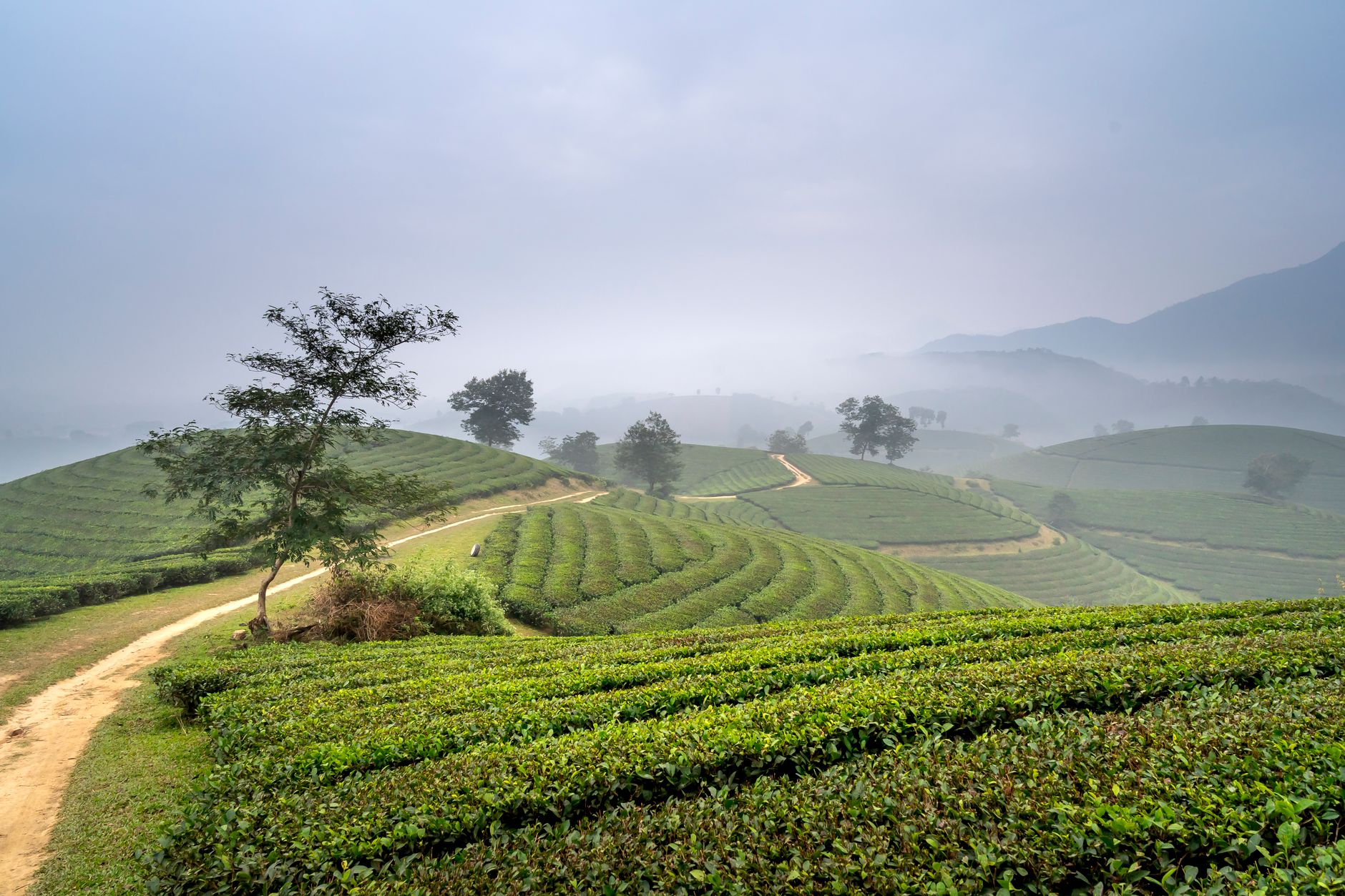
Doi Che Tam Chau isn't a theme park or a tourist attraction in any polished sense. It's a working tea plantation spread across rolling hills about 7 km south of Bao Loc town center, and that's exactly why it's worth visiting — you see tea as an actual crop, not a prop for photos.
What it is
Tam Chau is one of the largest tea companies in Vietnam (베트남 / 越南 / ベトナム), and their plantation in Bao Loc (Lam Dong province) has been producing oolong, green, and "lotus tea" since the 1980s. The hills cover roughly 1,600 hectares of neatly trimmed tea rows at elevations between 800 and 900 meters. Unlike Da Lat's flower farms, which are heavily geared toward visitors, Tam Chau still functions primarily as an agricultural operation. There's a visitor area with a processing facility, a tasting room, and a shop, but most of the estate is just workers, clippers, and tea bushes.
Following the 2025 provincial merger, Lam Dong now incorporates the former Dak Nong and Binh Thuan provinces — so if you see references to the "new" Lam Dong on maps, that's why. Bao Loc's location hasn't changed; it's still about 110 km south of Da Lat (달랏 / 大叻 / ダラット) along the QL20 highway.
Why travelers go
Three honest reasons. First, the landscape genuinely looks different from anything else in the Central Highlands — uniform rows of waist-high tea plants curving over red-soil hills, often with low morning fog sitting in the valleys. Second, you can walk through the processing facility and watch leaves go from wilting troughs to rolling machines to drying ovens, which makes your next cup of tea a little more interesting. Third, Bao Loc is on the route between Saigon and Da Lat, so Tam Chau works as a break stop rather than a destination you have to go out of your way for.
It's not a full-day attraction. Budget two to three hours and you'll have seen plenty.
Best time to visit
The tea hills are green year-round — that's the advantage of a crop that gets harvested every 30-40 days. But conditions for visiting vary:
- November to March is the dry season in this part of the highlands. Mornings are cool (18-22°C), fog often lifts by 8:30 AM, and the light between 7:00 and 9:00 is the best you'll get for photography.
- May to September brings afternoon rain almost daily. The hills are lush but you'll likely get caught in a downpour if you arrive after noon.
- Weekdays any time of year are noticeably quieter. Weekend mornings draw domestic tour groups, especially around Tet and public holidays.

Photo by Hồng Quang Official on Pexels
How to get there from Da Lat
Da Lat is the nearest major tourist hub. From there:
- By motorbike: 110 km via QL20, roughly 2.5-3 hours depending on your pace and how many coffee stops you make. The road is paved and scenic — pine forests, then coffee plantations, then tea. Fuel up in Da Lat; there are gas stations along the way but spacing gets thin in places.
- By bus: Phuong Trang (FUTA) runs multiple daily buses from Da Lat to Bao Loc. Tickets cost around 90,000-120,000 VND. The ride takes about 3 hours. From Bao Loc bus station, Tam Chau is a 15-minute motorbike taxi ride (about 30,000 VND).
- From Saigon: Bao Loc is roughly 190 km northeast, about 4-4.5 hours by bus (150,000-180,000 VND on FUTA or Thanh Buoi). If you're driving from Saigon to Da Lat, Tam Chau is a natural midway stop.
What to do
Walk the tea rows
The visitor-accessible section of the plantation has paths between the tea hedges. Early morning is best — the light is soft, workers are out picking, and you can actually see the process. Nobody will bother you if you stick to the paths. Wear shoes with grip; the red soil gets slippery after rain.
Tour the processing facility
Tam Chau offers guided tours of their factory (usually free, though hours can be inconsistent — aim for weekday mornings). You'll see withering, rolling, oxidation, and drying stages. The oolong line is more interesting than the green tea line because there are more steps. Ask about their lotus tea production if it's in season — workers hand-stuff tea leaves into lotus blossoms overnight, which is tedious work that explains the price.
Tea tasting and shopping
The on-site shop has a tasting area where you can try several varieties before buying. Prices are factory-direct, so they're lower than what you'd pay in Da Lat or Saigon tourist shops. A 200g bag of decent oolong runs about 80,000-150,000 VND. Their lotus tea is pricier — around 400,000-600,000 VND per 100g — but it's a legitimate version of the product, not the artificially scented stuff you find in tourist markets.
Silk production area
Tam Chau also operates a silkworm facility adjacent to the tea plantation. It's small but worth 20 minutes if you're already there. You can see mulberry fields, silkworm trays, and thread-pulling demonstrations.
Bao Loc waterfall circuit
If you have a motorbike, combine Tam Chau with Dambri Waterfall (18 km away, entry about 50,000 VND) for a solid half-day loop.
Where to eat nearby
Bao Loc town has a few options worth knowing about:
- "Com tam" stalls on Tran Phu street — broken rice with grilled pork, a fried egg, and pickled vegetables. Standard lunch, 35,000-50,000 VND.
- "Banh canh" with crab — thick tapioca noodle soup that's a local go-to for breakfast or lunch. Several small shops near the Bao Loc market serve good bowls for around 30,000-40,000 VND.
- For "vietnamese coffee", skip the chains and look for any local cafe advertising Bao Loc-grown beans. This region produces a significant chunk of Vietnam's robusta, and a fresh cup here costs 15,000-25,000 VND.

Photo by Quang Nguyen Vinh on Pexels
Where to stay
Most travelers base in Da Lat and day-trip to Bao Loc, but if you want to stay:
- Budget: Guesthouses ("nha nghi") along QL20 near Bao Loc center run 200,000-350,000 VND/night. Basic but clean enough.
- Mid-range: A few newer hotels in Bao Loc town offer rooms with breakfast for 500,000-800,000 VND. Check Hoang Gia or Bao Loc Hotel.
- Homestays: Some tea farm homestays have appeared in recent years on the outskirts of Bao Loc. Expect 400,000-600,000 VND/night. Quality varies — check recent reviews.
Practical tips locals would tell you
- Arrive before 8:00 AM if you want fog-over-tea-hills photos. By 9:30 on clear days, the light gets harsh.
- Bring a hat and water. There's almost no shade between the tea rows, and the tasting room is the only reliable spot with air conditioning.
- If you're on a motorbike, the red-soil access roads into the plantation are manageable when dry but genuinely dangerous when wet. Don't try them after heavy rain.
- The factory tour schedule isn't posted online. Just show up on a weekday morning and ask at the front gate — they're usually accommodating.
Common mistakes to avoid
- Arriving midday on a weekend — tour buses from Saigon show up between 10:00 and 14:00 on Saturdays. The tasting room gets crowded and the experience suffers.
- Expecting a resort-style tea experience — this isn't a Japanese tea ceremony venue. It's a farm with a shop attached. Adjust expectations accordingly.
- Skipping Bao Loc entirely on the Saigon-Da Lat route. Most travelers blast through without stopping. A two-hour break at Tam Chau makes the drive more interesting than another roadside rest stop.
- Buying tea at Da Lat night market instead of here. You'll pay double for the same product, sometimes lower quality.
Last updated · May 29, 2026 · independently researched, never sponsored.