
What it is and why it matters
Hai Phong's central city strip runs roughly from the opera house on Quang Trung down through Dien Bien Phu, Tran Phu, and Le Loi streets — a compact corridor of colonial-era buildings, banyan-shaded boulevards, and street-level commerce that hasn't been scrubbed clean for tourists. This is Vietnam (베트남 / 越南 / ベトナム)'s third-largest city, a working port town since the French dug out the harbor in 1874, and it feels like it. The architecture is faded yellow and cream, the traffic is aggressive but not Hanoi-level chaotic, and the food leans heavily on seafood pulled from the coast 20 km east.
Most travelers blow through Hai Phong on the way to Cat Ba or Ha Long Bay. That's a mistake — or at least a missed opportunity. The central strip rewards a full day, maybe two, especially if you eat your way through it.
Why travelers go
Three reasons. First, the food: Hai Phong has its own regional dishes that you won't find done properly anywhere else. Second, the architecture: blocks of French colonial buildings in various states of beautiful decay, less restored than Hanoi (하노이 / 河内 / ハノイ)'s Old Quarter but more atmospheric for it. Third, the pace: this is a real city where people live and work, not a tourism stage set. You'll be one of the few foreigners walking these streets, which changes how you experience a place.
Best time to visit
October through December is ideal — dry, cooler (22-28°C), and the light in the late afternoon turns those colonial facades golden. March through May is pleasant but increasingly humid. June through September brings heavy rain and occasional typhoon edges; the streets flood and the seafood markets get muddy. Avoid Tet unless you want to see a shuttered city — most restaurants close for a week.

Photo by Hoàng Giang on Pexels
How to get there
From Hanoi, you have options:
- Bus: Grab a seat on a Hai Au or Hoang Long bus from Giap Bat or My Dinh station. About 90 minutes on the expressway, 80,000-120,000 VND. Buses drop you at Niem Nghia station, then it's a 15-minute taxi (around 60,000 VND) to the central strip.
- Train: The Hanoi-Hai Phong line runs five or six times daily from Long Bien or Hanoi station. Takes 2-2.5 hours, 75,000-100,000 VND for a hard seat. The train station sits right on the edge of the central strip — walk out and you're basically there.
- Grab car: Around 600,000-800,000 VND one way, door to door in about two hours depending on traffic.
Cat Bi Airport has flights from Saigon (about 1.5 hours, usually 800,000-1,500,000 VND if booked early), but the airport is 5 km from center.
What to do
Walk the colonial blocks around the Opera House
Hai Phong's Opera House (Nha Hat Lon) anchors the central strip at Quang Trung square. The building itself is a smaller echo of Hanoi's opera house, built in 1912. Fan out from here along Dien Bien Phu and Hoang Van Thu streets. You'll pass crumbling Art Deco shopfronts, a Catholic cathedral from 1877, and the kind of architectural texture that Hanoi's Old Quarter had 15 years ago before the renovations.
Visit Hai Phong Museum and the surrounding park
The city museum on Dien Bien Phu has a modest but well-organized collection covering the port's history — trading ceramics, French-period photographs, wartime artifacts. Free entry. Budget 45 minutes. The park out front is where locals do morning tai chi and evening badminton; it's a good place to sit with vietnamese coffee from a street cart.
Explore the flower market on Tam Bac
The Tam Bac river market runs along the canal near the central strip. It's at its best early morning (6-8 AM) when vendors unload flowers from boats. This isn't a tourist market — it's where Hai Phong buys its flowers. No entrance fee, no hassle.
Sat Market (Cho Sat)
A cast-iron market building from the French era, recently restored but still functioning as a proper wet market. Downstairs is seafood and produce; upper levels have fabric and household goods. Come hungry — there are "banh mi" carts and noodle stalls ringing the perimeter.
Catch the street scene on Le Loi
Le Loi street between the train station and the waterfront is where the central strip's daily life is most concentrated. Motorbike repair shops next to "bia hoi" corners, photocopy shops next to noodle joints. Grab a plastic stool at any bia hoi spot around 4-5 PM and watch the after-work crowd settle in. A glass runs about 8,000-12,000 VND.
Where to eat
Banh da cua — the signature dish
Hai Phong's defining noodle soup uses flat red-brown rice noodles ("banh da") in a crab-based broth loaded with crab meat, pork ribs, and herbs. It's richer and more complex than most noodle soups you'll find in Hanoi. Try it at Banh Da Cua Ba Cu on Hai Ba Trung street — a bowl runs 35,000-50,000 VND. Go before 11 AM; they sell out.
Nem cua be — crab spring rolls
Crispy fried spring rolls stuffed with crab meat, a Hai Phong specialty that's different from standard "cha gio" you'll get in the south. Street stalls around Cho Sat sell them for 5,000-8,000 VND per piece. Dip in the chili fish sauce, eat immediately.
For a proper sit-down seafood meal, the strip of restaurants along Le Loi near the waterfront serves grilled clams, steamed shrimp, and stir-fried crab at reasonable prices — expect 150,000-300,000 VND per person with beer.
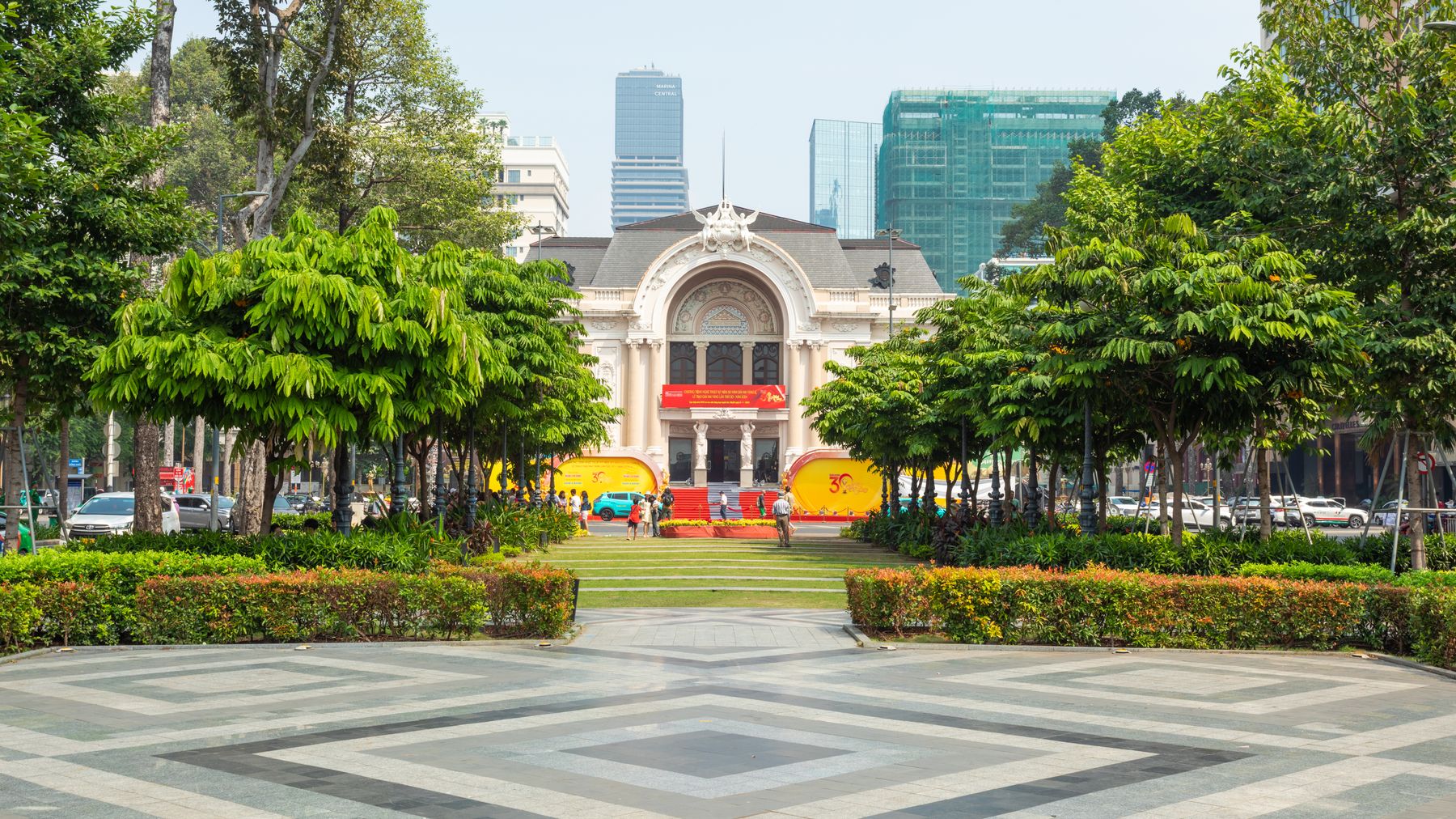
Photo by Nguyễn Trường on Pexels
Where to stay
The central strip has a range:
- Budget: Guesthouses on Dien Bien Phu and Minh Khai streets, 200,000-400,000 VND/night. Basic but clean. Don't expect English-speaking staff.
- Mid-range: Nam Cuong Hai Phong or similar 3-star hotels near the opera house, 500,000-900,000 VND/night. Decent rooms, breakfast included.
- Upper: Avani Hai Phong Harbour View, the city's one international-brand hotel, from about 1,200,000 VND/night. Waterfront location, proper gym and pool.
Practical tips locals would tell you
- Hai Phong taxis: use Mai Linh or Grab. Some independent cabs still run rigged meters.
- The central strip is walkable end to end in about 30 minutes. You don't need a motorbike unless you're heading to Do Son beach (20 km south).
- ATMs are clustered around the opera house area. Vietcombank and BIDV machines reliably accept international cards.
- If you're continuing to Cat Ba, the Got ferry terminal is 20 km east. A Grab car costs about 150,000 VND, or catch the public bus from Tam Bac.
Common mistakes to avoid
- Skipping the city entirely for Ha Long Bay: You're already here. Spend at least half a day eating and walking before you move on.
- Arriving after noon for banh da cua: The good shops are morning operations. By 1 PM, your options narrow sharply.
- Booking a hotel far from center: Hai Phong sprawls into industrial zones fast. Stay within the Dien Bien Phu / Tran Phu / Le Loi rectangle or you'll spend your time in traffic.
- Expecting Hanoi's tourist infrastructure: English menus, travel agencies, and walking-tour operators are rare here. Download Google Translate's Vietnamese offline pack before you arrive.
Last updated · May 29, 2026 · independently researched, never sponsored.






