Chu Dang Ya is one of the few places in Vietnam (베트남 / 越南 / ベトナム) where you can walk into a volcanic crater and find it carpeted in yellow wildflowers instead of lava rock. It sits about 30 km northeast of Pleiku city in Gia Lai province, and while it's been drawing domestic photographers for years, it remains largely off the radar for international travelers.
What it is
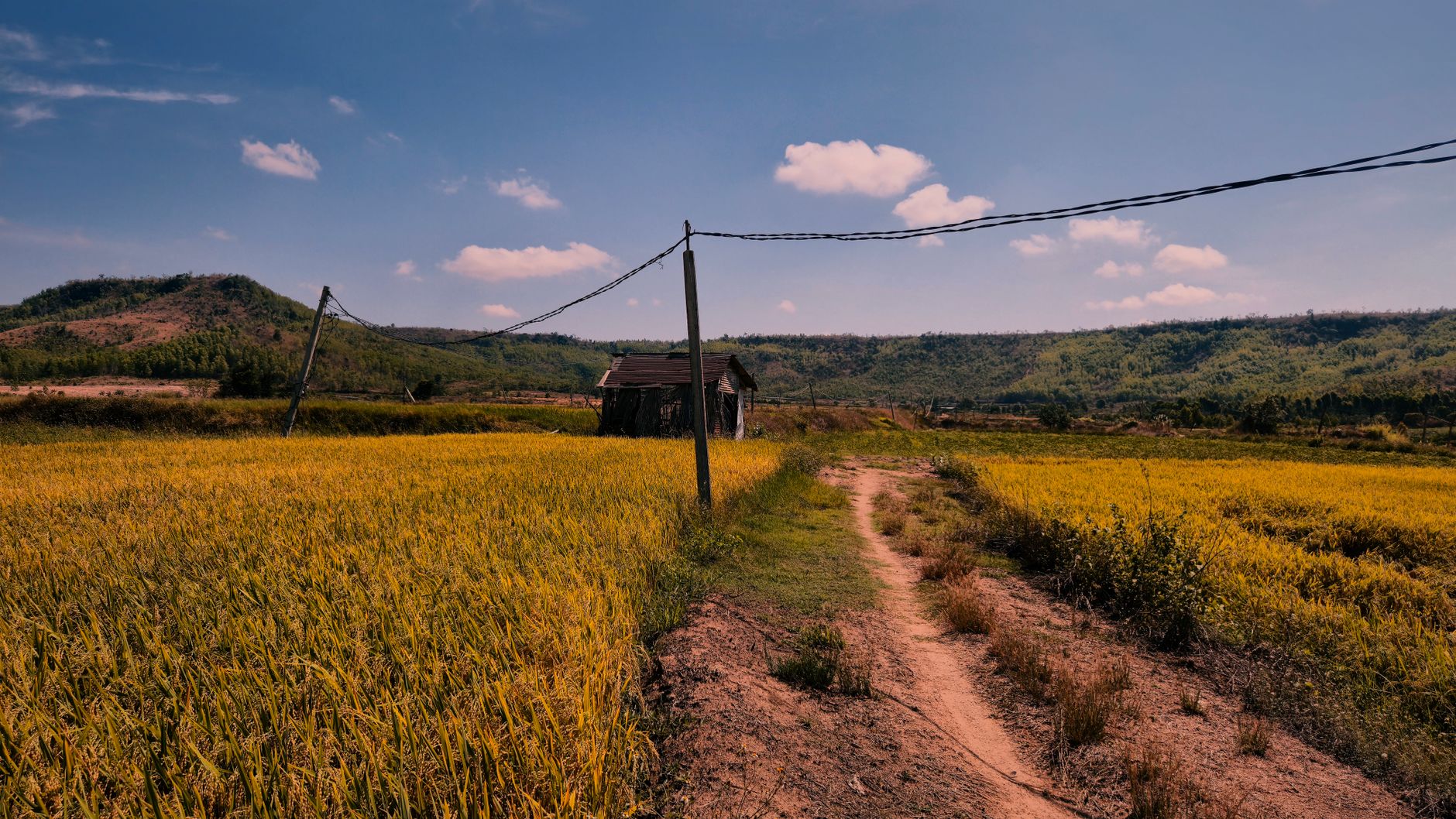
Chu Dang Ya is a dormant volcano that last erupted millions of years ago. The name comes from the Jarai language — the indigenous ethnic group of the Central Highlands (중부 고원 / 中部高原 / 中部高原) — and roughly translates to "wild ginger." The crater measures about 600 meters in diameter and sits at an elevation of around 650 meters above sea level. The basalt soil inside is extraordinarily fertile, which is why local farmers have cultivated crops in the bowl for generations. The surrounding landscape is classic Central Highlands: rolling hills, coffee plantations, pepper farms, and red-earth roads.
Unlike dramatic volcanic sites elsewhere in Southeast Asia, Chu Dang Ya isn't about height or danger. It's quiet, agricultural, and photogenic — a gentle giant that happens to bloom spectacularly once a year.
Why travelers go
Three reasons. First, the wild sunflower season ("hoa da quy") in November turns the crater and surrounding hillsides into solid gold. Second, the crater itself is genuinely unusual — you don't expect to find a volcanic bowl in the middle of coffee country. Third, Gia Lai province offers a version of the Central Highlands that hasn't been reshaped by mass tourism the way Da Lat has. You'll share the trail with local farmers, not tour buses.
Outside flower season, the crater is planted with crops — cassava, corn, vegetables — and has a quieter, earthier appeal. The rim walk is worth doing year-round for the panoramic views across the highlands.
Best time to visit
The golden window is mid-November to early December, when wild sunflowers peak. Mornings between 6:00 and 8:00 AM give the best light and fewer people — by 9:00 AM on weekends in peak season, the crater rim gets crowded with domestic visitors.
If you want to avoid crowds entirely, visit in the dry season (November–April) outside the flower peak. The landscape is still green and the crater is accessible. Rainy season (May–October) makes the dirt roads muddy and the climb slippery, though it's not impossible.
How to get there
Getting to Pleiku
Pleiku has a domestic airport (Pleiku Airport, code PXU) with daily flights from Saigon and Hanoi — typically 300,000–600,000 VND one way if booked in advance. Alternatively, sleeper buses run from Da Nang (about 7–8 hours, around 250,000 VND) or from Saigon (roughly 12 hours overnight, 350,000–450,000 VND).
Pleiku to Chu Dang Ya
From Pleiku city center, the volcano is about 30 km northeast, near Chu Dang Ya village in Chu Pah district. The ride takes 40–50 minutes by motorbike. The road is paved most of the way, with the last 2–3 km on a dirt track. Rent a motorbike in Pleiku for 120,000–150,000 VND/day, or hire a xe om (motorbike taxi) for roughly 200,000 VND round trip including waiting time. There's no public bus to the crater.
A car with driver from Pleiku runs about 500,000–700,000 VND for a half-day trip that includes Chu Dang Ya plus nearby stops like Bien Ho (Sea Lake).

Photo by HONG SON on Pexels
What to do
Walk the crater rim. A footpath circles the top in about 30–40 minutes. The views alternate between the cultivated crater interior and the rolling highland landscape outside.
Descend into the crater. A trail drops down into the bowl — it's steep but short (10–15 minutes). During flower season, this is where you get the iconic shots of yellow blooms against red soil. Outside season, you'll see crops and local farmers at work.
Combine with Bien Ho. This volcanic lake (also called T'Nung) is 15 km from Pleiku center and makes a natural pairing with Chu Dang Ya. Early morning mist on the lake is particularly atmospheric.
Visit a Jarai village. Several traditional Jarai longhouse communities sit within 10 km of the volcano. If you go with a local guide, you may be invited for "ruou can" (rice wine drunk through bamboo straws from a communal jar). Ask at your hotel in Pleiku for a guide who speaks Jarai.
Where to eat
There's nothing at the volcano itself — bring water and snacks. Back in Pleiku:
- Pho kho Gia Lai — Pleiku's signature dish is dry pho: noodles served without broth, tossed in a savory sauce with sliced beef, eaten alongside a separate bowl of soup. Try it on Nguyen Van Troi street, where several stalls serve it from early morning. About 30,000–40,000 VND per bowl.
- Com tam spots along Tran Phu street serve broken rice with grilled pork, egg, and pickled vegetables — solid lunch fuel for 35,000–50,000 VND.
- Banh mi carts near Pleiku's central market offer stuffed baguettes for 15,000–25,000 VND.
- For vietnamese coffee, Pleiku sits in prime robusta territory. Any local cafe will serve a strong, dark "ca phe sua da" (iced milk coffee) for 15,000–25,000 VND.
Where to stay
Pleiku is the base. Options:
- Budget: Thanh Lich Hotel or similar guesthouses on Le Loi street — clean rooms with air-con for 200,000–350,000 VND/night.
- Mid-range: Hoang Anh Gia Lai Hotel, which is the nicest option in the city center. Expect 500,000–800,000 VND/night with breakfast.
- Homestay: A few homestays operate near Bien Ho lake, offering a quieter setting 10 minutes outside the city. Check booking platforms under "T'Nung Lake homestay."
Don't expect resort-level accommodation. Pleiku is a provincial capital, not a tourist hub, and that's part of the appeal.

Photo by 1500m Coffee on Pexels
Practical tips
- Entrance fee: 20,000 VND per person (as of 2024). Paid at a small booth near the parking area.
- Footwear: Trainers or hiking sandals with grip. The descent into the crater is on loose red earth — slippery when wet.
- Sun protection: The crater rim has zero shade. Bring a hat and sunscreen.
- Cash: There are no ATMs at the site. Withdraw in Pleiku before heading out.
- Language: Very little English spoken in Gia Lai province. Download an offline Vietnamese phrasebook or translation app.
Common mistakes
Arriving midday in flower season. The light is harsh, the crowds peak, and photos look flat. Go at dawn.
Skipping the crater descent. Many visitors photograph from the rim and leave. The 10-minute walk down is where the landscape reveals itself.
Not combining with other stops. Chu Dang Ya alone takes 1.5–2 hours. Pair it with Bien Ho and a Jarai village visit to fill a satisfying half-day.
Visiting only for flowers. The crater has character year-round. If your dates don't align with November, come anyway — the geological oddity and highland scenery don't depend on blooms.
Practical notes
Chu Dang Ya works best as a half-day trip from Pleiku, ideally at sunrise. Budget a full day in Gia Lai if you want to add Bien Ho and a village visit. The volcano rewards early risers and travelers who don't mind dirt roads — which, in the Central Highlands, is most of the roads.
Last updated · May 29, 2026 · independently researched, never sponsored.