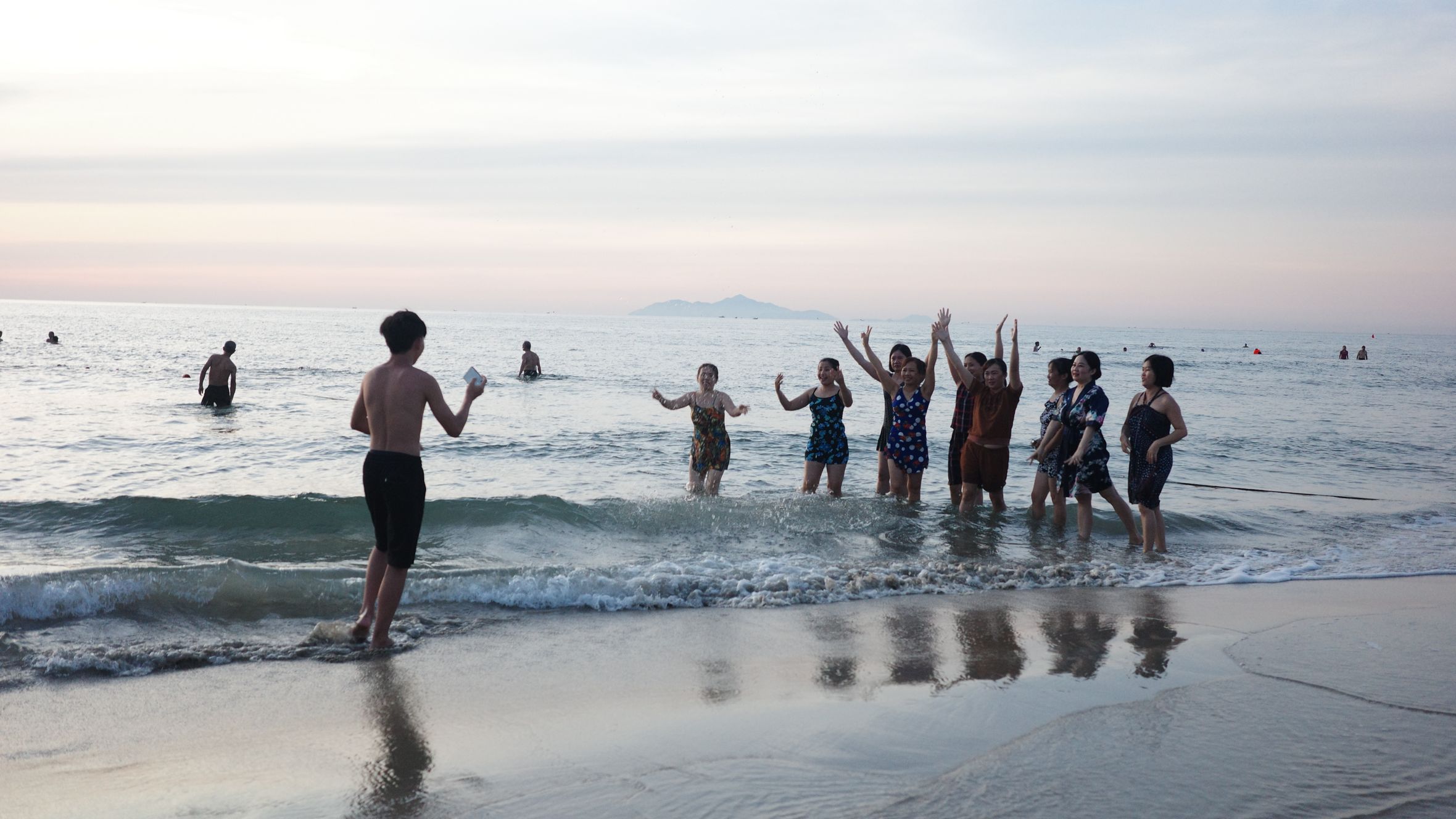
Sa Huynh Beach — "Bai Bien Sa Huynh" — is the kind of place that doesn't try to impress you. It's a wide, gently curving stretch of sand at the far southern tip of Quang Ngai province, roughly 100 km south of the provincial capital and just a few kilometers from the border with Binh Dinh. While most travelers blow past on the train or bus between Da Nang and Quy Nhon, Sa Huynh has been here for thousands of years, quietly doing its thing.
What it is and why it matters
Sa Huynh isn't just a beach. The area gave its name to the Sa Huynh culture, an Iron Age civilization (roughly 1000 BC to 200 AD) known for jar burials and sophisticated metalwork. Archaeologists first excavated sites here in the early 20th century, and the finds reshaped understanding of pre-Cham societies along the central coast. There's a small Sa Huynh Culture Museum in town — modest, a single building — but it gives useful context for what you're standing on.
The beach itself stretches about 3.5 km, backed by casuarina trees and a few low-rise guesthouses. Behind the coastline, you'll find salt production ponds — flat, white rectangles that workers tend by hand during the dry season. The whole area has a working-village feel. People here fish, make salt, and farm. Tourism is secondary.
Why travelers go
Honestly, most don't. And that's the appeal. If you've been doing the Hoi An–Da Nang (다낭 / 岘港 / ダナン)–Hue circuit and the crowds are wearing on you, Sa Huynh is a hard reset. The beach is clean, the water is calm enough for swimming most of the year, and you can walk the full length without dodging sunbeds or hawkers. It's a place to slow down for a day or two between bigger stops.
The seafood here is also notably cheap, even by Vietnamese standards, because you're eating where the boats come in — no supply chain markup.
Best time to visit
March through August is the sweet spot. Skies are clear, the sea is flat, and the salt fields are actively being harvested (a surprisingly photogenic process). July and August are the hottest months — expect 34-36°C — but mornings and late afternoons are comfortable.
Avoid October through December. Central Vietnam's rainy season hits hard along this stretch of coast. Seas get rough, rain comes in sheets, and some smaller guesthouses close up.
How to get there
The nearest major hub is Da Nang, about 200 km north.
By train: The Reunification Express stops at Sa Huynh (Duc Pho station, technically). From Da Nang, the ride takes roughly 4-5 hours depending on the train. Tickets run 150,000-350,000 VND for a hard or soft seat. From the station, it's a 10-minute xe om ride to the beach.
By bus: Long-distance buses on the Hanoi–Saigon route pass through. Ask to be dropped at the Sa Huynh junction on QL1A (National Highway 1). The beach is about 2 km east of the highway. A xe om from the drop-off costs around 20,000-30,000 VND.
By motorbike: If you're riding the coast road between Da Nang and Quy Nhon (which you absolutely should — it's one of the best stretches in the country), Sa Huynh makes a natural overnight stop. The ride from Quang Ngai city takes about 1.5 hours via QL1A.
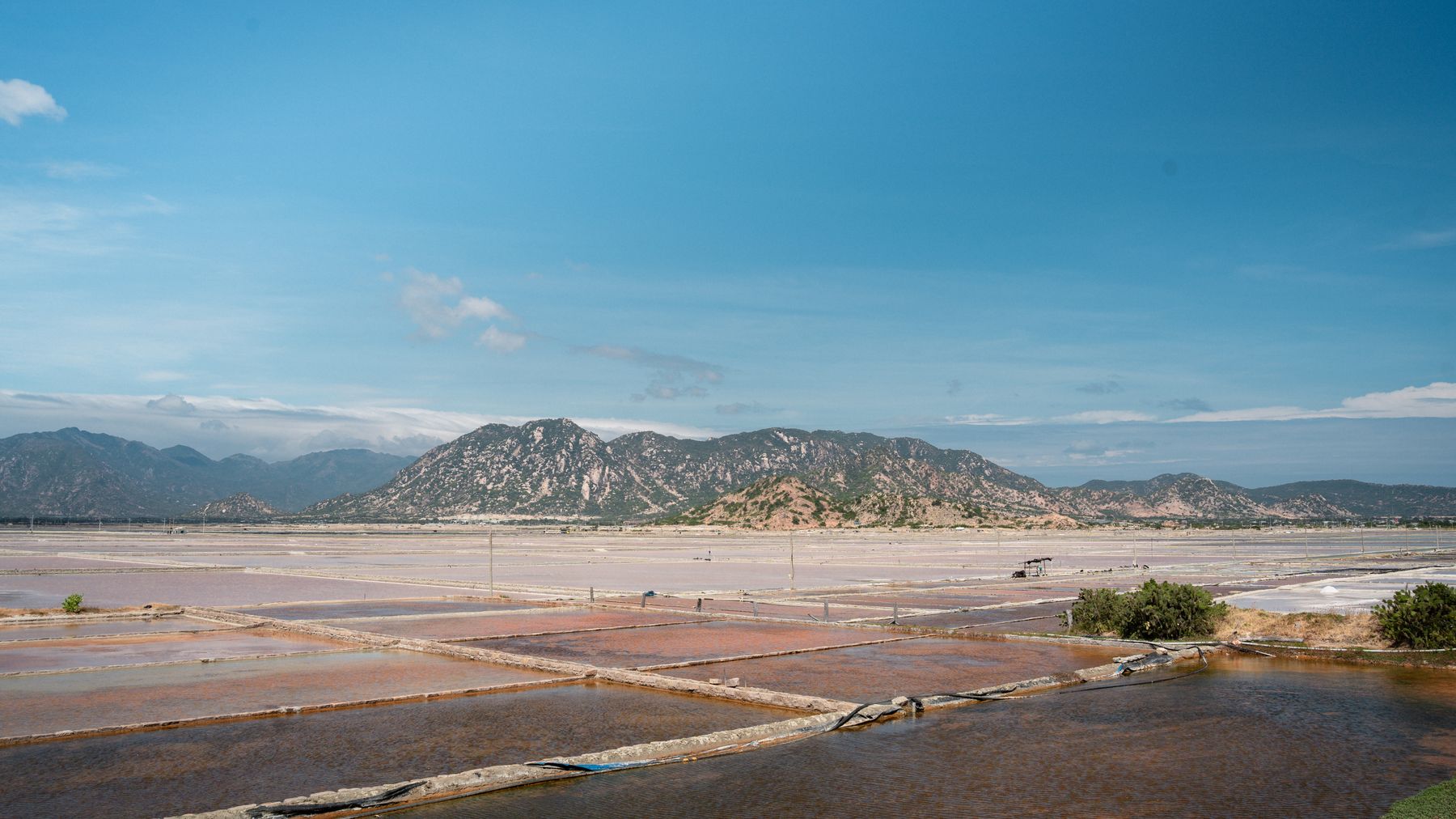
Photo by SICULA Đỗ on Pexels
What to do
Walk the salt fields
The salt-making ponds sit just inland from the beach, near the mouth of a small river. Between March and June, workers rake and pile salt by hand in the early morning. Show up around 6:00–7:00 AM. Nobody will mind you watching or taking photos — just stay off the drying beds. It's physical, old-school labor and genuinely interesting to see up close.
Visit the Sa Huynh Culture Museum
It's on the main road in Duc Pho (쌀국수 / 越南河粉 / フォー) town, a short ride from the beach. The collection includes burial jars, bronze tools, and ornaments excavated from nearby sites. Entry is free or nearly free (10,000-20,000 VND). Don't expect a world-class museum — expect a local one, earnest and informative. Budget 30-45 minutes.
Swim and do nothing
The beach slopes gently, the water is warm year-round, and there's a long sandbar that keeps waves manageable. No jet skis, no parasailing, no noise. Bring a book.
Watch the fishing boats come in
Early morning, around 5:30–6:30 AM, the round basket boats ("thung chai") and wooden fishing boats return to shore. Walk to the northern end of the beach near the river mouth. Fishermen sort their catch right on the sand — squid, mackerel, shrimp, whatever the night brought. You can buy directly if you want, though negotiating without Vietnamese takes some pantomime.
Day-trip to nearby My Son
The Cham temple ruins at My Son are about 130 km north — doable as a long day trip by motorbike, or you can break it up with a stop in Quang Ngai city. It's a stretch, but if you have your own wheels and want to combine beach time with some serious historical architecture, it works.
Where to eat
Seafood is the obvious play. Small restaurants along the beachfront road serve grilled fish, steamed clams, and stir-fried squid at prices that feel almost wrong — a full seafood spread for two runs 150,000-250,000 VND. Ask for "ca nuong muoi ot" (fish grilled with salt and chili) — it's the default preparation and it's excellent.
"Don" — a rice porridge made with fresh fish, turmeric, and herbs — is a Quang Ngai specialty you'll find at breakfast stalls. It's humble food, but it's the kind of thing you remember weeks later. A bowl costs 15,000-25,000 VND.
If you're coming from or heading to Hoi An, you've probably already tried "mi quang" — the turmeric noodle dish. The Quang Ngai version uses a thinner broth and slightly different toppings. Worth comparing.
Where to stay
Accommodation is basic. There are a handful of guesthouses ("nha nghi") along the beach road, mostly family-run, mostly clean, mostly no-frills. Expect to pay 200,000-400,000 VND per night for a room with air conditioning, hot water, and Wi-Fi. Don't expect English-speaking staff — a translation app helps.
There's no resort here. If you need a pool and a lobby, Sa Huynh isn't the stop. Quy Nhon (about 70 km south) has more polished options.

Photo by Đạt Nguyễn on Pexels
Practical tips locals would tell you
- Bring cash. There's an ATM in Duc Pho town, but card payments are essentially nonexistent at the beach.
- Sunscreen is not optional. The beach faces east, and the morning sun is direct. There's limited shade on the sand itself.
- Learn "bao nhieu" (how much). Prices aren't posted at most food stalls. Pointing at what others are eating works too.
- Motorbike rental isn't readily available in Sa Huynh itself. Arrange one in Quang Ngai city or Da Nang if you need wheels.
Common mistakes to avoid
- Skipping it entirely because it's not on any "top beaches" list. That's exactly why it's worth stopping.
- Arriving during rainy season and expecting beach weather. November is miserable here.
- Expecting nightlife. The town is quiet after dark. Bring your own entertainment — a book, a podcast, a bottle of local rice wine from the market.
- Not eating early enough. The best seafood goes to the first buyers at the morning market. By noon, restaurant options narrow. Lunch by 11:30 is smart.
Practical notes
Sa Huynh works best as a one- or two-night stop on a longer coastal trip — between Da Nang and Quy Nhon, or as a detour from Quang Ngai city. It rewards travelers who don't need things to be polished. Show up, eat well, sleep to the sound of waves, and move on rested.
Last updated · May 29, 2026 · independently researched, never sponsored.





