What it is
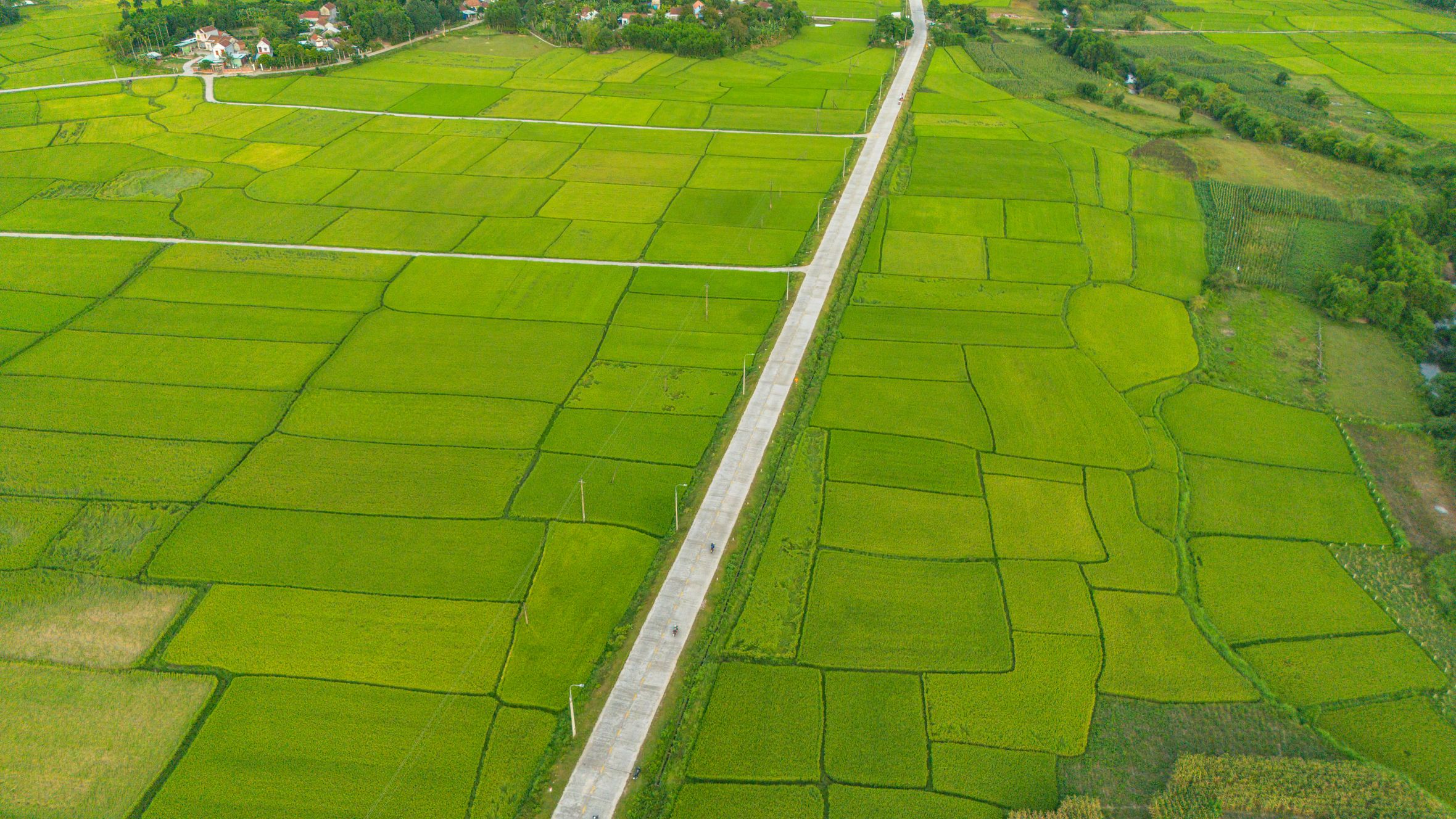
Dam Van Hoi is a large natural freshwater lake sprawling across roughly 600 hectares in what was formerly Yen Bai province (now part of the merged Lao Cai province after the 2025 administrative consolidation). Sitting at an elevation of about 50 meters in a valley between low limestone karsts and terraced hillsides, the lake functions as both a reservoir and a fishing ground for surrounding communities. Unlike the polished tourism infrastructure around Ha Long Bay or Ninh Binh (닌빈 / 宁平 / ニンビン), Dam Van Hoi remains a working landscape — fisherfolk in wooden boats, water buffalo grazing on the banks, and almost zero souvenir shops.
The lake has existed for centuries as a natural depression that collects water from surrounding streams. Local Tay and Kinh communities have fished here for generations. It only started appearing on domestic travel blogs around 2018, and foreign visitors remain rare.
Why travelers go
Three reasons, honestly. First: the landscape. Early mornings produce a thick mist that sits on the water surface while karst silhouettes emerge behind it — genuinely photogenic without needing a drone or heavy editing. Second: the pace. There's nothing programmed here. You rent a boat, you float, you watch herons. Third: it's a logical stopover if you're driving between Hanoi and Sapa or Ha Giang, breaking up what's otherwise a punishing 5-6 hour highway slog.
Birders come for the wetland species — egrets, cormorants, kingfishers — especially during migration season (October-November). Photographers come for the golden hour reflections. Everyone else comes because someone on a motorbike forum mentioned it and they got curious.
Best time to visit
The sweet spot is September through November. Rice terraces in surrounding hills are gold or freshly harvested green, the water level is high enough for boating, and morning mist is most reliable. December through February gets cold — 8-12°C on foggy mornings — which is atmospheric but uncomfortable on an open boat without layers.
Avoid June through August if you dislike rain. Downpours are heavy and the access roads can get muddy. March through May is fine but drier, meaning lower water levels and less dramatic mist.
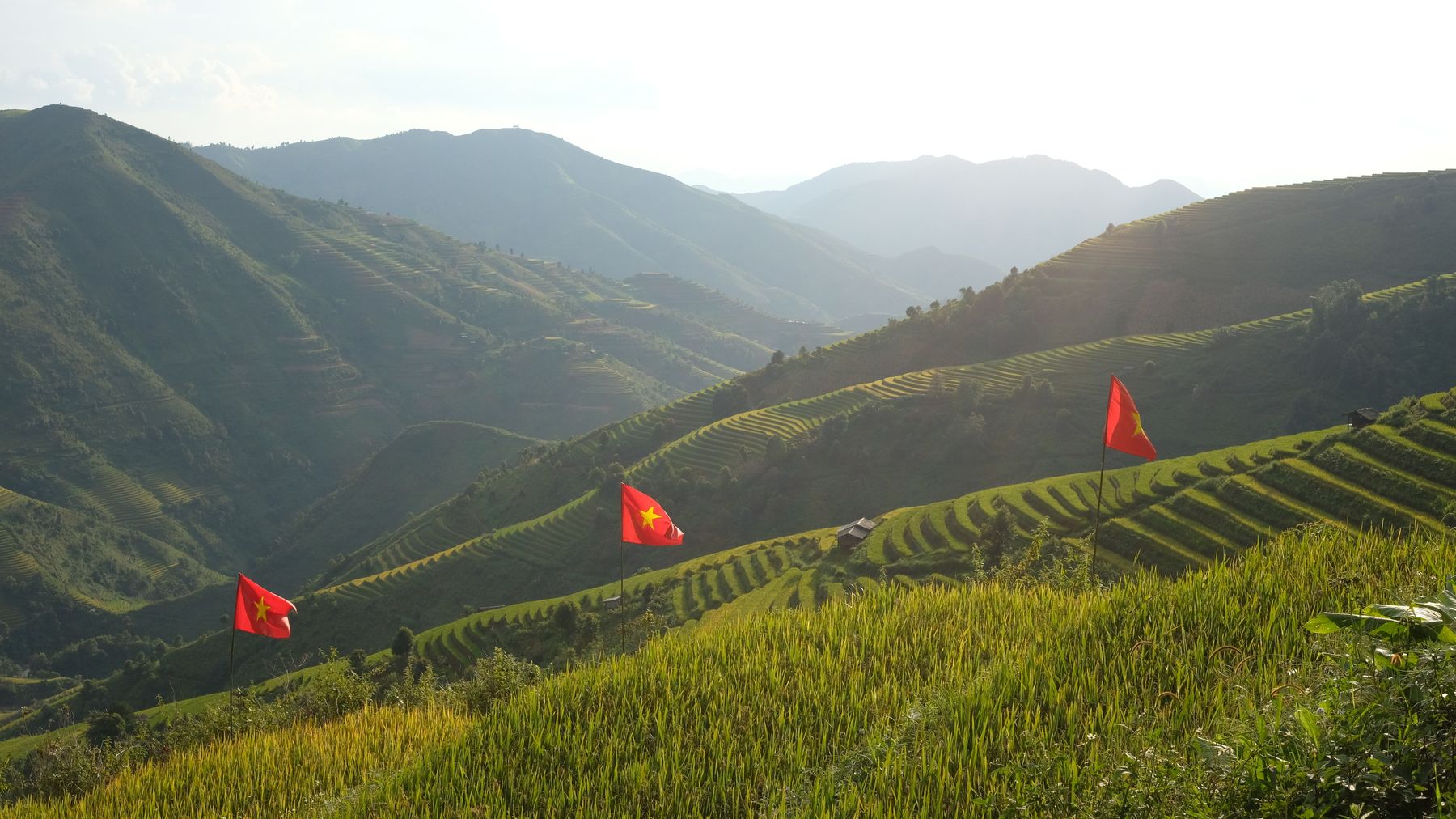
Photo by Sea Man on Pexels
How to get there
From Hanoi (하노이 / 河内 / ハノイ), Dam Van Hoi is approximately 180 km northwest — about 3.5 hours by car or motorbike via the Noi Bai - Lao Cai expressway (CT05), exiting at Yen Bai city and continuing northwest on provincial roads. The final 15 km from the main highway is on a narrow but paved two-lane road through villages.
If you're coming from Sapa, it's roughly 150 km south — around 3 hours. From Ha Giang, budget 5+ hours.
No direct public bus runs to the lake itself. The closest bus stop is Yen Bai city (frequent buses from Hanoi's My Dinh station, 80,000-120,000 VND, 2.5 hours). From Yen Bai city, you'd need a Grab bike or local "xe om" for the remaining 25 km — expect 100,000-150,000 VND one way.
Motorbike rental from Hanoi (150,000-200,000 VND/day for a Honda Wave) is the most flexible option and lets you explore surrounding villages at your own pace.
What to do
Boat trips
Local fishermen offer boat rides in narrow wooden vessels. Expect 200,000-300,000 VND for a 1-2 hour loop around the lake. No ticket office — you negotiate at the waterfront. Early morning (6:00-7:30 AM) gives the best light and mist. Some boats fit 3-4 passengers.
Cycling the perimeter
A rough path circles most of the lake — about 20 km total. It's not signed or maintained for tourists, so a mountain bike or sturdy motorbike works better than a road bike. You'll pass through two or three small Tay minority villages with stilt houses.
Fishing
Locals fish here daily and are generally happy to let visitors join if you ask politely. Bring your own gear or borrow a simple rod. Common catches include tilapia and carp. No permit needed as of 2024.
Photography
The northwest bank offers the best vantage for sunrise compositions with karsts in the background. A 50mm or 70-200mm lens works well for isolating boats against mist.
Where to eat
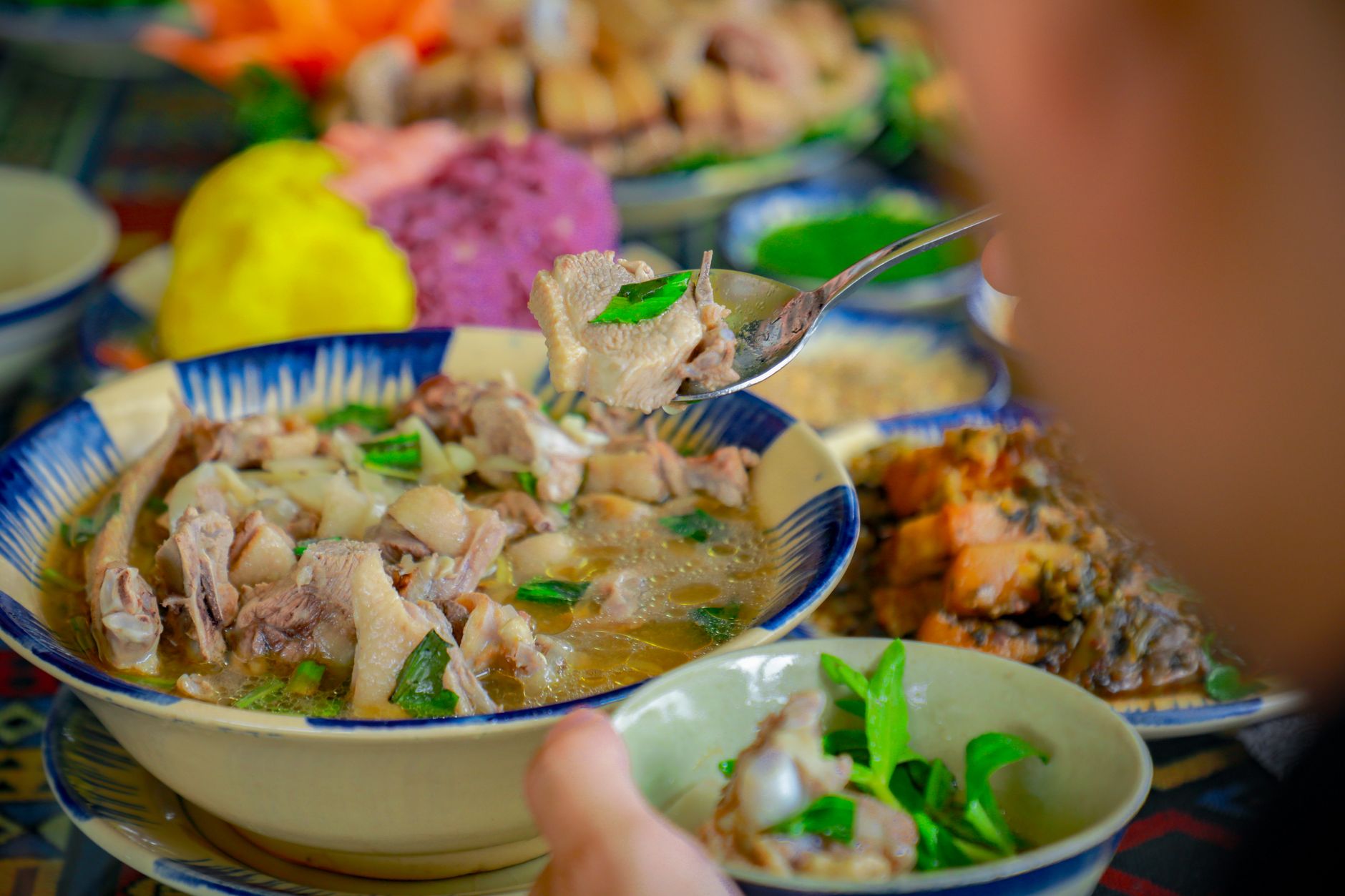
Don't expect restaurants. The nearest proper eateries are in the small town of Van Hoi, about 3 km from the lake shore. Two or three "com binh dan" (everyday rice shops) serve plates of rice with grilled fish, morning glory, and tofu for 35,000-50,000 VND.
If you're lucky, a lakeside family might sell you grilled fish fresh from the morning catch — usually tilapia prepared with turmeric and dill, similar to Hanoi's famous "cha ca" preparation but rougher and smokier. Ask around; nothing is advertised.
For pho or "bun" noodle soup, you'll need to ride into Yen Bai city.

Photo by Nhi Huynh on Pexels
Where to stay
Accommodation near the lake is limited. A handful of homestays have appeared since 2020 — basic rooms in stilt houses with mosquito nets, shared bathrooms, and home-cooked dinners included. Expect 300,000-500,000 VND per person per night including meals. Book through local Facebook pages or just show up and ask; availability is rarely an issue outside Tet / 越南春节 / テト) holidays.
For more comfort, Yen Bai city (25 km) has standard Vietnamese hotels in the 400,000-800,000 VND range with hot water, wifi, and air conditioning.
Practical tips
- Bring cash. No ATMs near the lake; the nearest is in Yen Bai city.
- Phone signal is decent (Viettel works best here) but don't rely on Google Maps for the final few kilometers — offline maps or asking locals is more reliable.
- Mosquitoes are aggressive at dusk. Bring repellent.
- If you're combining this with a Sapa trip, Dam Van Hoi works as a first-night stop heading north or a decompression stop heading back to Hanoi.
Common mistakes
- Arriving midday. The lake looks flat and unremarkable under harsh noon sun. Come at dawn or late afternoon.
- Expecting tourist infrastructure. There are no English signs, no visitor center, no cafe with a lake view. That's the point.
- Trying to do it as a Hanoi day trip. The 7-hour round drive doesn't leave enough time to actually enjoy the water. Stay overnight.
- Skipping the surrounding villages. The lake alone is a 2-3 hour experience. The Tay stilt-house communities and terraced hillsides within 10 km are equally worth your time.
Last updated · May 29, 2026 · independently researched, never sponsored.