Thac Grang sits deep in the forested highlands west of Da Nang, in a part of the city that until recently belonged to Quang Nam province. It's not on most tourist radars, which is exactly why it's worth the ride — a multi-tiered waterfall with genuinely cold pools, surrounded by Co Tu ethnic-minority villages and forest that hasn't been trimmed into a park.
What it is
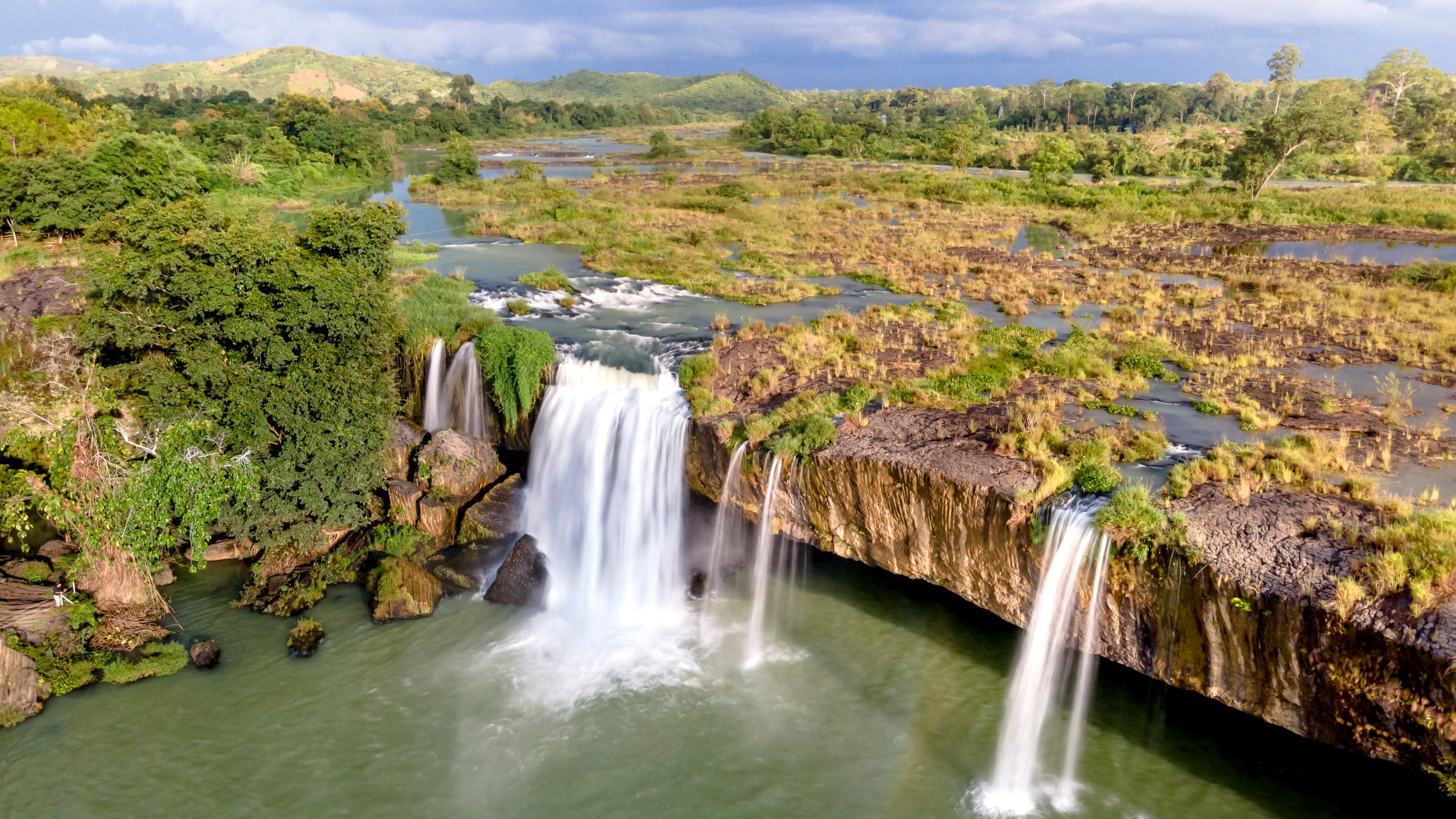
Thac Grang (sometimes written Grang Waterfall or Thac G'rang) is a cascading waterfall system roughly 70 km southwest of central Da Nang (다낭 / 岘港 / ダナン), near the commune of Ta Lu in the mountainous Dong Giang area. The falls drop across several rocky tiers through evergreen forest at an elevation of around 400–500 meters. The surrounding area is home to the Co Tu people, who have lived in these highlands for centuries and maintain their own architectural traditions — most visibly the tall communal "guol" houses you'll see in nearby villages.
The waterfall isn't commercialized. There's no ticket booth, no paved walkway, no gift shop. You walk in on a forest trail, and what you find is water crashing over mossy boulders into natural pools deep enough to swim in.
Why travelers go
Most people visit Thac Grang for a reason that sounds simple but matters: it's cool. Da Nang's coastal center is routinely 35°C or hotter from April through August. The highlands around Thac Grang sit several degrees lower, the canopy blocks the sun, and the pool water is genuinely cold — the kind that makes you gasp when you wade in.
Beyond the temperature, there's the drive itself. The road from Da Nang climbs into increasingly dramatic terrain, passing rice terraces, bamboo groves, and Co Tu settlements. For anyone who's spent a few days on the beach in Da Nang or exploring Hoi An, this is a hard reset.
Best time to visit
February through May is the sweet spot. The rains have tapered off, water levels are strong enough for the falls to look impressive, and the trail isn't a mud pit. June through August is hotter but still workable — just expect afternoon showers. September through November is peak rainy season in central Vietnam, and flooding or landslides can make the mountain roads unpredictable. December and January are cooler but drier, meaning the falls thin out considerably.
Aim for a weekday if you can. Weekend visitors from Da Nang have started discovering the spot, and the natural pools are small enough that a dozen people changes the feel.
How to get there from Da Nang
From central Da Nang, you're looking at about 70 km southwest, most of it on QL14G heading toward Dong Giang. The road is paved but narrow and winding once you pass Hoa Vang — expect the drive to take around 2 to 2.5 hours by motorbike, a bit less by car.
By motorbike: The most common option. Rentals in Da Nang run 120,000–180,000 VND/day for a semi-auto (Honda Wave or similar). Fill up before you leave the city; fuel stops thin out past Hoa Vang. The last stretch toward the waterfall is a smaller road — locals can point you in the right direction from the main highway.
By car or private driver: A return trip with a hired car costs roughly 1,200,000–1,800,000 VND depending on the vehicle and your negotiating. Grab doesn't reliably operate this far out, so arrange a round-trip with a local driver. Your hotel can usually set this up.
By tour: A few Da Nang-based operators include Thac Grang on day trips that combine the waterfall with a Co Tu village visit. Prices hover around 600,000–900,000 VND per person including transport and a basic lunch.
From the road, it's a 15–20 minute walk on a forest trail to reach the main falls. Wear shoes you don't mind getting muddy.

Photo by Quang Nguyen Vinh on Pexels
What to do
Swim the lower pools
The base of the main cascade forms natural pools deep enough to properly swim. The rocks are slippery, so take your time getting in. The water is clean — this is a highland stream fed by forest runoff, not downstream from anything industrial.
Hike to the upper tiers
A rough trail follows the stream uphill to higher cascade levels. It's not marked, and you'll be scrambling over boulders in places, but the upper pools are quieter and the forest thicker. Budget an extra 30–45 minutes for the climb.
Visit a Co Tu village
Several Co Tu settlements sit along the road before you reach the falls. The guol (communal house) is the centerpiece — a tall, open-sided structure with carved wooden pillars and a thatched roof. If you're respectful and ask before taking photos, people are generally welcoming. Some villages have started offering basic homestay experiences.
Birdwatch the canopy
The forest around Thac Grang is part of a larger highland ecosystem that extends toward the Laotian border. Birders have spotted laughingthrushes, barbets, and various bulbul species here. Early morning is best — which means either camping or leaving Da Nang very early.
Picnic by the falls
Bring food. There are flat rocks near the lower pools that work perfectly. Pack out everything you bring in — there are no trash bins.
Where to eat nearby
Don't expect restaurants at the waterfall. Your best bet is to eat in one of the small towns along QL14G on the way in or out.
Look for "com ga" — the chicken rice in this part of central Vietnam is closer to the Hoi An (호이안 / 会安 / ホイアン) style, with turmeric-tinted rice and shredded poultry. Small roadside spots charge 30,000–45,000 VND a plate. You'll also find "banh mi" carts in the market towns, though they tend to close by mid-afternoon.
If you arrange a village visit, some Co Tu families prepare a lunch of grilled stream fish, bamboo-tube rice ("com lam"), and forest greens. This usually needs to be organized in advance through a local guide or tour operator.
Where to stay
Thac Grang doesn't have accommodation at the site. Your options:
- Da Nang (return same day): Most visitors treat this as a day trip. Da Nang has everything from 200,000 VND hostels to beachfront hotels.
- Dong Giang town: A handful of basic guesthouses ("nha nghi") in the 150,000–300,000 VND range. Simple rooms, not much English spoken, but functional.
- Co Tu homestay: Some villages offer overnight stays in traditional houses. Expect to pay around 200,000–350,000 VND per person including dinner and breakfast. Arrange through a local tour operator or contact the commune's tourism office in advance.

Photo by HONG SON on Pexels
Practical tips locals would tell you
- Bring cash. There are no ATMs near the waterfall and phone signal drops in and out. Get your VND sorted in Da Nang before you leave.
- Water shoes matter. The rocks around the pools are covered in algae. Flip-flops won't cut it. Cheap water sandals from a Da Nang market (50,000 VND) work fine.
- Start early. Leave Da Nang by 6:30–7:00 AM. You'll beat the heat on the road and have the pools mostly to yourself.
- Check road conditions after rain. A heavy downpour the day before can wash out the smaller access road. Ask your hotel or a local ride-hailing driver for a quick update.
- Bring a dry bag. The trail involves a stream crossing, and your phone and wallet will thank you.
Common mistakes to avoid
- Underestimating the drive. It's only 70 km, but mountain roads are slow. Don't plan this as a quick morning trip — give yourself a full day.
- Wearing the wrong shoes. Every month, someone shows up in fashion sneakers and spends the walk back with ruined shoes and bruised pride.
- Leaving trash. This one's non-negotiable. The site is unmanaged, and whatever gets left behind stays behind. Bring a bag for your waste.
- Skipping sunscreen because it's shady. The ride there and back is two-plus hours on an exposed road. You'll burn.
Practical notes
Thac Grang works best as a full-day trip from Da Nang, ideally midweek during dry season. Pair it with a Co Tu village stop and a roadside "com ga" lunch, and you've got one of the better day trips in the Da Nang area — no crowds, no entrance fees, just forest and water.
Last updated · May 26, 2026 · independently researched, never sponsored.