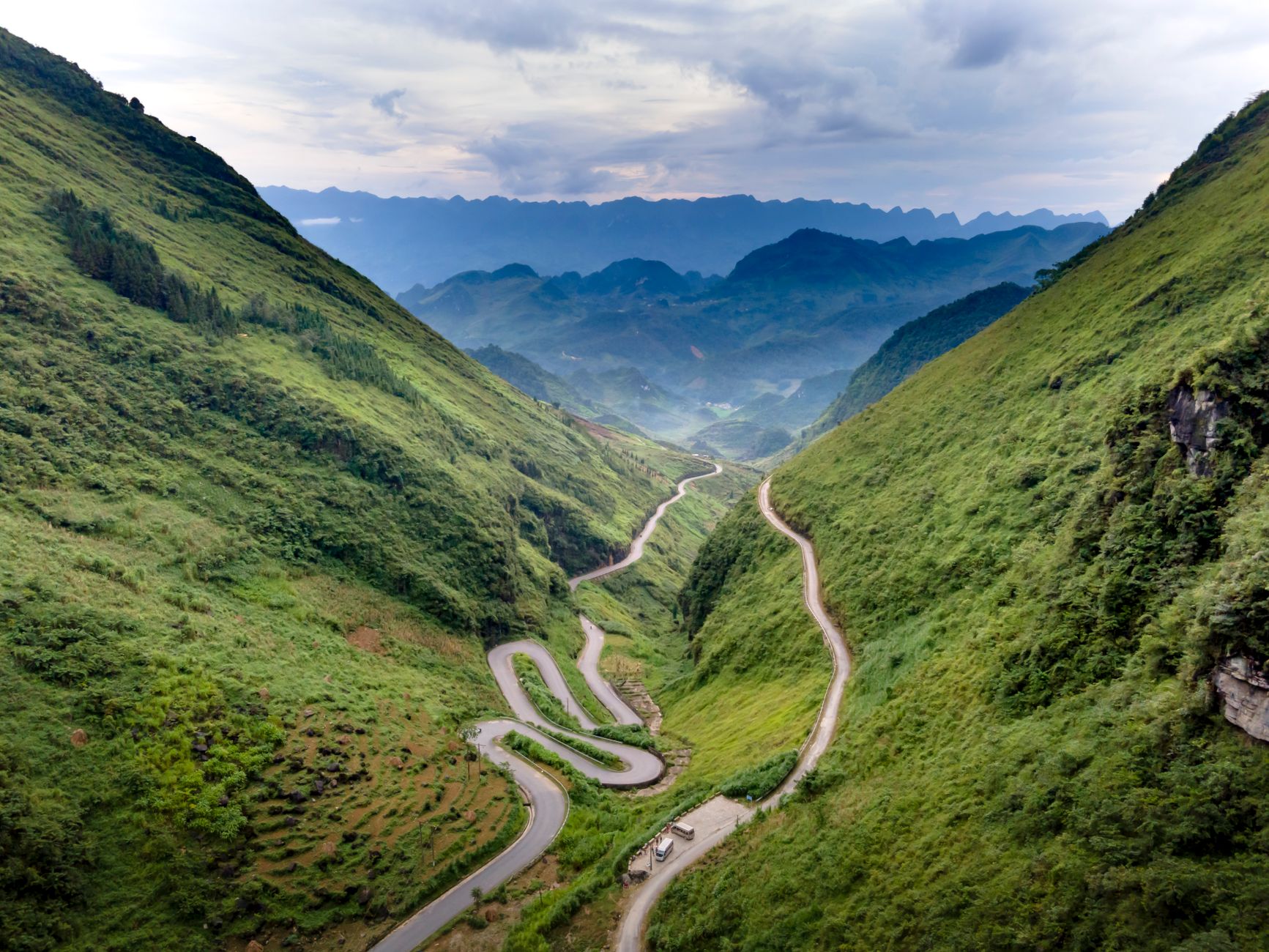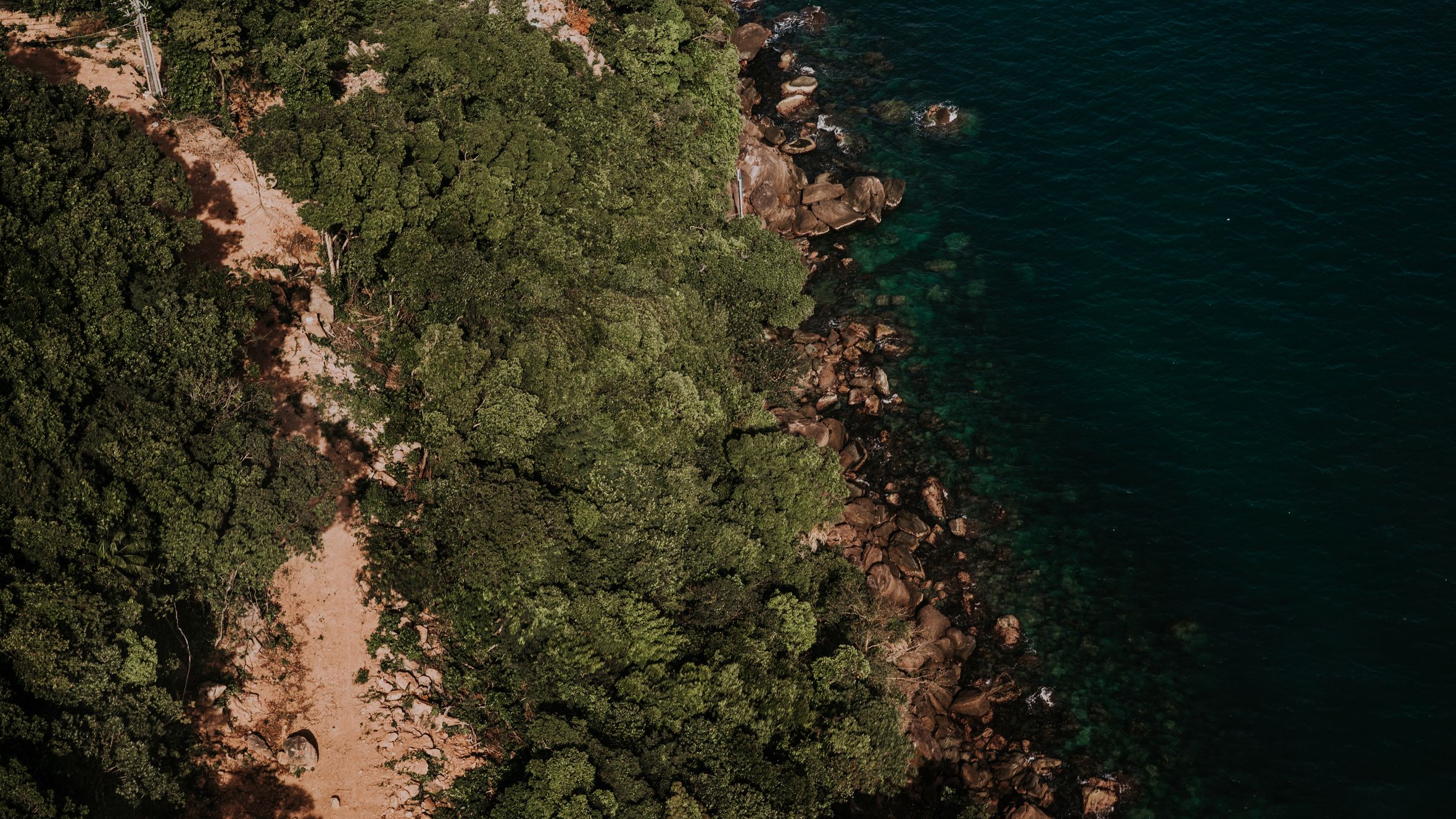
Thien Cam Beach sits about 20 km south of Ha Tinh city, curving for roughly 3 km along a bay sheltered by low, forested hills on both sides. It draws mostly domestic visitors, which means the seafood is priced for locals and the sand isn't lined with resort fences. If you're moving between Hue and Hanoi and want a beach day that isn't on every backpacker circuit, this is a solid stop.
What it is and a little history
Thien Cam — the name translates loosely to "heavenly lute" — is one of those Vietnamese place names tied to old legend. The story goes that a king once heard music drifting from these hills while passing through, as if the landscape itself were playing an instrument. Whether or not you buy the folklore, the bay does have a particular shape: a crescent framed by Thien Cam and Nam Gioi hills, with calm water and coarse golden sand that's firmer underfoot than the powdery beaches further south.
Ha Tinh province has never been a tourism hotspot. It's historically known for salt production, fishing, and being the birthplace of several important Vietnamese literary figures. The beach has been a local retreat for decades, but infrastructure picked up only in the last ten years or so — a handful of mid-range hotels, some seafood restaurants, and a paved coastal road that makes access easy.
Why travelers go
Honestly, most foreign travelers don't — and that's part of the appeal. You won't find banana boats or fire-dancing shows. What you get is a wide, uncrowded beach, cheap seafood, and an overnight stop that breaks up the long haul between Hanoi (하노이 / 河内 / ハノイ) and the central coast. It's also a decent base for exploring parts of Ha Tinh that rarely see international visitors, including Ke Go Nature Reserve about 30 km inland.
For anyone traveling the Reunification Express or riding a motorbike down the coast, Thien Cam is a natural pause point — close enough to the main north-south road (National Route 1A) that you're not making a big detour.
Best time to visit
Aim for April through August. June and July are the hottest months — temperatures push past 35°C — but the sea is warm and the skies are mostly clear. The water stays calm enough for swimming through this window.
Avoid September through November. Ha Tinh sits in the flood belt of north-central Vietnam, and these months bring heavy rain and occasional typhoons. The beach isn't dangerous exactly, but it's grey, windy, and the town mostly shuts down. December to February is cool and overcast — fine if you just want to pass through, but not ideal for swimming.
How to get there
The nearest major hub is Vinh, about 50 km north. From there:
- Bus: Regular local buses from Vinh's northern bus station head south along Route 1A. Ask for "Thien Cam" or "Cam Xuyen." The ride takes about 1.5 hours and costs around 50,000–70,000 VND.
- Motorbike/car: A straight shot down Route 1A, then a short turn east on Provincial Road 3. About 1 hour by motorbike. If you're renting a car with driver from Vinh, expect to pay around 500,000–700,000 VND one way.
- Train: Ha Tinh doesn't have its own station, but you can get off at Yen Trung station (Cam Xuyen district) on the north-south railway. From there, it's roughly 8 km to the beach by xe om (motorbike taxi) — around 30,000–50,000 VND.
- From Hue (후에 / 顺化 / フエ): About 300 km, either by train to Yen Trung (5-6 hours) or by bus via Route 1A. The Reunification Express trains pass through daily.

Photo by AN Nhol on Pexels
What to do
Swim and sit
The beach itself is the main event. The water inside the bay stays relatively calm, and the bottom is sandy without much rock or coral. Morning is best — by midday in summer, the sand gets hot enough to burn bare feet. Rent a beach chair from one of the nearby restaurants for about 20,000–30,000 VND.
Walk to Nam Gioi hill
The hill at the southern end of the beach has a short trail (about 30 minutes up) with a view over the full crescent bay. It's not a serious hike — flip-flops will do if you're careful — but it gives you the panoramic shot and a bit of shade. Early morning or late afternoon is the move here.
Visit the fishing village
At the northern edge of the beach, a small fishing community launches boats at dawn. If you're up early (around 5:00–5:30 AM), you can watch the catch come in and buy directly from the boats. Squid, crab, and various small fish are common. Some beachside restaurants will cook what you buy for a small fee.
Day trip to Ke Go Nature Reserve
About 30 km west into the hills, Ke Go is a large freshwater lake surrounded by forest. It's quiet, barely touristed, and good for a half-day of boating or birdwatching. You'll need your own motorbike or a hired car to get there — no regular public transport runs that route.
Try the local hot springs
Son Kim hot springs, about 40 km southwest of the beach near Huong Son district, are natural mineral springs in a forested valley. Basic bathing facilities are set up, and entry runs around 50,000–80,000 VND. It's a half-day trip and worth combining with Ke Go if you have wheels.
Where to eat nearby
Ha Tinh's signature dish is "cu doi khoai" — a simple preparation of freshwater crab pounded into a paste, cooked into a broth, and served over rice noodles. You'll find it at small restaurants along the road into Thien Cam and in Ha Tinh city. It's earthy, a little funky, and unlike crab dishes you'll get elsewhere in Vietnam.
Seafood at the beach is the obvious call. Grilled squid ("muc nuong") and steamed clams are everywhere along the beachfront strip. Prices are reasonable — a spread of grilled seafood for two runs about 200,000–350,000 VND. For something more specific to the region, look for "banh canh" with crab — a thick noodle soup that's heavier and more satisfying than it looks.
Where to stay
- Budget: Basic guesthouses ("nha nghi") near the beach charge 200,000–350,000 VND per night. Expect a fan room, thin mattress, and shared bathroom. Functional, not charming.
- Mid-range: A few hotels along the beachfront road offer air-conditioned rooms with sea views for 500,000–900,000 VND. Thien Cam Resort and a couple of newer hotels are the main options. Rooms are clean and have hot water.
- Higher-end: There's no luxury resort here. The nicest rooms top out around 1,200,000 VND. If you want a pool and room service, Thien Cam isn't the stop.

Photo by Quang Nguyen Vinh on Pexels
Practical tips
- Cash only: There's one ATM near the beach entrance, and it sometimes runs out on weekends. Bring enough dong from Vinh or Ha Tinh city.
- Sunscreen: Shops near the beach sell it at inflated prices. Stock up before you arrive.
- Language: Very little English is spoken here. A few basic Vietnamese phrases — or a translation app — will go a long way. Pointing at menu items works fine at restaurants.
- Motorbike rental: Available in Ha Tinh city for about 120,000–150,000 VND per day. Essential if you want to explore beyond the beach.
Common mistakes to avoid
Don't show up in October expecting beach weather — you'll get sideways rain and closed restaurants. Don't assume you can pay by card anywhere; this is a cash economy. And don't skip the fishing village in the morning in favor of sleeping in — the early catch is the most interesting thing happening on this beach, and the seafood you get from it will be the freshest meal of your trip.
Practical notes
Thien Cam works best as a one- or two-night stop on a longer journey between Hanoi and the central coast — Hue, Da Nang, or Hoi An. It's not a destination you'd fly across the country for, but if you're already passing through Ha Tinh, the detour is short, the seafood is honest, and the beach is yours.
Last updated · May 29, 2026 · independently researched, never sponsored.