Loc Ha Beach sits about 20 km east of Ha Tinh city, spread across a quiet district where fishing villages outnumber tourist operations by a wide margin. If you're traveling the north-central coast between Hue and Vinh and want a beach day without resort markup or crowds, this is the kind of place that delivers.
What it is
Loc Ha is a district-level coastal area, not a single manicured beach. The shoreline runs for several kilometers through communities like Thach Bang and Thach Kim, where most families make their living from the sea. The sand is coarse and tan — not the white powder you'd find on Phu Quoc or down in Mui Ne (무이네 / 美奈 / ムイネー) — but the water is clean and the horizon is uncluttered. There's no boardwalk, no jet skis, no banana boats. What you get is a working coast with a few guesthouses, a handful of seafood restaurants built on stilts, and a lot of open space.
The area has been a local weekend destination for Ha Tinh residents for decades, but it's only started appearing on domestic travel radar in the last few years as roads improved. Foreign visitors are still rare enough that you'll draw curious looks.
Why travelers go
Honestly, most people passing through Ha Tinh province are on their way somewhere else — north to Vinh or south to Dong Hoi and Phong Nha. Loc Ha Beach is a reason to pause. The seafood alone justifies a stop: you're eating what came off the boats that morning, at prices that make Da Nang look expensive. A kilo of grilled "muc" (squid) runs around 120,000-150,000 VND. Steamed clams with lemongrass cost even less.
Beyond food, there's a certain calm here that's hard to manufacture. The beach doesn't try to be anything it isn't. Early mornings, you can watch fishermen haul nets. Late afternoons, local families show up with mats and thermoses of tea. It's ordinary Vietnamese coastal life, and that's the appeal.
Best time to visit
Aim for April through August. This stretch of coast gets hammered by rain and sometimes storms from September through November — not the gentle afternoon showers of Saigon, but sustained grey weather that shuts down fishing boats and makes the beach unpleasant. December to February is dry but cool and windy, with water temperatures that discourage swimming.
June and July are peak season for locals, so weekends can get busier around the seafood strip. Weekdays in May or early June are the sweet spot: warm water, long days, minimal company.
How to get there
The nearest transport hub is Vinh, about 50 km north. From Vinh's train station or bus terminal, you have a few options:
- Bus: Catch a local bus from Vinh's Ben Xe Bac terminal heading to Ha Tinh city (roughly 40,000-50,000 VND, 1.5 hours). From Ha Tinh city, grab a local xe om or taxi east to Loc Ha district — about 20 km, 30 minutes, around 150,000-200,000 VND by taxi.
- Motorbike: If you're already riding the coast, take the AH1 (National Highway 1A) south from Vinh to Ha Tinh, then cut east on Provincial Road 17 toward the coast. Total ride from Vinh is about 1.5 hours.
- Private car/taxi: A direct taxi from Vinh to Loc Ha Beach runs approximately 500,000-600,000 VND one way. Negotiate before you go.
There's no airport in Ha Tinh. The closest is Vinh International Airport (VII), which has domestic flights from Hanoi and Saigon (사이공 / 西贡 / サイゴン).

Photo by Long Bà Mùi on Pexels
What to do
Swim and walk the shoreline
The beach is wide at low tide and good for long walks. Swimming is fine from April through August, but stick close to shore — there's no lifeguard service and currents can pick up in the afternoon. The stretch near Thach Bang commune is the most popular for swimming.
Visit Thach Kim fishing village
Thach Kim is one of the larger fishing communes in the district. Head to the small harbor early — around 5:00-6:00 AM — when boats come in with the night's catch. You can buy fish directly from the boats if you're staying somewhere with a kitchen, or just take in the organized chaos of sorting, icing, and loading.
Explore Cua Sot estuary
Where the river meets the sea at Cua Sot, the landscape opens into tidal flats and mangrove edges. It's a good spot for a quiet motorbike ride or a walk. Local shrimp and crab farming happens along the banks, and the light in the late afternoon is genuinely good for photography.
Try "nem chua" from Ha Tinh
Ha Tinh province produces its own version of "nem chua" — fermented pork wrapped in banana leaves. It's tangier and firmer than the Thanh Hoa version most travelers encounter further north. Pick some up at the markets in Ha Tinh city on your way to or from the beach. A bundle of 10 pieces costs around 30,000-50,000 VND.
Cycle through the villages
If your guesthouse has a bicycle (many do, or can arrange one), ride through the back roads between the beach and the inland villages. It's flat, shaded by casuarina trees, and you pass through rice paddies that shift from electric green to gold depending on the season.
Where to eat nearby
Seafood is the obvious play. Look for the cluster of open-air restaurants along the beach road in Thach Bang — they all source from the same boats, so quality is consistent. Point at what looks fresh in the ice displays and they'll cook it however you want: grilled, steamed, fried, or in a hotpot.
Two dishes worth specifically requesting:
- Chao luon (eel congee): Ha Tinh is famous for this. The eel is fried crispy and served over thick rice porridge with herbs. Around 35,000-50,000 VND a bowl.
- Grilled "oc" (sea snails) with chili salt and lime: simple, cheap, and perfect with a cold beer. Expect to pay around 80,000-100,000 VND per plate.
For a cold drink, look for "bia hoi" — fresh draft beer — sold from kegs at some of the seafood spots. Around 10,000-15,000 VND a glass.
Where to stay
Accommodation in Loc Ha is basic. Don't expect resorts or boutique stays.
- Nha nghi (guesthouses): The most common option. Clean rooms with air conditioning, hot water, and Wi-Fi run 200,000-350,000 VND per night. They're functional, not fancy.
- Homestays: A few families near the beach rent rooms. Prices are similar to guesthouses, sometimes including a home-cooked dinner. Ask around at the seafood restaurants — someone always knows someone.
- Ha Tinh city hotels: If you want more comfort, stay in Ha Tinh city where mid-range hotels run 400,000-700,000 VND per night, and make Loc Ha a day trip.
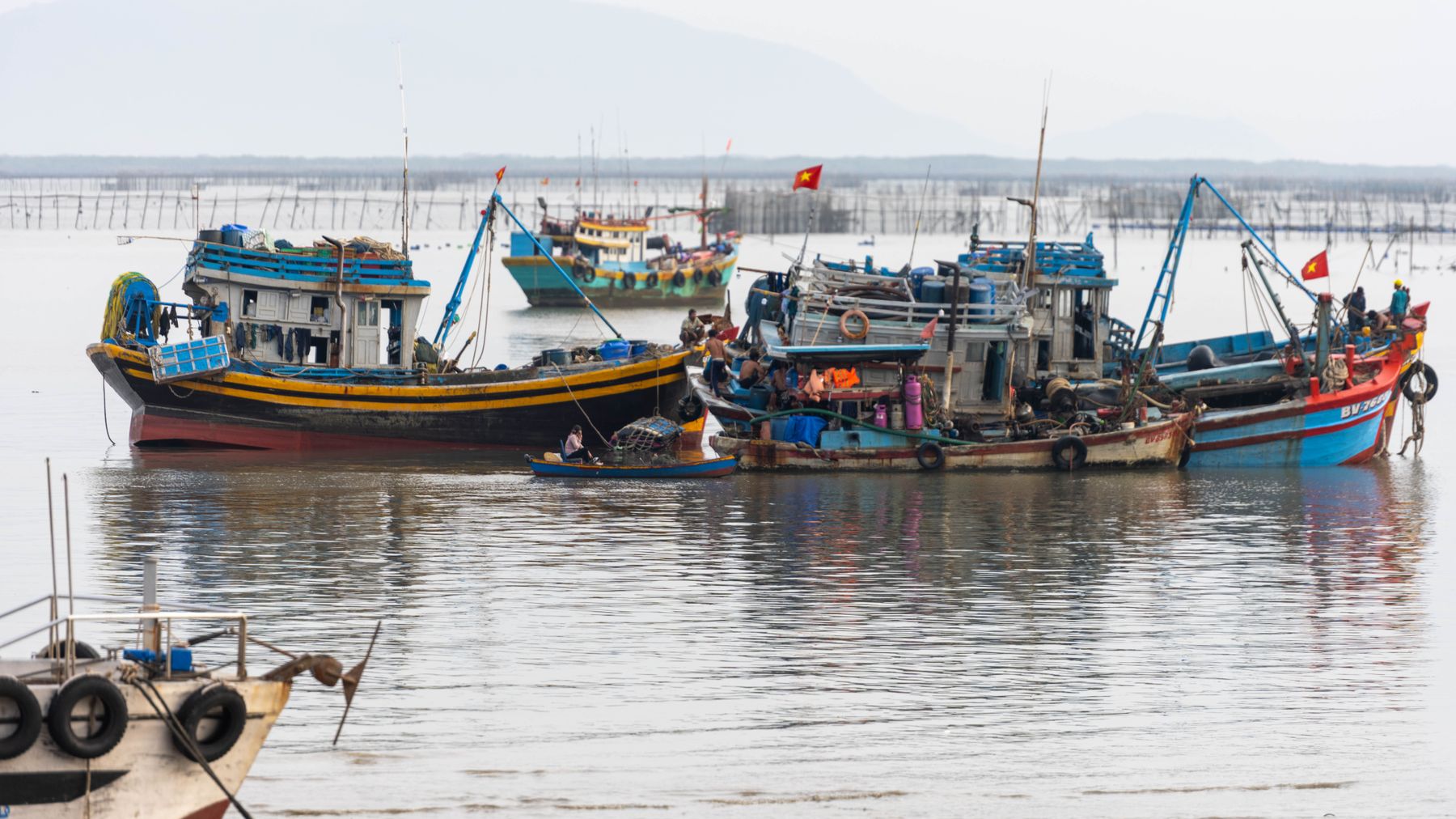
Photo by Quang Vuong on Pexels
Practical tips locals would tell you
- Bring cash. There are no ATMs in the immediate beach area. The nearest ones are in Ha Tinh city.
- Sunscreen is hard to find locally. Stock up in Vinh or Ha Tinh city before heading out.
- If you're renting a motorbike, fill up before leaving the main road. Fuel stations near the coast are sparse.
- The beach has almost no shade structures. Bring a hat or rent a basic canopy from one of the seafood restaurants for about 50,000 VND.
Common mistakes to avoid
- Coming in October or November: This is storm season. The beach is grey, the wind is harsh, and some guesthouses close.
- Expecting English: Almost nobody in Loc Ha speaks English. Download Vietnamese phrases offline or use a translation app. A few words of Vietnamese go a long way here.
- Skipping Ha Tinh city entirely: The city itself has good food — particularly "banh canh" with crab — and a morning market worth walking through. Don't just blow through it.
- Swimming after dark: No lighting on the beach, no lifeguards, unpredictable currents. Don't do it.
Practical notes
Loc Ha Beach works best as a one-night stop on a longer central Vietnam route — particularly if you're heading between Vinh and Phong Nha and want to break the drive with something coastal. It's not a destination you'd fly across the country for, but it's a genuine, unpolished piece of Vietnamese beach life that rewards the small detour.
Last updated · May 29, 2026 · independently researched, never sponsored.