What Tra Que actually is
Tra Que is a working vegetable village about 3 km northeast of Hoi An's old town, wedged between the De Vong River and a web of narrow irrigation canals. Farmers here have been growing herbs and greens on the same sandy plots for roughly 300 years, using seaweed from the nearby Tra Que lagoon as fertilizer instead of chemical inputs. The village supplies most of the fresh herbs that end up on your plate at restaurants across Hoi An — the mint in your "cao lau," the basil piled next to your "mi quang," the perilla leaf tucked into your "banh xeo."
It's small. Maybe 40 hectares of cultivated land and a couple hundred farming households. You can walk across the whole thing in 20 minutes. But that compactness is part of what makes it work as a half-day visit: it's dense, unhurried, and genuinely agricultural rather than theme-parked.
Why travelers go
Tra Que isn't a museum or a photo backdrop. People come to get their hands in the soil — literally. Most visits involve some combination of farming, cooking, and eating, which is a more honest way to spend a morning than wandering another souvenir street.
The herbs here taste noticeably different from what you get in Saigon or Hanoi markets. Local cooks will tell you it's the seaweed compost and the specific mineral content of the water. Whether or not you buy that explanation, the food you cook with these ingredients during a village visit is genuinely good.
It also offers a useful counterpoint to Hoi An (호이안 / 会安 / ホイアン)'s old town. After a few days of lantern-lit streets and tailor shops, spending a morning ankle-deep in a vegetable bed resets the trip a bit.
Best time to visit
The sweet spot is February through April and again from August to September. These months avoid the worst of the central coast rainy season (October through December, when fields can flood) and the peak summer heat of June and July when working outside at midday is genuinely unpleasant.
Early morning is the best time of day — farmers start before 6 AM, and the light across the plots between 6:30 and 8:00 is the kind photographers chase. By 11 AM the tour groups arrive and the village shifts from workplace to attraction.
How to get there
From central Hoi An, Tra Que is a 10-15 minute bicycle ride north along Hai Ba Trung street, crossing the small bridge over the De Vong River and following signs toward Tra Que. Renting a bicycle in Hoi An costs 30,000-50,000 VND per day, and the ride is flat the entire way.
From Da Nang, you're looking at about 35 km and 50-60 minutes by car or motorbike, heading south on the coastal road through Cua Dai. A Grab car from Da Nang runs around 250,000-350,000 VND one way. If you're based in Da Nang, it makes sense to combine this with a day in Hoi An rather than making a standalone trip.
If you're coming from the Hoi An beach hotel strip near An Bang, the village is only about 2 km inland — an easy pedal.
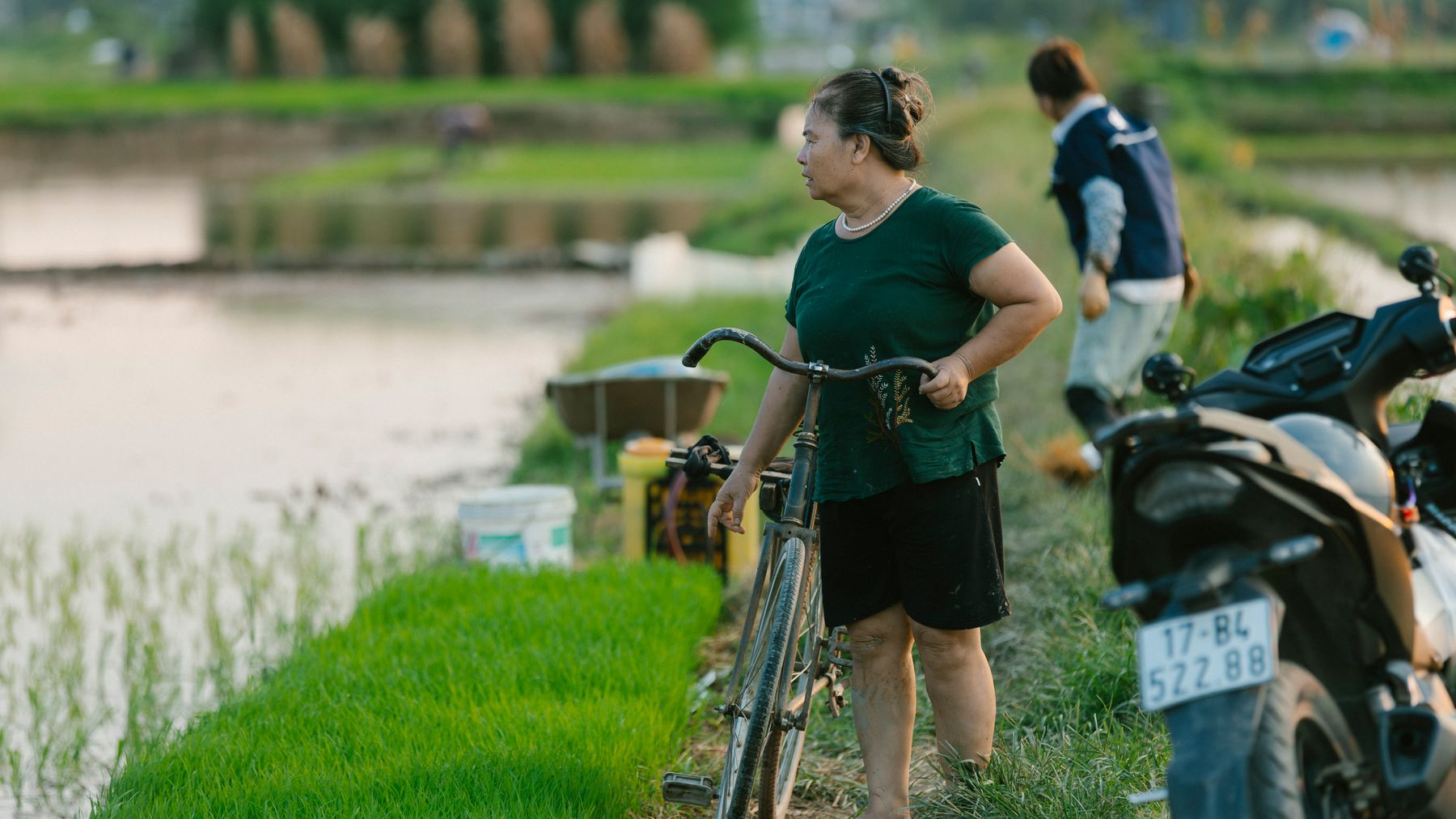
Photo by HONG SON on Pexels
What to do
Join a farming and cooking session
This is the main draw. Several family-run operations and a handful of organized tour providers offer a half-day experience: you help with actual farm tasks (watering with shoulder-pole buckets, hoeing rows, transplanting seedlings), then walk to a kitchen area to cook a meal using what you picked. Expect to make "banh xeo" with freshly cut herbs, spring rolls with "goi cuon" wrappers, and sometimes "banh cuon (반꾸온 / 蒸米卷 / バインクオン)" or a turmeric fish dish. Sessions run 150,000-300,000 VND per person depending on the operator, and that includes the meal.
Walk the field paths at dawn
Skip the organized tour and just show up early on a bicycle. The grid of paths between vegetable plots is open and walkable. You'll see farmers in "non la" conical hats actually working — spreading seaweed mulch, harvesting morning glory, bundling herbs for market. Be respectful, don't trample crops, and ask before photographing people up close.
Try the herbal foot soak
A few households offer a foot bath steeped in locally grown lemongrass, basil, and medicinal herbs. It costs about 50,000 VND, takes 20 minutes, and is a surprisingly effective reset after cycling in the heat. Not a spa treatment — just a tin basin on somebody's porch.
Cycle the loop to Cam Thanh
Rather than doubling back to Hoi An, continue south from Tra Que toward Cam Thanh village, known for its water coconut palms and basket boat rides. The loop takes about an hour by bicycle and passes through rice paddies and quiet backroads. It's the best cycling route in the Hoi An area.
Where to eat nearby
Most visitors eat as part of their farming session, but if you want a standalone meal:
"Mi quang" — Tra Que herbs make an appearance in virtually every bowl of this turmeric-stained noodle dish in the Hoi An area. Try a bowl at one of the small roadside stalls along the main road back toward town. A serving runs 30,000-40,000 VND.
"Com ga" (chicken rice) — Hoi An's signature lunch dish is only a short ride away. Ba Buoi on Phan Chu Trinh street is the standard recommendation for good reason. Plates start at 40,000 VND.
For something more substantial, the restaurants along An Bang beach are 10 minutes east and serve fresh seafood at reasonable prices.
Where to stay
Tra Que itself has a few homestays, mostly simple family-run places charging 300,000-600,000 VND per night. Staying in the village means you can walk out to the fields at first light, which is genuinely worth it.
Most travelers stay in Hoi An proper or along the beach strip. Budget guesthouses in Hoi An start around 250,000 VND; mid-range hotels with pools run 800,000-1,500,000 VND. The An Bang beach area has boutique options in the 1,500,000-3,000,000 VND range.
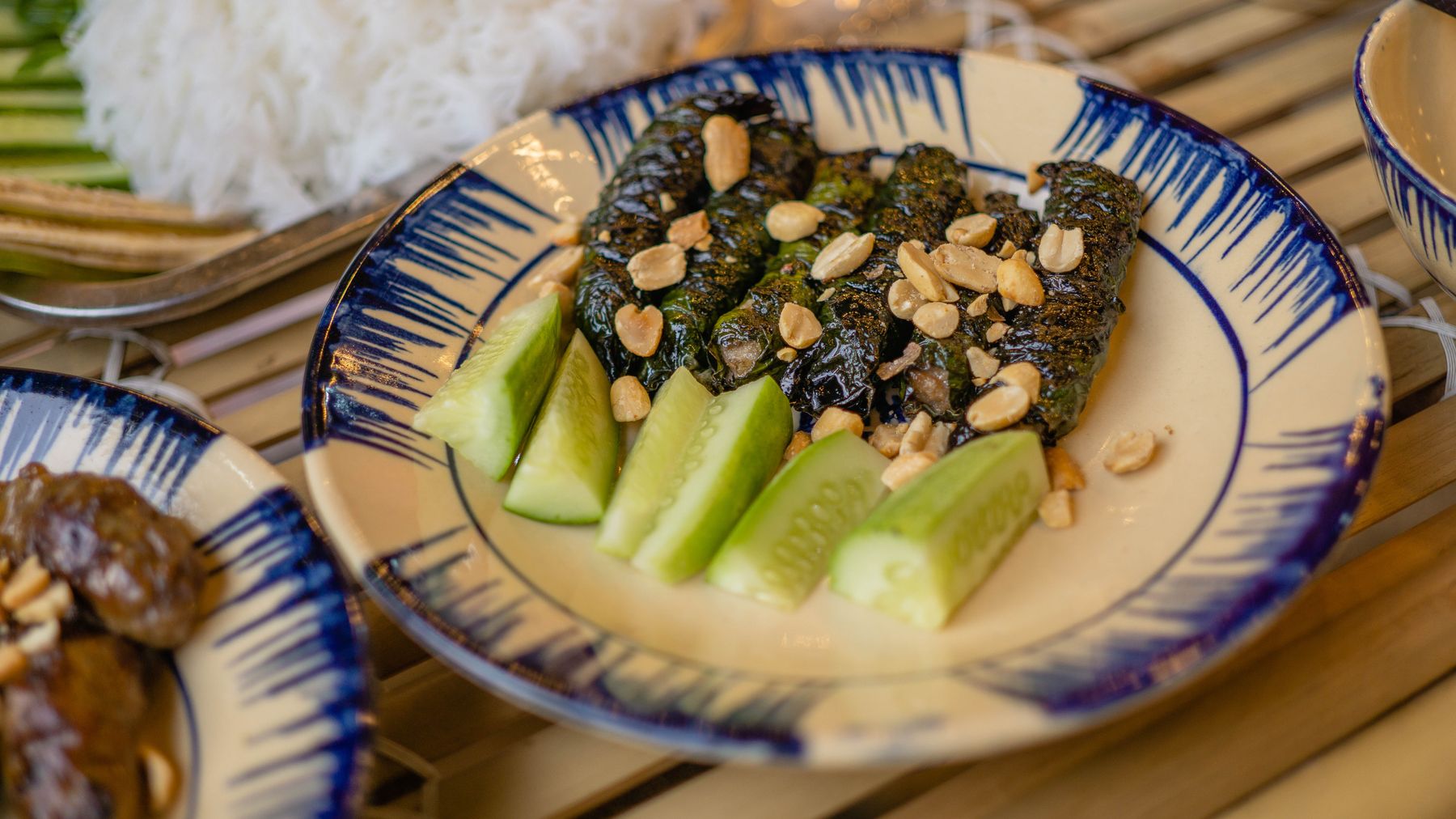
Photo by FOX ^.ᆽ.^= ∫ on Pexels
Practical tips locals would tell you
- Bring a hat and water. There's almost no shade in the vegetable plots. Sunscreen alone won't cut it in May-August.
- Wear shoes you don't mind getting muddy. Flip-flops work but will get caked. Closed-toe water shoes are ideal.
- Carry cash. No card readers here. ATMs are back in Hoi An.
- Book cooking sessions directly with local families where possible, rather than through Hoi An hotel tour desks which add a 30-50% markup. Ask your accommodation to call ahead — many Tra Que families don't have English-language online booking.
- Vietnamese coffee is not really a thing out here — bring your own or stop at a cafe in Hoi An before heading out.
Common mistakes
Arriving at midday. The village empties out between 11 AM and 2 PM when it's too hot to work. You'll see empty fields and closed kitchens.
Treating it like a photo op. Walking through someone's crop rows for a photo without asking is the quickest way to annoy the people who live here. Stick to the paths unless invited onto the plots.
Skipping the bicycle. Taking a car or van to Tra Que defeats half the experience. The ride through the rice fields and over the river is part of it.
Practical notes
Tra Que works best as a morning trip combined with an afternoon in Hoi An old town or on An Bang beach. Budget half a day including travel time. If you're spending time in Da Nang, this is an easy day-trip addition — just commit to the drive south early enough to catch the village while it's still active.
Last updated · May 29, 2026 · independently researched, never sponsored.