What Tram Tra Loc actually is
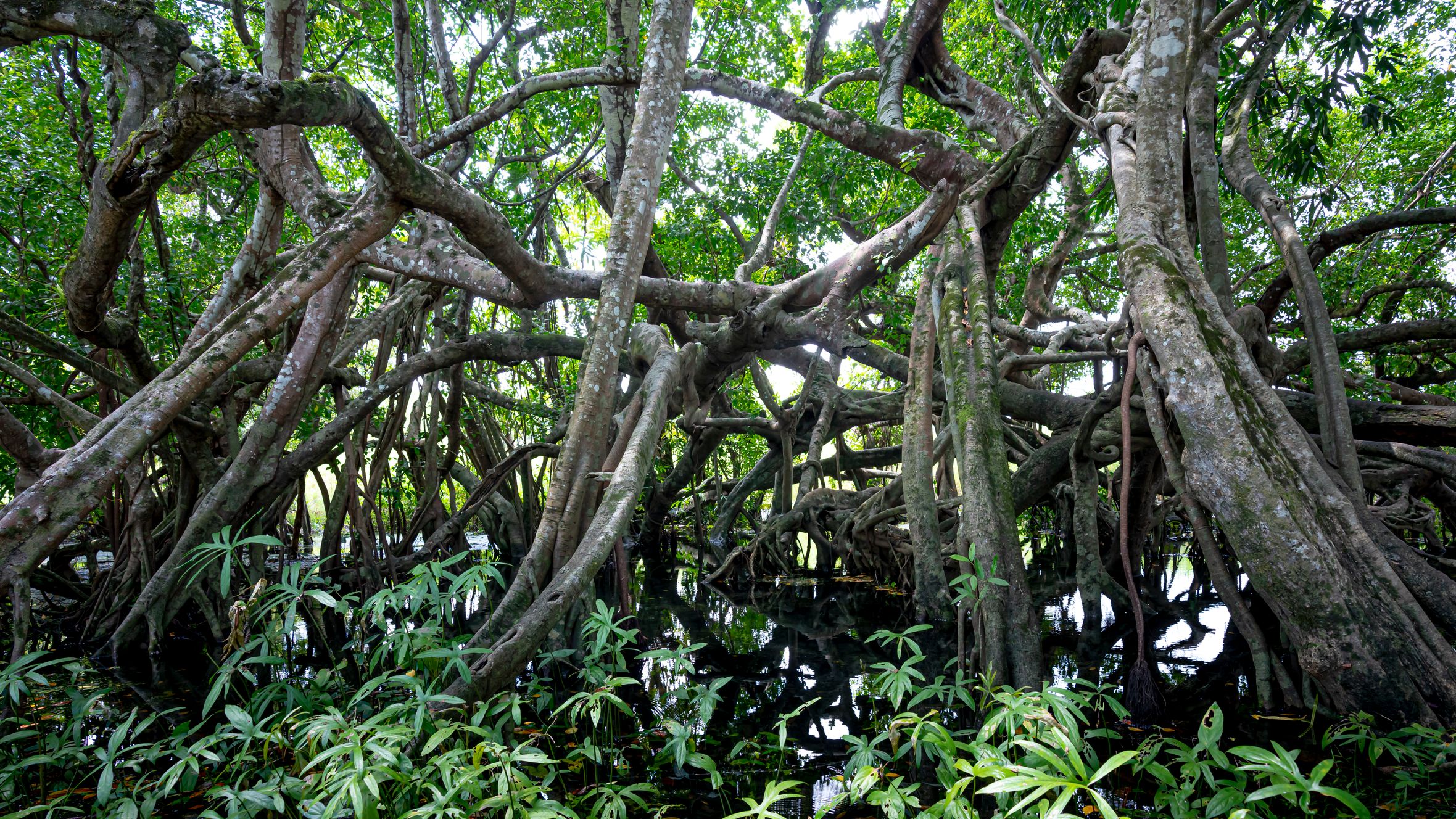
Tram Tra Loc is a melaleuca — or "tram" — forest sitting in Hai Lang district, in the Quang Tri area of central Vietnam (베트남 / 越南 / ベトナム). The forest covers roughly 60 hectares of low-lying wetland where white melaleuca trees grow out of still, tannin-stained water that looks like brewed tea. That amber color is natural: it comes from decaying leaves and bark leaching into the water, not pollution.
The forest has been around for generations, but it only started drawing visitors in the last few years after photos of the mirrored water surface and tangled root systems circulated online. It's sometimes compared to the flooded forests of Tra Su in the Mekong Delta (메콩 델타 / 湄公河三角洲 / メコンデルタ), but Tram Tra Loc is smaller, quieter, and far less commercialized. Most visitors are Vietnamese — you won't find many foreign tourists here yet, which is part of the appeal.
Why travelers go
People come for the water and the light. During the flooded season, the forest floor disappears under 0.5 to 1.5 meters of amber water, and the canopy filters sunlight into green-gold shafts that hit the surface. You move through on a small rowboat or bamboo raft, paddled by a local villager. It's genuinely peaceful — no engine noise, no loudspeakers, just the sound of a paddle and birds overhead.
Photographers show up early morning for the flat light reflecting off the water. But even if you're not carrying a camera, there's something worth the detour about floating through a forest where the only schedule is the tide and the boatman's mood.
This part of central Vietnam sits between Hue to the south and Phong Nha to the north, so Tram Tra Loc slots neatly into a road trip between those two destinations without a major detour.
Best time to visit
The forest floods from roughly September through January, with peak water levels in October and November. This is the sweet spot — enough water to paddle through the inner forest, and the melaleuca canopy is lush.
Visiting in the dry months (March to August) is possible, but the water recedes significantly and boats can't access the deeper parts. You'd be walking on muddy ground instead of floating, which loses most of the atmosphere.
November can be rainy — this is central Vietnam's wet season — so bring a lightweight rain jacket. Mornings tend to be calmer than afternoons for both weather and light.
How to get there
The nearest major hub is Hue, about 65 km to the south.
- By motorbike: The most practical option. Ride north on the AH1 (National Route 1A) from Hue toward Quang Tri city, then turn east at Hai Lang town following signs toward Tra Loc village. Total ride is about 1.5 hours. Motorbike rental in Hue runs 120,000–180,000 VND per day.
- By car/private driver: A return trip from Hue with waiting time runs roughly 800,000–1,200,000 VND depending on your negotiation skills. Grab cars are available in Hue but scarce in Hai Lang district.
- By bus + xe om: Catch a north-bound bus from Hue's bus station to Hai Lang town (around 40,000–60,000 VND, 1 hour), then hire a local "xe om" (motorbike taxi) for the last 8 km to the forest. This last leg costs about 30,000–50,000 VND.
There's no public transport directly to Tram Tra Loc. The access road is paved but narrow.

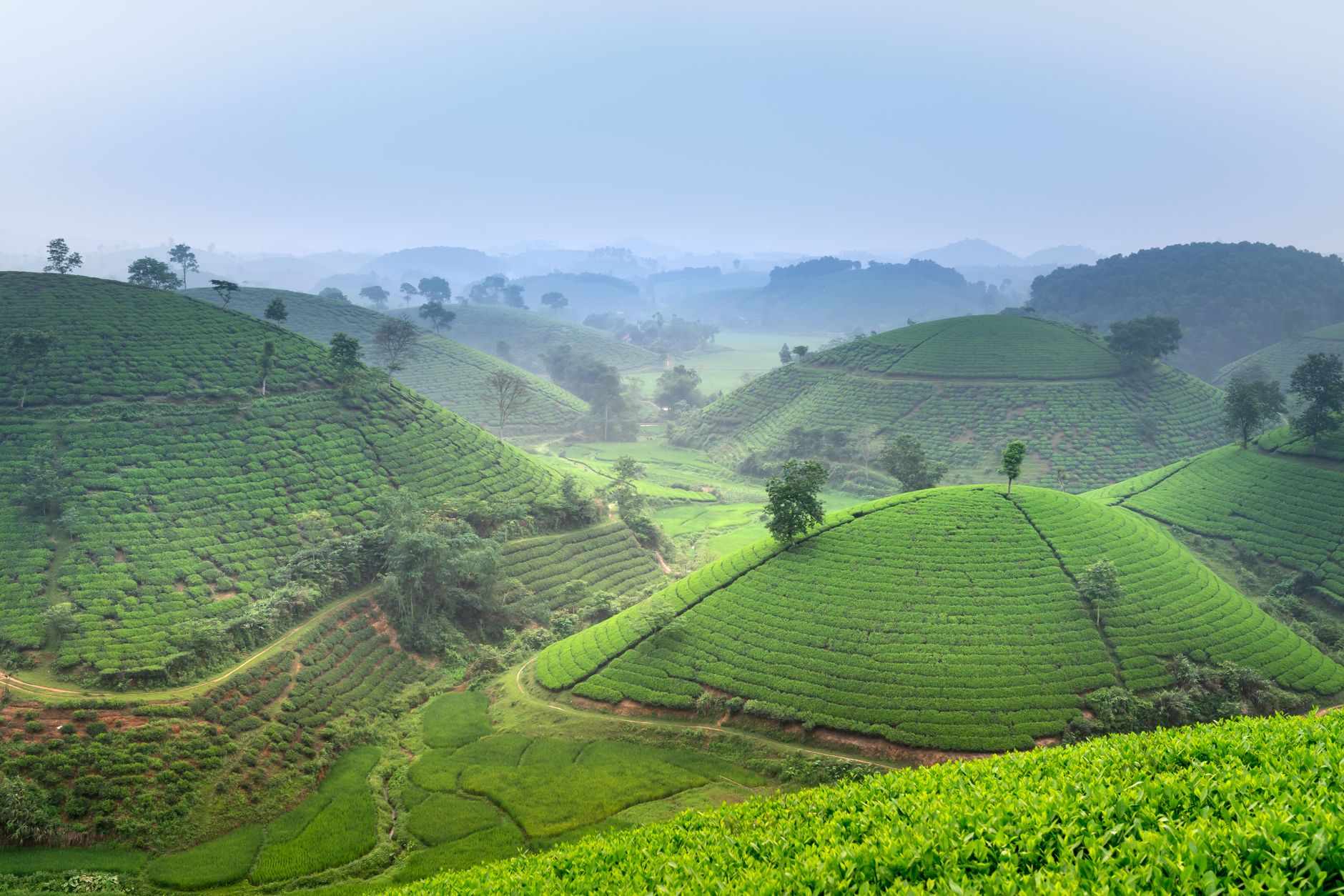
Photo by Quang Nguyen Vinh on Pexels
What to do
Paddle through the inner forest
The main activity. Local boatmen paddle you through the flooded forest on a small wooden boat or bamboo raft. A trip lasts 40–60 minutes, weaving between melaleuca trunks and through channels where the canopy closes overhead. Boat rides cost around 50,000–100,000 VND per person — prices can vary slightly by season and group size. Tip the boatman; they earn very little.
Walk the boardwalk and outer trails
A wooden boardwalk runs along the edge of the forest, giving views over the wetland without getting on the water. Useful if the water level is too low for boats, or if you just want to stretch your legs after the ride. The trail takes about 20 minutes at a slow pace.
Visit Tra Loc village
The village next to the forest is a quiet farming community. There's no tourist infrastructure to speak of, but wandering the lanes gives you a look at rural life in this part of Quang Tri — rice paddies, vegetable plots, dogs that couldn't care less about you. Some families sell local snacks and drinks near the forest entrance.
Combine with Quang Tri Citadel
Quang Tri town is about 20 km north. The old citadel — heavily damaged during the 1972 battle and partially restored — is a sobering historical site. It pairs well with Tram Tra Loc if you're interested in the region's layers of history alongside its landscape.
Photograph the dawn light
If you're serious about photography, arrive before 7:00 AM. The low-angle light through the canopy hitting the still water creates the mirror effect that made this place internet-famous. By mid-morning, wind picks up and the reflections break apart.
Where to eat nearby
Tram Tra Loc itself has no restaurants — just a few families selling drinks and instant noodles near the entrance. For a proper meal, head to Hai Lang town or Quang Tri town.
- "Banh canh" in Quang Tri: The local version of this thick noodle soup uses crab broth and is a regional staple. Look for small shops along the main road in Quang Tri town — a bowl costs 25,000–35,000 VND.
- "Com hen" (clam rice): More associated with Hue but available in stalls throughout this corridor. A plate with all the herbs and toppings runs about 20,000–30,000 VND.
If you're heading back to Hue afterward, you'll have the full range of Hue's legendary food scene — "bun bo Hue", "banh xeo", and the city's particular style of "banh cuon".
Where to stay
There's no accommodation at Tram Tra Loc itself. Your options:
- Quang Tri town: A handful of guesthouses and mini-hotels. Basic but clean rooms from 200,000–350,000 VND per night. Don't expect much beyond a bed, air conditioning, and hot water.
- Hue: The better base if you want comfort. Budget hotels start around 250,000 VND; mid-range places with decent rooms run 500,000–900,000 VND. Hue is 1.5 hours away, making a day trip practical.
- Homestays: Occasionally families near the forest offer simple rooms, but availability is inconsistent. Ask at the boat launch if you want to try.

Photo by Nguyen Truong Khang on Pexels
Practical tips locals would tell you
- Wear shoes you don't mind getting wet. The boat launch area is muddy, and getting in and out of the raft involves stepping into shallow water.
- Bring mosquito repellent. It's a flooded forest — the insects know this.
- Carry cash. There are no ATMs at the forest and the boatmen don't take cards.
- A waterproof phone pouch is worth the 20,000 VND they cost at any convenience store. Water splashes happen.
- If you're riding a motorbike, fill up in Hai Lang town. There's no fuel between there and the forest.
Common mistakes to avoid
- Showing up in the dry season and expecting the full experience. If the water's gone, the boats don't run deep into the forest. Check conditions locally before making the trip — your hotel in Hue can usually call ahead.
- Arriving at noon. The light is flat, it's hot, and the photographic conditions are poor. Early morning or late afternoon only.
- Not bringing water and snacks. There's almost nothing to buy on-site. Pack what you need.
- Treating it as a half-day trip from Hue and rushing. The drive takes longer than Google Maps suggests because of the narrow final road. Give yourself a full morning.
Practical notes
Tram Tra Loc works best as a stop on a longer central Vietnam route — Hue to Phong Nha, or even a slower Hue to Da Nang loop. It's not a destination you'd fly to Vietnam specifically for, but if you're already in the area between September and January, it's a detour that earns its keep. Budget about 200,000–300,000 VND total for the boat ride, snacks, and fuel from Hue.
Last updated · May 29, 2026 · independently researched, never sponsored.