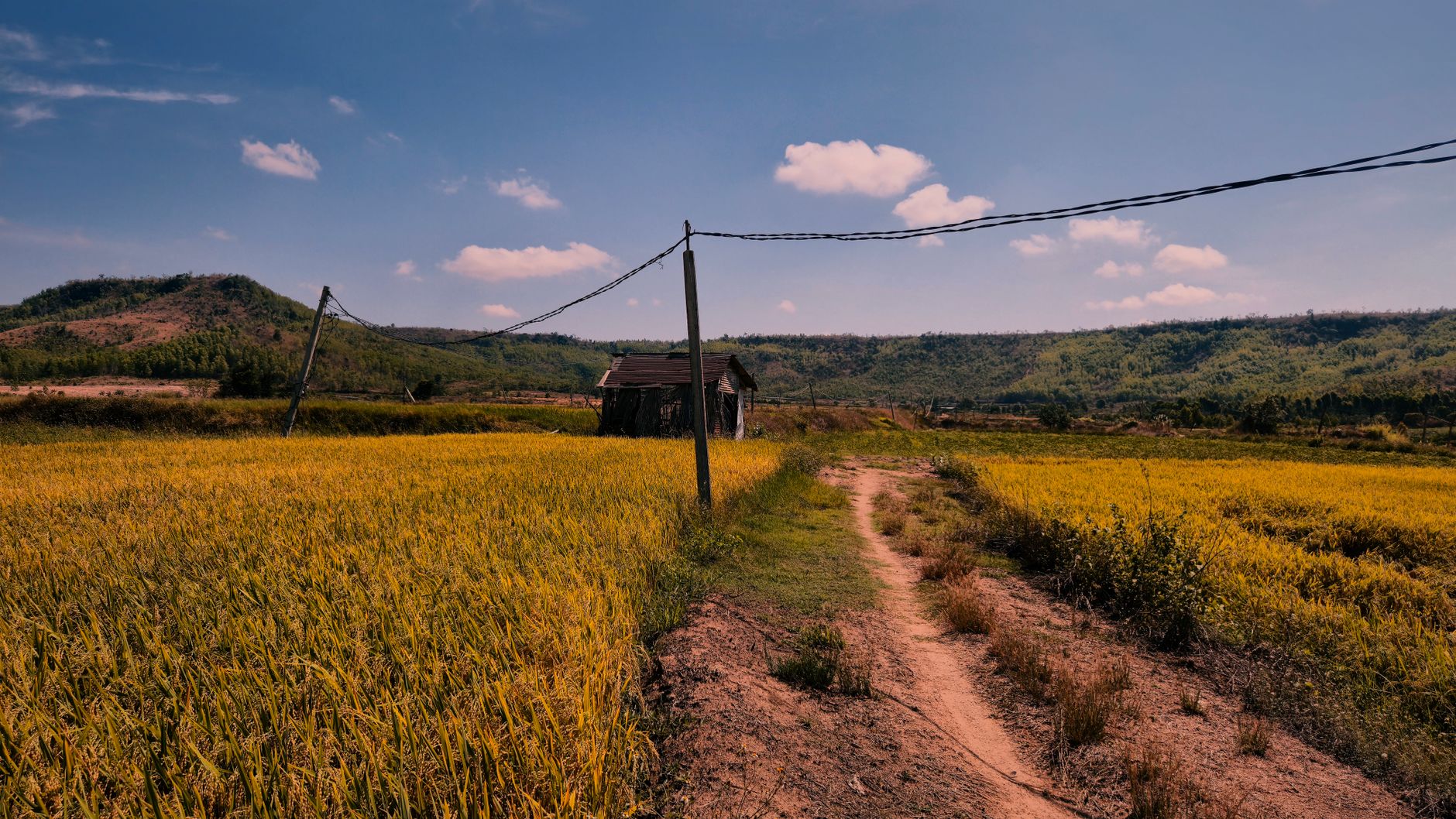
What Trung Luong is — and why it's on the map
Trung Luong is a commune in Dak Po district, Gia Lai province, sitting in the Central Highlands (중부 고원 / 中部高原 / 中部高原) at roughly 500-600 meters elevation. Following administrative changes (formerly associated with Binh Dinh's border areas before provincial boundary adjustments), it now falls squarely within Gia Lai's jurisdiction. The landscape is classic highland plateau: red basalt soil, rubber and coffee plantations stretching toward low hills, and scattered Bahnar ethnic-minority villages with their distinctive "rong" communal houses.
This isn't a place with a TripAdvisor page or tour-bus parking lots. Trung Luong appeals to travelers who've already done Da Lat and want something rawer — or those passing through Gia Lai on the way between the coast and Kon Tum who want a reason to pull over for more than fuel.
Why travelers go
Three reasons, mostly:
-
Bahnar village culture — The communal houses here aren't rebuilt for tourists. They're functioning village centers where gong ceremonies still happen during harvest festivals. If you time it right (more on that below), you can witness "cong chieng" gong performances that are part of UNESCO's intangible heritage recognition for the Central Highlands gong space.
-
Plantation landscapes — Rubber trees in geometric rows, coffee bushes heavy with red cherries in November-December, and pepper vines climbing their posts. The light in early morning turns everything amber. Photographers come specifically for this.
-
Transit logic — Trung Luong sits along QL19 (National Route 19), the highway connecting Quy Nhon on the coast to Pleiku in the highlands. If you're doing that crossing, Dak Po district is roughly the halfway mark.
Best time to visit
The Central Highlands have two seasons: dry (November–April) and wet (May–October). For Trung Luong specifically:
- November–January: Best overall. Coffee harvest is happening, air is cool (18-24°C mornings), roads are dry, and post-harvest festivals with gong music are most likely in December-January.
- March–April: Hottest but still dry. Rubber trees shed leaves, creating a stark graphic landscape. Less cultural activity.
- June–September: Afternoon downpours are reliable. Roads to smaller villages can get muddy. But the green is extraordinary and you'll have zero company.
Avoid the Tet holiday period if you want village interactions — most families are occupied with private celebrations and some shops close for a week.
How to get there
From Quy Nhon: 90 km west on QL19 through An Khe pass. The road is well-maintained two-lane highway. Motorbike riders budget 2-2.5 hours; cars about 1.5 hours.
From Pleiku: 70 km east on the same QL19. About 1.5 hours by motorbike.
From Da Nang or Hoi An: You'll need to get to Quy Nhon first (train or bus, 5-6 hours), then continue west. Or fly to Pleiku's airport (daily flights from Hanoi and Saigon, around 800,000-1,200,000 VND one-way) and head east.
Local transport: Once in Dak Po district, you need your own wheels. No ride-hailing apps work out here reliably. Rent a motorbike in Pleiku (150,000-200,000 VND/day for a Honda Wave) or arrange a car with driver through your hotel.

Photo by Quang Nguyen Vinh on Pexels
What to do
Visit a Bahnar rong house
Ask at the Dak Po district center for directions to active Bahnar villages — Trung Luong and neighboring communes have several. The tall thatched-roof rong houses are the social center. Don't walk in unannounced; find someone at the village edge, gesture your interest, and you'll usually be waved in. Bring a small gift — instant coffee packets or fruit work well.
Walk the plantations at dawn
Rubber plantations are privately owned but nobody minds walkers on the access paths between rows. The geometry of the trees at first light, with mist still low, is genuinely striking. Coffee plantations are more sensitive during harvest — ask before wandering in.
Drive the An Khe pass
The QL19 stretch between An Khe town and Dak Po crosses a pass with solid valley views. It's not Ha Giang (하장 / 河江 / ハーザン)-level drama, but the road itself is smooth and the traffic is mostly trucks — making it a good riding stretch without the white-knuckle factor.
Dak Po market
The district market runs every morning until about 10 AM. Highland produce: avocados, passion fruit, dried bamboo shoots, local honey. Bahnar women sell woven textiles here occasionally — small pieces run 50,000-150,000 VND.
Where to eat
Don't expect restaurant rows. Your options:
- Com binh dan (rice-and-sides shops) along QL19 in Dak Po town: 30,000-45,000 VND for a plate with grilled pork, greens, and soup.
- "Pho" and "bun" stalls in the morning market area — highland pho often comes with more herbs and a slightly sweeter broth than Hanoi's version.
- Grilled chicken — look for signs reading "ga nuong" — highland free-range chicken grilled over coffee-wood charcoal. Dak Po has a few spots along the main road. Half a chicken runs about 120,000-150,000 VND.
- If you're self-sufficient, the market has excellent avocados (often 20,000-30,000 VND/kg in season) and fresh baguettes for improvised "banh mi" with local cheese spread.
Where to stay
Trung Luong commune itself has no hotels. Your options:
- Dak Po town nha nghi (guesthouses): Basic but clean. Expect 200,000-350,000 VND/night. Air conditioning is standard; hot water is hit-or-miss. No English spoken.
- An Khe town (20 km east): Slightly more options, including a couple of mini-hotels with proper bathrooms. 300,000-500,000 VND range.
- Pleiku (70 km west): If you want comfort — proper hotels, ATMs, Vietnamese coffee shops on every corner. Pleiku has a growing cafe scene worth a half-day.

Photo by 1500m Coffee on Pexels
Practical tips
- Cash only — No ATMs in Trung Luong. The nearest are in An Khe or Dak Po town (Agribank). Bring enough VND for 1-2 days.
- Phone signal — Viettel works best in the highlands. Mobifone is patchy outside towns.
- Language — Almost no English. Learn basic Vietnamese phrases or use Google Translate's camera mode on signs. Bahnar villagers often speak Vietnamese as a second language with heavy accents.
- Fuel up — Fill your tank in An Khe or Dak Po. There's no gas station in the commune itself.
- Respect in villages — Don't photograph ritual objects or the interior of rong houses without clear permission. Gong sets are sacred; don't touch them.
Common mistakes
Rushing through on QL19 — Most people treat this stretch as pure transit between coast and highlands. Budget at least a half-day stop to actually see something.
Coming without a plan for transport — There's no Grab out here. If your motorbike breaks down, you're relying on the goodwill of passing truck drivers until you reach An Khe or Dak Po.
Expecting Sapa-style ethnic tourism — There are no homestay programs, no guided treks, no English-speaking cultural brokers. That's the appeal, but it also means you need patience and flexibility. Some days you'll find a village buzzing with activity; other days everyone's in the fields.
Final note
Trung Luong isn't a destination you'd fly to Vietnam for. But if you're exploring the Central Highlands beyond Pleiku and Kon Tum, or making the Quy Nhon-to-Pleiku crossing and want it to be more than windshield time, it rewards a slow half-day. Bring cash, a full tank, and low expectations for infrastructure — the landscape and village encounters fill in the rest.
Last updated · May 29, 2026 · independently researched, never sponsored.