What is Dinh Ban Co?
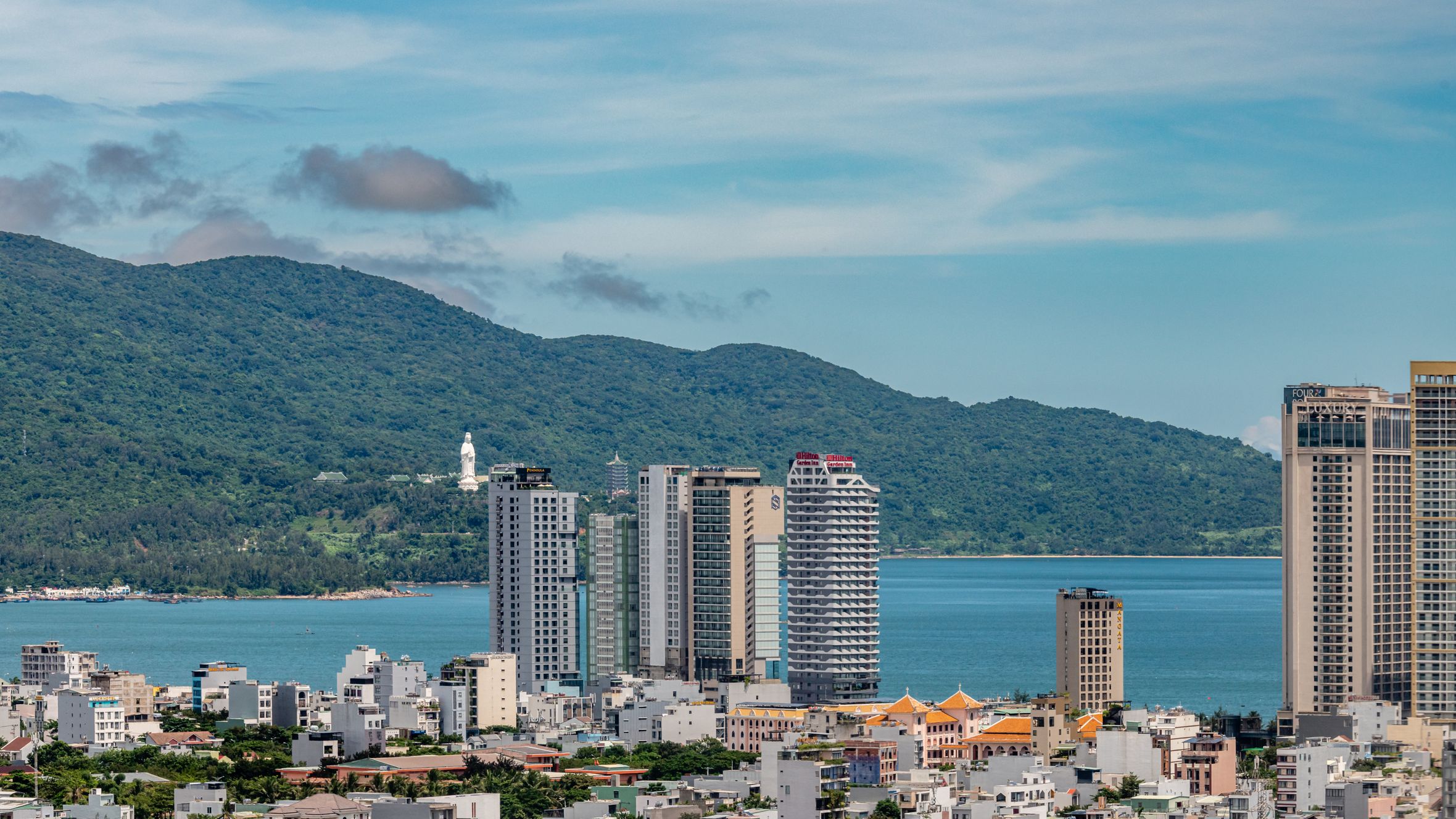
Dinh Ban Co — literally "Chess Board Peak" — is a lookout point at roughly 696 meters above sea level on Son Tra Peninsula, the mountainous headland that juts into the East Sea just northeast of central Da Nang. The name comes from a local legend: two immortals descended from the heavens to play chess on this flat summit, leaving behind a stone chessboard. You won't find the chessboard anymore, but you will find a circular concrete platform, a few benches, and an unobstructed 360-degree panorama that takes in the Da Nang skyline, My Khe Beach, the Hai Van Pass ridgeline, Cu Lao Cham island cluster offshore, and on clear mornings, Hoi An's coastline far to the south.
Son Tra Peninsula was a military communications base during the war — the Americans called it "Monkey Mountain" — and access was restricted for decades. It opened gradually to visitors in the 2000s, and Dinh Ban Co became the default summit destination for anyone riding up.
Why travelers go
This isn't a manicured tourist attraction. There's no entrance fee, no gift shop, no guide ropes. People come for two things: the view and the ride up. The winding road through Son Tra's forest canopy is one of the best motorbike routes in central Vietnam — tight switchbacks through dense green cover, with red-shanked douc langurs occasionally visible in the trees. The peak itself is a 15-minute stop, maybe 30 if you're waiting for clouds to clear or shooting photos at sunrise. It's the kind of place that rewards you for showing up early and doesn't punish you for leaving quickly.
Best time to visit
The dry season in Da Nang (다낭 / 岘港 / ダナン) runs from roughly March through August. For Dinh Ban Co specifically, March to May is the sweet spot — mornings are clear before the summer haze sets in, humidity is lower than in July-August, and the roads are dry. Sunrise visits (arrive by 5:15 AM) give you the best light and the emptiest platform.
Avoid October through December if you can. The northeast monsoon brings heavy rain to Son Tra, the roads get slick, and cloud cover often sits right at summit level, meaning you'll see nothing but grey.
How to get there
From central Da Nang (say, the Dragon Bridge area), Dinh Ban Co is about 25 km by road. The ride takes 40-50 minutes on a motorbike, depending on how aggressively you take the switchbacks.
- Motorbike rental: 120,000-150,000 VND/day for a Honda Wave or similar semi-automatic. This is the best option and the most common. The road is paved the entire way but narrow in sections, with some steep grades. If you're not confident on two wheels in mountain terrain, don't force it.
- Grab car/taxi: Around 250,000-350,000 VND one way from the city center. Ask the driver to wait — you won't find a return ride at the summit. Agree on a round-trip price before you go; 500,000-600,000 VND for the return trip with a 30-minute wait is reasonable.
- Guided jeep tour: Several operators in Da Nang run Son Tra sunrise tours in open-top jeeps or military-style vehicles. Expect 400,000-600,000 VND per person, usually including hotel pickup and a stop at Linh Ung Pagoda on the way down.
There is a checkpoint at the base of Son Tra where guards may ask to see your passport or a photo of it. Vehicles over 16 seats and trucks are prohibited on the peninsula road.
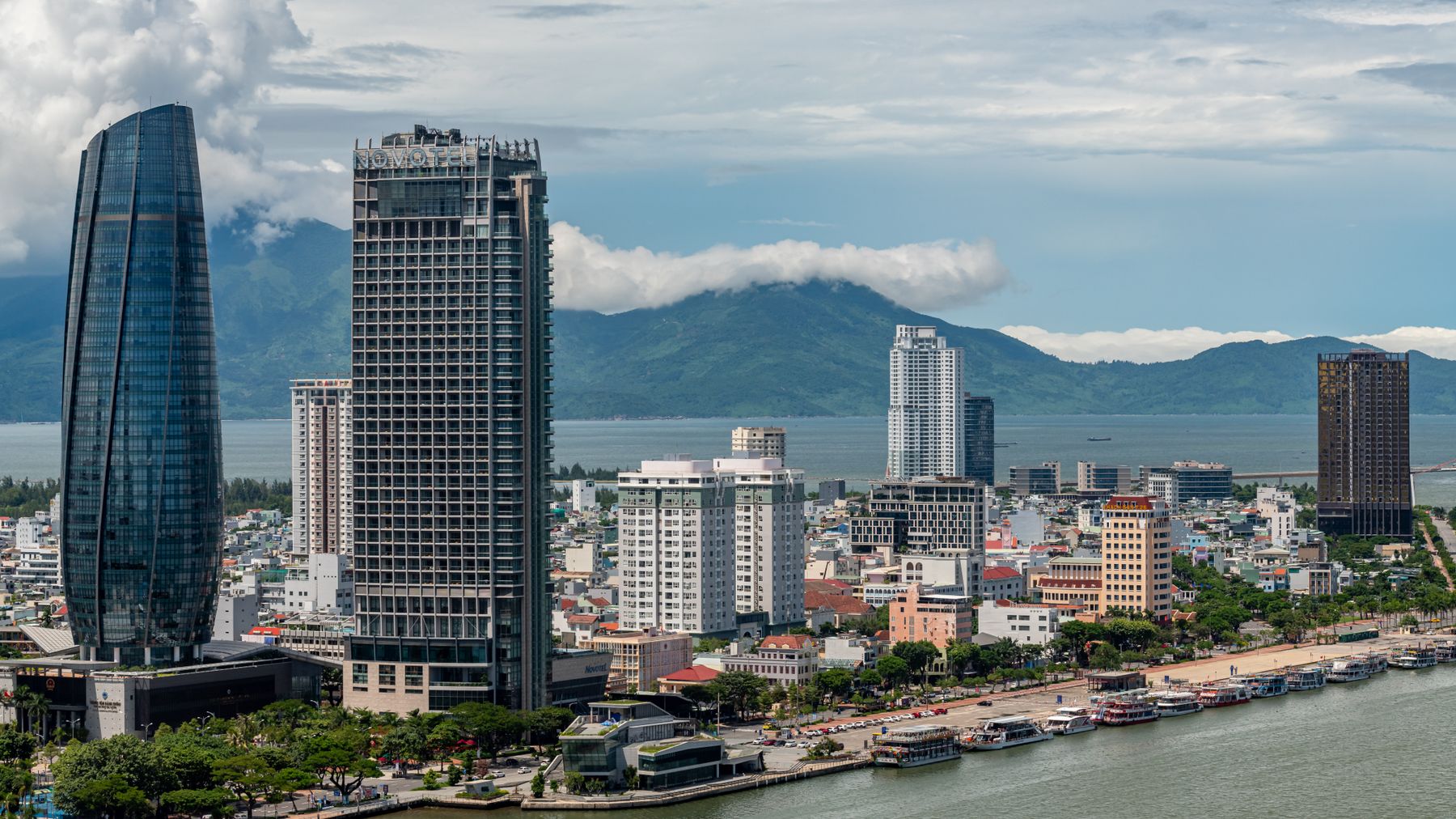
Photo by Kirandeep Singh Walia on Pexels
What to do
1. Catch sunrise from the platform
The concrete lookout has enough space for maybe 30 people before it feels crowded. Get there by 5:15 AM. The sun comes up over the water to the east, behind Cu Lao Cham. On a clear day you can watch the light sweep across the entire Da Nang coastline — My Khe, Non Nuoc, and the Marble Mountains in silhouette.
2. Spot red-shanked douc langurs
Son Tra is home to one of the last significant populations of these primates. They're most active in early morning and late afternoon, feeding in the canopy along the road between the 400-500 meter elevation marks. Drive slowly, stop when you see movement, and stay quiet. Don't feed them.
3. Ride the Son Tra loop
Rather than going straight up and back, take the full loop road that circles the peninsula. The eastern coastal section between Linh Ung Pagoda and Tien Sa Port has sea views the whole way. The full loop is roughly 35 km and takes 1.5-2 hours at a relaxed pace.
4. Stop at Linh Ung Pagoda
On the descent, Linh Ung - Bai But Pagoda sits at mid-elevation with a 67-meter Lady Buddha statue facing the sea. It's free to enter, usually busy by mid-morning, and worth 20-30 minutes.
5. Cool off at Bai But or Bai Bac beaches
Small cove beaches on the peninsula's south and north sides. Neither is developed — no loungers, no bars — but the water is clear and the setting is quiet on weekday mornings.
Where to eat nearby
There's nothing at the summit itself — no restaurants, no vendors. Eat before or after.
Back in Da Nang, the obvious move is "mi quang" — the turmeric-tinted noodle dish that's native to this region. Mi Quang Ba Vi on Le Dinh Duong has been around for years and does a reliable bowl with pork and shrimp for 35,000-45,000 VND. For seafood, the string of restaurants along Man Thai fishing village at the base of Son Tra serves whatever came off the boats that morning — grilled squid, steamed clams, garlic butter shrimp. Budget 150,000-250,000 VND per person for a proper spread.
If you're craving something quick post-ride, grab a "banh mi" from one of the carts near Pham Van Dong beach road. Da Nang's version tends to be simpler than Hoi An (호이안 / 会安 / ホイアン)'s but hits the spot after an early morning.
Where to stay
Most travelers base themselves in central Da Nang near My Khe Beach or along the Han River.
- Budget: Hostels and guesthouses along An Thuong Street run 200,000-400,000 VND/night for a private room with AC.
- Mid-range: Beachfront hotels on Vo Nguyen Giap Street, 600,000-1,200,000 VND/night. Clean, with pools, nothing fancy.
- Upscale: The InterContinental and Hyatt Regency sit on the Son Tra side, starting around 3,000,000 VND/night. Convenient if you want to be close to the peninsula road.

Photo by Đạt Nguyễn on Pexels
Practical tips locals would tell you
- Fuel up before the climb. There are no gas stations on the peninsula. Fill your tank in the city.
- Bring a light jacket. It's noticeably cooler at the summit, especially at dawn. The wind picks up.
- Headlights on. The road has blind corners. Oncoming traffic — tour buses, jeeps, other bikes — appears fast. Use your horn on tight bends.
- Sunscreen anyway. Even at 5 AM the UV reflects off the concrete platform once the sun clears the horizon.
- Download offline maps. Cell signal is patchy above 500 meters on some carriers.
Common mistakes to avoid
- Going at midday. The haze, heat, and sun glare kill the view. Morning or nothing.
- Wearing flip-flops on a motorbike. The road is steep and gravelly in spots. Closed shoes, always.
- Skipping the loop. Many riders go straight up and straight back down. The coastal road on the east side of Son Tra is the better half of the experience.
- Expecting facilities at the top. No toilets, no water, no shade. Bring what you need.
Practical notes
Dinh Ban Co is free to access and open year-round, though the checkpoint occasionally closes the road during storms or military exercises. Budget half a day if you're combining the summit with the loop road, Linh Ung Pagoda, and a beach stop. If you're spending more time in central Vietnam, Da Nang works well as a base for day trips to Hoi An (30 km south) and Hue (100 km north over the Hai Van Pass).
Last updated · May 29, 2026 · independently researched, never sponsored.