What it is
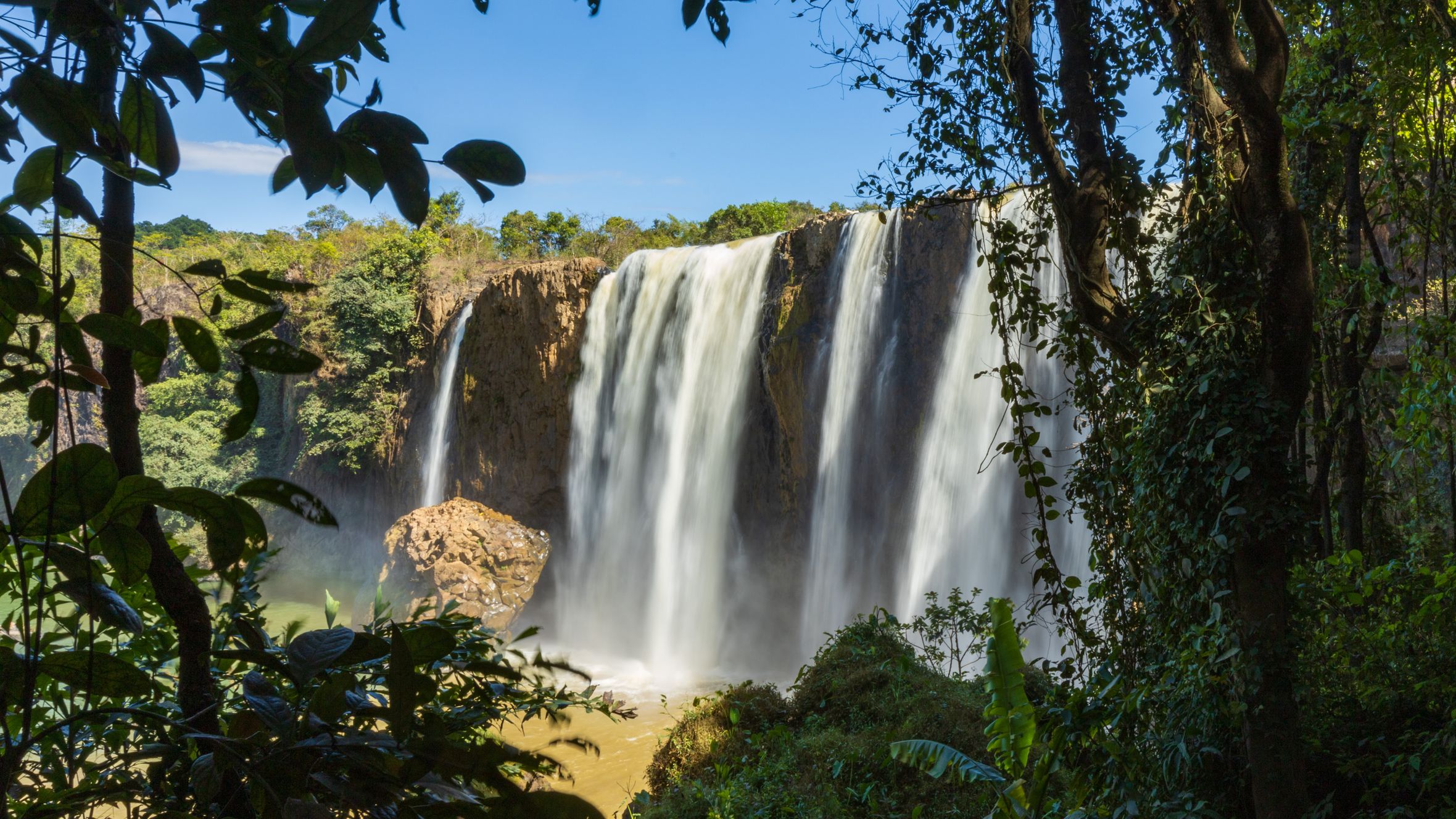
Thac Phu Cuong is a 9-meter-tall, roughly 30-meter-wide curtain waterfall on the Ayun River in Chu Se district, Gia Lai province. The water drops over a curved basalt ledge into a shallow pool below — it's not dramatic in height, but the breadth gives it a horseshoe quality that photographs well, especially in the wet season when the volume turns the whole cliff face white.
The waterfall sits about 45 km southeast of Pleiku city. Locals have known it forever, but it only started appearing on Vietnamese travel blogs around 2018. Foreign visitors are still rare here. There's no ticket booth, no roped-off viewing platforms — just a dirt path, some concrete steps, and the sound of water.
Why travelers go
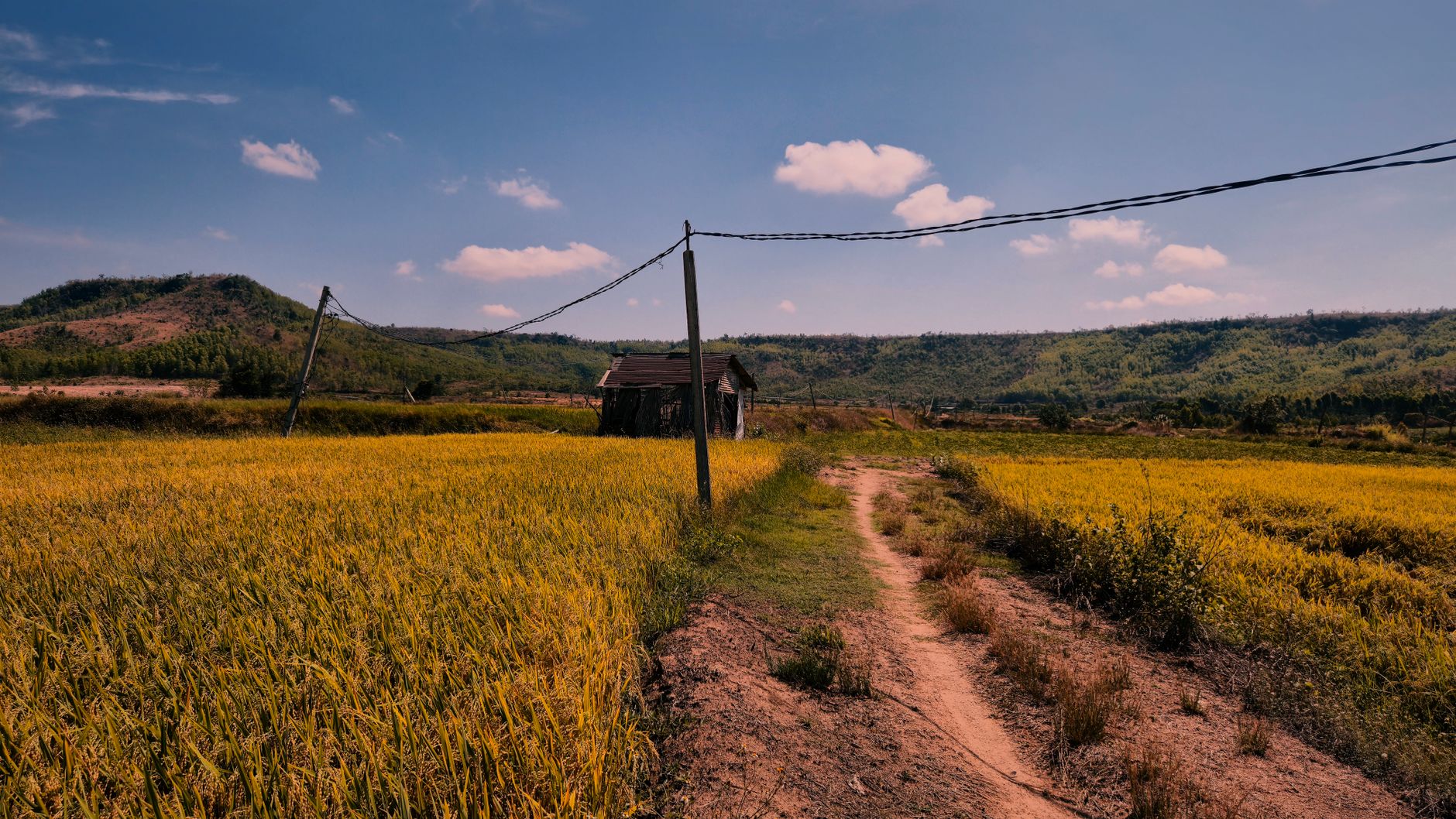
Most people passing through Gia Lai are on the way somewhere else — maybe heading from Da Nang or Hoi An inland toward Kon Tum, or cutting south to Da Lat. Thac Phu Cuong works as a half-day detour that breaks up the long highland drives. The appeal is simple: it's a legitimately scenic spot with almost no crowd, no entrance fee, and the surrounding landscape — coffee plantations, red-dirt roads, Jarai villages — gives you a taste of the Central Highlands (중부 고원 / 中部高原 / 中部高原) without the tourist infrastructure that places like Da Lat have built up.
If you've been eating "pho" in cities for two weeks and want a morning where you just sit on basalt rocks listening to water, this is the place.
Best time to visit
The wet season runs roughly July through November in Gia Lai. That's when the waterfall is at its most impressive — full flow, mist rising off the pool, the surrounding vegetation intensely green. September and October tend to be peak water volume.
The dry season (December–April) shrinks the falls considerably. By March, you might see more rock face than water. Still worth a stop if you're passing through, but manage expectations.
Mornings before 9 AM give you the best light — the falls face roughly east, so early sun hits the water directly. By midday the light flattens out.
How to get there
From Pleiku
Take Highway 25 (QL25) southeast toward Tuy Hoa. After roughly 40 km you'll pass through Chu Se town. The waterfall turnoff is about 5 km past the town center — look for a small sign reading "Thac Phu Cuong" on the left side. The access road is paved for the first kilometer, then becomes a decent dirt track for another 500 meters to a parking area.
Total drive time from central Pleiku: about 50–60 minutes by motorbike, 40 minutes by car.
From Quy Nhon (Binh Dinh coast)
If you're coming from the coast, QL19 connects Quy Nhon to Pleiku (about 170 km, 3.5–4 hours by motorbike). You'd pass through An Khe before climbing into the highlands. Alternatively, QL25 from Tuy Hoa also reaches Chu Se directly — roughly 130 km, winding through Phu Yen province.
Transport options
No public bus goes directly to the waterfall. Your realistic options are:
- Motorbike rental from Pleiku (150,000–200,000 VND/day for a Honda Wave)
- Grab car from Pleiku (negotiate a round-trip wait; expect 400,000–500,000 VND)
- Guided day trip — a few Pleiku-based guesthouses can arrange this, usually combined with other stops like Bien Ho (Sea Lake)

Photo by HONG SON on Pexels
What to do
This isn't a full-day destination. Plan 1–2 hours at the waterfall itself.
- Walk down the concrete steps to the base of the falls. The rocks are slippery when wet — wear shoes with grip, not flip-flops.
- In the dry season, you can wade across the shallow pool to the far bank. Wet season: don't try it, the current picks up significantly.
- There's a viewpoint at the top of the falls accessible via a short trail to the left of the main path. Good for the wide-angle shot.
- The surrounding area has coffee and pepper plantations. If you speak basic Vietnamese (or use a translation app), farmers are generally happy to let you walk through.
Where to eat
There's no restaurant at the waterfall — just occasional vendors selling sugarcane juice or snacks on weekends. Eat before or after in Chu Se town or back in Pleiku.
In Chu Se
- "Com tam (껌땀 / 碎米饭 / コムタム)" (broken rice) stalls along the main road through town — 35,000–50,000 VND per plate
- Local "bun" (rice noodle) soup shops open from early morning
In Pleiku
- Pho Cong on Nguyen Van Troi street — solid bowl of pho for 40,000 VND
- The Pleiku night market area near Hoa Lu park has grilled meats, "banh mi", and highland-style grilled chicken with lemongrass
- For "vietnamese coffee", Pleiku is surrounded by coffee farms — any local cafe will serve beans grown within 20 km of your seat
Where to stay
No accommodation exists at the waterfall. Base yourself in Pleiku (most options) or Chu Se (limited).
Pleiku
- Hoang Anh Gia Lai Hotel — the nicest option in town, around 600,000–800,000 VND/night
- Duc Long Gia Lai Hotel — mid-range, clean, 350,000–500,000 VND
- Numerous nha nghi (guesthouses) around the bus station area — 150,000–250,000 VND
Chu Se
- A handful of basic nha nghi along the highway — 150,000–200,000 VND. Don't expect English spoken.
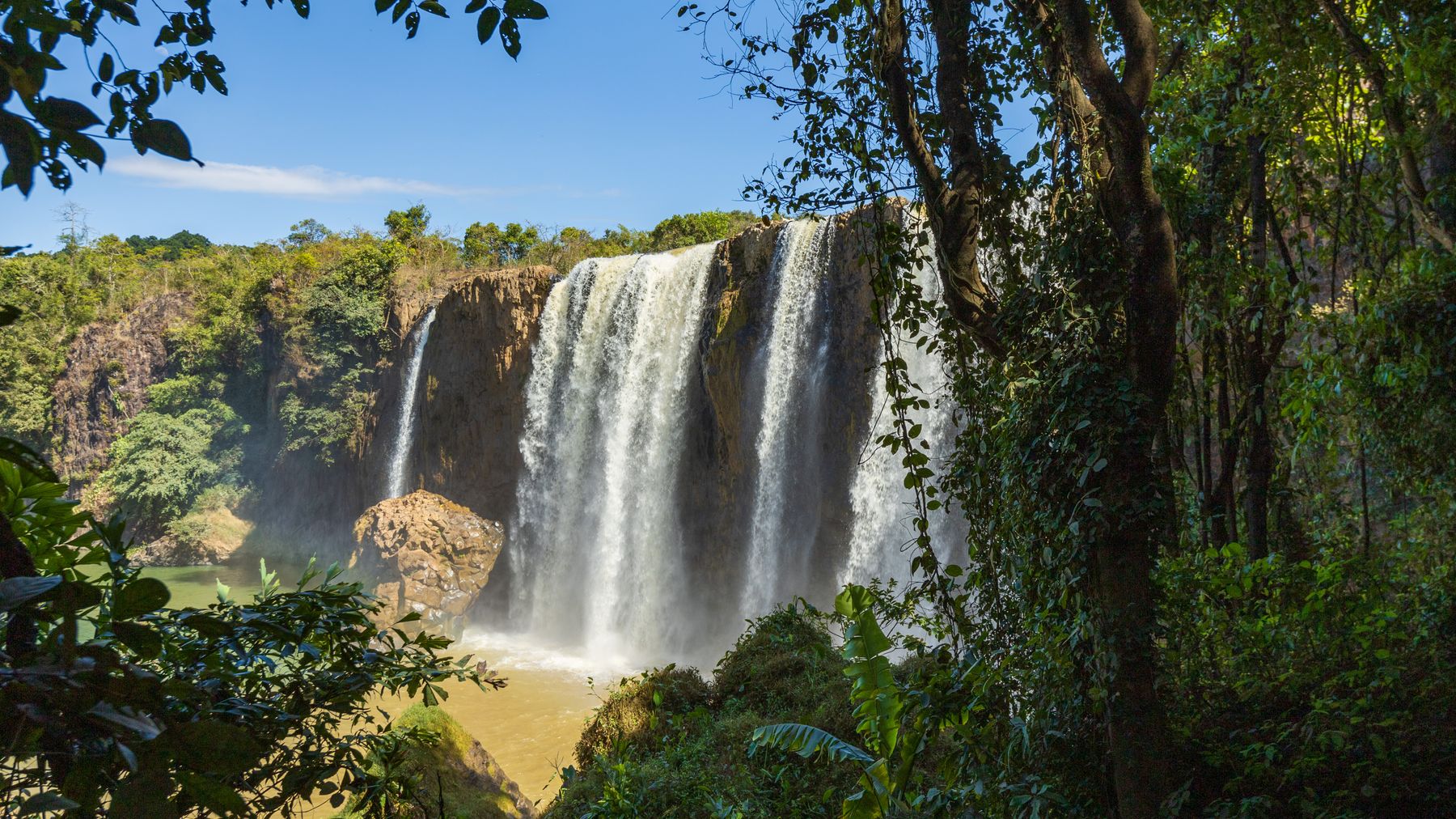
Photo by Serg Alesenko on Pexels
Practical tips
- Bring water and snacks. There's nothing reliable at the site itself.
- Phone signal (Viettel, Mobifone) works at the waterfall — you won't be off-grid.
- The dirt access road can get muddy after heavy rain. A scooter handles it fine in dry weather; after rain, go slow or you'll slide.
- There are no ATMs near the waterfall. Withdraw cash in Pleiku or Chu Se before heading out.
- If combining with other Gia Lai stops, Bien Ho (T'Nung Lake) is 10 km north of Pleiku and makes a natural pairing.
Common mistakes
- Visiting in March–April and expecting a waterfall. Check recent photos on Vietnamese social media (search "Thac Phu Cuong" on Facebook) before making a special trip in dry season.
- Wearing sandals on the wet rocks. The basalt gets a slick algae coating. Proper shoes save you a bruised tailbone.
- Not bringing a motorbike rain poncho. Even in "dry" season, afternoon showers hit the highlands without warning. A 10,000 VND poncho from any roadside shop keeps you riding.
- Assuming you can Grab back easily. Grab coverage outside Pleiku city is patchy. If you took a Grab car, have the driver wait rather than trying to book a return from rural Chu Se.
Final note
Thac Phu Cuong won't top anyone's list of Vietnam's most famous waterfalls — it's no Ban Gioc. But that's exactly why it works. An hour of empty basalt ledges, the smell of wet earth and coffee plants, zero selfie sticks. If you're already in Gia Lai, it's an easy half-day that costs you nothing but fuel.
Last updated · May 29, 2026 · independently researched, never sponsored.