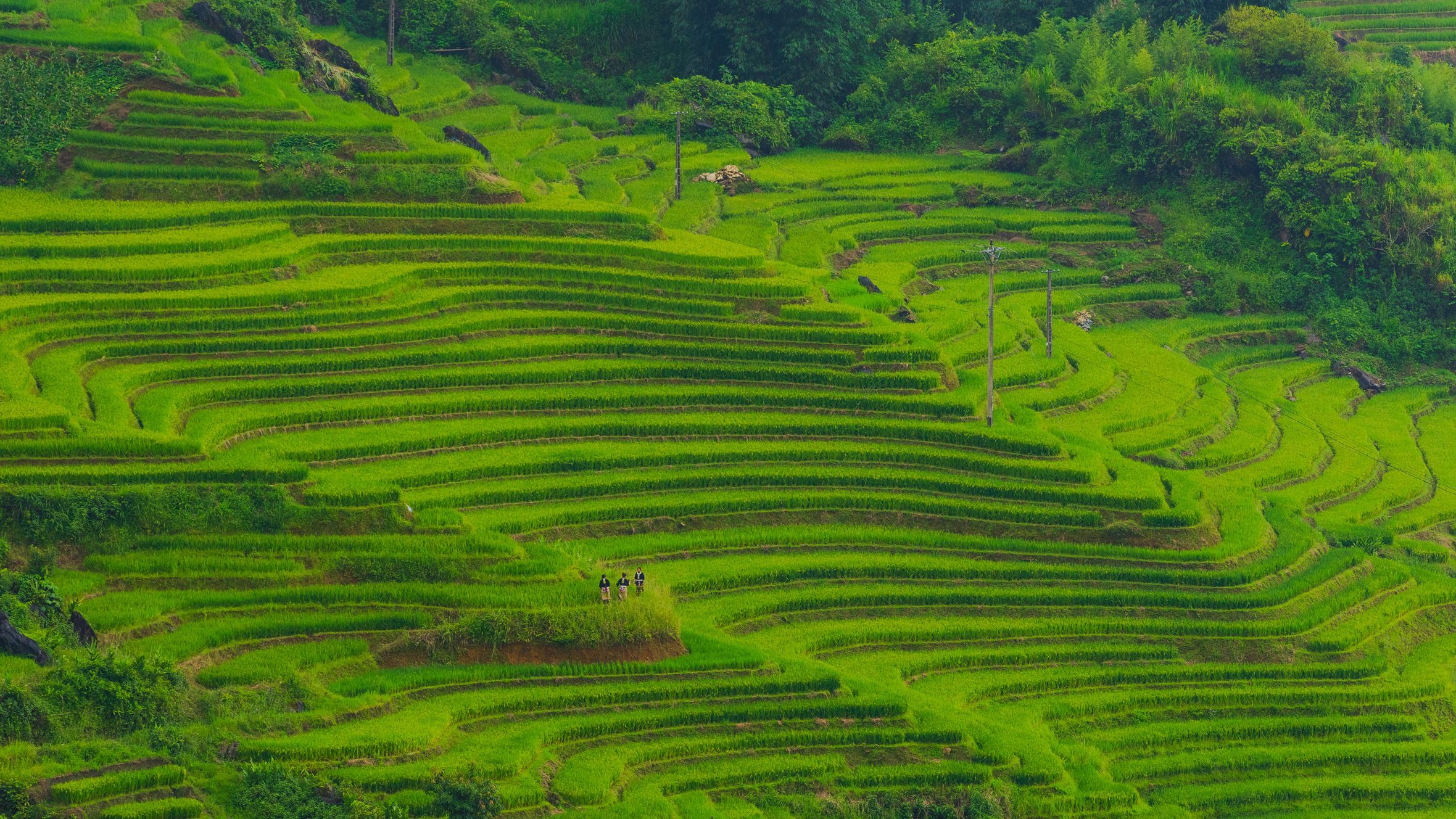
Thap Chot Mat sits in flat farmland on the edge of Tay Ninh province, a lone Cham tower rising above rice paddies with almost no one around. If you've seen the crowds at Po Nagar in Nha Trang (냐짱 / 芽庄 / ニャチャン) and wished for something quieter, this is the opposite end of the spectrum.
What it is
Thap Chot Mat (sometimes written Chot Mat Tower or Chot Mat Cham Tower) is a brick temple tower dating to roughly the 12th–13th century, built during the later period of the Champa civilization. It belongs to the same architectural tradition as the towers at My Son and Po Nagar, though it's far more modest in scale — a single tower rather than a complex. The structure stands about 10 meters tall, built from fired brick without mortar in the classic Cham technique where bricks were ground and fitted so tightly they've held together for centuries.
The tower was likely a Hindu shrine, probably dedicated to Shiva, consistent with most Cham religious architecture in the region. It marks the southern reach of Cham cultural influence, which extended well into what is now the Mekong Delta (메콩 델타 / 湄公河三角洲 / メコンデルタ) area. The site was recognized as a national historical monument, and some basic restoration work has been done to stabilize the structure, though it remains rough around the edges.
Why travelers go
Honestly, most don't — and that's the draw. Thap Chot Mat gets a handful of visitors per week, mostly Vietnamese history buffs and the occasional architecture nerd passing through Tay Ninh. There are no ticket booths, no souvenir shops, no tour buses. You show up, walk around the tower, study the brickwork, and leave with the quiet satisfaction of having seen something real without a crowd.
For anyone interested in Cham heritage, the tower fills in a geographic gap. Most travelers only see Cham ruins in central Vietnam — My Son near Hoi An, Po Nagar near Nha Trang, the towers around Quy Nhon. Thap Chot Mat is evidence of how far south that civilization extended, sitting in territory that feels culturally very different from the Cham heartland.
Best time to visit
November through March is ideal. Tay Ninh province is hot year-round, but the dry season keeps you out of the mud and makes the dirt paths around the tower walkable. Temperatures hover around 30–33°C, which is about as cool as it gets down here.
Avoid June through September if you can. Afternoon downpours turn the surrounding fields into shallow lakes, and the access path can get slippery. Early morning visits (before 9 AM) are best regardless of season — the light is softer and the heat hasn't peaked.
How to get there
From Saigon, Tay Ninh town is about 100 km northwest — roughly 2.5 hours by car or motorbike via National Highway 22. Buses run regularly from An Suong bus station in Ho Chi Minh City to Tay Ninh bus station, costing around 60,000–80,000 VND one way.
From Tay Ninh town, Thap Chot Mat is approximately 15 km to the southeast. You'll need your own wheels — a rented motorbike from town (150,000–200,000 VND per day) or a Grab car. There's no public transport to the tower itself. The final stretch runs through flat agricultural land on a narrow concrete road. Look for a small signpost; it's easy to miss on the first pass. GPS coordinates are your friend here — plug them in before you leave town.

Photo by Hugo Guillemard on Pexels
What to do
Study the brickwork up close
The main reason to come. Walk slowly around the tower and look at how the bricks fit together without visible mortar. Some sections show carved decorative elements — lotus motifs and geometric patterns — that are weathered but still readable. Bring a flashlight if you want to peer into the interior chamber.
Photograph the tower against the rice fields
The setting is what makes this site atmospheric. A solitary tower in an ocean of green paddies, with Nui Ba Den (Black Lady Mountain) visible in the distance on clear days. Golden hour in the late afternoon or the soft light of early morning gives you the best shots.
Combine with a visit to Nui Ba Den
Nui Ba Den is Tay Ninh's main attraction — a 986-meter granite peak with pagodas and a cable car — and it's only about 20 km from Thap Chot Mat. Doing both in a single day trip from Saigon is realistic if you start early.
Visit the Cao Dai Holy See
The Cao Dai Great Temple in Tay Ninh town is one of the most visually distinctive religious buildings in Vietnam. The noon prayer ceremony (12:00 PM) is open to respectful visitors. Pair it with Thap Chot Mat for a day that covers both Cham and Cao Dai heritage.
Walk the surrounding paths
There's not much formal infrastructure, but the dirt tracks through the fields around the tower give you a sense of rural southern Vietnam that organized tours skip entirely. Farmers working the paddies, water buffalo, the occasional duck herder — it's unscripted.
Where to eat nearby
There's nothing at the tower itself — bring water. Back in Tay Ninh town, look for "banh canh" Tay Ninh style, a thick tapioca-noodle soup that's the local specialty. Stalls along Cach Mang Thang Tam street serve bowls for 25,000–35,000 VND. Tay Ninh is also known for its "banh trang" (rice paper) — the thin, crispy kind seasoned with chili and garlic that gets sold across southern Vietnam but tastes best at the source. Street vendors near the central market sell bags for 10,000–15,000 VND.
For a proper meal, com tam plates (broken rice with grilled pork) are easy to find throughout town at standard street-food prices of 30,000–45,000 VND.
Where to stay
Tay Ninh town has a range of guesthouses and budget hotels along the main roads. Expect to pay 200,000–400,000 VND per night for a clean room with air conditioning and Wi-Fi. There are no international-chain hotels here, but places like Khach San Hoa Binh and a few newer mini-hotels on Highway 22B are adequate for a night. Most travelers treat Tay Ninh as a day trip from Saigon, which is perfectly doable.

Photo by Haneul Trac on Pexels
Practical tips locals would tell you
- Bring sun protection. There is zero shade at the tower. Hat, sunscreen, water — non-negotiable.
- Wear closed shoes. The ground around the base can be uneven, with loose bricks and overgrown vegetation.
- Respect the site. Don't climb the tower or touch carved elements. The brickwork is fragile after eight centuries.
- Carry cash. There are no ATMs near the tower and limited options even along the access road.
- Ask locals for directions. If you're on a motorbike and get turned around in the farm roads, the Vietnamese phrase "Thap Chot Mat o dau?" (Where is Chot Mat Tower?) will get you pointed the right way.
Common mistakes to avoid
Don't expect a developed tourist site with a visitor center or guided tours — there's none of that. Don't come in the midday heat; you'll last about five minutes in the open sun. Don't skip the Cao Dai temple if you're already in Tay Ninh; it's the other half of what makes this area worth the drive. And don't try to find the tower without GPS — the signage is minimal and the surrounding roads all look the same.
Practical notes
Thap Chot Mat works best as part of a full Tay Ninh day trip from Saigon: Cao Dai temple for the noon ceremony, lunch in town, then the tower in the cooler afternoon. Budget a full day if you're adding Nui Ba Den. The site is free to visit and open during daylight hours.
Last updated · May 29, 2026 · independently researched, never sponsored.








