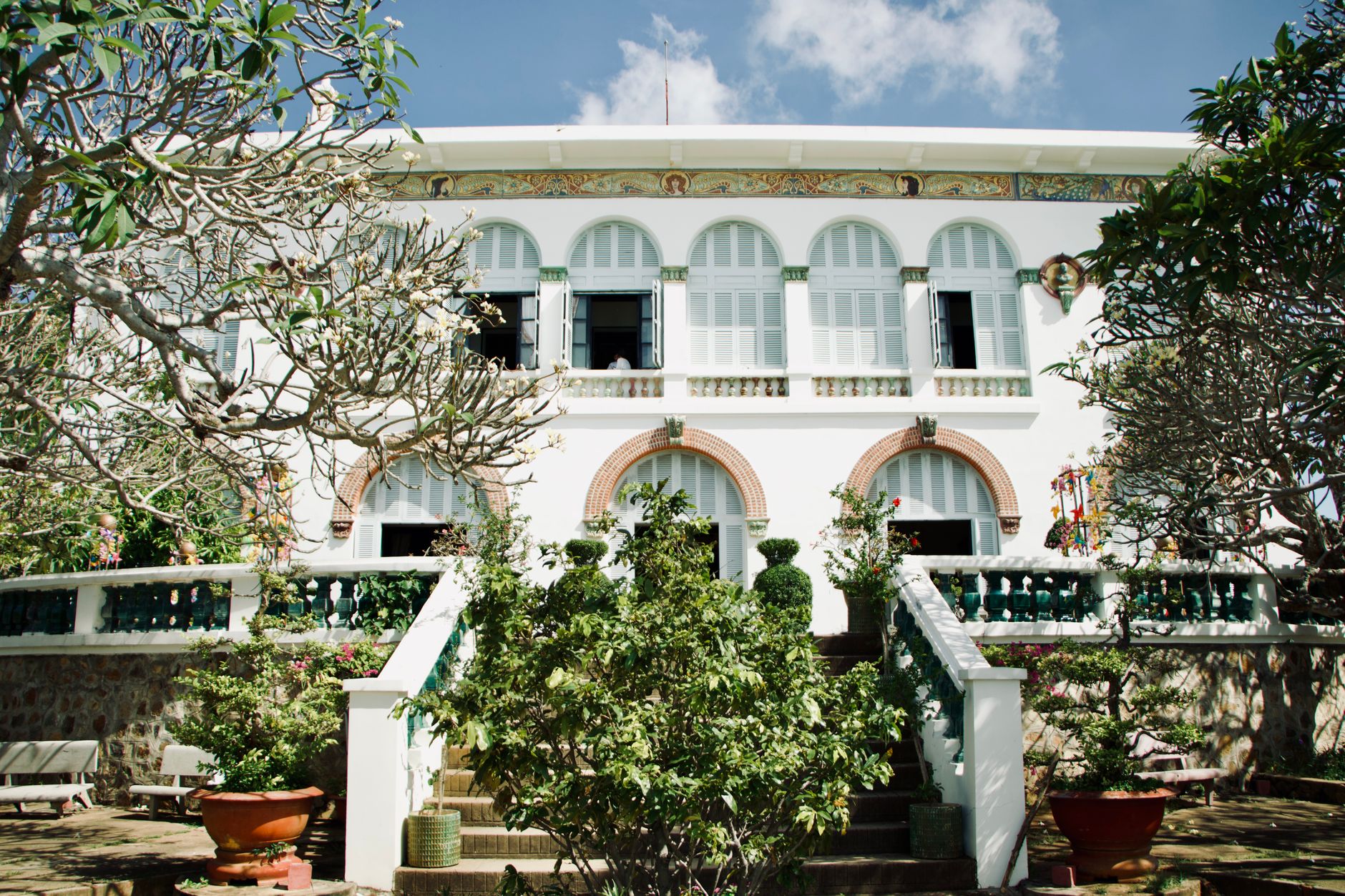
Hoi An's old town is one of the few places in Southeast Asia where you can walk streets that look more or less the way they did 200 years ago. It's not a reconstruction or a theme park — it's a lived-in UNESCO-listed trading port where people still sell fabric, press coffee, and hang laundry between centuries-old shophouses.
What it is and how it got here
Hoi An was a major international trading port from the 16th to 18th centuries. Japanese, Chinese, and European merchants all kept warehouses and homes here. When the Thu Bon River silted up and trade shifted to Da Nang, Hoi An was effectively frozen in time — too economically quiet to tear down and rebuild. That accident of geography preserved a mix of Japanese merchant houses, Chinese assembly halls, French colonial facades, and Vietnamese tube houses that you won't find clustered together anywhere else in the country.
The old quarter covers roughly 30 hectares along the river. Administratively, Hoi An now falls under the broader Da Nang (다낭 / 岘港 / ダナン) area, but it sits about 30 km south of central Da Nang and operates with its own distinct rhythm.
Why travelers go
Three reasons keep people coming back. First, the architecture — yellow-walled shophouses with wooden shutters, tiled roofs sagging gently with age, and narrow lanes that reward slow walking. Second, the food scene, which is arguably the best regional kitchen in central Vietnam. Third, tailoring — Hoi An (호이안 / 会安 / ホイアン) has hundreds of tailor shops that can turn out a custom suit or dress in 24-48 hours for a fraction of what you'd pay elsewhere.
It's also a manageable size. You can see the core old town on foot in a day, but most people stay two or three nights because the pace here encourages lingering.
Best time to visit
February through May is the sweet spot. Skies are clear, temperatures hover around 28-32°C, and it's dry enough to walk comfortably. June through August brings serious heat (35°C+) and crowds from domestic tourism season. September through November is typhoon season — Hoi An floods regularly in October and November, sometimes knee-deep in the old quarter. December and January are cooler (20-25°C) and occasionally drizzly, but still pleasant.
If you visit during the full moon each lunar month, the old town switches off electric lights and fills the streets with paper lanterns. It's genuinely atmospheric, though it does get packed.
How to get there from Da Nang
Da Nang is the nearest major transport hub with an international airport.
- Grab/taxi: 30-40 minutes depending on traffic. Expect 250,000-350,000 VND by car. This is the easiest option.
- Local bus: Yellow bus #1 runs from Da Nang city center to Hoi An. About 30,000 VND, takes roughly 60-75 minutes. Buses leave every 20 minutes from the Da Nang bus station on Dien Bien Phu street.
- Motorbike rental: If you're comfortable on two wheels, the ride down the coast road is flat and straightforward. Rentals run 120,000-150,000 VND per day in Da Nang.

Photo by HONG SON on Pexels
What to do
Walk the old quarter (with the right ticket)
You need a Hoi An Old Town ticket (120,000 VND) to enter certain heritage houses, assembly halls, and the Japanese Covered Bridge. The ticket includes five entries from a list of about 20 sites. The Phuc Kien Assembly Hall and the Tan Ky Ancient House are the two most worthwhile stops — skip the museum of ceramics unless you're genuinely interested in pottery shards.
Cross to An Bang Beach
An Bang is about 4 km east of the old town. Rent a bicycle (30,000 VND/day from most hotels) and ride out there for a morning swim. The beach is long, relatively clean, and lined with low-key restaurants where you can eat seafood and drink beer for a few hours. It's not dramatic coastline, but it's good sand and calm water from March to September.
Take a boat on the Thu Bon River
Late afternoon boat trips leave from the Bach Dang riverside promenade. A short ride (30 minutes, around 50,000-100,000 VND per person in a shared boat) takes you past fishing villages and coconut palms. It's the best way to see the town from water level, especially around sunset.
Visit a vegetable village or pottery village
Tra Que Vegetable Village is a 15-minute bike ride north of town. Farmers here grow herbs and greens using seaweed fertilizer from the river. Several homestays offer cooking classes where you harvest ingredients, then make "banh xeo" and fresh "goi cuon" from scratch. Classes run about 350,000-500,000 VND.
Get something tailored
If you want custom clothing, go with a clear idea of what you want — bring photos. Yaly Couture and Bao Khanh are two of the more reliable shops, but there are dozens. Budget 1,500,000-3,000,000 VND for a decent suit. Always schedule a fitting before your final pickup; first drafts often need adjustments.
Where to eat
Hoi An has its own dishes that you won't find done properly anywhere else in Vietnam.
"Cao lau" is the signature — thick rice noodles with sliced pork, herbs, and crouton-like fried dough, tossed in a small amount of broth. The noodles are traditionally made with water from a specific local well, which gives them a chewier texture. Try it at Trung Bac on Tran Phu street (40,000 VND).
"Mi quang" is the region's other essential noodle — wide turmeric-tinted noodles with pork, shrimp, peanuts, and a shallow pour of rich broth. Ong Hai on Ly Thuong Kiet street in the newer part of town serves a good bowl for 35,000 VND.
For street-level snacking, "banh mi" in Hoi An has its own style — smaller bread rolls stuffed with more pork varieties than the Saigon version. Banh Mi Phuong on Phan Chu Trinh is the famous one (Anthony Bourdain ate here), but Madam Khanh across town is equally good and usually has a shorter line.
Where to stay
- Budget: Guesthouses and hostels in the Cam Pho ward, 200,000-400,000 VND/night. Basic, clean, walkable to the old quarter.
- Mid-range: Boutique hotels along the river or on Hai Ba Trung street, 800,000-1,500,000 VND/night. Many include breakfast and bicycles.
- Higher-end: Resorts between the old town and the beach, 2,500,000-5,000,000 VND/night. These are quieter but you'll need a bike or shuttle to reach the old quarter.
Staying inside the old town itself means narrow rooms and some noise from tourists until about 10 PM, but you get the atmosphere of morning deliveries and lantern-lit streets at night.

Photo by Quang Nguyen Vinh on Pexels
Practical tips locals would tell you
- Bicycles beat motorbikes in the old quarter. Many streets are pedestrian-only from 8 AM to 11 AM and 3 PM to 9 PM. A motorbike is useless during those hours.
- Rain gear matters from September onward. A cheap poncho from any shop (20,000 VND) saves you repeatedly.
- The old town ticket is checked inconsistently — but buy one anyway. The money funds preservation of the buildings.
- Vietnamese coffee here is strong and cheap. Order "ca phe sua da" at any riverside cafe for 20,000-30,000 VND and sit for as long as you want.
Common mistakes to avoid
- Rushing through in half a day from Da Nang. Hoi An rewards slow time. One night minimum, two is better.
- Only eating in the old quarter. The best food is often on streets just outside the tourist core — Ly Thuong Kiet, Phan Chu Trinh, and the market area.
- Booking a tailor on your last day. You need at least two days for fittings and alterations.
- Skipping the surrounding area. Cu Lao Cham island is a 90-minute boat ride away and worth a day trip for snorkeling and quieter beaches.
Practical notes
Hoi An is compact and best explored slowly, ideally over two or three days. Pair it with a few days in Da Nang or a side trip to the Hue imperial sites to fill out a solid central Vietnam itinerary. Bring cash — many smaller shops and food stalls don't take cards.
Last updated · May 29, 2026 · independently researched, never sponsored.