
What Buon Don Is
Buon Don is a rural district about 50 km northwest of Buon Ma Thuot, the capital of Dak Lak province in Vietnam's Central Highlands (중부 고원 / 中部高原 / 中部高原). For centuries, this area was the center of elephant capture and domestication — local Mnong and Ede communities developed techniques for taming wild elephants that were traded across Southeast Asia. The most famous elephant hunter, Khunjunob (known locally as Vua Voi, the Elephant King), captured over 400 elephants in his lifetime during the late 1800s.
Today, Buon Don sits at a crossroads. The wild elephant population has dwindled to fewer than 100 in Dak Lak, and the domesticated elephants number around 40. The district has shifted toward ethical tourism, with riding largely phased out in favor of observation-based encounters. The surrounding Yok Don National Park — Vietnam (베트남 / 越南 / ベトナム)'s largest terrestrial national park at 115,545 hectares — anchors the area's appeal for nature travelers.
Why Travelers Go
Buon Don draws a specific kind of visitor: someone who wants the Central Highlands without the coffee-plantation circuit of Buon Ma Thuot, or the resort feel of Da Lat. The reasons are straightforward:
- Ethical elephant encounters at Yok Don, where a partnership with Animals Asia runs walk-with-elephants programs (no riding, no chains)
- Dray Sap and Dray Nur waterfalls, two of the most powerful falls in southern Vietnam, connected by a trail through dry dipterocarp forest
- Ede and Mnong longhouse villages that still function as living communities, not staged exhibits
- Yok Don National Park for birding, cycling, and multi-day treks
This isn't a bucket-list destination. It's a slow-travel stop that rewards curiosity.
Best Time to Visit
The Central Highlands have two seasons: wet (May–October) and dry (November–April). For Buon Don specifically:
- November to March is ideal. Cool mornings (18–22°C), dry trails, waterfalls still flowing from residual rain. Elephant encounters run year-round but visibility in the forest is better when undergrowth thins.
- April gets hot — 35°C+ by midday — but remains dry.
- June to September means afternoon downpours, muddy park trails, and some waterfall access roads become difficult. The falls are at their most dramatic, though.
Avoid Tet week (late January/early February) unless you've booked elephant programs in advance — they fill up with domestic tourists.
How to Get There
Buon Ma Thuot is your gateway. From there:
- From Saigon: VietJet and Vietnam Airlines fly to Buon Ma Thuot (Hoa Xuan Airport) daily, 1 hour. Buses run overnight from Ben xe Mien Dong, 7–8 hours, around 250,000–300,000 VND.
- From Da Nang or Hue: no direct flights. Bus to Buon Ma Thuot takes 10–12 hours. Most travelers combine with a motorbike loop through the Highlands.
- Buon Ma Thuot to Buon Don: 50 km on Highway 14 then provincial road. Xe om (motorbike taxi) runs about 150,000 VND one-way. Grab doesn't operate reliably out here — arrange transport through your accommodation or rent a motorbike in Buon Ma Thuot (150,000–200,000 VND/day for a Honda Wave).
Getting Around Buon Don
A motorbike is essential. The district sprawls — Yok Don's entrance is 8 km from the town center, Dray Sap is 25 km south, and villages are scattered along dirt tracks. Roads are paved but narrow, with occasional cattle crossings.

Photo by Quang Nguyen Vinh on Pexels
What to Do
Yok Don Elephant Program
The ethical elephant experience costs around 1,800,000 VND per person for a half-day walk. You follow mahouts and their elephants through the forest while they forage naturally. No saddles, no tricks. Book at least 3 days ahead through Yok Don National Park's office or the Animals Asia partnership directly.
Dray Sap and Dray Nur Waterfalls
Entry is 30,000 VND each. Dray Sap (meaning "smoke waterfall" in Ede) drops 20 meters across a wide basalt cliff face — the mist earned its name. Dray Nur, 2 km downstream, is taller and narrower. A suspension bridge connects the two. Allow 3 hours for both.
Village Visits
Buon Don village itself has the tomb of Khunjunob, a suspension bridge over the Serepok River, and several Ede longhouses. The Ethnographic Museum (small, free) gives context. For something less curated, ask your guesthouse about visiting Mnong communities deeper in the district — homestays exist but aren't advertised online.
Yok Don Trekking and Cycling
The national park offers guided treks from 1 to 3 days. A day trek costs around 500,000 VND including guide. Cycling routes through the dry forest are flat and well-marked — bring your own bike or rent at the park entrance (100,000 VND).
Where to Eat
Buon Don town has simple "com binh dan" (daily rice) shops along the main road. Look for:
- Com lam — sticky rice cooked in bamboo tubes, a Highlands staple. Sold at stalls near the suspension bridge, 20,000–30,000 VND per tube.
- Ga nuong (grilled chicken) with pepper salt and lime — the local free-range birds are smaller and more flavorful. A whole chicken runs 180,000–250,000 VND.
- Ruou can — rice wine drunk communally from a clay jar through bamboo straws. Your guesthouse will likely offer this in the evening.
- Vietnamese coffee here is different — Dak Lak produces over 40% of Vietnam's robusta. Every roadside stall serves thick, dark drip coffee for 15,000–20,000 VND.
Don't expect restaurants with English menus. Point-and-order or ask your host to phone ahead.
Where to Stay
Options are limited but adequate:
- Yok Don National Park guesthouses: Basic rooms inside the park, 300,000–500,000 VND/night. No frills but you're steps from the elephant program.
- Buon Don Homestays: Ede-style longhouse stays with families. Expect a mattress on the floor, mosquito net, shared bathroom. Around 200,000–300,000 VND including dinner.
- Buon Ma Thuot hotels: If you want air-con and hot water reliably, stay in the city and day-trip. Muong Thanh and local hotels run 400,000–800,000 VND.
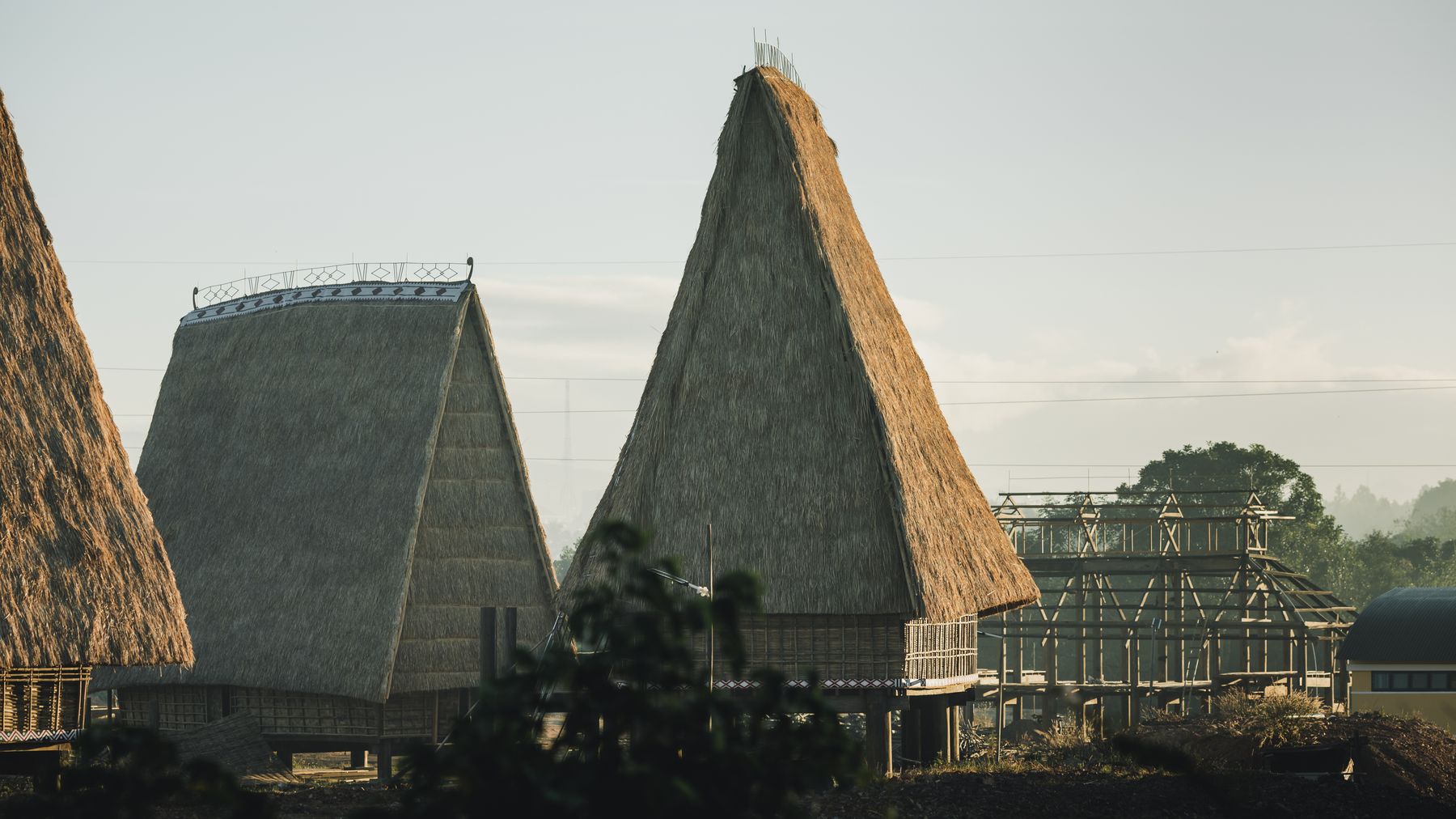
Photo by Thái Trường Giang on Pexels
Practical Tips
- Cash only in Buon Don. ATMs exist in Buon Ma Thuot — withdraw before heading out.
- Phone signal is patchy in Yok Don. Viettel has the best coverage in rural Dak Lak.
- Leeches are present on wet-season forest trails. Tuck pants into socks, carry salt.
- Language: Very little English spoken. Download Vietnamese offline in Google Translate. Learn "xin chao" and "cam on" at minimum.
- Elephant ethics: If anyone offers elephant riding, mahout shows, or photo ops with chained animals, walk away. The ethical program at Yok Don is the only one worth supporting here.
Common Mistakes
- Day-tripping from Buon Ma Thuot and rushing it. Buon Don needs two nights minimum to fit the elephant walk, waterfalls, and a village visit without exhausting yourself on motorbike transfers.
- Skipping Yok Don for just the waterfalls. Dray Sap is impressive but you can see big waterfalls elsewhere. The elephant forest walk is what makes Buon Don singular.
- Coming without a motorbike plan. There's no public transport within the district. Sort your wheels before arriving.
Practical Notes
Buon Don is best paired with 2–3 days in Buon Ma Thuot (coffee farms, Ako Dhong village) and possibly a ride north toward Kon Tum or south to Da Lat for a broader Central Highlands loop. It's not a place you stumble into — you choose it deliberately, and it rewards that choice with something quieter and more genuine than most stops on the Vietnam circuit.
Last updated · May 29, 2026 · independently researched, never sponsored.







